Unknown's avatar

About Richard Bowker

Author of the Portal series, the Last P.I. series, and other novels

Bradbury and Believability

The death of Ray Bradbury reminded me that he was among the least believable of science fiction writers. (See my discussion of believability.)  I couldn’t find the quote online, but I recall him saying that he gave up science fiction after a nine-year-old wrote him to complain about the science in one of his stories (“The Golden Apples of the Sun”, maybe?).

Like most people I came across online who talked about Bradbury in the past day, I haven’t read him in decades.  I have a feeling that his work hasn’t aged well — except for Fahrenheit 451, I suppose, which is the perfect novel to assign to schoolkids.  Science fiction as a genre, of course, has a tendency not to age well.  Here is an excerpt from an essay about Bradbury by Damon Knight from 1967 that sounds about right.  He says:

Although [Bradbury] has a large following among science fiction readers, there is at least an equally large contingent of people who cannot stomach his work at all; they say he has no respect for the medium; that he does not even trouble to make his scientific double-talk convincing; that—worst crime of all—he fears and distrusts science.

For better or worse, I think he helped give me the courage to imagine that I could write science fiction.  Also, I remain spooked by Something Wicked This Way Comes.

In which I read Thomas Middleton so you don’t have to

The controversy over the authorship of All’s Well That Ends Well prompted me to give the Jacobean playwright Thomas Middleton a try.  This turns out to have been a mistake.

A friend lent me A Chaste Maid in Cheapside. Wikipedia says: “Unpublished until 1630 and long-neglected afterwards, it is now considered among the best and most characteristic Jacobean comedies.”  The Internet is littered with other encomia.  Sheesh.

Here’s what I have to say: The plot is incomprehensible, the characters are uninteresting, and the language is devoid of poetry or wit.  The play is supposed to be dirty, and that sounds promising, but it turns out to be the kind of vulgarity that a modern reader can only understand by reading the footnotes.  The word “confusion,” the editor informs us, means “incest.”  Oh, of course, shoulda figured that out myself.  The play is supposed to be funny, but it’s the humor of stereotypes that were probably banal 400 hundred years ago.  The prim Puritan ladies get drunk at a party — what a riot!  The son comes home from college and he’s full of himself with all his new-fangled learning — I didn’t see that one coming!

Even in the dreariest parts of Shakespeare you’ll come across a startling image, a beautiful couplet, a character who does something unexpected.  There’s none of that in A Chaste Maid.  The only thing that seemed even quasi-Shakespearean is a happy ending that features a rebirth of sorts — the two lovers, supposedly dead, arise from their coffins, and the funeral turns into a wedding.  But there was no particular setup for the scene, so it felt entirely arbitrary.  And the characters could have stayed dead, for all I cared about them.

There, I feel better now.  Time to re-read As You Like It.

Due to inclement weather, graduation will be held indoors

The use of “due to” in this sentence is wrong, wrong, wrong. So it won’t surprise you that I misused it in one of those excerpts from my novels I posted the other day.

This brings me to an interesting essay by Steven Pinker in Slate about the latest prescriptivist/descriptivist controversy.  I’m a big Pinker fan, and I think he gets it right:

The thoughtful, nondichotomous position on language depends on a simple insight: Rules of proper usage are tacit conventions. Conventions are unstated agreements within a community to abide by a single way of doing things—not because there is any inherent advantage to the choice, but because there is an advantage to everyone making the same choice. Standardized weights and measures, electrical voltages and cables, computer file formats, the Gregorian calendar, and paper currency are familiar examples.

And:

Once you understand that prescriptive rules are conventions, most of the iptivist controversies evaporate. One such controversy springs from the commonplace among linguists that most nonstandard forms are in no way lazy, illogical, or inferior. The choice of isn’t over ain’t, dragged over drug, and can’t get any over can’t get no did not emerge from a weighing of their inherent merits, but from the historical accident that the first member of each pair was used in the dialect spoken around London when the written language became standardized. If history had unfolded differently, today’s correct forms could have been incorrect and vice-versa.

But the valid observation that there is nothing inherently wrong with ain’t should not be confused with the invalid inference that ain’t is one of the conventions of standard English. Dichotomizers have difficulty grasping this point, so I’ll repeat it with an analogy. In the United Kingdom, everyone drives on the left, and there is nothing sinister, gauche, or socialist about their choice. Nonetheless there is an excellent reason to encourage a person in the United States to drive on the right: That’s the way it’s done around here.

(My cold-eyed editors would probably remove that hyphen from vice-versa, but we’ll let that pass.)

There is a bit of historical illogic in using “due to” as a prepositional phrase instead of an adjectival phrase, but it’s completely comprehensible to any reader of English.  So why should we care if it’s used as a preposition, equivalent to “because of”?  In general, we shouldn’t.  But if you’re a writer, maybe you should, because there will be a part of your audience who will think the less of you if you use “due to” in this way.  And you’re probably not good enough a writer to not care about annoying those people.

Bryan Garner, the author of Modern American Usage, has coined the term die-hard snoots to refer to the pedantic folks who care about these lost causes.  Here the Columbia Journalism Review talks about the die-hard snootiness of opposition to the prepositional “due to.”

At work recently we discussed whether we should prohibit the prepositional “due to.”  We decided that we should.  Ordinary schlubs won’t care if we use “because of” instead of “due to,” but die-hard snoots will.  And we want die-hard snoots to like us as much as ordinary schlubs; so why not make them happy?

I’ve started reading a book called The Language Wars that Pinker mentions in his essay.  I’ll let you know who wins.

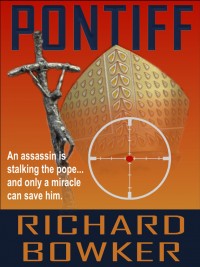
Pontiff available for $0.99!

While I was busy doing the ebook work for Senator and Replica, I reduced the price of Pontiff at Barnes & Noble to $0.99, mainly to see how the process works. I informed the nice folks at Amazon about the change, and we may see them reduce their price in response–they’re not about to lose Pontiff sales to their bitter crosstown rival!  Anyway, this lower price won’t last forever, so now is the time to buy!

Pontiff is a religious thriller very much not in the Dan Brown tradition, although the Vatican intrigue it features does appear to have been ripped from today’s headlines.  The lower price is not a reflection of the quality of the novel! To persuade you of this, here is Chapter 2, where we see the College of Cardinals in the Sistine Chapel making an unexpected choice for pope.  The point-of-view character, Cardinal Riccielli, figures prominently in the novel’s intrigue.

**********

Eligo in summum pontificem…

Cardinal Antonio Riccielli stared at the Latin phrase printed at the top of the small rectangular card. I choose for Supreme Pontiff…

He took his pen and scrawled a name on the bottom of the card. He was supposed to disguise his handwriting to preserve the secrecy of the ballot, but that hardly seemed worth the effort. Everyone knew whom he supported, whom he would support to the bitter end.

Marcello Valli.

He looked at the name, and then at the man, seated across from him in the Sistine Chapel. The hawk nose, the high forehead, the piercing eyes that betrayed nothing of what he was thinking. Another ballot, another chance. But the chance was slipping away—had already slipped away, many of his original supporters thought, and there seemed to be nothing they could do about it.

One maneuver was left, perhaps. If no one got a two-thirds majority in the next day, the rules of the conclave allowed the cardinals to vote that election was to be by simple majority, thereby totally changing the dynamics of the conclave. Would it help Valli? It couldn’t hurt. Valli clearly wasn’t going to get the Third-World bloc, but if they could keep the Curial cardinals in line, plus the Europeans and most of the North Americans…

He could perhaps put together a majority. But that required them to make it through the next few ballots, with the cardinals weary and eager for a resolution. The conclave had lasted far too long already. They were tired of each other’s company day and night, while the world waited. And meanwhile Valli’s vote count had steadily slipped, as the cardinals cast about for other candidates who might attract sufficiently widespread support to claim the throne of Saint Peter. One after another, candidates had surfaced, only to fade without reaching the two-thirds majority, none able to receive enough support from the various blocs fighting for the soul of the Church.

On this ballot Riccielli was worried about Carpentier, the genial Canadian. The man was a moron, but he was hard to dislike, and Riccielli knew what others might be thinking: wouldn’t it be good to have someone as pope who was less, well, high-powered than they were used to? Someone who could stay away from controversy and simply make Catholics feel good about their religion again. If we can’t get our man, maybe this guy would do. And he’s old enough that we won’t have to put up with him for long. Carpentier had received an astounding twenty votes on the ballot before lunch. Was there a movement afoot? Would people suddenly decide that he was the solution to their problem?

If there was a movement, Riccielli hadn’t been asked to be a part of it. So he could only guess, and fret.

The voting was beginning. Riccielli folded his ballot and awaited his turn to approach the altar. The ceremony and rituals attached to every aspect of the conclave had inspired awe in him at first, but at this point he found them merely irritating. Couldn’t they just vote and get on with it? Nothing to be done, though. The Church lived by its rules.

He watched Carpentier walk past on his way to the altar, plump and red-faced. What was he thinking? Was his mind frothing with excitement about what might happen to him in a few minutes? Or was he utterly terrified at the prospect confronting him? Impossible to tell from the appropriately solemn look on his face. One learns that look, of course. You can be thinking about yesterday’s football match or the bottle of expensive wine chilling for tonight’s dinner, and still appear as if you are meditating about Christ’s Passion. They had all been priests far too long not to have mastered that skill.

Finally Riccielli’s turn arrived. He walked slowly down the long aisle, between the ranks of red-robed cardinals arrayed along the walls of the chapel. He undoubtedly looked every bit as solemn and prayerful as Carpentier. At the altar he knelt and held up his ballot. “I call as my witness Christ the Lord who will be my judge,” he intoned, “that my vote is given to the one who before God I think should be elected.” Then he stood and went up to the large chalice on the altar. He put the ballot on the paten that covered the top of the chalice, then picked up the paten and slid the ballot into the chalice, where it nestled in among the others. There, it was done, yet again. He returned to his seat, and the next cardinal went up to repeat the ritual.

Nothing to do but wait now. The infirmarii returned with the votes of the cardinals too ill to attend the session. As the last cardinals went up to the altar, Riccielli could hear the rustling in the ancient chapel, could feel the anticipation growing. Would this be the ballot when the election ended, when the new era began? Or would the black smoke rise from the chimney once more, forcing them to keep trying?

The rituals after the balloting were especially excruciating. The cardinals chosen by lot this afternoon to be the scrutineers now had to do their duty. The first scrutineer picked up the chalice and shook it to mix up the ballots. Then he brought the chalice to the table in front of the altar, where he took out the ballots and counted them to make sure that the number matched the number of elector cardinals in the conclave. When Carpentier had been scrutineer the previous morning he had miscounted, causing considerable consternation until his fellow scrutineers straightened things out. The pope should at least be able to count, Riccielli thought blackly.

After counting the ballots the three scrutineers sat at the table and began the job of tallying the votes. The first scrutineer unfolded a ballot, wrote down the name printed on it, then passed it to the second scrutineer, who did likewise. Then the third scrutineer read the name out loud. Fortunately the third scrutineer this afternoon was Cardinal Heffernan, who had given more than his share of hellraising sermons and had a loud, clear voice. “Cardinal Valli,” he announced.

Riccielli started counting mentally. It was not considered proper to keep score on paper.

“Cardinal Carpentier.

“Cardinal Gurdani.

“Cardinal Valli.

“Cardinal Gurdani.

“Cardinal Carpentier.

“Cardinal Lopez.

“Cardinal Gurdani…”

It was only after fifteen or twenty votes had been announced that Riccielli realized he hadn’t been counting Gurdani’s votes, yet the African seemed to be attracting a lot of support. Riccielli looked down to where he was sitting, on Riccielli’s side of the aisle. Couldn’t tell much from his distant profile, but then, one never could tell much about Gurdani. He could scarcely remember hearing the man speak. More of a cipher than Carpentier.

“Cardinal Gurdani.

“Cardinal Carpentier.

“Cardinal Gurdani… ”

But surely Gurdani couldn’t be elected, Riccielli thought nervously. Everyone said so. Few connections within the Curia. His country was too small; he’d been named a cardinal only to protect him from that insane dictator who’d thrown him into prison. And he was unacceptable to the Americans—too critical of the country and its policies in Africa. There weren’t enough American cardinals to block him, obviously, but no one could ignore the power of the American Church.

Besides, Riccielli had heard his Italian was terrible. Maybe you could elect a non-Italian to be Bishop of Rome, but how could you elect someone who couldn’t even speak the language?

“Cardinal Valli.

“Cardinal Gurdani.

“Cardinal Gurdani… ”

After he called out each name, Heffernan took the ballot and pierced it with a threaded needle through the word Eligo. The stack of ballots on the thread was growing, as was the rustling and murmuring among the cardinals. Riccielli glanced over at Valli, still sitting motionless and, apparently, emotionless, his eyes on the scrutineers. Then he looked at Carpentier. Was his red face a little paler than it had been? Did he sense that his moment had slipped away? Had his short-lived movement been overtaken by yet another?

“Cardinal Gurdani.

“Cardinal Gurdani.

“Cardinal Lopez.

“Cardinal Gurdani… ”

Carpentier would have been all right, Riccielli realized. He would have had his photo taken with nuns and told jokes at papal audiences and said comforting things after natural disasters. He would have been called the people’s pope, or some such nonsense. He would have waffled enough on the controversial issues to give some comfort to the liberals, without having the nerve to do anything that would annoy the conservatives. And he would have left all of them alone to do their business. Perhaps they should have all backed Carpentier from the beginning. In retrospect Valli was too holy, too intellectual, too distant. Certainly too identified with the Curia. He scared people. He never had a chance.

And what of Gurdani? An unknown, and therefore by definition frightening. The black pope. They used to apply that phrase to the head of the Society of Jesus; perhaps they’d have to come up with a new, less confusing sobriquet for the Jesuit. Gurdani had an inspiring story, what with standing up to the dictator and saving people from the famine and all. And there were those rumors about his healing powers… Choosing him would make people feel good about themselves and their religion. Look how universal the Church is, how modern, how enlightened! But the pope had to be more than a symbol. He had to rule, he had to lead, he had to make hard decisions.

Riccielli glanced up at Michelangelo’s magnificent ceiling, at God’s finger reaching out to give life to Adam. Were the cardinals reaching out to give life to a black pope? If so, what kind of creature were they creating?

And then the counting was finished. The first two scrutineers started adding up their totals. Cardinal Heffernan tied the ends of the thread and placed the stack of ballots into a box. Soon the right chemicals would be added—for black smoke or white, depending on the outcome; they would then be burned in the tiny stove in the corner, and in this primitive fashion the waiting world would learn the results of the ballot. When the scrutineers were done, the three revisers came over to check their work. All had to be in agreement. There could be no possibility of mistake or subterfuge, no claims of unfairness or error.

Cardinal Magee leaned over to Riccielli. “The witch doctor’s got it,” he murmured. “Quite a surprise, eh?”

“Oh, I knew it would be him all along,” Riccielli joked lamely.

Magee laughed. “You and the Holy Spirit.”

The scrutineers and revisers called up Agnello, the dean of the College of Cardinals. He conferred with them for a moment, and the chapel grew quiet. Then Agnello looked up and smiled. “Habemus papam,” he said with a smile, and the conclave erupted in cheers.

Riccielli looked across at Valli. His expression hadn’t changed.

Cardinal Agnello approached Gurdani.

* * *

Joseph Gurdani watched Agnello approach as if in a dream. Absurdly, he thought of one of his prison guards walking toward him. He had the same leaden sense of dread in his stomach. It is starting again, he would think as the guard approached. The one he was thinking of always had a smile on his face, much as the cardinal was smiling now. One of his front teeth was gold, so the prisoners called him Goldy. Goldy’s boots always gleamed, and he never went anywhere without his rifle. And whenever he approached you, you could be sure that the butt of that rifle would end up in your stomach, the dread turning into a hard ball of pain.

It is starting again.

Giuseppe Agnello was a wizened but spry old man. He seemed to have difficulty being as solemn as his role demanded. He stopped in front of Gurdani and gazed at him, his gray eyes sparkling. “Hello, Joseph,” he whispered in badly accented English, bending close.

“Ciao, Giuseppe,” Gurdani replied, speaking the same words in badly accented Italian.

Then Agnello straightened and said aloud, “Do you accept your canonical election as Supreme Pontiff?”

You can turn them down, of course. It is not like going to prison—though in fact Gurdani had had a choice then, as well. It had been an easy one for him, though not for many others. Prison or freedom. Pain or pleasure. Good or evil. So many choices through a lifetime, leading to this moment, this ultimate decision.

He had no desire for the burden they wanted to place on him. But his decisions had always been made on a simple basis: What does God want of me? If God wanted him to take the rifle butt in the stomach with a smile and a prayer for his torturer, he would do so. Sometimes, of course, it is not easy to discern God’s wishes; sometimes it is the height of pride and folly to assume you know them.

But not now, he realized. Not with the princes of the Church gazing at you, asking you to lead them. God had not brought him this far, only to see him turn into a coward.

“With deepest humility,” Gurdani said in a clear voice, “with the realization that I am the least worthy among us, but with complete trust in God’s wisdom and help, I accept.”

There was loud applause. Agnello nodded cheerily. It was the correct answer. “By what name do you wish to be called?” he asked.

His first decision, Gurdani realized. The world would interpret it however it chose. He thought of his mother. Would she have been astonished, proud, overwhelmed at this moment? No, even this would not have caused her to bend. Of course you can do it, Joseph, he could hear her say, her eyes blazing with determination. You can be better than anyone. You just have to try harder. Think of your father. Think of what he would have wanted.

His father, dead of cholera when Gurdani was only two. Nothing more than a shadow in his memory—and possibly a false one at that, woven from his mother’s stories and his own longings. Such a great man, Joseph. He loved learning. He loved Our Lord. He expected great things from you. You must not let him down.

Who, next to his mother, was more important in his life? Whom did he want more to honor?

His father, John Gurdani.

“I take the name John.”

Agnello beamed, as if this were the very name he himself would have chosen. And then he led Gurdani down to the altar. The scrutineers’ table had been removed and an ornate carved wooden chair put in its place. “Now it’s time for us to pledge our obedience to you,” Agnello explained, seating him in the chair. “I will be honored to be the first.”

The old man got down on his knees. “Your Holiness,” he began…

This won’t do, Gurdani thought. He arose from the chair and helped the cardinal to his feet. “Please, Giuseppe, there is no need,” he said.

“Not from me, perhaps,” Agnello murmured, “but from some of these fellows, you’ll want to get all the promises you can.”

Gurdani laughed and embraced him. “If they’re as bad as you suggest, no amount of promises will help,” he pointed out.

And then the other cardinals approached, one by one. Many of them Gurdani scarcely knew—just a name, a reputation. Others, like Agnello, were his friends and allies. And he knew that Agnello was right: some of the men who were greeting him and promising their loyalty and obedience were his enemies, though he could only guess who. The Curial cardinals, presumably; some of the Americans. Perhaps the defeated candidates and their backers. One in particular was important to him.

“Cardinal Valli,” he said when the man was in front of him, “you would have been a far worthier choice than I.”

Valli inclined his head. “Your Holiness is very kind.”

Valli had been the old pope’s cardinal secretary of state. He knew everyone and everything. Eminently papabile. In other times, perhaps, he would have been the natural successor to the papal throne. Now they were looking for someone new and different, apparently, and Gurdani had been the man who fit the bill. “This is a very heavy burden that has been placed on me,” he went on. “I will need your help.”

“All I have, all I am, is at your disposal,” Valli responded, with another small bow.

Gurdani reached out and shook the Italian cardinal’s hand warmly. “That is very good news,” he said. “We will talk.”

“I look forward to it, Your Holiness.”

When the new pope had finished with the cardinals, it was time to meet the world. But first he had to dress for the part.

He was escorted to the small scarlet-walled sacristy off the chapel. “This is called the Room of Tears,” Agnello said. “I can’t imagine why.”

“Perhaps one can guess,” Gurdani replied.

In it were three simple white cassocks—small, medium, and large. A tailor stood by with safety pins, ready to fit him. The small cassock would do, of course. He removed his elaborate red and white cardinal’s robes and stared down at his scrawny body. Such a frail vessel. He put on the cassock. The tailor fussed with it until he apparently deemed it sufficiently papal, and then retired. Gurdani doubted that he ever would look papal, to some at least. A small black man with grey hair and a squint. A head that habitually bent to one side, like a bird’s. A back that was no longer quite straight, because of events he did not wish to dwell on just now. To some he would look quite ridiculous, he was sure. Worse, an insult to the Church, a disgrace to the throne of Saint Peter.

Abruptly he sat down on a small bench. Was he supposed to cry now, in the Room of Tears? Well, he wouldn’t, he decided after a moment. He wasn’t worthy, but then, no one was, no one could be.

He slid from the bench and knelt stiffly on the tiled floor. He was certain that many of his predecessors had knelt here like this, praying for the strength to do the impossible. It was all you could do—ask for some of God’s strength, so that you could carry out His will.

After a while he got to his feet and left the room. Again he was escorted, this time outside, to the loggia overlooking Saint Peter’s Square, filled now with a writhing, jostling, banner-waving throng. Agnello presented him to the multitudes waiting there in the twilight, clearly delighted at the opportunity to shock them. And Gurdani could hear—no, he could feel—the gasp as people caught their first glimpse of the small black figure who was now the leader of the Roman Catholic Church.

He approached the microphone and paused, waiting for silence. “I don’t speak Italian well,” he began finally. “But I promise I will learn. There is so much I need to learn. I need your help—I need the world’s help—to do this job. But most of all I need God’s help. I ask you to pray for me, and for our Holy Mother the Church. And in return I will give every ounce of my strength to this role that has been thrust upon me.”

And then he sketched a blessing in the chilly air while the crowd cheered.

Domine, non sum dignus, Gurdani thought as he gazed out at the sea of faces. Lord, I am not worthy. You just have to try harder, his mother’s voice echoed in his mind. There would be no tears. What would his father have said? He thought of Goldy—dead of AIDS, he had heard. He thought of all who had shaped him, for good or ill. And his blessing was for them, as well as for this crowd filled with the curious and the devout, and the billion Catholics whose leader he had just become.

God is in us all, he thought. The evil and the good. The torturer and the tortured. Let us come together in His spirit, to do His will.

And thus began the reign of Pope John the Twenty-Fourth.

Replica is now available from Amazon and Barnes & Noble!

Replica is now available from Amazon and Barnes & Noble for the embarrassingly low price of $4.99.

Replica is a near-future thriller about creating an android replica of the president of the United States.  It’s filled with clever plot twists, interspersed with occasional reflections on what makes us human.  Here’s the prologue, which I posted once before, but admit it, you’ve forgotten it already.

***********

It was the last day of his life, and the man in the blue nylon jacket was getting nervous.

He stood on the common, hands stuffed in his pockets. It was a little after two by the town-hall clock. He would be dead by a quarter to three.

The crowd was growing now. Lots of Norman Rockwell families: pink-cheeked grandmas, kids in snowsuits clutching balloons, strong-boned women pushing strollers. Plenty of bored, burly policemen. And the occasional gimlet-eyed man in a gray overcoat, watching.

The high school band was playing next to the temporary stage; a young woman was testing the sound system; the hot-chocolate vendors were doing terrific business. What better way to spend a Sunday afternoon?

He hadn’t expected to be nervous. But everything was real now, and nothing can prepare you for the reality of death.

He had parked his car in a supermarket lot at the edge of town. It occurred to him that he could turn around, walk back to it, and drive away. Life would go on.

This struck him with the force of great insight. He had been anticipating this day for so long now that the idea of living it like any other day was strange and compelling.

Which would be harder: dying, or living with the knowledge that he had failed?

A helicopter swooped by, and then returned to hover overhead. The band played “From the Halls of Montezuma.”

He remembered sitting in the bleak apartment and listening to the others spin their crazy schemes. They were dreamers; worse than dreamers, because they thought they were doing something wonderful and dangerous, when all they were really doing was wasting their lives. “You’re trying to get something for nothing,” he told them, “and you’re not clever enough for that. If you want to do this, then you’ve got to be willing to risk everything—and then it becomes easy.”

But they weren’t willing. And he was. So he had left them behind, to end up here and take the risk.

He had been on the road for days. The distance to be traveled was hardly great, but he felt a need to disappear, to find some anonymity in the grimy motels and the self-service gas stations and the fast-food restaurants. Family, lovers, friends, work—it would be easier, he had thought, if he left them all far behind.

But here he was, and it was hard.

Distant sirens. Little boys had climbed the bare trees; infants were perched on parents’ shoulders, necks craned, placards waved. Flashing lights, the roar of motorcycle engines, the cheering of the crowd…

…and there he was! Yes, look, in person—something to tell your grandchildren. Reach out and maybe he’ll touch your hand!

The man in the blue nylon jacket stood in the crush and gaped like all the rest. The reality of his prey was paralyzing. The high forehead gleaming in the sunlight as if polished, the sharklike smile, the large nose red from the cold… Look, it’s him!

We’re both going to die.

He was on the stage now, waving. A local politician stood at the microphone and gestured for quiet. “It is my great privilege…”

Hard to breathe. The anger was returning before the man had spoken a word. How could they cheer him? Why couldn’t they see?

Would one of the gimlet-eyed men notice that he wasn’t cheering?

The introduction was finished; the cheers continued.

The man on the stage waited for silence, then began. Bad joke, gratitude to the crowd for coming out on such a cold January day. Then on to the substance.

“Four years ago, when I came to New Hampshire, I asked a simple question: do you think your lives are as good as those of your grandparents? As meaningful. As rich in the things that make life worth living. Now as you know, in a couple of years we will be celebrating America’s two hundred and fiftieth birthday as a nation. So today I want to ask you fine people a slightly different question: do you think your lives are as good as those of the men and women who brought this great nation into existence? They had no jets to take them across the country, no robots to do their work, no nuclear weapons to wipe out their enemies. But I think you’ll agree they had a better chance at happiness than many of us have today, a better chance to attain the dignity and self-respect that go with having a purpose in this life, even if the purpose is as basic as providing food for your family.”

How could he say that stuff—and how could the crowd listen to it? Inoculated, anesthetized, sanitized, with twice the life-span of their ancestors and half the pain, they didn’t know how good they had it. Maybe they wouldn’t know until they destroyed what they had.

“For years we have been fooling ourselves that technological progress must inevitably produce happiness. But now we have come to realize that it produces merely complexity, and tension, and fear. The technologists say: machines make life easier. I say: I don’t want my life easy; I want it real. The technologists say: you can’t pick and choose your progress. I say: why not? I’ll be happy to let them cure cancer, but I’ll be damned if they’ll force me to own a robot. The technologists say: you can’t stand in the way of the future. I say: wanna see me?”

The crowd roared. Someone slapped him on the back. He jammed his hands deeper into his pockets. He should be past trying to understand or to argue now. He should just get ready to do what had to be done.

“And now they are going beyond even robots; they are putting robot brains into living human flesh. They call these creatures androids. I call them the work of the devil, and if I do nothing else during my second administration, I am going to see that their manufacture and sale is made illegal in this great nation.”

As he watched and listened, the speaker’s head seemed to grow until it filled his field of vision. He imagined it exploding, like a ripe melon dropped on concrete. He imagined the screams and the terror, the hands pointing at him, grappling with him; imagined everything as he had imagined it a hundred times before. But he had run out of time for imagining now; reality was here, ready. He had only to seize it.

He didn’t move, and the speech continued.

“I know many of you have been put out of work by robots and similar machines. And in trying to get the jobs that remain, you find yourself competing with immigrants who are willing to work for pennies. Now, contrary to what my opponents are always saying, I have nothing against immigrants. When the wars of the millennium broke out, it was right and fitting that we extended our generosity to their victims. But over twenty years have passed, and we are still paying the price for our good deeds. I say: enough is enough! Let’s put a stop to immigration! Let’s call a halt to the incursions of technology on the quality of our lives! Let’s regain control of our nation!”

Cindy Skerritt. He hadn’t thought about her in years. He wondered how she was doing. Still living in Montpelier? Still fooling around with those stupid Tarot cards? Geez, they had had some good times together. Why did they ever break up? He could be in Montpelier by nightfall.

He could turn around, walk back to his car, and drive away.

He didn’t want to die.

Maybe he could kill the man and still escape. Why not? He wouldn’t miss. He knew he wouldn’t miss.

The common was overrun with Secret Service agents. He had even seen one with a robot scanner; they were convinced a techie was going to send out a robot to do the deed. But they couldn’t be everywhere, couldn’t watch everything. He just needed a little distance.

He made his way through the crowd out onto the sidewalk. It was full of cops standing next to their cycles, waiting for the motorcade to resume. He crossed the street. A few people were perched on the steps of town hall. He looked around. There was nobody by the Methodist church. He sauntered over to it and turned. He was almost directly behind the stage now, and he no longer had a clear shot.

But he wouldn’t miss.

He climbed the stairs and stood in front of the white double doors. He casually tried them. They were unlocked. He opened one a little and stepped back inside. The stage was still visible, his target still there, head bobbing slightly as he reached the climax of his oration.

His dying words.

“I truly believe that for the first time in generations we are headed in the right direction—toward an America that is more concerned with its people than with its machines, more concerned with its spiritual well-being than with its physical comfort, more concerned with life than with progress. If you will give me your help once again—”

He imagined walking through the streets, unnoticed in the turmoil, getting into his car, driving away. No one would even know he had been in town. Montpelier by nightfall.

And a lifetime to enjoy the memory.

He took the gun out of his pocket and lifted it into firing position. The crowd was cheering.

And the people on the stage were on their feet, applauding, surrounding the man, shaking his hand. The speech was over.

“Hey, what are you doing?”

He fired and fired and fired. Felt the arm clutching at him, heard the cheers turn to screams, saw the jumble of bodies on the stage, the pointing fingers. Then he turned and faced his attacker.

It was a minister, overweight, jowls trembling with fright. Doing his duty even though it meant he was going to die. He knew that feeling. He shrugged off the minister’s feeble grip and shot him in the face.

Blood everywhere. Had to get out of here. He raced down the center aisle of the church, taking off his bloody jacket as he ran. The place smelled of furniture polish and flowers. Had to get out. Past the pulpit, through a door, into darkness. His knee banged into something sharp. He cursed and limped ahead. He found a knob, turned it, and saw sunlight. He forced himself to run down the stairs and along the side street. Which way to his car? If he could only get to his car, everything would be all right.

He heard sirens, squealing tires. He veered onto the sidewalk and dived into a shop.

It was a drugstore, brightly lit, antiseptic. No customers—just a pharmacist, bald, skinny, terrified. He realized he still had his gun in his hand.

The clock over the counter said quarter to three.

“Rear door,” he gasped.

The pharmacist pointed past the shelves of pills. The man hurdled the counter and made his way through a storage room piled high with empty cartons. The door was bolted. He slid the bolt back and wrenched the door open. A dumpster, a car, a chain-link fence with houses beyond. He headed for the fence.

The wire ripped his pants, cut into his hands. He didn’t feel it. A Doberman was running toward him. He shot it, then noticed it was on a leash. A woman stared at him from her kitchen window.

He ran.

Had to find his car. The parking lot couldn’t be far. Montpelier by nightfall. Sirens everywhere.

Cindy, will you tell me my fortune?

His knee was on fire. Couldn’t run much farther.

Just around the corner. I’m sure it’s—

The first shot hit him in the shoulder as he reached the corner. The car wasn’t there. All he saw was flashing blue and red. He stopped and breathed the pure cold air.

The car wasn’t there.

He wanted to apologize to that woman for killing her Doberman. Reflex. Unavoidable.

The second shot hit him in the left buttock.

And a lifetime to enjoy the memory.

The third and fourth shots hit him in the spinal column and the right kneecap, respectively, and he fell to the ground. The fifth shot smashed through the rib cage and lodged in his heart.

The thing of it was, he didn’t know if he had succeeded. And now he would never know.

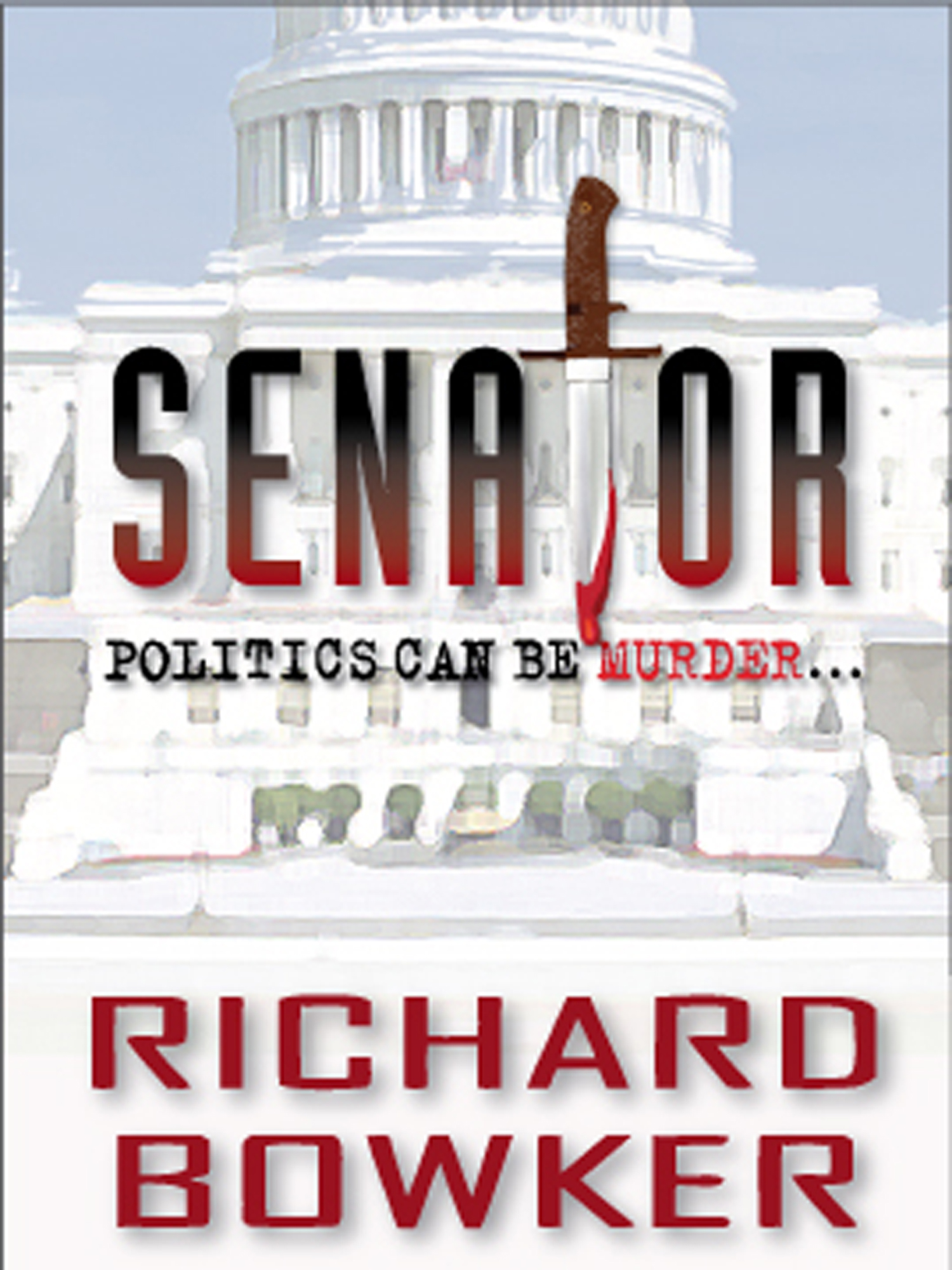
Senator now available from Amazon, Barnes & Noble!

Senator is now available from Amazon and Barnes & Noble for the egregiously low price of $4.99.

Senator is a meditation on family, loyalty, and politics, wrapped up in a complex murder mystery that takes place during a grueling political campaign.

The cover is by the great Jim McManus.

Here is the first chapter.

***********

I am a politician.

I stare at the blank screen, and that is the first thing I can think of to write.

It’s astonishing, really. I have never thought of myself as a politician. I certainly didn’t plan to become one. Even as I campaigned, as I shook hands and kissed babies, gave canned speeches and attended endless fund raisers, it didn’t occur to me that these activities were defining me; I always thought of them as simply a means to an end. Until now. Now, when it has all changed forever.

I’m a politician, and I have just finished the toughest campaign of my life. But it isn’t just the campaign I want to write about in this unfamiliar room, on this intimidating machine. Because I want to be something more than a politician, and that will require an understanding of far more than the mechanics of running for public office. It won’t be easy to find that understanding.

But this is where I have to start.

* * *

The battle had been shaping up ever since Bobby Finn announced in late spring that he was going to run against me, but the public didn’t pay attention until after the primary. Couldn’t blame them; we were both lying low—raising funds, doing research, plotting strategy. Neither of us had opposition in the primary, so we spent our time stockpiling ammunition; better to do that than to use it up early and risk having nothing left for the final struggle.

But even when we started in earnest, people were slow to react to the legendary confrontation. The pros blamed it on the weather. It was a soggy September. Flights were delayed, parades canceled; people at factory entrances and subway stops rushed past us to get out of the perpetual rain. Even indoors the crowds were small and inattentive, worried more about whether their basements were flooding than about who would get their vote for senator. Maybe after the baseball season, the pros thought. Eventually they would have to take an interest.

Eventually they did, but Lord, it wasn’t the way I wanted.

I may as well start with the Friday evening it all began. Just another speech—this one to the Newton Republican Women’s Club. Not an especially important event; I was preaching to the converted, and there were only a couple of local reporters there to take my message to the masses. My mind was far away, but still, it went well; the fine ladies laughed at the jokes and applauded at the proper places and were generally thrilled to be in my presence. A politician is an actor whose performance never ends.

Kevin Feeney was with me. It was his job to grab me away from the fine ladies as soon as possible after my speech. Let them blame him, not me, for not staying longer. Sorry, ladies. I’m a slave to my schedule, and Kevin is its keeper.

He did his job—he always does—and together we headed out into the fog and drizzle. He held an umbrella over the two of us as we stood in the parking lot. “Let me drive you home, Senator,” he said.

“Don’t be silly. What’ll we do with the extra car? Take the night off. Relax.”

“You should have let me drive you here.”

By using my own car, I had provided the evening with a logistical complication that Kevin found unnerving. He was supposed to take care of me, and I wasn’t cooperating. “I managed to get here by myself, Kevin,” I said. “I’m sure I can make it back. Go home. Introduce yourself to Barbara and the kids. I’ll see you in the morning.”

Kevin still didn’t look happy. His wife and children came in a distant second in his loyalties. But I wasn’t going to argue with him; I had more important things to do. I got into my Buick and opened the window. “Go home, Kevin,” I repeated. And then I left him standing forlornly in the parking lot.

I didn’t feel sorry for him; in fact, I didn’t give him another thought. Kevin would always be there. I drove along Commonwealth Avenue, an oldies station on low, the windshield wipers keeping time with Neil Sedaka. Generally I like driving alone—offstage, if only for a while. But tonight the pleasure was soured. I had a problem, and I had to solve it by myself.

At a stoplight I picked up the car phone and dialed a number. After the fourth ring the answering machine clicked on: “Hi, this is Amanda Taylor. I can’t come to the phone right now, but—” The light turned green, and I slammed the receiver down.

Maybe she’s there, I thought. Maybe she just isn’t answering.

But maybe it would be better if she weren’t there. I had a key.

Newton turned into Brighton, and the big old Victorian houses gave way to dorms and apartment buildings, laundromats and convenience stores and bars. I come from Brighton, but not this part; this was academic territory. First Boston College and then Boston University, the campus sprawling in urban disarray on both sides of the road for a mile or two before petering out in the dance clubs and record stores and pizza joints of Kenmore Square. To the right, the light towers above Fenway Park blazed in the darkness; the Red Sox were trying to get the game in despite the fog. Big advance sale, probably. I cursed silently: ten thousand extra cars in the neighborhood.

I made my way through the chaos of Kenmore Square traffic and into the Back Bay, where Commonwealth Avenue became elegant once again. I didn’t pay attention to the stately elms and old brick town houses, though; like everyone else in the Back Bay, I was looking for a place to park.

The best I could find was a “residents only” space on Gloucester Street. I decided that I didn’t have a choice, so I pulled into it. I got out of the car and opened my umbrella. At least the fog would make it less likely that I’d be recognized; I didn’t need a conversation about abortion or someone’s Social Security benefits just now. I started walking.

If she was there, what would I say? It was important not to lose my temper. I didn’t need an argument. Above all, I didn’t need her angry at me. And I did need to know what was going on.

If she wasn’t there, I would have to wait for her. This couldn’t be put off.

The building was on Commonwealth, between Gloucester and Fairfield. Out front a low hedge surrounded a magnolia tree, glistening in the light from an old-fashioned streetlamp. Black wrought-iron bars enclosed the windows in the basement and first floor. In the basement I could see the flicker of a TV through the bars. A woman approached, walking a Doberman. The Doberman paused at the streetlamp; the woman stared at me. Where had she seen that face before? I hurried up the front steps and inside.

I closed the umbrella and glanced around. A row of mailboxes to the right. On the wall next to them, a handwritten notice about a lost cat. On the floor beneath, a few faded sheets advertising a Scientology lecture. The ever-present smell of disinfectant. I had caught a whiff of the same disinfectant once in a bathroom at a fund raiser and found myself becoming aroused. I expect that will happen to me again someday. I rang her bell; no answer. I didn’t want to hang around the lobby. As usual someone had left the inner door unlocked. I opened it and hurried up the stairs.

I never took the elevator. You can avoid being seen if you pass someone on the stairs; it’s impossible in an elevator. I took out my keys and started looking for the one I wanted. By the time I reached the third floor, I had found it. The door was there in front of me. My heart was pounding—from racing up the stairs; from the tension of the coming confrontation. I put the key into the lock, and that’s when I knew that something was wrong.

The wood around the lock had been splintered and gouged, as if someone had attacked it with a hammer. I tried the knob; the door was locked. I turned the key, and the door swung open.

“Amanda?” I called out, closing the door behind me.

No answer. I moved into the living room. My heart sank. The place had been ransacked: books and tapes and compact disks pulled off shelves, papers scattered on the rug, the glass coffee table upended. A spider plant lay on its side, its pot cracked, dirt trailing from it like blood from a wound. “Amanda?” I whispered, a prayer now: She wasn’t here; she was at a friend’s place; she was at the police station. “Amanda?”

On the floor next to the bookshelves I saw several large shards of glass. It took me a moment to recognize them; they were the remains of her crystal ball. “I wish I knew where all this was going to end up,” she had said to me once, smiling wistfully. “I wish I had a crystal ball I could look into and see the future.” So I had bought one for her. A joke. It was the only present I had ever given her. It had never done her much good, and now, shattered into a dozen pieces, it looked more useless than ever.

I wanted to run away. I wanted to rewind the tape and start over again. This wasn’t it. The scene was supposed to be entirely different. She should be standing here, beautiful, frightened, apologetic. She had made a mistake. She could explain everything. Nothing for me to worry about.

But my will wasn’t strong enough to change reality, and I knew that running away would only make things worse. So I forced myself to move through the apartment, pleading with God to make it empty.

Her bedroom seemed untouched. So was the bathroom. The little second bedroom she used for an office was a mess; the desk drawers were all open, and her floppy disks were scattered on the floor like shingles ripped from a roof by a hurricane. But her computer was on, humming softly in the silence. On the screen, white words against a black background. I stepped into the room and read the words:

she had to die she had to die she had to die she had to die she had to die she had to die she had to die she had to die she had to die she had to die she had to die she…

They swam in my vision; they merged and twisted as I stared at them and tried to change their meaning. They are only words, I thought. Words can lie. Or they can just be words, sound without content, a speech to nice Republican ladies.

One last room.

I walked past the words and into the kitchen, and that’s where I found her.

She was sprawled on the black tile floor. Her white shirt was torn and bloody; her eyes were open, and they stared unblinking at the ceiling. They seemed amazed that this was the last thing they would see. I reached down and touched her wrist; she was cold.

I looked around wildly. Was her murderer lying in wait for me as well? But I had searched already; I was alone. I closed her eyes, and then I closed my own, slumping down beside her on the floor. The apartment, the city were silent; the only sounds were the hum of the computer in the next room and the thumping of my heart. She was cold. She was dead.

Amanda.

At that moment I would have given back everything I had accomplished, everything I had achieved, for Amanda to be alive again.

But it wasn’t going to happen. My life ticked inexorably onward, and gradually my grief yielded to the pressures of the moment. After a while I forced myself to open my eyes. I haven’t been to a great many crime scenes in my life, but I’m not unfamiliar with murder. I tried to look at Amanda clinically. No rigor mortis, so she’d been dead less than eight hours. On the floor, the bottom of her arm was purplish from the blood settling there, so lividity had started. That meant she’d been dead at least a couple of hours.

Someone had murdered Amanda in the late afternoon.

And I thought: Exact time of death is going to be important.

Her clothes were intact, except for where she had been stabbed. At least she hadn’t been raped, thank God. There was a bruise on her right forearm—where her attacker had held her? There were cuts on her hands and arms—where she had tried to defend herself?

On the floor near the sink I saw a kitchen knife, its blade dark with dried blood. I recalled using that knife to chop celery one evening.

Oh, Lord, I thought: fingerprints. And then the pressures started to overwhelm me. I had to do something. I was in terrible trouble.

I crawled over to the knife. I took out my handkerchief and wiped the handle—

—and immediately felt stupid and evil. It had been months since I had used the knife. My fingerprints couldn’t possibly have been on it. What mattered more: saving my career or finding out who had murdered Amanda?

But then I realized that finding out who had murdered Amanda was just as likely to end my career as having my fingerprints on the knife. This murder couldn’t be a coincidence.

So what should I do? Run away? Go outside and howl in the fog? I couldn’t think of anything that would help. I don’t deserve any credit for it, but finally I decided to do what civilization had taught me to do. I went into the bedroom and called the police.

I gave the dispatcher the address and told her there had been a murder. She asked for my name, and I gave that to her as well. She didn’t seem surprised. There are plenty of James O’Connors in Boston.

Then, continuing to be responsible, I called Harold White. No answer. I tried Roger Simmons next. He was home. “Hi, Roger. Jim.”

“Jim, how are you? What can I—”

“I’m at a murder scene, Roger. I discovered the body. I just called the police. They haven’t arrived yet.”

“Jesus Christ,” he whispered.

“I need you,” I said. I gave him the address.

“Jim,” he said, “I’m not sure I’m the person you want. You know I haven’t done criminal in—”

“That’s okay. Between the two of us it’ll all come back. And get hold of Harold if you can. He isn’t answering.”

“All right, but—”

I hung up. I didn’t feel like chatting with Roger.

I sat on the edge of the bed and looked around. Lights were on, I noticed: in the living room, here in the bedroom. Did that mean she had been alive into the evening? The time of death matters.

But it had been foggy all day, and the apartment was dark anyway, so—

So what? Amanda was dead.

I looked down at the black comforter on the bed. Black comforter, black rugs, white walls. “Why is everything black and white?” I asked her the first time I saw her apartment. I was nervous; I needed to talk.

“I have no style,” she said. “Decorating’s easier if you stick to black and white.”

I didn’t believe her. She oozed style. “I think it’s because you’re a journalist,” I said. “Journalists like extremes. Good guys and bad guys. Saints and sinners.”

“All right,” she said. “Have it your way.”

“So am I a good guy or a bad guy?” I persisted.

And then she smiled at me. That sensuous, knowing smile, the smile of a prom queen watching the gawky boy try to ask her for a dance. “I don’t know,” she said. “But I intend to find out.”

The words were filled with menace in the remembering. I thought of her white shirt, now stained red. I thought of her white skin turning purple against the black floor. I heard sirens.

I thought of what I had come here to find out. Too late for that now. If it was here, hidden somewhere in the computer or the pile of floppy disks, I was ruined. But I thought: At least I can’t let them find out we were lovers.

We had been careful, I knew. No presents, no mementos. No risks. Was there anything—

Yes. A Polaroid snapshot we had taken with a timer one night after a bottle of wine: the two of us kissing openmouthed on the edge of the bed. Where I was sitting now. We didn’t stop kissing when the flash went off and the camera spat out the photo. Afterward I suggested that we burn it, but she refused. “I need something to remind me of you when you’re not here,” she insisted. Were those words another lie? I hadn’t thought so at the time. She kissed me again, and I didn’t object when she kept the photo.

She had put it in the drawer of her night table, beneath her birth control pills. Could it still be there? Perhaps she had thrown it away in anger or despair; more likely she was saving it for evidence. I opened the drawer. The pills were where I remembered them; I picked them up, and there was the photograph. I stuck it in my pocket without looking at it. And then I held my head in my hands and started to cry for the first time since I was twelve years old.

Music and an excerpt from Summit: The Raindrop Prelude

It’s raining in my part of the world, so it seems like a good idea to post a performance of Chopin’s Raindrop Prelude, which plays a small role in Summit.

Since the Raindrop Prelude isn’t especially difficult to play, YouTube is overrun with amateur performances.  Here is a professional one.  I’ve never heard of Valentina Igoshina, but she’s pretty good, although the production here is a bit over the top, from the dress to the camera work to her soulful expressions at the end.  Oddly, the Russian heroine in Summit is also named Valentina, although she is the psychic, not the pianist.

And here’s your special bonus excerpt.  Khorashev plays a minor but interesting role in Summit; here we see him playing the prelude at Carnegie Hall.  Note the grammatical atrocity perpetrated about two-thirds of the way through the excerpt.

**************

Most of the audience in Carnegie Hall knew the recital would end with a slow piece. That was the way Dmitri Khorashev did things. If you really have an audience with you, you can leave them pianissimo, while they strain to hear every note, desperate not to miss the slightest susurration of your genius. The result may not be the wild, mindless cheering elicited by a thundering cascade of octaves, but in its place you get a deeper response, one that will last long after the final bouquet has been thrown and the piano firmly and dramatically shut.

When Khorashev began the Raindrop Prelude for his third encore, then, the hall was hushed. If you didn’t pay attention now, who knew when the old man would play again?

He didn’t look like a legendary pianist. His posture at the keyboard made piano teachers wince—arms stiffly in front of him, hands parallel to the keys and scarcely moving. His eyes were half-closed, and his expression could as easily have been produced by boredom as ecstasy. He looked, in fact, more like a kulak than an artist; one could imagine him swilling vodka and bellowing a bawdy song in some Ukrainian tavern after bringing in the wheat harvest. But people paid to listen, not to look. And it was well worth listening to Dmitri Khorashev.

Audiences do not think as one, of course, even while the legendary Khorashev plays Chopin.

In the third balcony, a Juilliard student strained to penetrate the mystery of the man’s legato. Was it the pedaling? The fingering? It all sounded so easy—until you tried to do it yourself.

In the fifth row of the orchestra, another legendary pianist, who had played the prelude for over half a century, was convinced that Khorashev’s tempo was far too slow, his phrasing syrupy—that Khorashev was, in fact, a show-off, who aimed more to please the masses than to understand the music. This conviction would not, however, prevent the legendary pianist from leaping to his feet at the conclusion of the piece and joining in the ovation. It would not do to appear jealous.

The critic from the Times sat in his aisle seat composing his lead. “Recitals by the emigré pianist Dmitri Khorashev are rare events—far too rare, judging by his stupendous performance in Carnegie Hall yesterday….”

Near the rear of the orchestra, a white-haired man with a deeply lined face sat with his head bent forward and his eyes closed. Was he listening intently to the music, or was he asleep? The people around him were afraid he would start snoring, and that fear was enough to ruin their enjoyment of the piece. He was wearing stained brown pants and an old blue suit coat that was too short for him; his white shirt was dingy and frayed; he grasped a cane in his large left hand. He should have been feeding pigeons in Central Park instead of attending a piano recital, the people around him thought. And if he had to be here, at least he could stay awake.

Two rows behind him, at the very back of the orchestra, a dark-haired man wearing a gray suit stared intently at the sleeping—or listening—old man. If there was music being played, the dark-haired man did not appear to notice it.

And that was the dark-haired man’s loss. The piece was not long, not difficult, but it managed to encompass both serene beauty—the beauty of a soft spring shower, perhaps—and grim menace—the menace of an underwater beast, perhaps, reaching to the surface to destroy the beauty. And at the end it all faded, the incessant pulse of eighth notes slowed and stopped, as if the music no longer had the strength to overcome silence.

In Khorashev’s performance, the silence lengthened as he allowed the visions a chance to disappear into the mist. And then he slowly raised his hands from the keyboard, his eyes opened wide, and the recital was over. Time for the final applause.

It rained down on him from the balconies, it washed up at him from the orchestra. He stood and bowed and beamed, and let the applause soak in. The audience too was standing, unwilling to leave, unwilling to let him leave.

The critic from the Times was first down the aisle. The white-haired man was a close second; he stumbled past the people in his row, then limped through the swinging doors into the lobby.

The dark-haired man was right behind him. His eyes were narrow and alert; he looked like a dog on the scent. He caught up with the old man in the cream- and rust-colored art deco lobby and laid a hand on his arm. The old man stopped, startled, and stared at him. “Excuse me, Mr. Fulton,” the younger man said. “I’d like to talk with you for just a few moments, if you don’t mind.”

The old man shook his head. “Fulton?” he rasped. “You’ve made a mistake. My name isn’t Fulton.”

“Please, Mr. Fulton,” the other man persisted. “You’re a difficult man to get hold of, and this is rather important.”

The old man seemed to become agitated. “Absurd,” he muttered. “Mistaken identity. Fulton, indeed.” He started to walk away.

The dark-haired man then reached out a hand as if to grab him. Instantly the old man’s cane came up and whacked him solidly on the arm. Then the old man rushed out of the lobby into the confusion of Fifty-seventh Street.

The other man pursued him for a moment, but stopped as he saw him dive into a cab and head off past the Russian Tea Room. He noted that the old man’s limp had disappeared in his eagerness to escape, and that seemed to be enough for him. He rubbed his arm where the old man’s cane had hit it, and he smiled.

Rules for Writing — Rule 7: Aim for the right level of believability

Continuing our intermittent and randomly numbered series . . .

Believability in fiction is overrated.  P. G. Wodehouse novels aren’t believable.  Most of Shakespeare and Dickens isn’t believable.  Who cares?

The level of believability you want depends on what you’re trying to accomplish. If you’re writing a gritty police procedural aimed at readers who consume lots of police procedurals, you’d better make sure your police procedures are believable.  If you’re writing chick lit that involves a scene at a police station, your readers aren’t going to care very much about the details.

Accuracy is neither necessary nor sufficient for believability.  I recall John le Carré describing how he got the description wrong of the British embassy in some African country — probably inThe Constant Gardener.  Who cares, as long as the description he came up with was believable?  On the other hand, in early drafts of my fiction I’ve written descriptions and dialog that my writing group has found unbelievable — even though I took the stuff from real life.

You need to think about believability for characterization, plot, and setting.  In a realistic novel, readers will put up with outlandish plots, but the characters and setting had better ring true.  In a mystery, the plot doesn’t have to be especially believable, but the mystery and its solution had better work.

I find that my own reactions to believability are hard to predict.  In reading 1Q84, I was perfectly happy with a plot that involved all kinds of weirdness, including a parallel universe with an alternate history and two moons (hey, I’ve written a parallel universe story myself — who hasn’t!).  I was annoyed by the idea that Japan could have a short fiction contest that attracted national attention, but I gave that plot point a pass because I don’t know anything about Japan.  I was really peeved, though, by the main character’s reaction to seeing two moons in the sky.  He keeps wondering if this is a hallucination.  He considers asking other people if they see what he’s seeing, but he’s afraid they’ll think he’s crazy.  Dammit, I kept thinking whenever this came up: This character’s not stupid.  Can’t he just read a newspaper, where they give phases of the moon as part of the weather report?  Can’t he go to the library and look in an encyclopedia?   I also wondered about gravitation and tides and such, but I’m not scientifically literate enough to worry too much about that.  Anyway, this one issue periodically marred my enjoyment of the novel.

There are always place is my novels where I find it hard to maintain complete believability. People need to do things that aren’t quite in character; I  need to set up situations that may strain credulity.  The writing craft involves recognizing these problems when they come up; if you can’t avoid them, you need to be able to paper over the crack so that no one notices.

Replica is a complex thriller with a complex technological premise.  You can get away with more hand-waving in a thriller, trusting that the reader doesn’t want to be slowed down by details.  Here are a couple of believability problems that bedeviled me when writing this novel:

  • In the world of Replica, an android is a human clone with a robotic brain inserted.  How does that work, exactly?  You can’t just hollow out the clone’s skull and insert a hard drive.  Or can you?
  • Frightened by an assassination attempt, the president wants to create an android replica of himself to replace him at public appearances.  OK, but how do you create an adult clone of someone?  You can’t just speed up the clone’s development so that you get the equivalent of a 50-year-old man in a matter of months.  Or can you?

I didn’t really solve these problems, but no one complained.  Maybe no one noticed.  Maybe now they will.

The Whirligig of Time brings Dylan the Presidential Medal of Freedom

Am I the only one who is a little creeped out by this?  Dylan himself doesn’t looks particularly happy:

Here he is in 1964 singing “With God on Our Side”:

Didn’t seem too happy about America back then.  Here he is croaking “The Times They Are A’Changin'” at the White House:

Yes, the times sure have changed.

More on Kitcher and Scientism

Over at Why Evolution Is True, Philip Kitcher defends his essay (which I talked about here) against the criticisms it received from people like Jerry Coyne.  One of the criticisms is that he’s attacking a straw man — no one would claim that the study of history (let’s say) isn’t scientific in some meaningful way.  He claims there are such people.  I haven’t read the ones he mentions, so I can’t say.  He also reiterates his belief that the arts make a contribution to knowledge:

Knowledge is sometimes advanced not by arriving at some new true statement, but by reframing concepts.   As my essay argues, particular kinds of history and anthropology are very good at generating this sort of cognitive advance (besides the people I mention, think of Levi-Strauss, Clifford Geertz, Natalie Zemon Davis, and Carlo Ginzburg). The same can be said for poetry, drama, fiction, visual art, and music. The great artists teach us to see the world differently, to divide it up in new ways.  That sometimes has profound consequences for our ways of living (witness my opening example) – and it sometimes affects the ways in which the sciences are practiced.

His “opening example” is about Britten’s War Requiem and our understanding of the bombing of Dresden.  But, honestly, I still don’t get it, and neither does Coyne, although he is more interested in religion and how it relates to charges of scientism (not that Kitcher claims religion to be a source of truth).  I suppose you could say we understand something about the horrors of war from reading the poems of Wilfred Owen, and we feel this understanding more deeply because his poems are so powerful.  Maybe Catch-22 helped us to see war differently, to reframe the concept of what it means to be a soldier.  Maybe this has consequences for our ways of living.  But, you know, big deal.  We’ve known about war since the Iliad.  What matters is the  aesthetic experience itself, which to me just isn’t particularly related to understanding or truth or knowledge.  What have I learned from listening to Beethoven’s Ninth?  Beats me.  That doesn’t mean it isn’t worth listening to Beethoven’s Ninth.

I think Kitcher needs to write another essay so I can be convinced otherwise.