Joe Hurley explains why he became a priest

In this scene from Pontiff, Father Joe Hurley explains to Lieutenant Kathleen Morelli, a lapsed and very suspicious Catholic, why he became a priest. They have teamed up to try to track down a possible threat to the Pope when he visits Boston, and are driving back from interviewing someone who might have information about the threat.

This is something of an antidote to the theology I talked about in this post.

**********************

Morelli glanced over at him. She was beginning to think she had misjudged him, somehow. Priests weren’t all alike, she supposed, but still… “So what’s your story, Father?” she asked. “How did you end up—you know—”

“Trapped in Holy Orders?” Hurley suggested. “Doing a thirteenth-century job in the twenty-first century? It’s strange how often I’m called upon to defend my career choice.” He paused, as if considering how much to give back in return for her life story. “Well, to begin with,” he said, “I was raised in what I’d call a relaxed Catholic family. Nothing like yours—which probably says a lot about how to bring up your kids if you want them to be religious. Anyway, we went to Mass on Sundays, but if we skipped it was no big deal, and we didn’t bother with much else. I was mostly a jock growing up—football meant a lot more to me than God. I was a star in high school, got an athletic scholarship to Boston College, and then things sort of went downhill. I had some injuries, and maybe I wasn’t quite as good as I thought I was, so I spent most of my varsity career as third-string quarterback, getting ready for an opportunity that never actually came.

“But looking back, that was all to the good. Gave me a chance to think, to focus on the big picture. And the big picture, much to my surprise, didn’t include football. I had pretty much decided in my senior year that I wanted to enter the seminary, and then I just had to put up with people—including my family—trying to talk me out of it.”

“But why?” Morelli persisted. “Why become a priest? I just don’t get why anyone would want to do that nowadays.”

“Exactly what my family and friends said—and even quite a few of the priests I talked to. I felt like a freak. Perfect strangers would hear about my decision and feel compelled to come up to me and tell me I was making a big mistake. And this was at a Catholic college, right? So I’m a weak person and eventually I caved in. I graduated and I went to work on Wall Street for a few years—and, you know, I wasn’t bad at it. I made a pot of money and my bosses told me I had a great future and I thought about applying to business school. I left religion for Sundays. All my friends breathed easier, as if they’d saved me from becoming a Moonie.

“And it didn’t take. I just couldn’t get the priesthood out of my mind. Now you can keep asking me why, just like my family and friends, and I could give you answers that have to do with helping people and making a difference, but they wouldn’t be the real story, because my reasons are beyond logic, beyond rational explanation. They call it a vocation—a calling. God called me. I have no idea why He called me instead of my roommate or the middle linebacker on the football team or that kid in Economics class who actually looked like a priest; but He did. I’m as sure of it as I’m sure I’m sitting in this car. So eventually I gave up trying to please everyone else and trying to kid myself, and I did what I knew I had to do. And here I am.”

Morelli took the Brighton exit off the Turnpike, and she made her way toward Hurley’s apartment. What about sex? she wanted to ask him—wasn’t that all anyone really wanted to know about a priest?—but she didn’t. He still made her uncomfortable—even more so now, after she had heard his story, and she knew he wasn’t some mama’s boy who had been saying the rosary since he was three and never had a thought of living in the real world. He wasn’t in the priesthood, apparently, to hide from life, or because he had some big problem to work out. He was just like everyone else—except he had chosen to be different.

She decided to ask about something else. “So, with this calling of yours—does that mean you agree with all the Church’s teachings? I’m really not trying to be obnoxious about this, Father. I just don’t know how it works. I’m only used to one way of looking at things—my father’s way.”

“First,” Hurley said, “if you don’t call me Joe, I’m going to jump out of the car.”

“Okay. Joe.”

“Thank you. Second, you don’t check your brain or your conscience when you enter the seminary. At least, I didn’t. This may sound stupid—all right, I know it’ll sound stupid—but I think of it like being on a football team. You may not agree with the play the coach is calling, but he’s the coach, and you know that the only way you can win is through discipline and sticking together. If you worry about why he’s doing what he’s doing, you’re going to mess up. His job is to call the plays, and your job is to execute them.”

“But football is about winning,” she pointed out. “Religion isn’t about winning, it’s about the truth.”

Hurley shook his head. “Religion isn’t about anything,” he responded. “It is. Religion is the sport, the gridiron, the reason you’re out there wearing pads and helmets and cleats and having three-hundred-pound men hurling you to the ground. It isn’t about whether the coach calls a draw play when you think you should be running a play action. It isn’t about punting instead of going for it on fourth down. Those are just… details. It’s a mistake to get lost in the details.”

“That is totally sick, Joe. Those ‘details’ ruin people’s lives, if they can’t get access to birth control or a legal abortion.”

“What I mean is, yeah, they’re important, but we shouldn’t confuse them with the game—with religion itself, I mean. Um, I think my metaphor has gotten out of control.”

Morelli looked over at him, and he was grinning sheepishly, and she found herself grinning back, something she never expected to be doing when arguing religion with a priest.

She parked in a handicapped space near Hurley’s apartment building. Time to call it a night.

“So, what’s next?” he asked.

“Well, I’d say we still need to track down Bandini, if we can.”

“How—the phone number?”

“That’s a start. We can trace it. I’ll let you know what we come up with.”

“Thanks. I appreciate it,” Hurley said. He reached over and touched her arm. “And I appreciate your telling me about yourself, Kathleen. Seriously. I hope you don’t consider me the enemy. I don’t want to be your enemy.”

Morelli could feel herself blushing. Her Jeep seemed far too small all of a sudden. Hurley seemed to realize his mistake, because he retreated immediately, smiling nervously, in perhaps his own version of a blush.

“Of course you’re not my enemy,” she said. “But that doesn’t mean the Church doesn’t have a lot to answer for. Anyway, I hate football.”

“Maybe that’s because you haven’t played enough of it.” He opened his door. “Goodnight, Kathleen.”

“Good night, Joe.”

Assumptions

My birthday is August 15, which happens to be the Feast of the Assumption of the Blessed Virgin Mary — a holy day of obligation in the Catholic church.  So, the two days of the year when I got presents — Christmas and my birthday — I also had to go to church.  It was a tradeoff I was willing to make — not that I had any choice.

Of course, when you’re young you just accept your religious beliefs.  I remember learning the distinction between the Ascension and the Assumption.  Jesus ascended to heaven of His own power; Mary was assumed into heaven by God.  Got it.

I can also recall being impressed that the proclamation of the Assumption as a dogma of the Church was an example of the pope (in this case, Pius XII) speaking ex cathedra — that is, infallibly.  Here is the declaration:

By the authority of our Lord Jesus Christ, of the Blessed Apostles Peter and Paul, and by our own authority, we pronounce, declare, and define it to be a divinely revealed dogma: that the Immaculate Mother of God, the ever Virgin Mary, having completed the course of her earthly life, was assumed body and soul into heavenly glory.

Most Protestants don’t believe in the Assumption because it has no Biblical basis.  Actually, it has no basis in historical fact whatsoever. The Catholic Encyclopedia says the first mention of the corporeal assumption of Mary into heaven showed up in treatise in the fourth or fifth century A.D.  So how does it become an infallibly pronounced belief of the universal Church?

This is a prime example of the Church considering its teaching authority to be as important a source of belief as the Bible.  People have believed in the Assumption down through the ages, and so finally the Pope asserted that it is true, and that faithful Catholics must believe that it is true.

My very fine commenter Stan asked me if I think religions are insane.  Of course not.  But they are fundamentally irrational, and this is an example.  Theologians wouldn’t see it that way, I suppose; they have scoured the Bible and the writings of the Church fathers to come up with texts that could be construed to support the dogma.  But the dogma is based purely on belief and tradition — not reason, not evidence.  Here, from Wikipedia, is the kind of “reasoning” the Pope uses:

Explaining these words of Sacred Scripture: “Who is this that comes up from the desert, flowing with delights, leaning upon her beloved?” [Song of Songs 8:5] and applying them in a kind of accommodated sense to the Blessed Virgin, [Saint Bonaventure] reasons thus: “From this we can see that she is there bodily…her blessedness would not have been complete unless she were there as a person. The soul is not a person, but the soul, joined to the body, is a person. It is manifest that she is there in soul and in body. Otherwise she would not possess her complete beatitude. …

Huh?  Atheists are often chided because they take on fundamentalists rather than sophisticated theologians with their nuanced beliefs.  Catholic theologians aren’t stupid; Pope Pius XII wasn’t stupid.  But anytime I dip into Catholic theology I find stuff like this, which seems to have nothing to do with any reality that I understand.

Rule 37: Use names that don’t confuse your reader

You’ll notice that I have skipped ahead from Rule 0.  Like NCIS Special Agent Gibbs, I won’t dole these rules out in numerical order. The numbering should reflect the rule’s overall importance, I guess.

I was reminded of this rule when I was rereading Senator and I noticed that I had one character named Danny and another character named Denny.  Why did I do that?  Danny is a major character — the Senator’s brother; Denny is a staffer who appears in a couple of minor scenes.  The chance that the reader will be confused is slim; but still, that’s the sort of thing a writer should avoid.

You don’t want to risk confusion with last names either.  A rule of thumb is to avoid having two characters whose last name starts with the same letter: Maloney and Mackey, for example.  That’s hard to manage in a novel with a large cast, but you can vary the number of syllables and the vowel sounds: Maloney and Meade, let’s say.

Another subrule is to be careful if you refer to a character in a lot of different ways: Katherine and Kate and Mrs. O’Connor, for example.  You sometimes need to do that in dialog or when you’re using multiple points of view, but it can be troublesome for the reader.  Think of those Russian novels where a character is Vladimir Vladimirovich in one scene and Volodya in the next; this problem crops up in Summit.

A couple of related rules, which don’t merit a number:

Don’t end a character’s name with an “s” — this gets awkward if you have to use the possessive.  Senator O’Connor’s ex-law partner is named Roger Simmons.  Again, why did I do that?  Now I have to write a phrase like “Simmons’s wife,” which sounds awful, or recast the sentence to avoid the possessive.  In this case, it’s a first person narrative, so the senator always refers to him as “Roger,” which mitigates the damage.

Don’t use an ethnic name unless the ethnic identity is part of the characterization. The reader is going to expect that. The police lieutenant in Pontiff is named Kathleen Morelli.  The fact that she has an Irish first name and an Italian last name has some significance to who she is, and I have to draw that out at some point in the novel.  Senator Jim O’Connor’s Irishness is a part of his identity, although I think the publisher made too much of it with the bleeding shamrock on the book’s cover.

A big problem with names (at least for me) is that a character’s name quickly become deeply entwined in his or her characterization, and if I finally notice a problem — like the final “s” in Roger’s name — it’s hard for me to do anything about it.  He just feels too much like a “Simmons” to me.  Which is odd, because “Roger Simmons” is an utterly bland name.  It’s not like Pecksniff or Gradgrind or a hundred others out of Dickens.  Of course, Roger Simmons is an utterly bland character compared to anyone in a Dickens novel.  But he’s my character, and that’s his name.

Pulitzer for The Swerve

The Swerve has won the 2012 Pulitzer Prize for Nonfiction. The citation says it’s “a provocative book arguing that an obscure work of philosophy, discovered nearly 600 years ago, changed the course of history by anticipating the science and sensibilities of today.”

I think that overstates the book’s argument; it makes the case that the rediscovery of De Rerum Natura was emblematic of and contributed to the changes that were happening, not that it was solely responsible for the changes. Furthermore, the book is anything but provocative. The Renaissance was about rediscovering works by the ancient Greeks and Romans, and these rediscoveries helped usher in the modern world.  I learned that in grade school.  The Swerve just provides an entertaining example of how this happened.  Apparently that was enough.

At any rate, in my opinion The Swerve wasn’t even the best nonfiction book of 2011 written by a professor at the World’s Greatest University.  I was far more impressed with, and learned far more from, Steven Pinker’s The Better Angels of Our Nature, which I read just before starting my blogging career.

So how do you get a Pulitzer?  The description of the process on the Pulitzer site is vague to the point of incomprehensibility.  It says: “While the journalism process goes forward, shipments of books totaling some 1,000 titles are being sent to five letters juries for their judging …”  Apparently anyone with a book and $50 can apply.  Here is the form.  It’s easier than applying to college, and about as cheap.

But what do the judges do with all the submissions?  They obviously can’t read more than a fraction of them.  Was Pinker’s book at a disadvantage because it was 800+ pages, and the judges didn’t have time to get through it all?  Or was its somewhat controversial thesis a problem? The Swerve was short and entertaining and sufficiently highbrow.  Maybe that was enough.

I wonder when the Pulitzers will start accepting ebooks….

Rule 0: Write

In my post on rules for writing, I mentioned that Rule 0 is to, you know, write. Is that clear enough?

Let’s begin with the obvious: writing fiction is, generally speaking, a stupid waste of time.  (My rules, by the way, have to do only with writing fiction — if you’re interested in writing experimental screenplays or avant garde poetry or opera libretti, you’re on your own.)   Samuel Johnson said “No man but a blockhead ever wrote, except for money.”  That makes most of us blockheads.  The return on investment for writing novels is infinitesimal for almost everyone; you’re better off spending those hours learning how to blow glass or becoming a yoga instructor.  What’s the matter with you, anyway?

So, if you want to get into this writing racket for the money and fame, you’re not worth talking to.  The ones who are worth talking to are the ones who can’t not write. This is what they do; this is who they are.  For them, Rule 0 is unnecessary.  Of course they write!

But there is a class of people who aren’t quite there.  They think of themselves are writers; they want to write; glass-blowing and yoga hold no interest for them.  But the novel never quite gets started.  Or it gets started, and then they come down with the flu, or they can’t figure out what happens in the next chapter, or their girlfriend hates it, and their momentum and inspiration dissipate.  And each failure makes it harder to try again.

Rule 0 may help those folks.  Here are its subrules:

Write every day.  Or thereabouts.  Don’t write when the inspiration strikes, or when you have a couple of spare hours before American Idol comes on, or when the guilt about not writing becomes too strong.  (Inspiration, by the way, is highly overrated. Faulkner said: “I don’t know anything about inspiration because I don’t know what inspiration is; I’ve heard about it, but I never saw it.”)

Write at the same time every day. Or thereabouts.  Think of writing like exercise.  There’s never a good time to exercise.  There’s never a good time to write.  But if it’s seven in the morning or eight at night, and that’s when you’re supposed to write, then you’re more likely to sit down and write.

Don’t exhaust your inspiration. Graham Greene famously wrote only 500 words a day at one point in a career, even stopping in the middle of the scene if he had reached his quota. I don’t know if I could do that, but I do know that it’s helpful if I stop at a point where I can easily pick up the thread the next time I sit down to write.

Begin by revising yesterday’s work. That’s another way of picking up the thread.  And revising what you write is another rule!

Keep writing something until you finish it. I can’t make this a hard-and-fast subrule; I have certainly abandoned my share of writing projects, and we can talk about why.  But some folks never finish anything — or they never really start anything; they take notes and make sketches and lose themselves in their imagination.  Don’t do that.  Finishing a novel is an achievement, even if it’s not publishable; not finishing is at best a learning experience — but what you may think you have learned is that you’re not a writer.  And that’s the wrong lesson.

Note that, at 500 words a day (a couple of pages), an average-length 80,000-word novel would take about 160 days to finish — six months or so if you take weekends off. Not that long!

Stay tuned for more exciting rules….

Music from Summit: Les Adieux

This post reminded me to provide some of the music that gets talked about in Summit.

Here is Claudio Arrau play Beethoven’s Les Adieux sonata.  I saw Arrau at Symphony Hall in Boston, probably when I was writing Summit.  He must have been over 80, and he walked so slowly to the piano from the wings that I though he might not make it.  His tempi were fairly slow as well, as I recall, but I wasn’t bothered by it — it gave you more time to savor the music. YouTube doesn’t give any provenance for this clip, but it must have been hot, because he basically turns into a puddle by the end of the piece.

For an encore, here’s Evgeny Kissin playing Liebestraume No. 3, which the two pianists also talked about in the excerpt.  (I’d find it distracting to have a bouquet sitting on the piano, as Kissin does here.)

Red Sox Home Opener (with photos)

Great weather!  Great seats!  Great excitement, as the Red Sox have all New England a-twitter after a wonderful start in their first six road games!

OK, that last sentence was a lie, but the first two weren’t.

Getting There

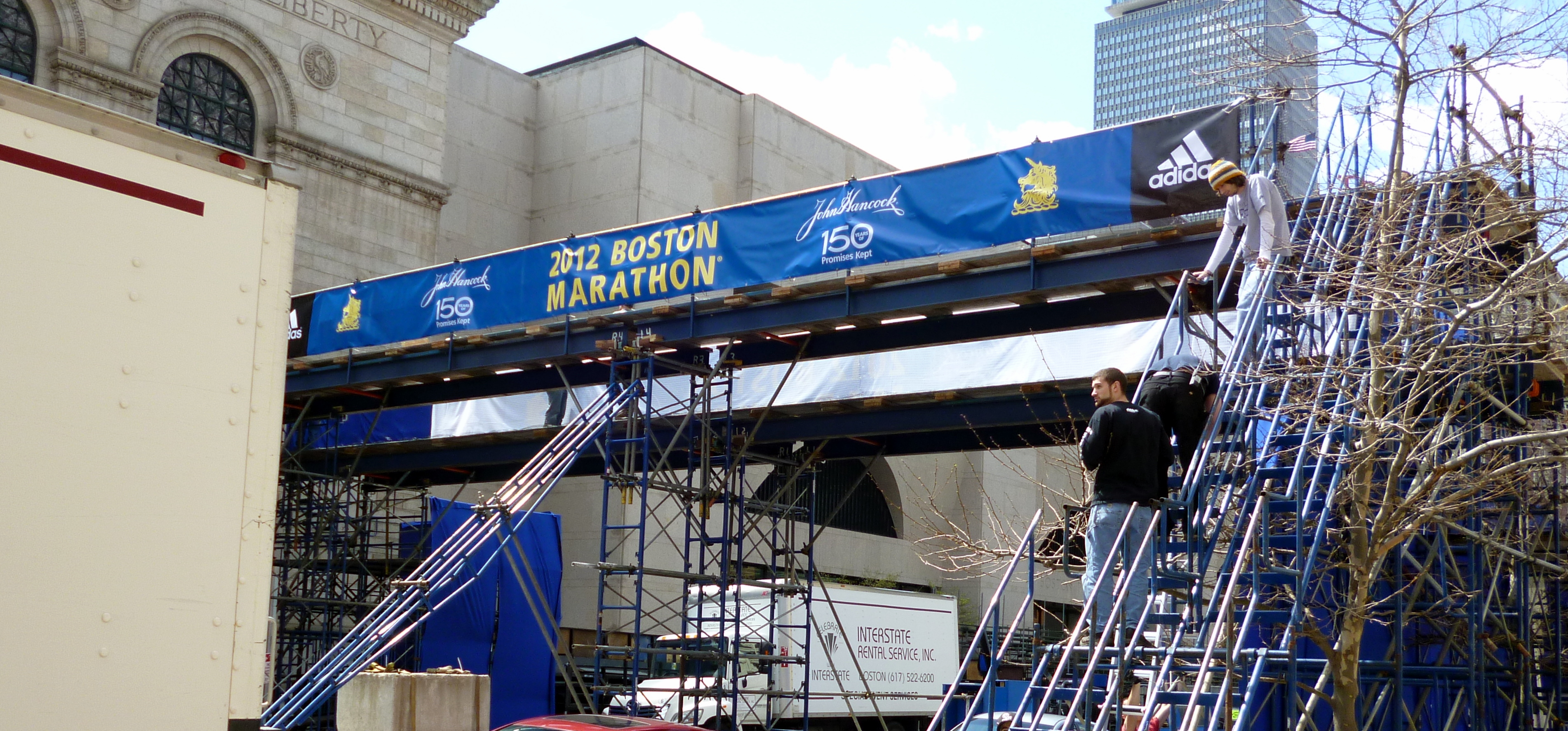
Had to park far away.  They seemed to be preparing for a running competition of some sort. Lots of fit-looking folks in track suits wandering around Copley Squere.

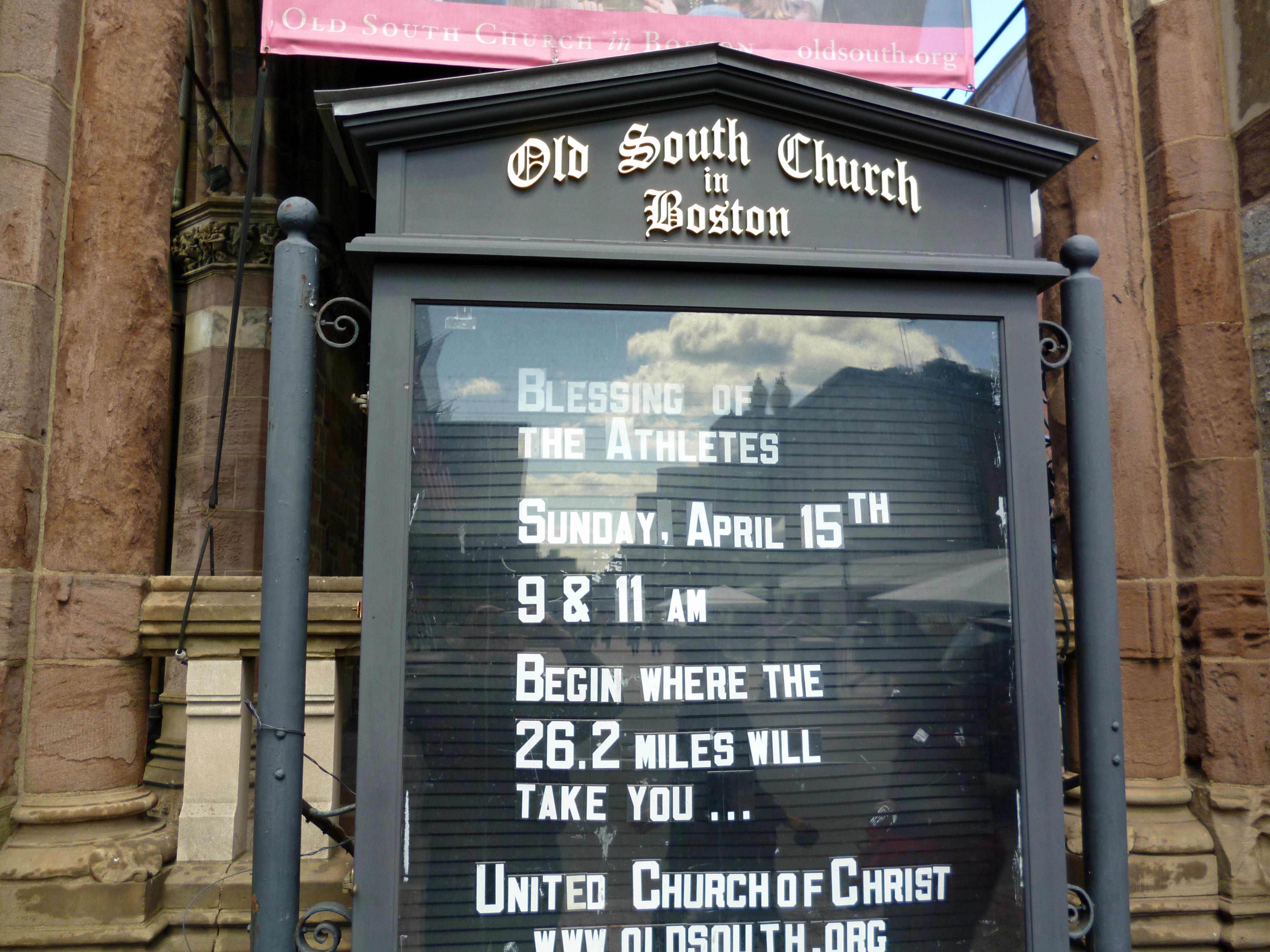
They were even preparing to pray for the runners:

Old South Church bills itself as the “church of the finish line.”

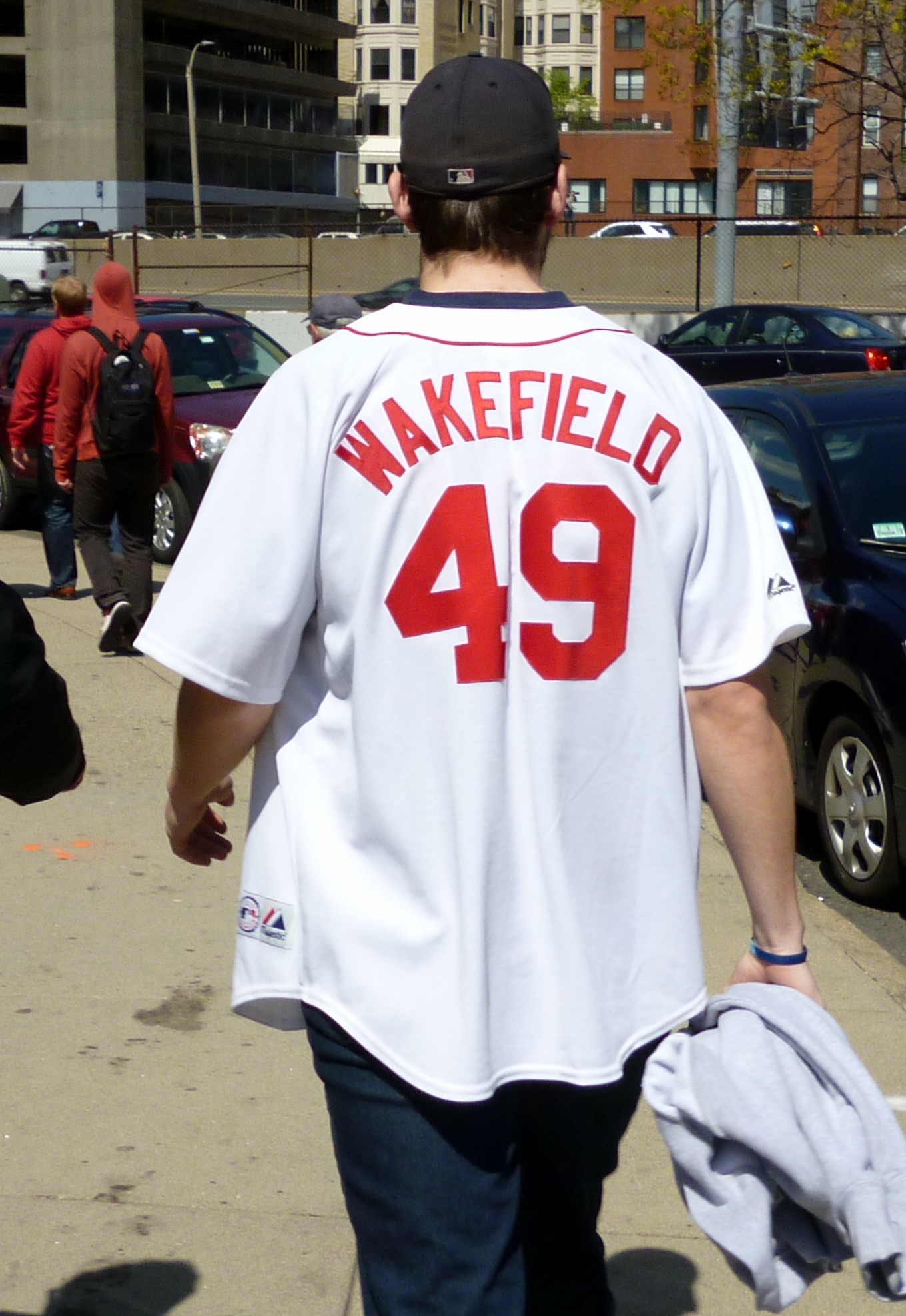
Here’s a guy celebrating a pitcher of yesteryear:

Here’s the Muddy River, which looks a lot better in a photograph:

Outside the Park

The 100-year anniversary celebration is next Friday:

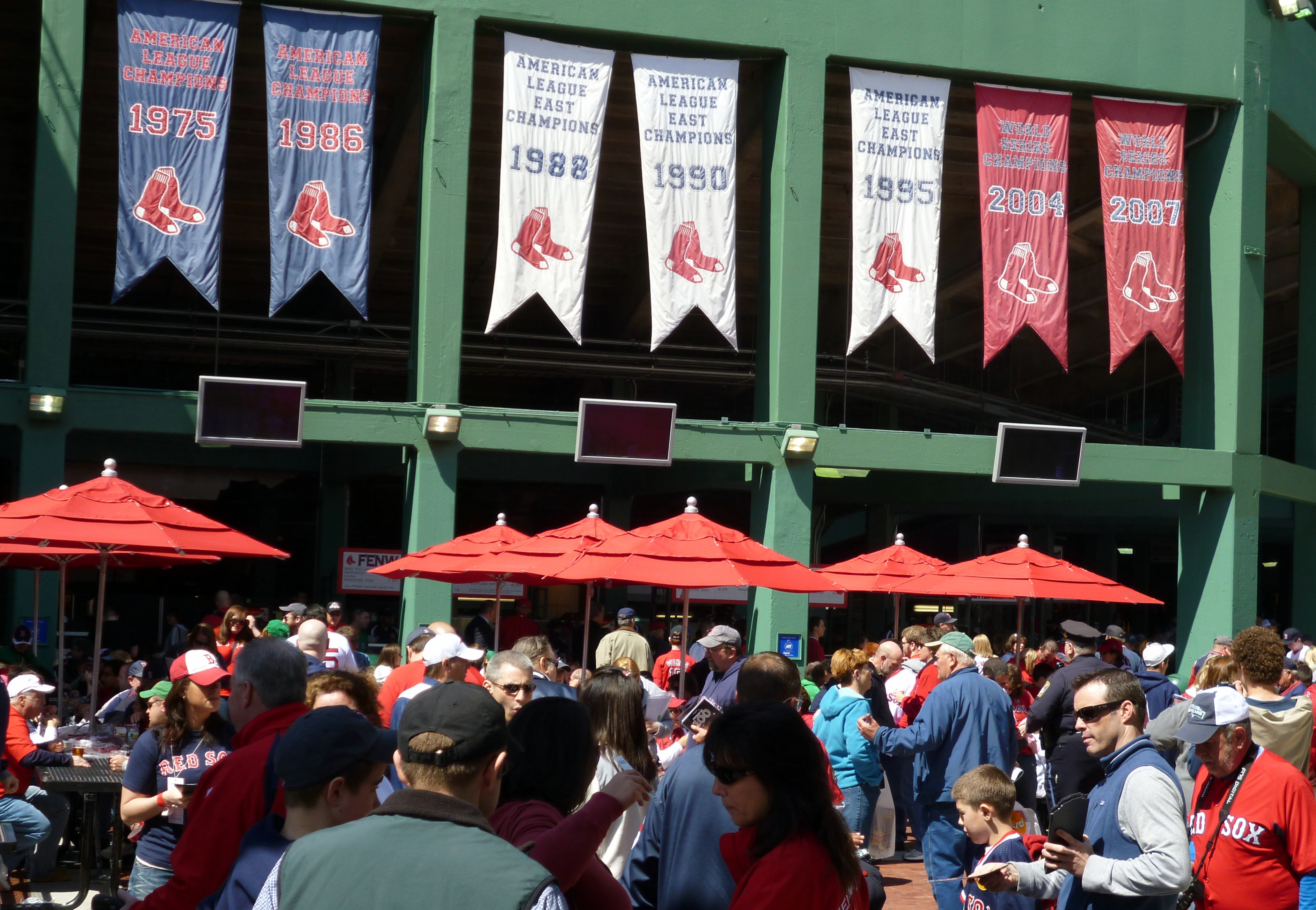
Where is our third-place banner from 2011?

Buddy?  Who’s Buddy?  Even the lady holding the sign doesn’t seem sure:

Of course, it’s the immortal Buddy Roemer.

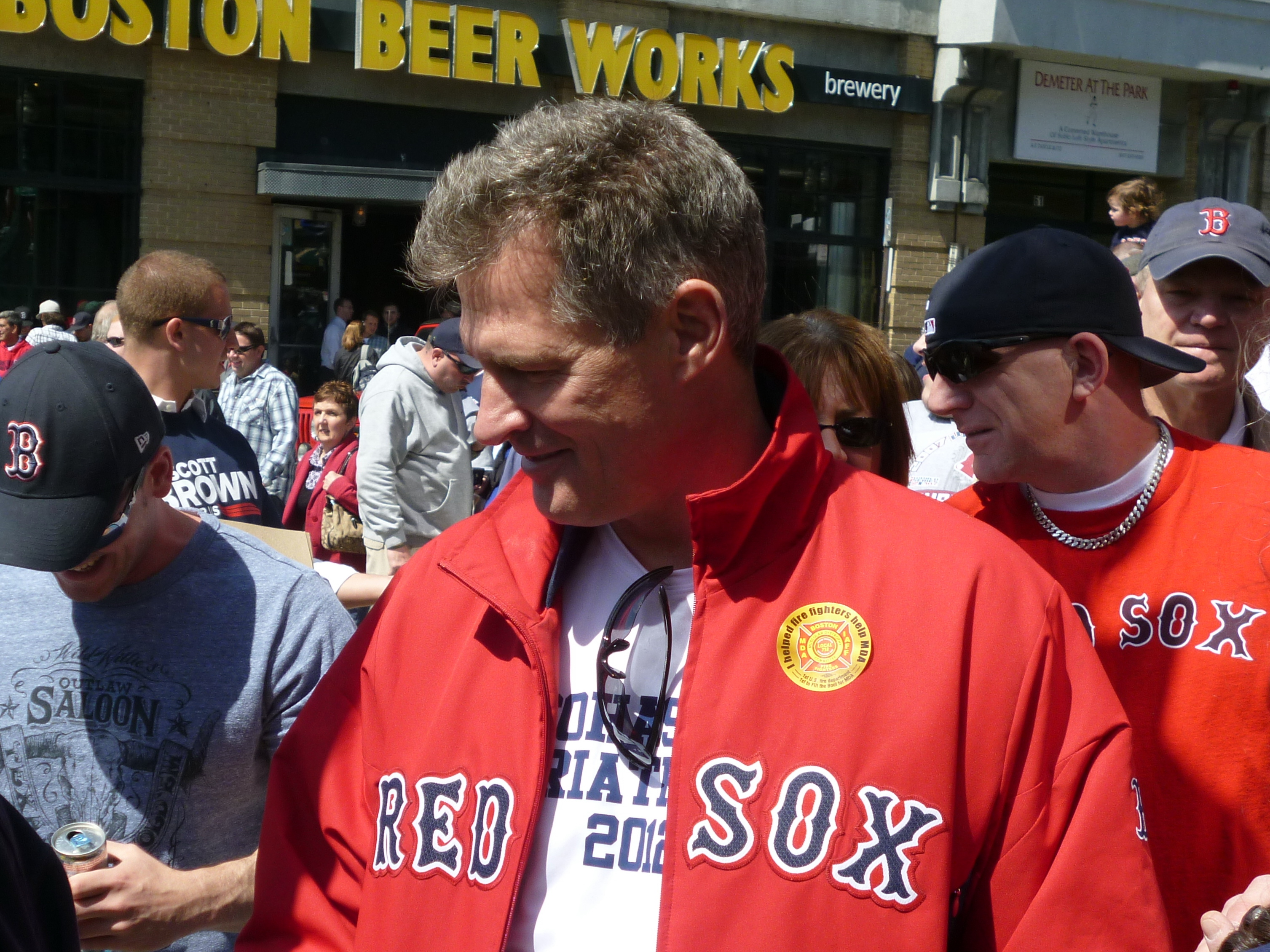
Here is the handsome, conservative junior senator from Massachusetts, Scott Brown:

He is locked in a tough reelection fight against a popular Democratic opponent.  Hey, there might be a novel in that!

Inside the Park

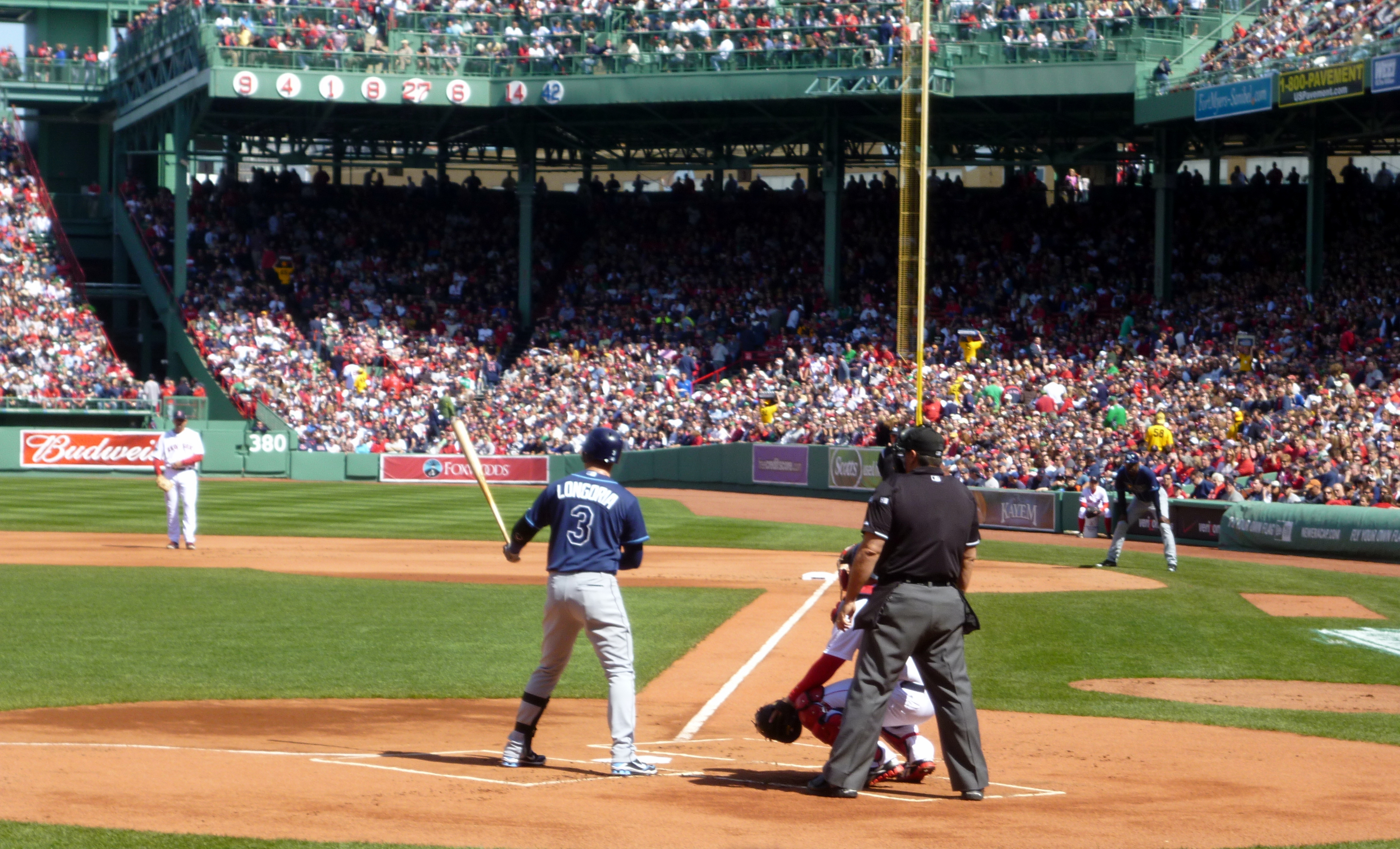
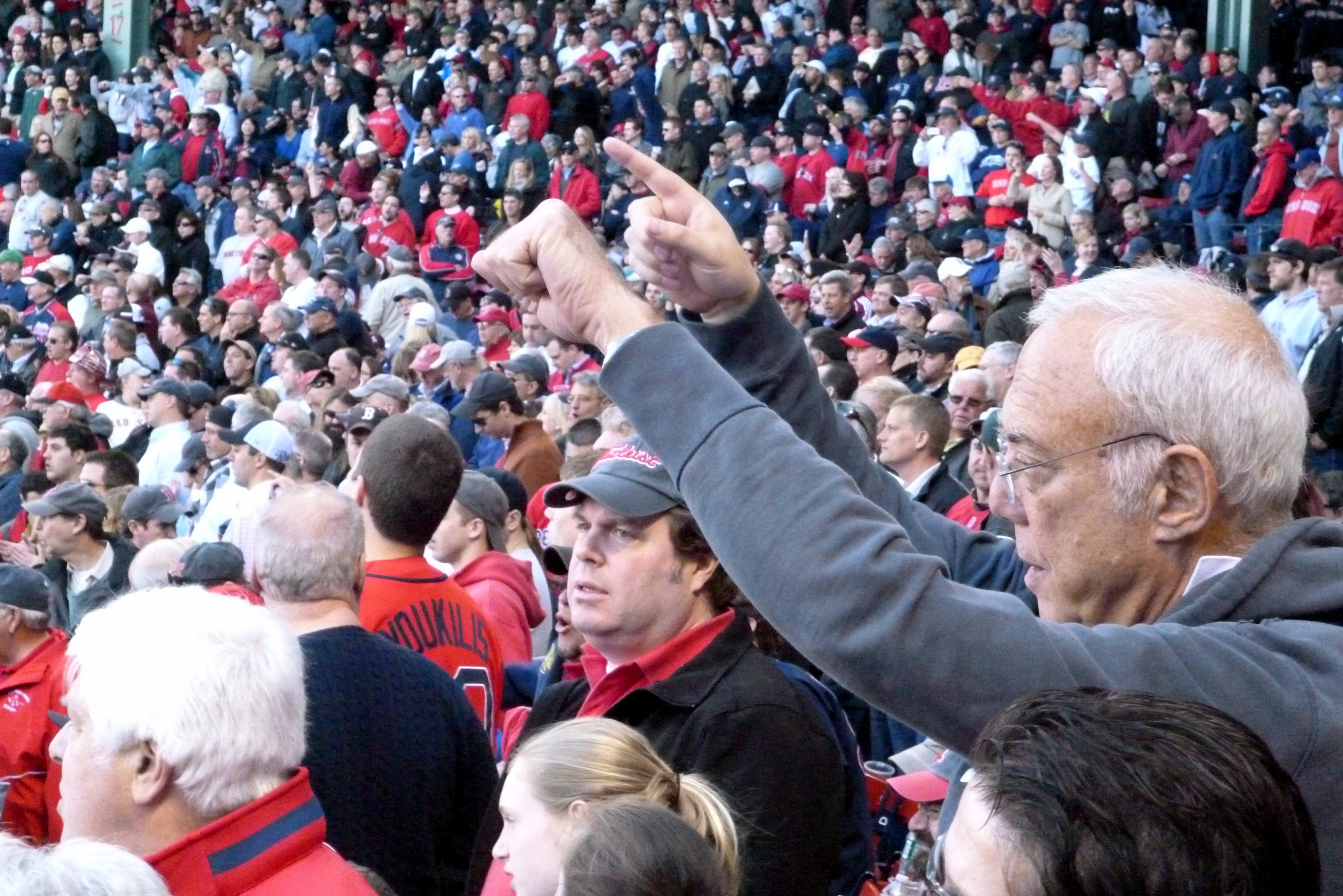
The seats were ten rows back — the fancy seats where the vendors actually bring beer to you.  Here’s the view:

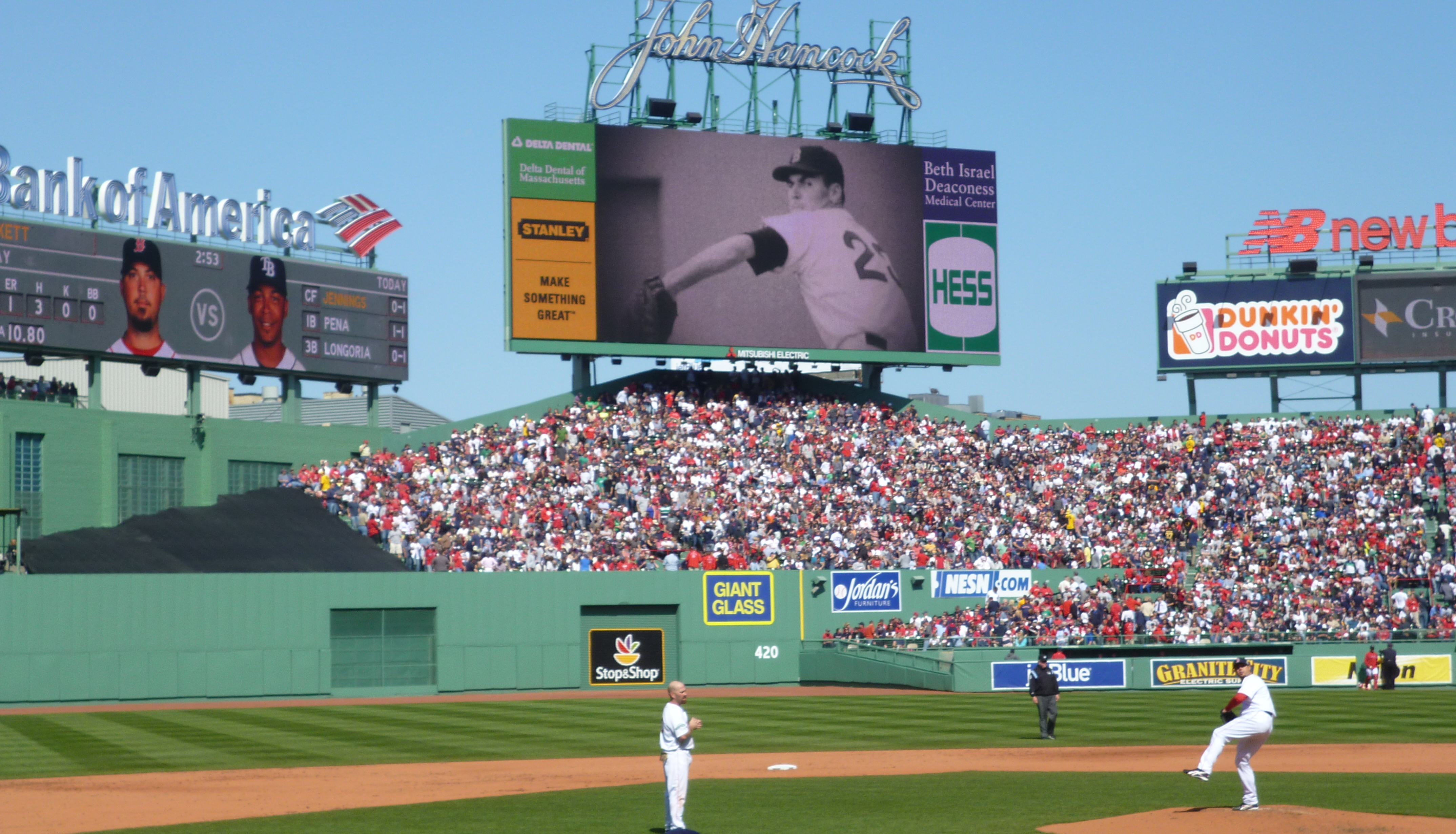
Fenway now has three Jumbotrons; each displays player statistics with a faux Fenway scoreboard background. On the John Hancock scoreboard, we’re looking at a video of the immortal Dave Morehead.

Here’s the aftermath of the injury to Ellsbury.  It didn’t look that bad from far behind home plate:

They flash the words to “Sweet Caroline” on the scoreboard.  Have they always done that?  Why bother?  (Well, they flashed the words to “God Bless America” as well, but the girl singing it still had problems.)

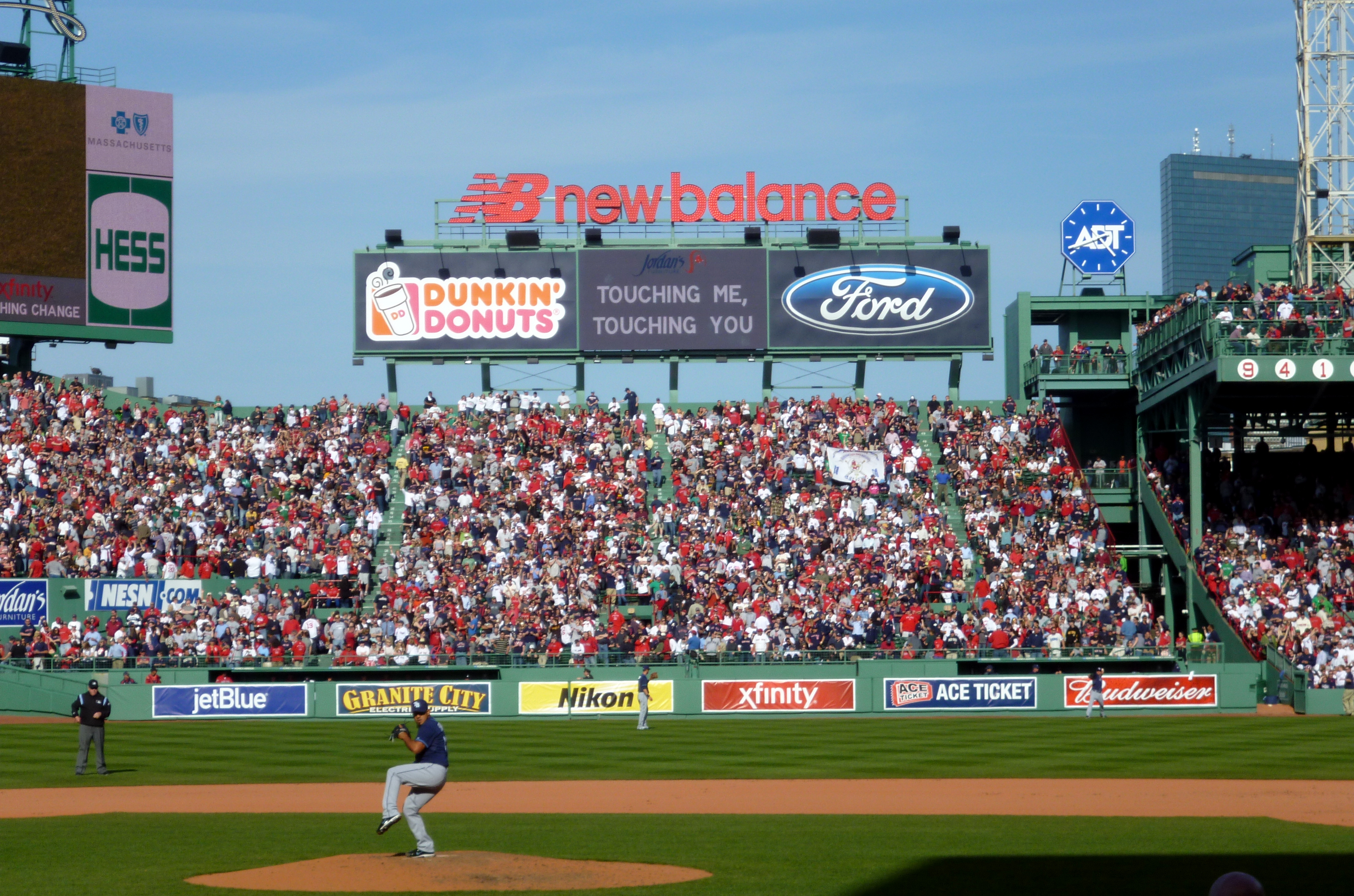
Here are the crazed throngs giving their Neil Diamond salute to “So good!  So good!  So good!”

The Game

Oh, the game.  Beckett was very efficient — only struck out one, but got the Rays to hit a lot of fly balls.  David Price for Tampa Bay was extremely inefficient, despite consistently hitting 97 mph on the gun.  He was gone after three innings.  The hitting star for the Red Sox was the immortal Kelly Shoppach; he even managed to steal the first base of his career on a weird delayed steal.  The Red Sox put ten men on in a row in the bottom of the eighth and scored eight runs to seal the victory.  Final score: 12-2.

The Return

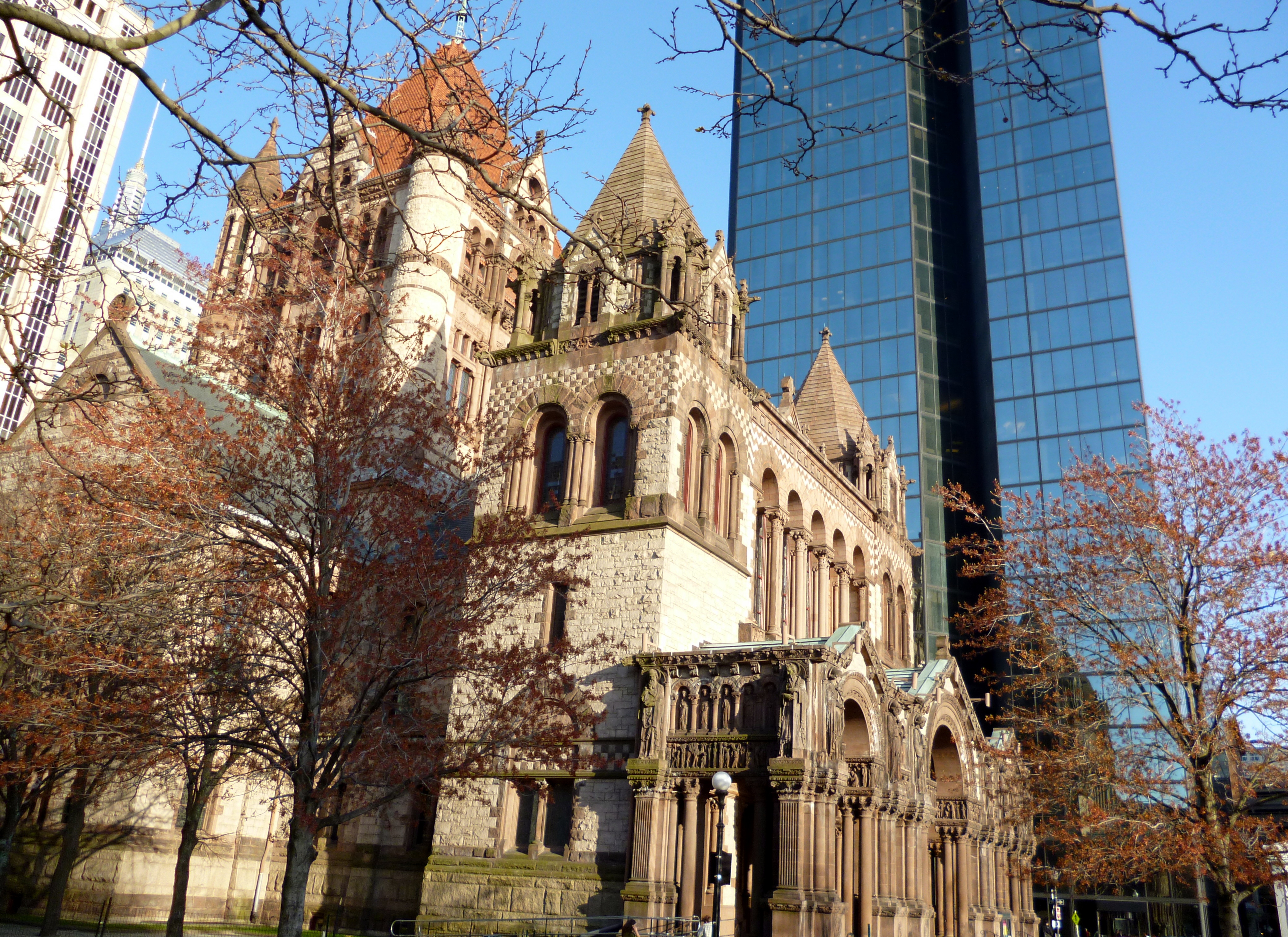
I was tired of taking photographs.  Here’s Trinity Church with the Hancock Building in the background:

Two pianists, talking and remembering

Here’s an excerpt from Summit. Daniel Fulton, our hero, is a handsome, eccentric pianist who has left the concert stage, for reasons having something to do with the Russian psychic Valentina Borisova.  He is visiting the Russian emigré pianist Dmitri Khorashev in his New York City apartment to discuss the recital he has agreed to give in Moscow — where, he believes, he will meet Valentina again.

The matryoshka doll we see in the scene is a kind of Chekhov’s gun.

******

The doorman seated at the security console did not like the looks of the scruffy, unshaven man with the cloth cap pulled down over his eyes. He was wearing a tattered tweed jacket and ancient stained chinos, and he held a battered briefcase in his large left hand. He looked like a rummy who retained some pretensions of respectability. He did not belong here. “Yes?” the doorman asked, hand poised over the alarm button in case the man became abusive.

“I heff come to repair ze piano of Maestro Khorashev,” the man said in a heavy accent that the doorman didn’t recognize.

The doorman paused. That seemed at least conceivable. “Is Mr. Khorashev expecting you?”

The man shrugged. “Inquire, pliz. The name is Herr Bösendorfer. Daniel Bösendorfer. He has cracked sounding board. Is very serious.”

The doorman decided it wouldn’t do any harm to inquire. He called Khorashev’s apartment. The housekeeper knew nothing about any Herr Bösendorfer, so she went to ask Khorashev himself, who immediately got on the line. “Yes, indeed,” he said. “Sounding board is not only thing that is cracked. Send Herr Bösendorfer up immediately.”

“Yes, sir.” The doorman buzzed open the inner door. The scruffy man tipped his cloth cap and headed for the elevator.

* * *

Khorashev was at the door of the apartment to greet him. They hugged. “Daniel, my idiot friend, why don’t you call like normal person?”

“If I knew the answer to that, Dmitri, maybe I’d actually be normal.”

“Well, you are a sight for hurt eyes. Come in. I am just watching The Beverly Hillbillies.”

Fulton wasn’t quite sure whether Khorashev fractured his clichés as a joke, or whether after thirty years in America he still hadn’t mastered the language. He followed the older man inside. The apartment, as always, brought back a rush of memories. Khorashev had been his teacher at Juilliard and afterward; together they had found the genius lurking behind the talent. The experience had been exhausting and exhilarating.

“I must get the name of your tailor,” Khorashev said as he led the way down the hall to the TV room. “Is a wonderful outfit you are wearing.”

“I’ll trade you for the name of your decorator.” It was an old joke. There had been a decorator once, but over the years Khorashev had so overloaded the apartment with his own peculiar collection of memorabilia that all traces of professional taste had long since disappeared under an avalanche of kitsch.

Khorashev collected Americana. If it reminded him of his adopted land, it had a place in his apartment, regardless of what other people thought of it. So his walls were plastered with movie posters and Coca-Cola signs and crocheted American flags, his tables and bookshelves were covered with Atlantic City ashtrays and ceramic Statues of Liberty and autographed baseballs. It was all junk to Fulton, but it was junk, he realized, because he was so used to it; it was part of the texture of his life, like golden arches and pepperoni pizza and Muzak. To someone like Khorashev, such things were symbols of what this new world had given him.

Fulton had come across only one reminder in the apartment of the world Khorashev had left behind. It was a doll that sat in the corner of a bookshelf in sight of Khorashev’s piano. Fulton had picked it up once, and discovered that inside the doll was another doll, which in turn had its own doll inside it—and so on, he assumed, but Khorashev had taken it away from him before he could find out. “Matryoshka doll,” Khorashev had said, putting it back together again. “From the old days.” Khorashev was not eager to talk about the old days. Fulton hadn’t mentioned the doll again.

On The Beverly Hillbillies, an old woman with a funny voice was squawking at a hapless-looking man in a suit. Fulton had never seen the program before, but he felt as if he had watched it a hundred times. “Granny and Mr. Drysdale,” Khorashev informed him. “A very clever show.” When Granny and Mr. Drysdale were replaced by an air-freshener commercial, Khorashev turned off the television. “So, my friend, what brings you back from the vallée d’Obermann? Do you come perhaps to congratulate me on my triumphant Carnegie Hall recital, which I got you a very rare and precious ticket for, but you have not bothered to mention to me as yet?”

“It was pretty good,” Fulton said, “although what you see in those Haydn sonatas is beyond me.”

“Everyone has his peculiarities,” Khorashev said, chuckling. “Horowitz likes Clementi, Glenn Gould’s favorite composer was Orlando Gibbons. And did you not recently make a recording of Charles Ives?”

“Yes, well, I learned my lesson with that record. Back to Chopin, I guess.”

“Another recording?”

“Well, no. That’s why I’m here, actually. I need some advice. I’m going to play in public again this fall.”

Khorashev clapped Fulton on the back. “Ah, excellent! What is the lucky city?”

This was the hard part. “Um, Moscow,” he replied.

Khorashev scowled. “Not at this Peace Festival so-called?”

“Uh-huh.”

Khorashev glared at him, a glare that Fulton knew all too well. It used to come when he had failed to think through a piece, had played as if he were merely reproducing notes, not recreating a work of art. It meant that Fulton had not lived up to the older man’s expectations of him. “What’s wrong with peace?” Fulton demanded.

“What’s wrong with freedom?” Khorashev replied.

“Can’t we try to have both, Dmitri?”

“Only if we are much smarter than Grigoriev and his cronies. And I do not think we are, my friend.”

“I don’t think building more and bigger nuclear weapons is particularly smart, no matter who’s doing it. At least Grigoriev appears to be making a sincere effort to get rid of them.”

Khorashev threw up his hands, as if in despair at Fulton’s ignorance. “Grigoriev is only making his proposals because Soviet Union is on brink of collapse,” he said. “Why not force him to keep on spending on military, and help bring about this collapse?”

“Should we continue risking our entire planet on the chance your analysis is correct?”

Khorashev started to reply, then sat back in his chair and laughed. “Ah, my friend, you are American, no matter how much you complain about the place. You see the good in people, and you hope for the best. While I am just an old Russian peasant who is used to the worst, and sees no reason why things should change. Go ahead and give your recital in Moscow. Now let us talk about music, where we may perhaps agree occasionally.”

That was fine with Fulton. Khorashev had actually given in rather easily, he thought—at least compared to the battle he had been expecting. “I’m scared, Dmitri,” he admitted. “It’s been a long time. What if I’ve lost whatever it was that I had? I don’t want to make a fool of myself in front of the entire world.”

“Do you still hit all the notes?” Khorashev asked.

Fulton shrugged. “I suppose so. That’s the least of my worries.”

“Then you need not worry about anything else—at least for this recital. People will just be so glad to find out you have not gone into the deep end or come up with a disease or whatever, that their standards will be much lower. Is the advantage of having a reputation, Daniel. And once you are back, it will just get easier.”

“You quit for a while in the late fifties, didn’t you? Were you scared when you returned?”

“Of course, but I was much younger and stupider then—like you are now. When I should have been scared was before that, after I defected. Not right away, because then people loved me for defecting. But a little later, when the newness was gone, and people weren’t so interested anymore. But lucky me, I was much too stupid, and I muddled through. So will you. What will you play?”

“I don’t know. Pieces I’m familiar with, I guess. One less thing to be nervous about. I thought maybe I’d begin with Les Adieux—you know, sort of programmatic, the absence followed by the return.”

“Begin with Les Adieux? God help you, Daniel, you have courage. That final movement—vivacissimamente—your fingers must be supple just to survive it. Let’s hope you do not have a cold Moscow night to stiffen them.”

“It’s only you old people who have to worry about stiff fingers. Maybe I should start off with Liebesträume, get them swooning with love for me right away.”

Khorashev shook his head. “Save it for the final encore, Daniel. Is better to leave them swooning.”

Fulton had to agree. “And what about something Russian—out of courtesy for my hosts?”

“Of course. Perhaps one of the Prokofiev war sonatas—now that would be interesting programming for Grigoriev’s Peace Festival.”

“A little too interesting, maybe.” And the ideas began flowing then. Before long the two of them moved into Khorashev’s studio, where they took turns at his Bösendorfer, arguing about the merits and the interpretation of every piece either one suggested. It was the kind of afternoon that Fulton enjoyed immensely, and felt vaguely guilty about enjoying. There is more to life than music. It was as if he had retreated to some warm, familiar place where he could not be harmed. But he had left that place when he had gone off with Hill. Now nothing was going to be the same.

They stopped finally when a pupil arrived—a slim, serious-looking young woman whose knees almost visibly buckled when she recognized Fulton. “This man is handsome and plays like an angel, but is very stupid,” Khorashev informed her. “Go watch Gilligan’s Island till I am ready for you.”

She obediently went down the hall to the TV room, glancing behind her once or twice to imprint Fulton’s visage on her memory.

“Very talented, but no spark yet,” Khorashev remarked. “Wonderful at Scarlatti, though.”

Fulton sighed, thinking of all she had to face. “Thanks for your help, Dmitri.”

“Don’t mention it. Where will you be playing in Moscow, may I ask?”

“The Great Hall of the Conservatory—where I played before.”

Khorashev nodded. “I have played in the Bolshoi Zal too,” he murmured. “It has its memories. But keep in mind: you will be Daniel Fulton when you walk on that stage. Is all that matters.”

Fulton smiled at his old friend. “I’ll keep it in mind,” he said. Then he picked up his battered briefcase, put on his cloth cap, and walked out of the apartment.

* * *

Khorashev went back into his studio and sat at the piano. The pupil was waiting for him, but he did not want to see her just yet. He glanced at the matryoshka doll and thought of Daniel Fulton in Moscow, at the conservatory. Thought of his own days at the conservatory, practicing till his bones ached, wandering through the bookstores of the Arbat and buying dirty glasses of kvass from street vendors, picking mushrooms in the countryside, talking and drinking and laughing all night in some wretched student flat, young and happy and stupid. Thought of the glorious war, beating back the Fascists from the city’s very suburbs, the giddy, insane pride he had felt in his motherland—a pride that covered a multitude of sins.

Sins. Thought of the farm that his family had once owned, until the thugs came and dragged off his father and beat his mother while he cowered beneath the bed.

Thought of the friends who disappeared and were not spoken of again.

Thought of Zhdanov and his toady Khrennikov sitting in judgment of Shostakovich and Prokofiev and the rest, geniuses whose boots they were not fit to lick, throttling the musical spirit of the nation with their fat fingers. All to please the Great Leader, who sat in the Kremlin, invincible in his ignorance and his power, and destroyed lives with a twitch of his mustache.

Thought of the fear that permeated his life like a fog. What can I play? Who can I speak to? What can I speak about? The fear that finally made him leave, impulsively, the first chance he had—a drowning man reflexively gasping for air.

He had left, and now he would never return.

His fingers idly played the three descending whole tones that began Les Adieux. Le-be-wohl, Beethoven had written above them. Farewell. Do svidanya.

Americans expect the return to follow the farewell, the way the third movement must follow the first two; Russians know better.

Khorashev got up from the piano and went to watch the end of Gilligan’s Island with his pupil.

* * *

Fulton walked away from the elegant apartment building on Central Park, head down to avoid making eye contact with passersby. His mind was filled with music.

It was another warm, sunny day. A horse-drawn carriage clip-clopped by; inside, a young couple—newlywed tourists, maybe—gawked at the metropolis. A taxi driver leaned on his horn. A black kid’s boom box pulsated with a mindless rhythm. Life surrounded him. Why couldn’t he be a part of it?

Eventually he found himself by Rockefeller Center. He gazed across Fifth Avenue at Saint Patrick’s Cathedral, and after a while he crossed, making his way past the pretzel vendors to stand in front of its huge doors. Saints stared out at him from the doors, recognizing him, daring him. He went inside.

The back of the cathedral bustled with tourists. There were boxes asking him to donate money for peace, for the poor, for earthquake relief, for the maintenance of the cathedral. This wasn’t what he wanted. He moved forward up a side aisle.

A wizened old man in a shapeless suit grabbed Fulton’s arm and gestured at his head. Terrified, Fulton tried to break free, and then realized he was supposed to take off his cap. He obeyed. The man nodded, appeased, and wandered off. Fulton slid into a pew.

Now what? He half knelt, half leaned back against the seat and looked up at the high, vaulted ceiling. At the far end of his pew, a man in a business suit was reading the Times. A couple of rows in front of him, a black teenager with a Mohawk knelt, motionless, his face in his hands.

Now he was supposed to pray.

He remembered asking his mother once about religion. She frowned at him with the perpetual frown that seemed to be the natural state of her features. “Religion,” she said, “is the last refuge of a failure. Only those who cannot succeed in this life need the promise of another one. Go practice.”

He had practiced.

His mother was a high school teacher in Evanston, Illinois. That was not her idea of success, but success can also be experienced vicariously. She had put her husband through graduate school and helped him become a professor at Northwestern. And when Daniel came along and started picking out melodies on the old living room upright at the age of two, the course of the rest of her life was clear.

She could not understand how someone could throw away his success like a pair of old socks. It was her success too, after all, that he was throwing away. And how could he explain it to her, when he didn’t really understand it himself? They didn’t speak anymore, and Fulton didn’t know what to do about that.

A couple of middle-aged women were staring at him intently. He buried his face in his hands. The black teenager could pray; why couldn’t Daniel Fulton? Because he was successful? Hardly. Because he didn’t believe? But he wanted to believe. Wanted to believe something. Fulton tried to imagine life as a believer. Things would be so easy, so comfortable then. The answers would all be there, and the only worry would be to do what you were told, and surely that would be easier than being told nothing.

He thought about Moscow. He thought about Valentina Borisova and her frightened eyes. Tears at dawn. A rose lying on a chair. He hesitates, then picks it up, and then he walks away….

He thought about playing the piano again. It had been in Moscow, walking through the cold early-morning city, that he had decided to quit. Perhaps it was inevitable that his departure and his return were so intertwined, like voices in a Bach fugue.

Perhaps the answers are there, he thought. Yes, he was beginning to believe that they were. And that belief was better than nothing.

He looked up, gripping the back of the pew in front of him. The women were gone; the black teenager hadn’t moved. He could feel his fingers moving slightly against the hard wood. He stared at them as he listened to the music in his mind.

They were flying through the intricacies of Les Adieux‘s third movement: The Return.

Fulton smiled. It was time to start practicing.

Lower prices coming on ebooks

The Department of Justice has brought suit in the ebooks pricing case, and three publishers (Hachette, HarperCollins, and Simon & Schuster) have settled.  We mentioned the possibility of the suit here.  The government is saying that five publishers and Apple colluded to force the “agency model” onto the ebook business.  In the agency model, the publisher sets the price, and the seller gets a percentage of that price for each sale.  There’s nothing illegal about the agency model; it’s the collusion that got these guys in trouble.  Apparently the government has pretty good evidence of the collusion.  Here’s the DOJ’s statement, which says in part:

During regular, near-quarterly meetings, we allege that publishing company executives discussed confidential business and competitive matters – including Amazon’s e-book retailing practices – as part of a conspiracy to raise, fix, and stabilize retail prices.   In addition, we allege that these publishers agreed to impose a new model which would enable them to seize pricing authority from bookstores; that they entered into agreements to pay Apple a 30 percent commission on books sold through its iBookstore; and that they promised – through contracts including most-favored-nation provisions – that no other e-book retailer would set a lower price.   Our investigation even revealed that one CEO allegedly went so far as to encourage an e-book retailer to punish another publisher for not engaging in these illegal practices.

The three publishers who settled have agreed to abandon the agency model for two years.  Amazon is already saying it’s ready to lower e-book prices:

“This is a big win for Kindle owners, and we look forward to being allowed to lower prices on more Kindle books,” said an Amazon spokesperson, referring to a settlement the Justice Department reached with Hachette, HarperCollins and Simon & Schuster.

But the Wall Street Journal warns:

The settlement allows publishers to negotiate limits on how much retailers can discount, ensuring retailers can’t lose money overall on e-book sales. Moreover, Amazon may be cautious about across-the-board discounts because its profit margins are already thin.

This is clearly bad news for publishers and bookstores.  Lower prices on ebooks means lower sales of print books.  Amazon may not do across-the-board discounts, but this still opens up the possibility of price-shopping for the best deal on any given ebook.  So it’s good news for ebook readers, at least in the short run.

In the long run, who knows?  What if Apple leaves the ebook business, Barnes & Noble goes bankrupt, and only Amazon is left as a major ebook retailer?  Monopolies aren’t good for consumers.  On the other hand, the barriers to entry in the ebook market are pretty low.  All these vendors have their own reading devices for ebooks, so there is a convenience element to buying and downloading books from their online stores, but I’m not sure how big a deal that will ultimately be.

And, as I mentioned before, this doesn’t affect people like me, who are essentially independent publishers.  Both the wholesale model and the agency model work fine for us, as far as I can tell.  We just have to get people to buy our stinkin’ books.