Does a change in tone matter when it comes to the pope?

Here is Will Saletan calling Pope Francis a liberal.  Here are some of Andrew Sullivan’s readers exploding with joy over the pope’s recent interview:

Wow! I wondered if Pope Francis could possibly be for real.  He seems the absolute embodiment of what I always thought the Catholic Church was supposed to be about – promoting the ideas and teachings of Jesus, not running a corrupt organization without a shred of mercy, divine or otherwise.  Pope Francis is having a tremendous pull on me.  I rejected the Church long ago, but I’m drawn to this man and what he has to say.  I hear a voice inside me that says “yes”.

I have always been of two minds about this sort of thing.  On the one hand, the new guy is saying a lot of good things–the kind of things I had my fictional pope saying in Pontiff. On the other hand, the Church has a long long history of being dogmatic and authoritarian and, after thirty plus years of John Paul and Benedict, it is run by people who like it that way.  What is likely to change, besides tone?  And is tone enough?

The leader of the archdiocese of Boston is named Sean O’Malley, and he seems like a terrific guy.  He even has a blog!  In the blog he has a heartwarming anecdote about a relief worker distributing food to starving Africans.

At the end of the line, the last person was a little nine year old girl. All that was left was one banana. They handed it to her. She peeled the banana and gave half each to her younger brother and sister. Then she licked the banana peel. The relief worker said at that moment he began to believe in God.

Let’s all be like that little girl!  But, you know, the Catholic Church’s opposition to birth control may be part of the reason why there were too many people in that line, and not enough food.  Wouldn’t it be nice if, in addition to not being so obsessed with birth control and homosexuality and abortion, as Francis put it in his interview, the Church could start remedying the damage those obsessions have already done to the world. I’m not optimistic.

Is Jeff Bezos the antichrist? Or maybe just one of the four horsemen of the Apocalypse?

Jonathan Franzen isn’t sure.

In an article for Guardian Review before the publication of his new book, The Kraus Project, he writes: “In my own little corner of the world, which is to say American fiction, Jeff Bezos of Amazon may not be the antichrist, but he surely looks like one of the four horsemen. Amazon wants a world in which books are either self-published or published by Amazon itself, with readers dependent on Amazon reviews in choosing books, and with authors responsible for their own promotion.”

He goes on to say:

“As fewer and fewer readers are able to find their way, amid all the noise and disappointing books and phony reviews, to the work produced by the new generation of this kind of writer, Amazon is well on its way to making writers into the kind of prospectless workers whom its contractors employ in its warehouses, labouring harder for less and less, with no job security, because the warehouses are situated in places where they’re the only business hiring.”

This is the dystopian vision of Scott Turow and the Author’s Guild, where every move that Amazon makes is greeted as the next step towards the end of literature as we know it.  And I just don’t get it.  Amazon, and the e-book revolution, have certainly made publication more democratic.  It’s now open to anyone, which of course means there will be more junk available.  But do these folks really believe that there will be no way for readers to distinguish the good writers from the bad?    My novel Senator has a bunch of reviews on Amazon, and the review deemed most helpful by readers also happens to be (in my opinion) the best of the bunch.  Read that review, and you’ll get as good a sense of the novel as any newspaper review.

Further, do they really think that, even if Amazon controlled the entire publishing industry, it wouldn’t have an incentive to find and publish great books? And do they really think that Amazon can control the entire publishing industry?  Jonathan Franzen is a world-class writer with a large following.  If he wanted to bypass Amazon and self-publish on jonathanfranzen.com, he could do it.  Or, he could start his own publishing house, giving his imprimatur to the kind of fiction he thinks the world wants; no one is going to stop him, and the barriers to entry are minimal.

I’m also a little baffled by this view that Amazon is destroying the financial prospects of good writers.  Writers have no financial prospects!  They have never had any financial prospects!  If anything, Amazon has opened the doors to a whole class of writers who were shunned by the traditional publishing industry but now at least have a chance at reaching an audience, thanks to the Internet.

Finally, I just want to say that the Red Sox are back in the playoffs thanks to a complete-game victory by John Lackey.  And that’s one of those sentences I never thought I’d write.

Still looking for reviews of “The Portal”

I’ve gotten three very nice ones so far, but I could use some more.

In case you’ve forgotten, here’s the outline and first chapter.   And here’s the cover, which helpfully informs you that it’s an alternative history novel:

9781614174639


And, apropos of nothing, here’s a photo of my little town’s charming harbor on a late summer’s day:

2013-09-15 17.18.13

Rules for writing — Rule 12: End a chapter with a bang, not a whimper

My last post, on short sentences, reminded me that I haven’t been adding to my rules for writing, a somewhat randomly numbered series of guidelines that I try to follow, and you probably should too, if you’re writing mainstream novels.

The short sentence I discussed in that post came at the end of a chapter, which, as the Times article rightly pointed out, is a very good place to put a short sentence.  But what’s up with chapters?

Chapters are a nebulous concept.  If you were to ask me “How long should a chapter be?”, my response would be “I dunno.”  I don’t have a rule for that.  Sometimes you have a set piece that demands to be its own chapter, and the length is determined by the length of the set piece, but at other times you have a more or less continuous flow of action, or rapid-fire viewpoint changes, and it’s not at all obvious what function the chapter is playing, other than giving the reader an obvious place to stop reading, turn out the light, and go to sleep.

But you don’t want the reader to stop reading!  You don’t want the reader to go to sleep!

So the obvious thing to do is to end the chapter with something that forces the reader to keep reading into the next chapter.  And then I heard the screams. End of chapter.  What screams?  Who is screaming?  Better turn the page and find out.

This is the cliff-hanger approach to movie serials, and it’s such an obvious narrative ploy that I shouldn’t have to explain it to you.  Except that I keep screwing this up!  Twice so far in the first draft of the novel I’m writing I’ve ended a chapter with my narrator going to sleep.  That’s nuts — it’s an open invitation to the reader to go to sleep too.  If the narrator is safe in bed and nothing is going to happen till morning, there’s no reason to keep reading.  My writing group has had to gently remind me that the narrator shouldn’t go to bed at the end of the chapter — he should get whacked on the head by an unseen adversary, or discover a corpse, or fall into a bottomless ravine.  Or, you know, hear an unidentified person screaming.  And they couldn’t be more correct.

I’ll get this right in the second draft.  But in the meantime, I should print out this blog post and pin it next to my computer.  Let’s not screw up again.

Are five-word sentences the gospel truth?

Here’s a bland New York Times op-ed making the somewhat uncontroversial point that short sentences are good.  Particularly after long sentences.  Particularly at the end of paragraphs and chapters and novels.  This doesn’t seem like breaking news.  The author starts off with a pretty good story, though:

I learned an important lesson, somewhat unwittingly, on July 19, 1975, while watching an interview with two of my favorite writers, William F. Buckley Jr. and Tom Wolfe. Mr. Wolfe was making fun of an art critic who had begun an essay with the sentence “Art and ideas are one.”

“Now, I must give him credit for this,” said Mr. Wolfe. “If you ever have a preposterous statement to make … say it in five words or less, because we’re always used to five-word sentences as being the gospel truth.”

If that’s true, maybe I should end everything with a five-word sentence.

It turns out my writing group spent some time considering a six-word sentence I used to end a chapter of the novel I’m writing.  Here’s the sentence:

And then I heard the screams.

Pretty good, huh?  But folks were worried that readers would infer that multiple people were screaming, rather than one person screaming multiple times, which is what I intended.  Well, maybe. So someone suggested:

And then I heard the screaming.

But that didn’t seem to solve the original problem.  And it added an extra syllable to the sentence.  I didn’t like that extra syllable.  So we ended up with:

And then I heard the scream.

That solved the problem of multiple people screaming.  But it was somehow less powerful than the image of the narrator hearing scream after scream.

That’s where we left it.  Staring at the pixels, I’m tempted to make the last word plural once again.  Back where we started.  Maybe I should drop the “And” at the beginning.  That’ll give me the magic five-word sentence.  I could probably spend a lot of time figuring this out.

That’s why writing is fun.

Thoughts on sales ranking; also, a bad review and a good sunflower

After getting as high as about #46 on the Nook bestseller list, Senator is starting to fade like the Tampa Bay Rays.  Its sudden rise in the rankings got me thinking about how they are calculated. A brief tour of the Internet convinced me that this is a rat-hole from which one may never return.  The algorithms are proprietary and probably change periodically, so it’s all guesswork.

Since I’m dealing with a publisher rather than publishing my books myself, I don’t see the daily sales figures on Amazon and B&N, so there is no easy way for me to see how the ranking tracks these sales numbers.  But lots of self-published writers apparently have nothing better to do, and they are more than happy to opine about who the rankings are calculated.

The consensus, if you care, is that the ranking represents something like a 30-day moving average, with more recent sales weighted more heavily than sales earlier in the cycle. There is probably some residual effect from sales prior to the 30-day period, so a book that sells five copies a year will have a higher ranking than a book that sells one copy. I have no idea if this is anything like the truth, but it seems plausible to me.  And how many sales does a particular ranking represent?  This looks like a reasonable guess.  Of course, that’s for Amazon.  Barnes & Noble would presumably be something like 20% of that.

Anyway, the sales on Barnes & Noble have started to get Senator some reviews there.  Here is a remarkably bad one that I enjoyed (sort of).  It’s by our friend Anonymous and is titled “Awful”:

Was there a good guy anywhere in this mess? However samples at end were even worse and can now avoid all in future mom

What’s impressive about this is that the writer feels obliged to trash the samples as well as the novel.  Also, what’s up with the word “mom” at the end?  Is the writer trying to insinuate that “Anonymous” is actually my mother?  That’s harsh.

To make myself feel better, here’s a photo of some sunflowers from my garden:

sunflowers


Also, the Red Sox just beat the Yankees for the third time in a row, so there’s that.

“Senator” promo at Ereader News Today

Hey, do me a favor and go over to this Facebook site and Like the “More Kindle Deals for 9-3-13” topic.  Getting lots of likes makes Ereader News Today happy.  Or you can go straight to the site, where Senator is one of their Kindle deals of the day.  Buying a copy would make them even happier.  It would make me happy, too.  At $0.99, how can you go wrong?

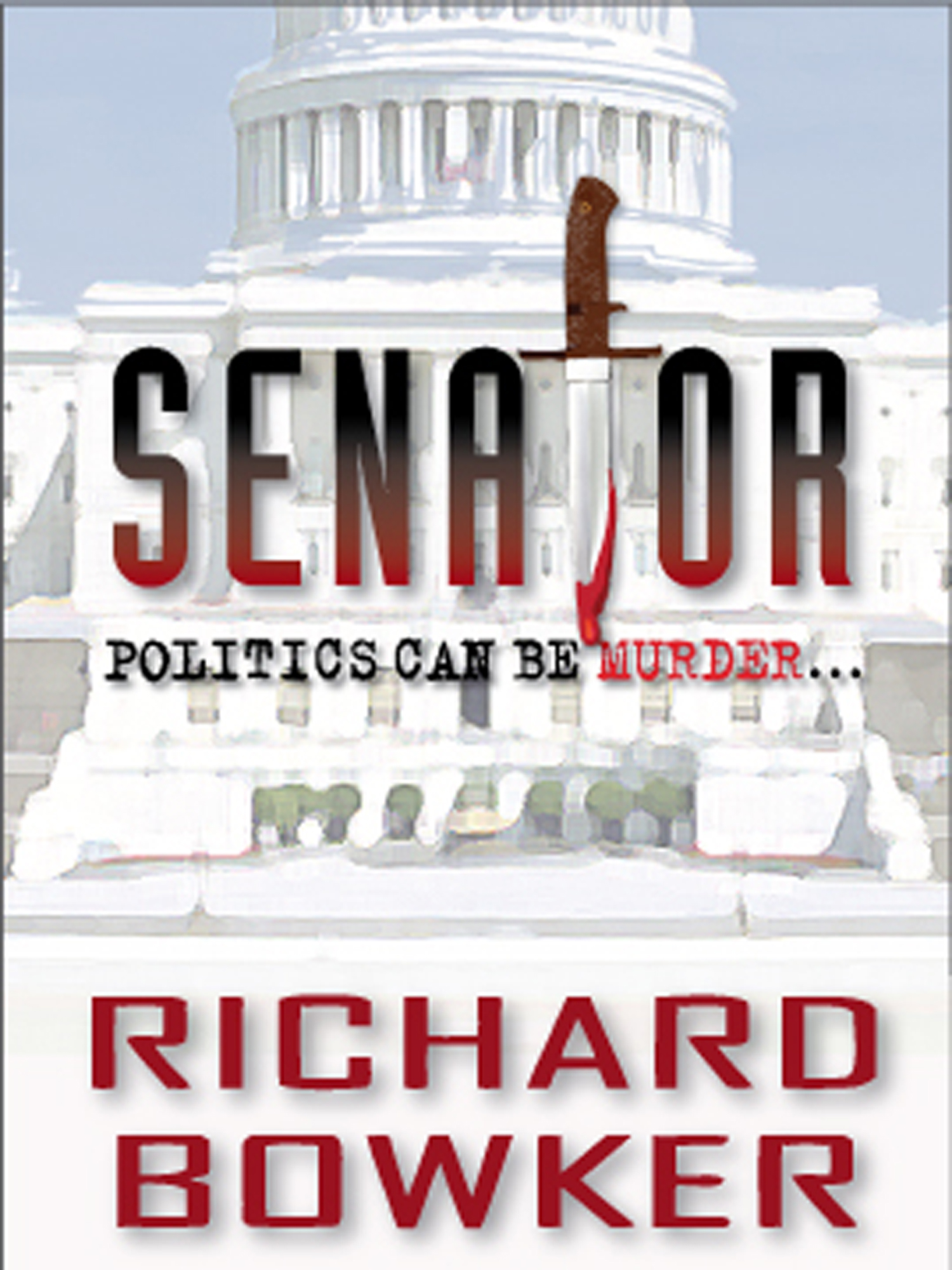
Senator final cover

The Senator promotion at Barnes & Noble is certainly doing what it’s supposed to do.  The book is now #56 on the Nook bestseller list, which puts it ahead of Volumes 2 and 3 of the Fifty Shades trilogy, among other interesting and no doubt worthy books.

Finally, I’ve gotten a couple of nice reviews of The Portal on Amazon but could use a lot more, if you’re interested in helping out.  I’m told that the Nook edition will appear any day now.