Print on Demand pricing

One thing I’ve noticed in my brief experience with Print on Demand publishing: Amazon seems to vary its pricing constantly.  The list price of the book (set by my publisher) is $15.99.  When I bought the book from Amazon last Saturday, it cost me about $15.50.  When it arrived on Wednesday, I checked, and Amazon was charging $12.89.  Today they’re charging $14.39.  Meanwhile other vendors (available via Amazon) are charging from $12.04 to $13.55 (plus $3.99 shipping and handling).  Barnes & Noble is charging $12.89.  It’s entirely possible that I’m the only one who has bought the book so far, and that is somehow making Amazon decide to raise its price.  Come on, people!

Every vendor is claiming that the book is “in stock.”  What that means in this context, I suppose, is that they have access to the book via Lightning Source, the book manufacturer.  They obviously don’t have the physical book on their shelves.

By the way, the unit cost my publisher will charge me is $5.77 per book, plus shipping and handling.  The cost to me for a carton (24 books) comes out to $7.77 per book.

I was sorta hoping the book would be available via Paige M. Gutenborg, the POD machine at Harvard Bookstore in Cambridge. Alas, she only seems to handle books from Google Books. Here’s what Paige looks like:

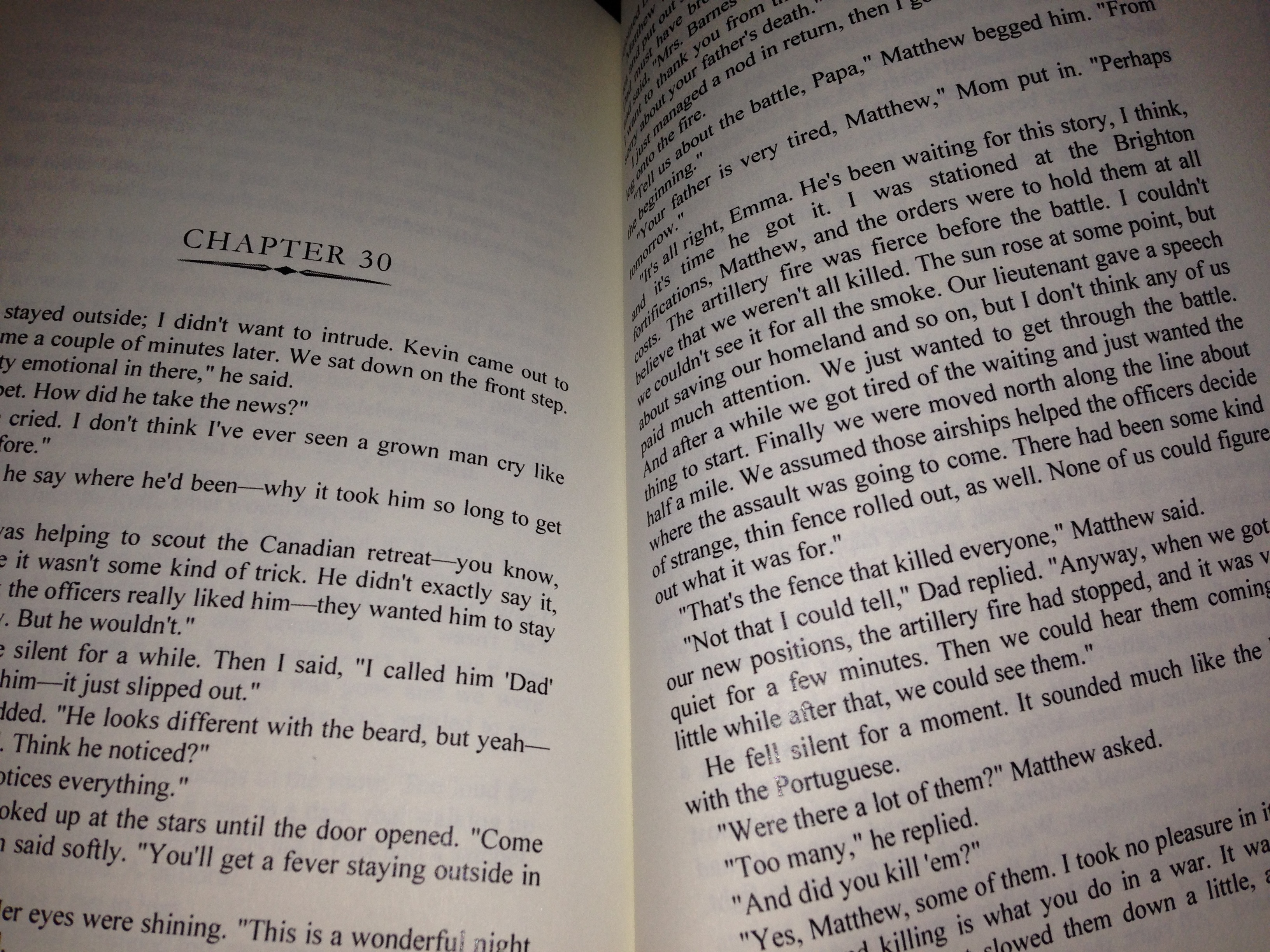
Photos of my Print on Demand book

This is what the book looks like.  For some background, see this post.

Here’s the cover:2013-12-04 21.38.11And the back cover (somehow the angle makes it looks like there are no pages–but there are!):2013-12-04 21.38.42And the inside:2013-12-04 21.39.04I dunno.  Looks just like a real book to me.


POD is PDQ

To check out the Print On Demand version of The Portal, I placed an order for it from Amazon on Saturday, with my two-day Amazon Prime shipping.  It arrived today, Wednesday.  So they were able to print the book  on Sunday (I guess) and ship it to me on Monday.  And it looks great!

I’m going to buy a bunch for my own use direct from the publisher.  I should be able to undercut Amazon’s prices significantly, although I don’t know about two-day shipping.  If you’re interested in buying one from me, let me know in comments or somewhere.  The advantage to buying it directly from me, in addition to the price, is that you can get my autograph in it.  Which is, of course, priceless.

Will texting change the meaning of the period?

Here’s an interesting article about a development I’ve noticed since I’ve started texting a lot with my kids.  Because I’m a writer and I’m fond of punctuation (and I don’t send hundreds of texts a day), I typically end my texts with a period, even though it’s a bit of a pain on an iPhone: you have to switch to a different “keyboard” first, so it takes two finger movements instead of one.  My kids typically don’t bother.  The article argues that including the period may convey something to the recipient that I certainly didn’t intend:

In most written language, the period is a neutral way to mark a pause or complete a thought; but digital communications are turning it into something more aggressive. “Not long ago, my 17-year-old son noted that many of my texts to him seemed excessively assertive or even harsh, because I routinely used a period at the end,” Mark Liberman, a professor of linguistics at the University of Pennsylvania, told me by email. How and why did the period get so pissed off?

Since the default in texting is to not include the final punctuation, people will want to figure out what message you’re sending when you do it.  And maybe they’ll assume you’re being harsh and parental, instead of just being an old fuddy-dud.  The writer points out:

[T]hese newfangled, emotional uses of terminal punctuation haven’t crossed over into more traditional, thoughtful writing. (I have used the period throughout this story, and I’m in a perfectly pleasant mood.) Perhaps one day it will, though, and our descendants will wonder why everyone used to be so angry.

It’s a good thing we won’t be around to find out.