It’s midseason, do you know where your Red Sox are?

Sports, especially baseball, is about stories.  Everything has a story: the season, the team, each player, each game.  A good season has lots of good stories; a great season has stories you wish your parents were alive to experience. Like this one:

So where we are with the Red Sox at midseason?

The Good Stories

David Ortiz is having an all-star year, when we were afraid he was on the downhill side.

Jarrod Saltalamacchia has turned into a pretty good player.

Daniel Nava has come back from the bottom of the depth chart to become a pretty good player.  (He was a one-play good story in 2010, when he hit the first pitch he saw in the big leagues for a grand slam.)

Will Middlebrooks and Felix Doubront look like pretty good young players.

And, um, that’s about it.

The Bad Stories

In no particular order:

The team with the third-highest payroll in the majors has a 43-43 record.

The Yankees came back from a nine-run deficit and beat the Red Sox by six.

Josh Beckett sucks for a front-line pitcher.

John Lester sucks for a front-line pitcher.

Clay Buchholz sucks for a front-line pitcher.

Daniel Bard sucked so bad they had to send him to the minors, where he continues to suck.

Dice-K finally came back from his injury, turned out to be the same old Dice-K, then got injured again.

Adrian Gonzalez sucks for a guy getting paid $20 million a year.

Kevin Youkilis sucked, got hurt, came back and sucked some more, then got traded.

Jacoby Ellsbury has missed half the season with an injury.

Carl Crawford has missed half the season with an injury.

I don’t like the way Bobby Valentine chews gum.

I may have missed a few, but I’m thinking the ratio of bad stories to good is about three to one. Things could turn around starting tomorrow, but this doesn’t bode well for my summer.

So, in case things don’t get any better, here’s another memory:

What makes me happy (baseball edition)

Let’s face it: baseball is boring.  Nothing much happens in the course of a game.  For every minute of action, there are five minutes of crotch-scratching and sunflower-seed-spitting.  The Red Sox this season have been particularly boring: win a game, lose a game…

And then something like this happens….

Tie game, bottom of the eighth, Ryan Kalish on first.  Bobby Valentine puts on a hit-and-run.  Kalish takes off with the pitch.  Mike Aviles bounces a ball to first.  Kalish reaches second — and keeps running!  He beats the tag at third.  Daniel Nava hits a single to center, and Kalish scores the go-ahead run.  The Red Sox win.  How did that happen?

The Red Sox don’t look like they’re going anywhere this year: too many injuries, too many stars underperforming.  Tonight Jon Lester is underperforming yet again.  But just for that one moment, they were exciting.

Now back to the crotch-scratching.

Baseball notes

You can’t blame me for yesterday’s debacle. Nor Bobby Valentine. I like the Times headline: “Two late touchdowns lift Yankees in Boston”. ESPN tells me this is the second time in MLB history that a team has led by nine runs, and then lost by six or more. Go Sox!

Dice-K Matsusaka, Red Sox nation turns its lonely eyes to you.

From the vantage point of my hotel treadmill this morning, where I saw it about six times, no way was that a swing on the last pitch of Humber’s perfect game. I don’t think the batter would have been safe at first if he had bothered to run instead of arguing with the umpire, but it would have been awesome if the perfect game was lost on a strikeout with two outs in the ninth. Awesome for collectors of baseball oddities, not for Mr. Humber.

Was I the only one who expected more than 200 ex-Red Sox at Fenway on Friday? I wish I knew what percentage this represents. Did people have to pay their way to Boston? Get their own hotel rooms?

This is the first post I’ve composed on my iPad. The interface isn’t too bad.

Red Sox Home Opener (with photos)

Great weather!  Great seats!  Great excitement, as the Red Sox have all New England a-twitter after a wonderful start in their first six road games!

OK, that last sentence was a lie, but the first two weren’t.

Getting There

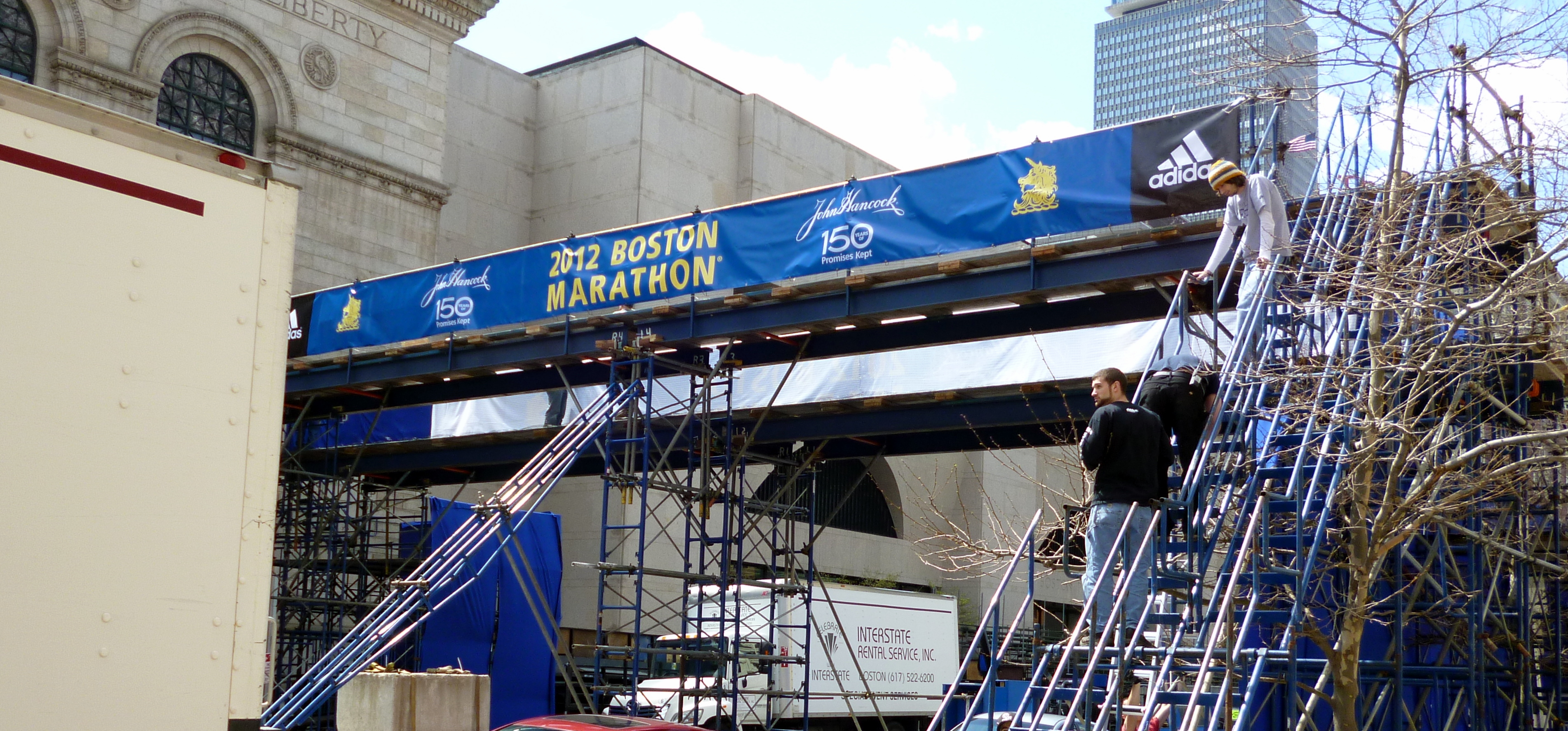
Had to park far away.  They seemed to be preparing for a running competition of some sort. Lots of fit-looking folks in track suits wandering around Copley Squere.

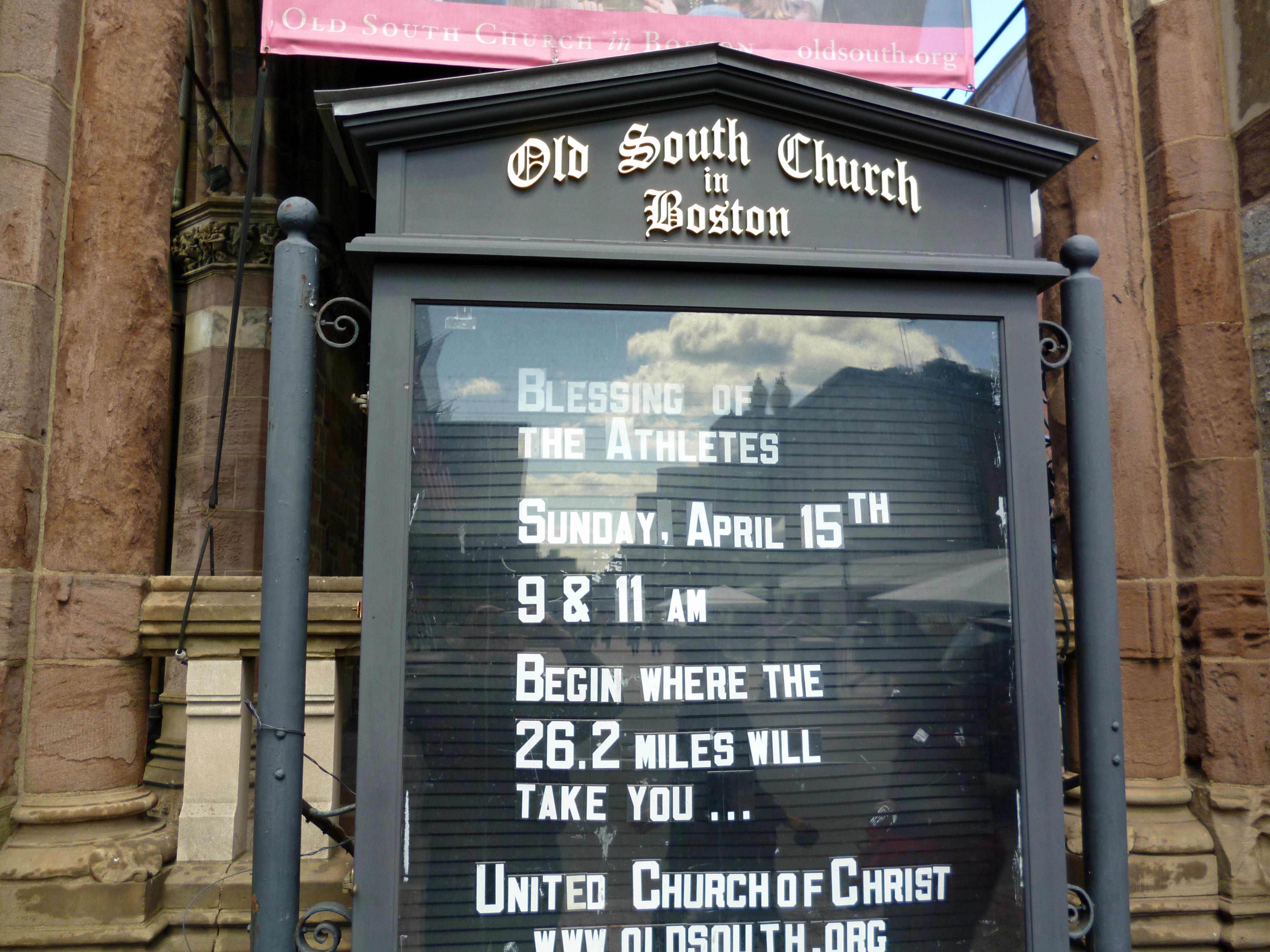
They were even preparing to pray for the runners:

Old South Church bills itself as the “church of the finish line.”

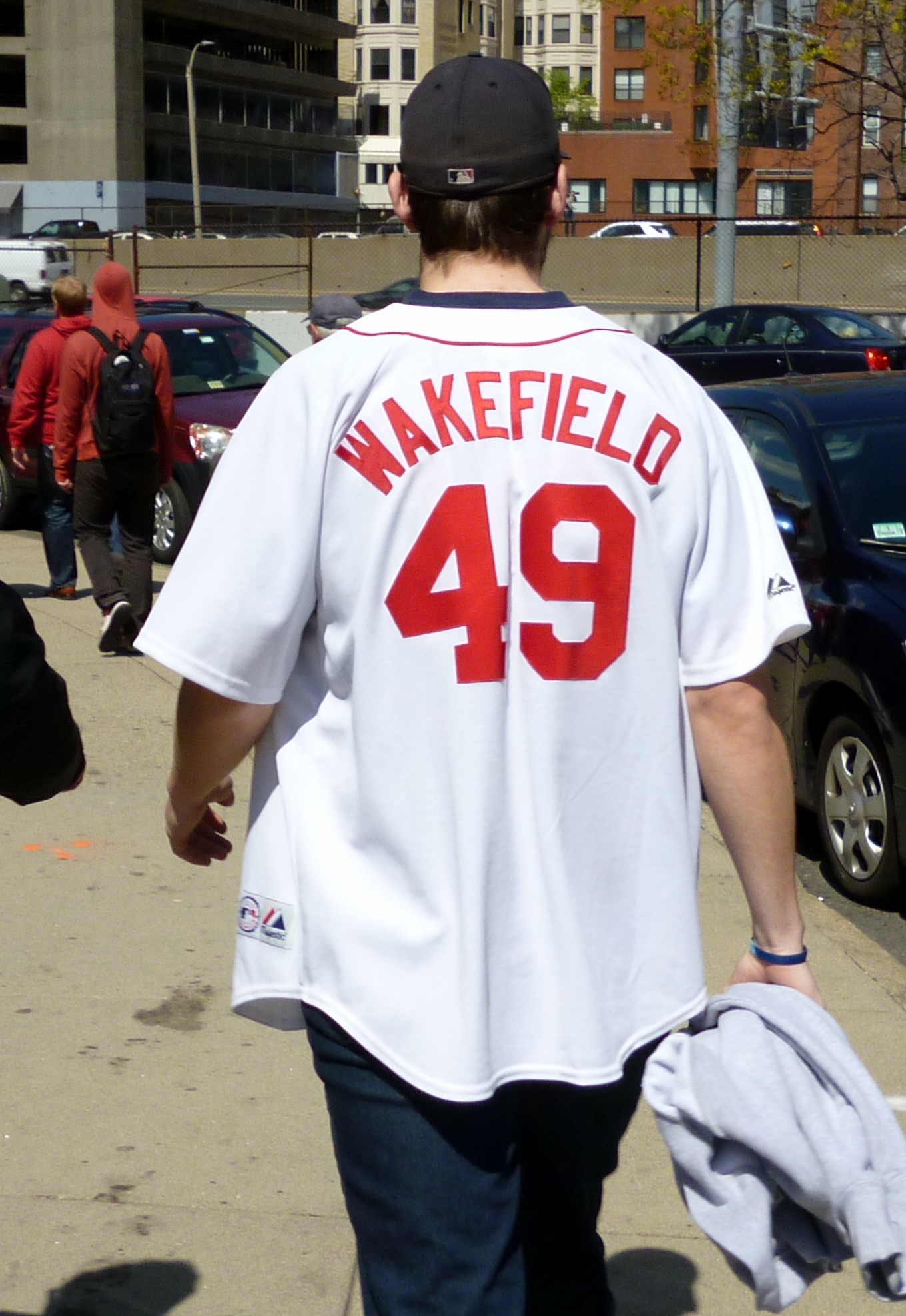
Here’s a guy celebrating a pitcher of yesteryear:

Here’s the Muddy River, which looks a lot better in a photograph:

Outside the Park

The 100-year anniversary celebration is next Friday:

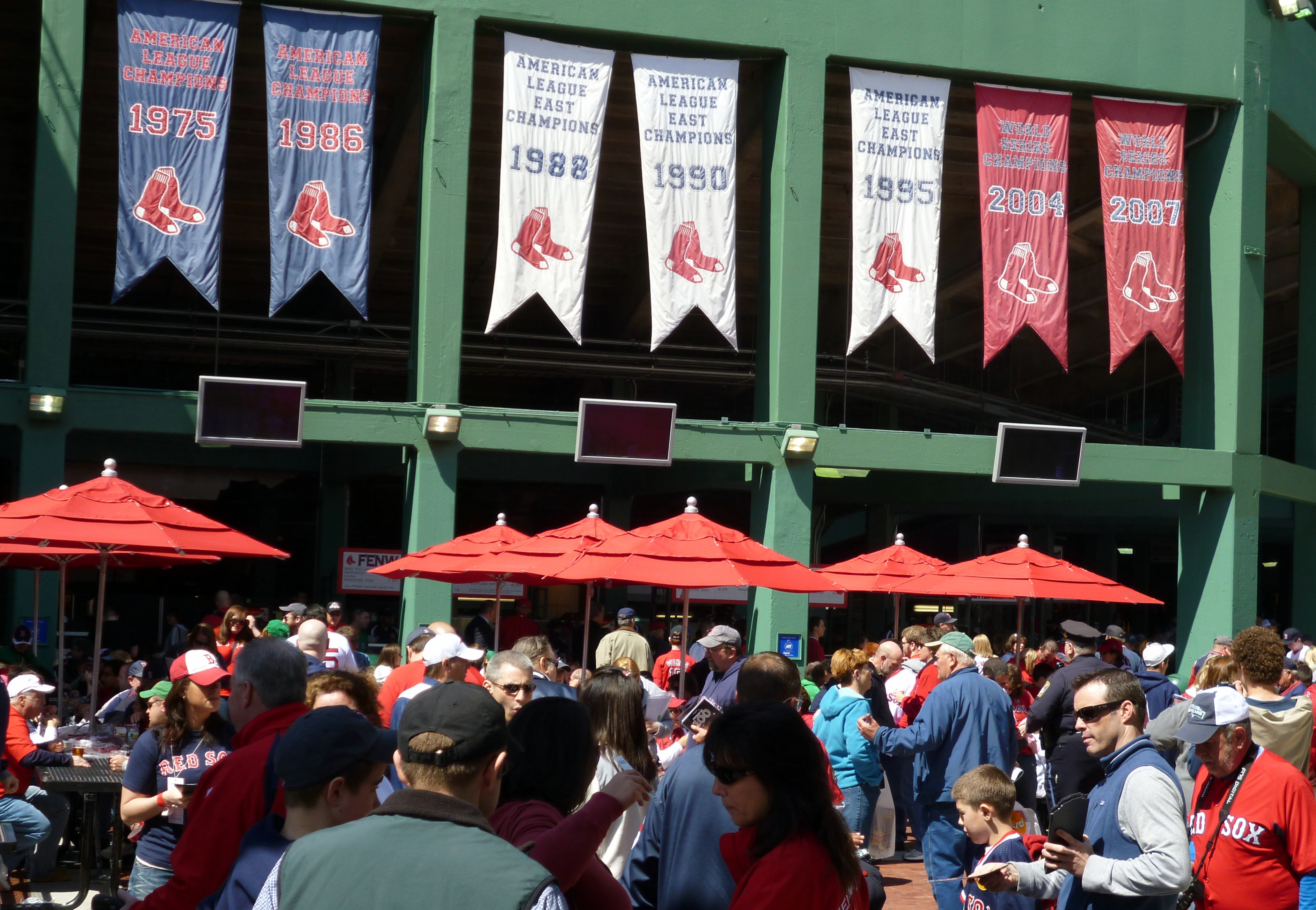
Where is our third-place banner from 2011?

Buddy?  Who’s Buddy?  Even the lady holding the sign doesn’t seem sure:

Of course, it’s the immortal Buddy Roemer.

Here is the handsome, conservative junior senator from Massachusetts, Scott Brown:

He is locked in a tough reelection fight against a popular Democratic opponent.  Hey, there might be a novel in that!

Inside the Park

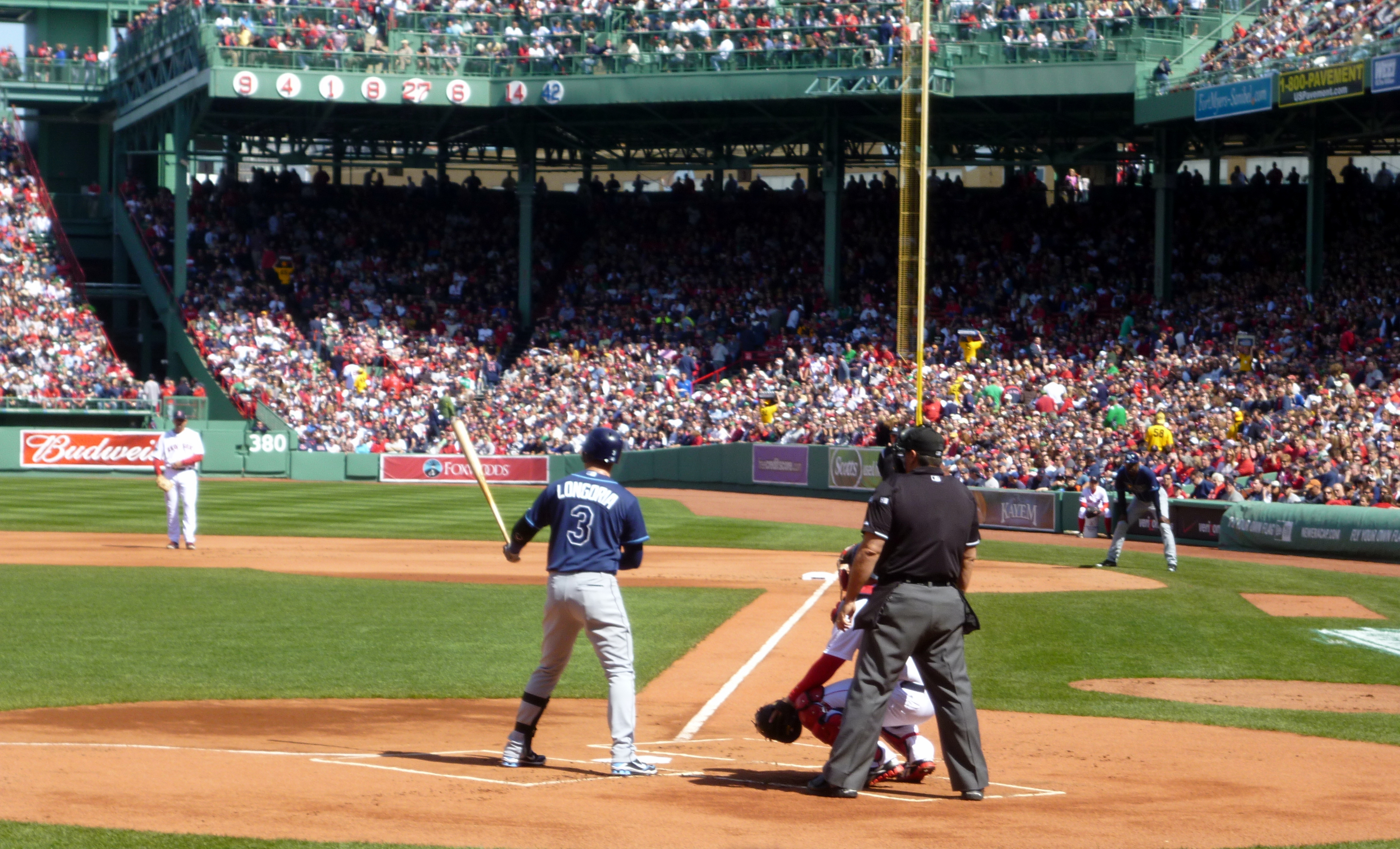
The seats were ten rows back — the fancy seats where the vendors actually bring beer to you.  Here’s the view:

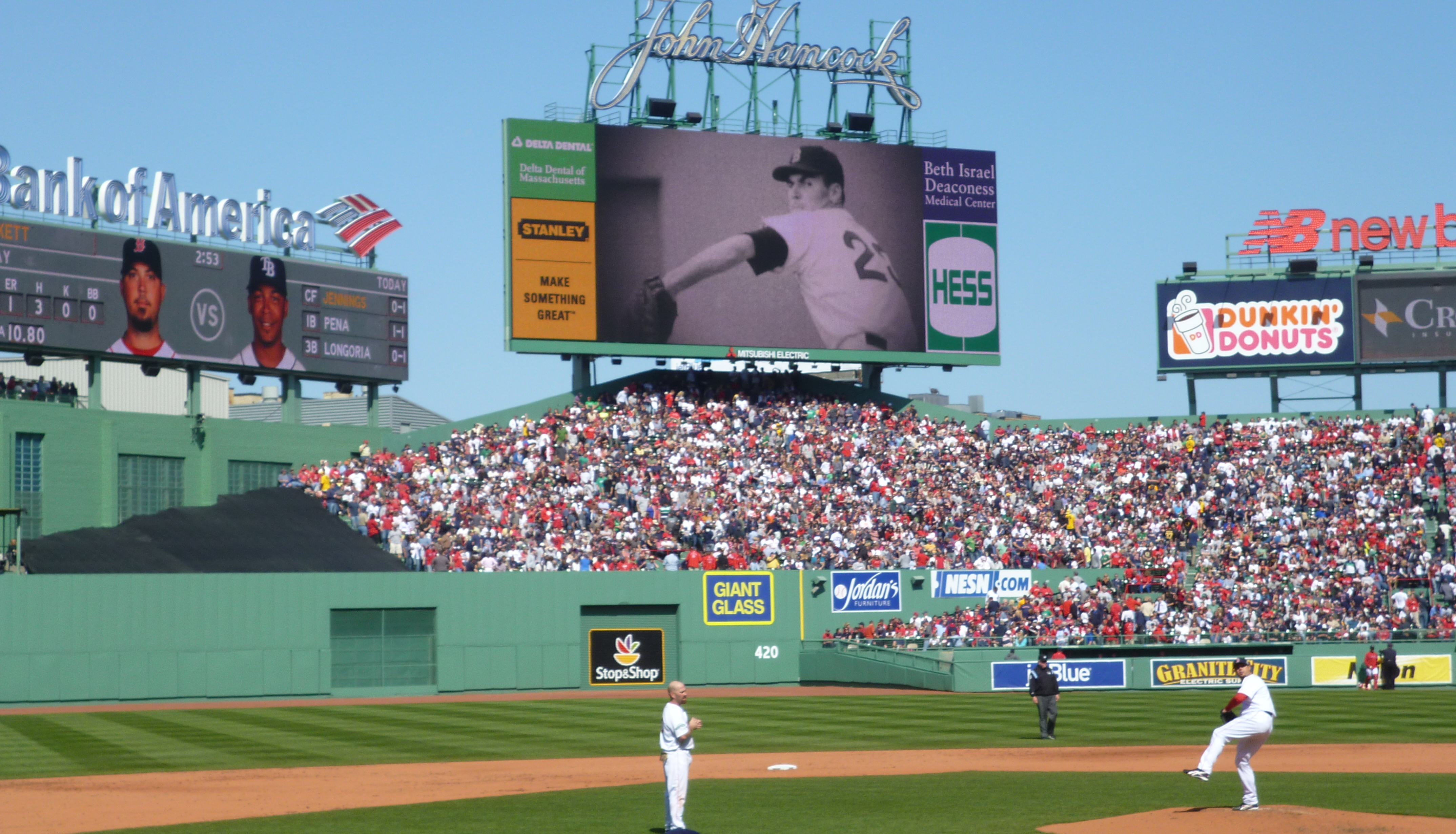
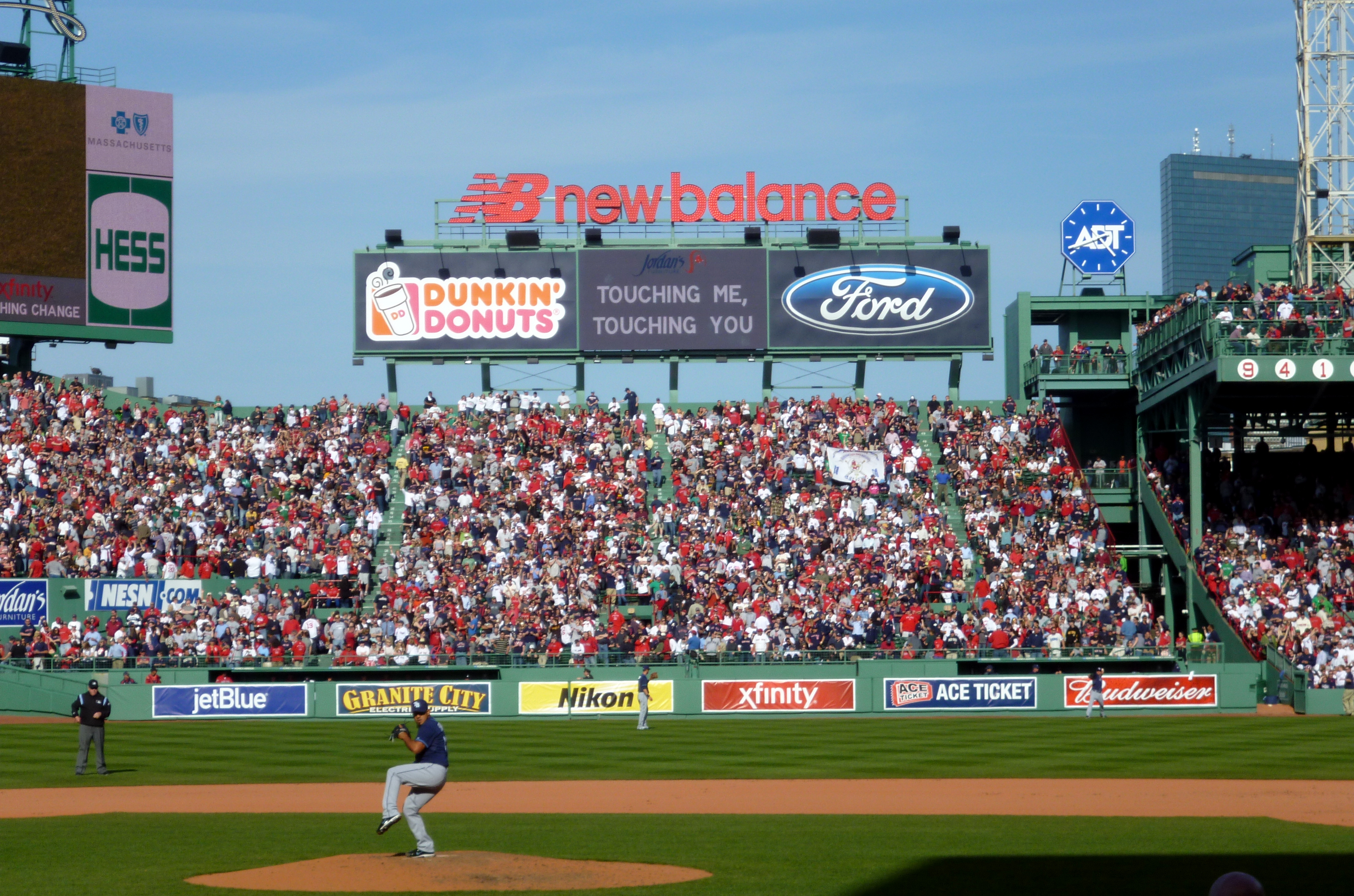
Fenway now has three Jumbotrons; each displays player statistics with a faux Fenway scoreboard background. On the John Hancock scoreboard, we’re looking at a video of the immortal Dave Morehead.

Here’s the aftermath of the injury to Ellsbury.  It didn’t look that bad from far behind home plate:

They flash the words to “Sweet Caroline” on the scoreboard.  Have they always done that?  Why bother?  (Well, they flashed the words to “God Bless America” as well, but the girl singing it still had problems.)

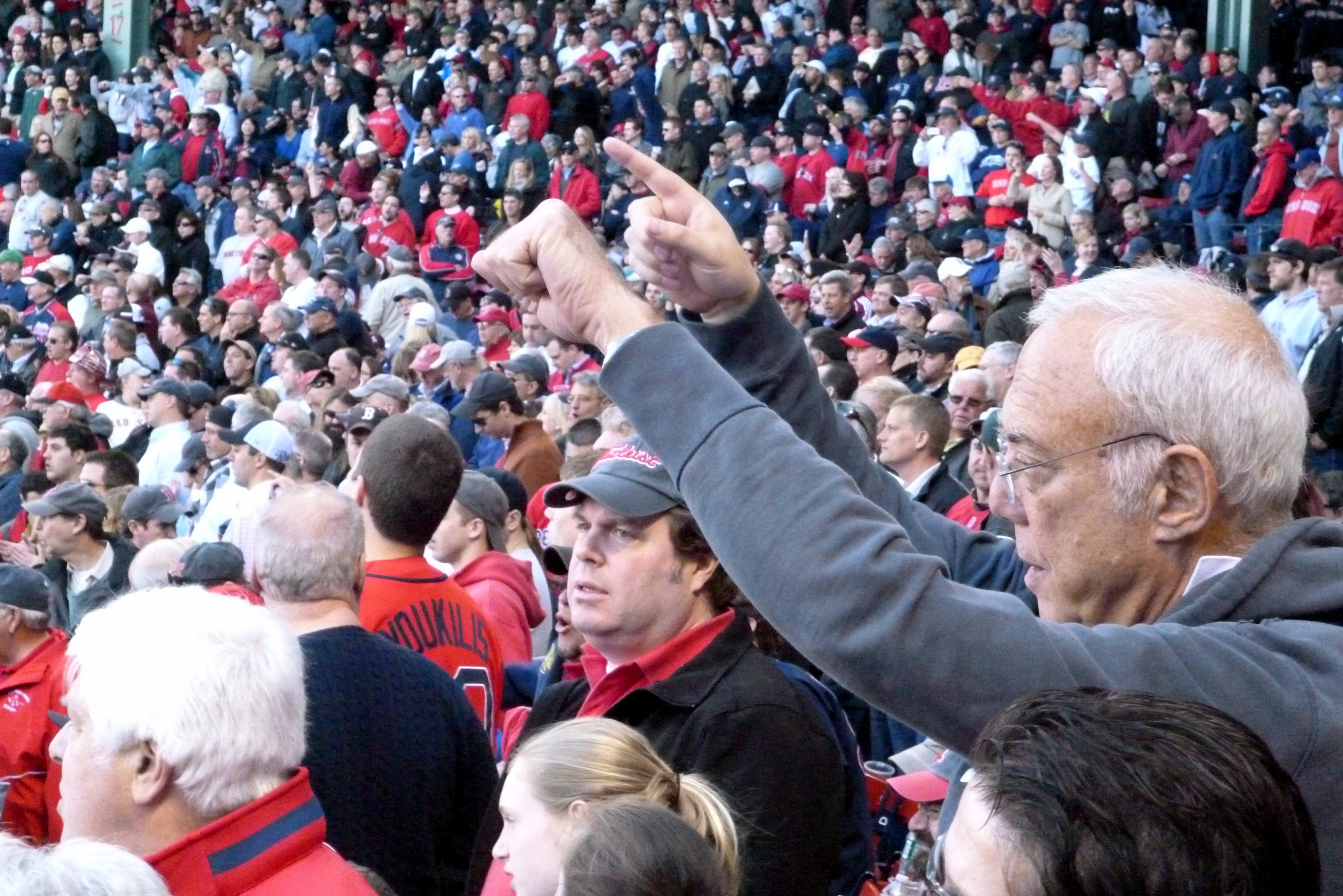
Here are the crazed throngs giving their Neil Diamond salute to “So good!  So good!  So good!”

The Game

Oh, the game.  Beckett was very efficient — only struck out one, but got the Rays to hit a lot of fly balls.  David Price for Tampa Bay was extremely inefficient, despite consistently hitting 97 mph on the gun.  He was gone after three innings.  The hitting star for the Red Sox was the immortal Kelly Shoppach; he even managed to steal the first base of his career on a weird delayed steal.  The Red Sox put ten men on in a row in the bottom of the eighth and scored eight runs to seal the victory.  Final score: 12-2.

The Return

I was tired of taking photographs.  Here’s Trinity Church with the Hancock Building in the background:

How to Make Baseball Better

Watching Moneyball reminded me of the significant way in which Moneyball theories have made baseball worse for fans.  Moneyball emphasizes the importance of drawing walks, waiting for the right pitch to hit, and driving up pitch counts for pitchers.  So a measure of a hitter’s success is how much time he spends not hitting — just standing there with the bat on his shoulder.  Which is to say, how boring he is.  Would you rather watch Dustin Pedroia line a first-pitch single to the outfield or draw a seven-pitch walk?  He’s good at both: he ranked sixth in the American League in pitches per plate appearance in 2011; Kevin Youkilis (Moneyball’s “Greek God of Walks”) ranked eighth.

So Moneyball slows the game down.  The average Red Sox game takes over three hours to play.  When the Red Sox play the Yankees, that goes up to almost three and a half hours.  This is just too long.  No wonder the game is losing popularity.

Bill James (who was mentioned several times in the movie) had some ideas about how to speed up the game in his clunkily titled The New Bill James Historical Baseball Abstract.  I just wanted to mention a few.

He points out that it isn’t just the length of the game that’s at issue. He says:

The problem with long baseball games isn’t the time they take. The problem is that the wasted time inside baseball games dissipates tension, and thus makes the games less interesting, less exciting, and less fun to watch.

Anyway, here are the proposed rule changes that I find interesting:

Limit the number of times a pitcher can throw unsuccessfully to bases to two per inning. The third unsuccessful throw would count as a ball.  This would get rid of the endless throws to first base to keep a runner close to the bag and prevent him from stealing.  The result would be more steals (which is a good thing) and less wasted time.  What’s not to like?

Limit the number of times a team could change pitchers in mid-inning. James suggests once per game, and only after the current pitcher has given up at least one run in the inning.  Nothing is more tension-dissipating than having a manager waddle to the mound and bring in a lefty specialist to pitch to David Ortiz, and then waddle back out after Ortiz has batted to bring in a righty to pitch to Youkilis.  Do that two or three times in a game, and you’ve added twenty minutes to its length.  Ugh.  A variant would be to have a rule that a reliever has to face at least two batters (unless he gets the third out in an inning). This might effectively get rid of the lefty specialist, which would also be a good thing.

Don’t call time when the batter gets into the box to hit. That isn’t a rule change, it’s just a policy directive to umpires.  Why are batters always granted time when they ask for it?  Make ’em hit.  Maybe time could be granted once per at bat, since a batter could legitimately get something in his eye or whatnot.

James doesn’t mention this change, and it probably wouldn’t make a lot of difference, but:

A batter will be granted first automatically when the opposing team signals that it wants to intentionally walk him.  Why does the pitcher have to deliberately pitch four balls?  Theoretically he could screw up and throw a pitch too close to the plate, and the batter could swing at it.  But I have never seen that happen.  Have you?  So why waste everyone’s time?

If the length of Red Sox games could be whittled down to two and a half hours or so, life would be better for everyone.

Of course, James made these recommendations in 2001, and nothing much has happened since then.

Notes on Moneyball

So let’s get off cosmology and talk a little baseball.

I finally saw Moneyball last night, in time for the Oscars.  Some comments:

  • For weeks Moneyball has been at the top of my Netflix queue, but they never sent it to me, so I finally had to get it on-demand from Verizon.  Netflix is having problems with its business model, seems to me.
  • Paul DePodesta (the original for Jonah Hill’s character) didn’t allow his name to be used in the movie.  I don’t know which came first — DePodesta refusing permission to use his name or the decision to make the character fat and unathletic (DePodesta is neither).  Oddly, they also made the character a Yale graduate, whereas DePodesta went to Harvard.  Maybe Aaron Sorkin was tired of writing about Harvard characters after The Social Network.  Or maybe they thought that going to Yale went along with being fat and unathletic.  (Jonah Hill was terrific, by the way.)
  • The movie glosses over the central difficulty with the pure Moneyball approach — that it ignores the player’s character in favor of his statistics.  The scene where Billy Beane yells at Jeremy Giambi is great — but we aren’t reminded that the scouts explicitly warned Billy about Giambi’s character when his name came up before the season.  On-base percentage isn’t everything.
  • Of the nominated movies I’ve seen, I think The Descendants probably has a better adapted screenplay than Moneyball.  But the Ricardo Rincon trade scene with Brad Pitt and Jonah Hill was Aaron Sorkin at his best — almost as good as the opening scene of The Social Network. Nobody writes dialogue for intelligent people as well as Sorkin.
  • I was wondering how the movie would handle the ending; after all (spoiler alert, I guess), Billy Beane has never won anything with his Moneyball theory.  It takes the odd approach of using the Red Sox World Series win in 2004 as its happy ending — since John Henry embraced Moneyball when he bought the franchise.  OK, I guess…  The problem for Billy Beane, of course, was that once big-budget teams started copying his methods, he was pretty much back where he started — trying to make things work with a shoestring budget.