Thoughts on sales ranking; also, a bad review and a good sunflower

After getting as high as about #46 on the Nook bestseller list, Senator is starting to fade like the Tampa Bay Rays.  Its sudden rise in the rankings got me thinking about how they are calculated. A brief tour of the Internet convinced me that this is a rat-hole from which one may never return.  The algorithms are proprietary and probably change periodically, so it’s all guesswork.

Since I’m dealing with a publisher rather than publishing my books myself, I don’t see the daily sales figures on Amazon and B&N, so there is no easy way for me to see how the ranking tracks these sales numbers.  But lots of self-published writers apparently have nothing better to do, and they are more than happy to opine about who the rankings are calculated.

The consensus, if you care, is that the ranking represents something like a 30-day moving average, with more recent sales weighted more heavily than sales earlier in the cycle. There is probably some residual effect from sales prior to the 30-day period, so a book that sells five copies a year will have a higher ranking than a book that sells one copy. I have no idea if this is anything like the truth, but it seems plausible to me.  And how many sales does a particular ranking represent?  This looks like a reasonable guess.  Of course, that’s for Amazon.  Barnes & Noble would presumably be something like 20% of that.

Anyway, the sales on Barnes & Noble have started to get Senator some reviews there.  Here is a remarkably bad one that I enjoyed (sort of).  It’s by our friend Anonymous and is titled “Awful”:

Was there a good guy anywhere in this mess? However samples at end were even worse and can now avoid all in future mom

What’s impressive about this is that the writer feels obliged to trash the samples as well as the novel.  Also, what’s up with the word “mom” at the end?  Is the writer trying to insinuate that “Anonymous” is actually my mother?  That’s harsh.

To make myself feel better, here’s a photo of some sunflowers from my garden:

sunflowers


Also, the Red Sox just beat the Yankees for the third time in a row, so there’s that.

“Senator” promo at Ereader News Today

Hey, do me a favor and go over to this Facebook site and Like the “More Kindle Deals for 9-3-13” topic.  Getting lots of likes makes Ereader News Today happy.  Or you can go straight to the site, where Senator is one of their Kindle deals of the day.  Buying a copy would make them even happier.  It would make me happy, too.  At $0.99, how can you go wrong?

Senator final cover

The Senator promotion at Barnes & Noble is certainly doing what it’s supposed to do.  The book is now #56 on the Nook bestseller list, which puts it ahead of Volumes 2 and 3 of the Fifty Shades trilogy, among other interesting and no doubt worthy books.

Finally, I’ve gotten a couple of nice reviews of The Portal on Amazon but could use a lot more, if you’re interested in helping out.  I’m told that the Nook edition will appear any day now.

Let’s all join Craig Shaw Gardner in the Netherhells

Craig Shaw Gardner has finally released the first three books in his hilarious Ebenezum series as e-books.  Let the rejoicing begin!  Here’s the classic cover for A Malady of Magicks:

Also out are A Night in the Netherhells and A Multitude of Monsters.

I heard Craig read the short story that turned into A Malady of Magicks back in the Harding administration sometime, and I couldn’t believe that anyone could write a story that funny.

Mr. Gardner has also relaunched his blog, this time in our familiar WordPress world. Let’s get him to start adding content!

Senator currently one of “101 Nook Books Under $2.99” at Barnes & Noble

Senator is currently on sale at Barnes & Noble for the ridiculously low price of $0.99.  (Yes, friends, you heard right!)  So now would be a good time to pick it up if you’ve got a Nook.

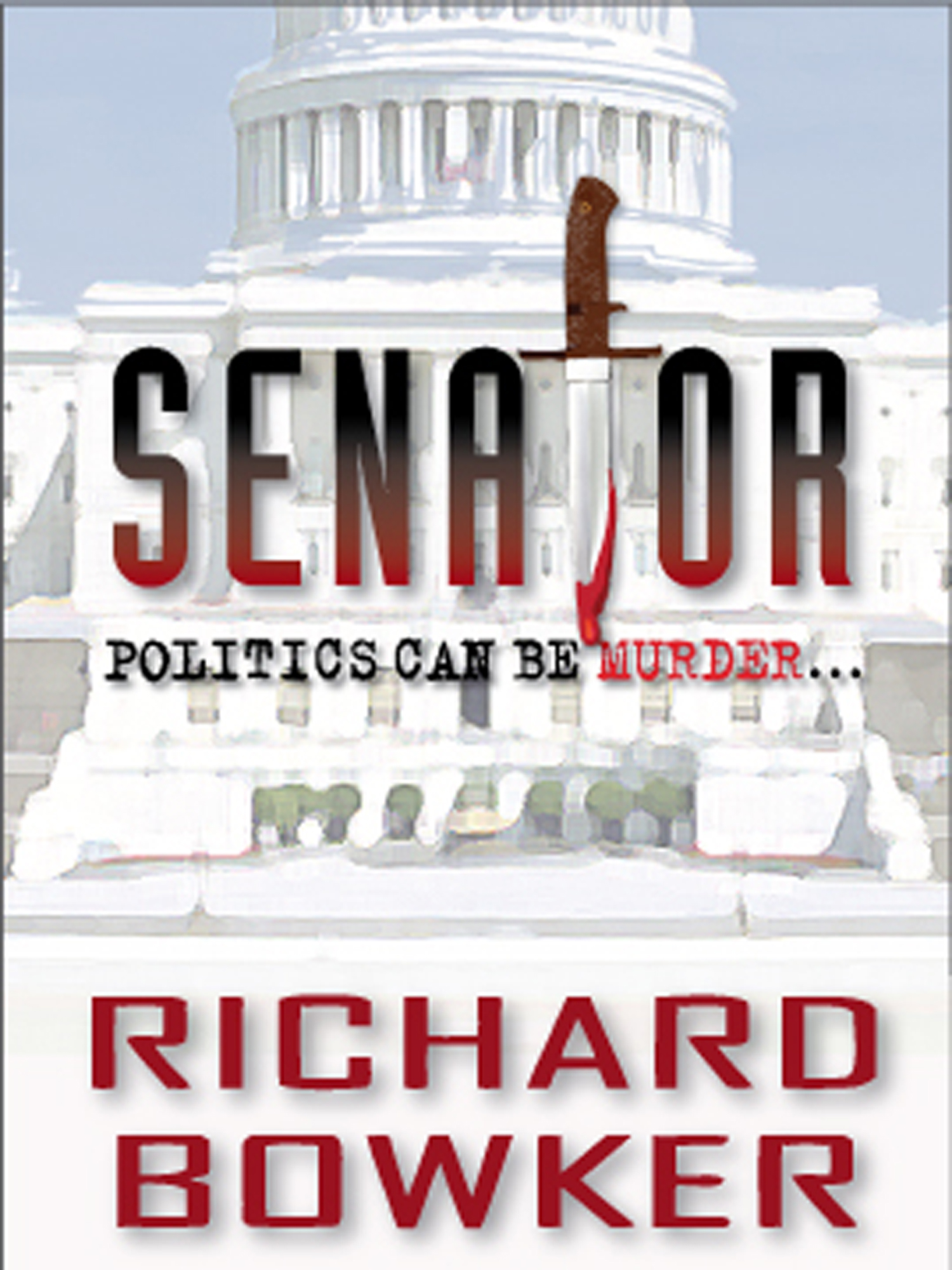
I don’t know how this sort of thing works, but my publisher got the novel a spot on B&N’s “101 Nook Books Under $2.99” promotion.  It’s currently on the third page, but the book moves up the pages as its sales rank improves. This promotion is having an effect.  A couple of days ago Senator‘s sales rank was somewhere north of 300,000 on B&N, meaning (I suppose) that no one had bought it recently.  Currently its sales rank is 460.  Maybe someone will finally review it!

Here’s what the cover looks like, in case you’ve forgotten:

Senator-Cover2

The Portal is now available from Amazon!

It’s time to enter The Portal.

9781614174639

Okay, that’s a bit hokey, but seriously, the Kindle version of The Portal is now available. It’ll be up on Barnes & Noble, iBooks, and other fine sites soon. Those of you who have dipped into the novel on this blog can now have your very own electronic copy for the astonishingly low price of $4.99.  (All right, that price isn’t so astonishingly low, but it’s what my publisher decided the thing was worth.)

Customer reviews are critical to the success of an ebook.  If you can find it in your heart to write a good review of The Portal at Amazon, that would be very helpful.  You don’t have to purchase the book from Amazon, but reviews from verified purchasers count for more.

My publisher and I couldn’t quite agree on sales copy for The Portal.  Here is my summary:

In the woods behind his house Larry Barnes makes a spectacular discovery—an invisible portal to a parallel universe, where Burger King has turned into Burger Queen, cell phones are huge, and his home town doesn’t look anything like the place where he lives.  When he returns from this world, he makes the mistake of telling his best friend, Kevin Albright, who convinces him to try entering the portal one more time.  What could go wrong?

But this time Larry and Kevin find themselves in a very different world. From the moment they step out of the portal they are caught up in a war that pits the United States of New England against New Portugal and Canada.  They need to make their way in a world that is utterly alien, without computers or automobiles or telephones.  A world in which no one has heard of America, or Mozart, or bacteria.  Larry and Kevin face hunger, disease, battle—and, most of all, loneliness.  But they also find friendship and family, joy and love.  Can they survive the war—and help New England win it?  Can they make their way back to the portal and return home?  And what will they leave behind if they do make it back?

Exciting and deeply moving, The Portal is a science-fiction adventure you won’t soon forget.

An alternative cover

My publisher changed its mind about “Alternate History“.  The primary reason: Amazon uses “Alternative History” as its category for ebooks and “Alternate History” for books. So here is today’s cover:

9781614174639


My friend Kathy (who can’t possibly be old enough to be the parent of a tween) complains that using the word “History” on the cover will turn off kids the age of her son.  This is interesting.  Publishers feel the need to categorize novels, because readers tend to stick to their favorite genres, and it’s much harder to market a novel if it can’t be fit neatly into a genre.  (My first agent gave up on me when I sent him Marlborough Street and he had no idea how to pitch it to publishers.  My current publisher decided it was a “psychic thriller,” which I guess is a thing.)

Kathy also queries why the novel isn’t marketed directly to tweens — don’t they have their own category?  Yes, they do.  But I’m pretty sure adults will enjoy The Portal, and if you market a novel specifically to young adults, you’re not going to get any adults reading it (unless you’re J.K. Rowling).  So, I dunno.  I’d much rather write the stuff than figure out how to market it.

Writing e-book sales copy — sheesh, it’s harder than you think

I have to trust that my e-book publisher knows more about the business than I do.  They certainly seem to.  They have convinced me to change my title from Portal to The Portal because one-word titles aren’t selling well nowadays, unless you’re James Patterson or Clive Cussler.  OK, fine — they can have the “the.”

Now they have sent me these instructions for the sales copy that will appear online..

Maximum overall word count: 200 words. (this includes sales blurb only)

Ideal length: 150 words

Why the length limits? Readers/people are basically lazy.  Amazon allows for approx 120 words before the reader has to click “read more”.  The incentivizing plot twist (or a strong suggestion of the twist) must appear in the first 120 words.

First Paragraph length max: 250 characters including spaces.  More than that and the number of lines exceeds three on most standard monitors.  More than three lines and the reader tends to “click away” unless the title is highly anticipated.

Apps present a new wrinkle.  200 characters including spaces to incentivize the reader to “click” read more.  Because readers are basically lazy, the buy-now case is best made in the first 200 characters (including spaces).

Copy Structure: Every word in the copy must either introduce the protagonist/antagonist, present the internal or external conflict, or contribute to a  relevant and non-clichéd sub-genre plot twist that sets the book apart. (but not too far apart.  Readers also tend to read in a rut).

OK, then.  The text I came up with here doesn’t fit the guidelines, so there is work to be done.  The limitation on total character count (including spaces) is an interesting modern development.  I’ve just started using Word 2013, and it took a bit of fumbling around before I figured out how to get it to show me the character count.  Sure enough, it will display the number of characters, and the number of characters including spaces, with a single mouse click.  Good job, Microsoft!


Print on Demand

My e-book publisher has started a Print on Demand (POD) service to go along with its e-book publishing services.  I’m going to try it out for Portal.

POD fills a gap in the e-book self-publishing model: some people just prefer a printed book.  A guy at work said he’d like to read one of my books, but what he really wanted was an autographed copy.  Can’t autograph an e-book.  (It seemed kind of weird that a co-worker would want my autograph, but not totally weird.  There’s something about a signed copy of a book that makes it special.)

There are two major players in the POD world: CreateSpace and Lightning Source.  This article explains the differences in mind-numbing detail and ultimately recommends CreateSpace.  My publisher uses Lightning Source.  Oh, well.  The publisher’s model, as with e-books, is that I pay them a (relatively small) amount of money to do all the prep work. They also handle the ongoing dealings with Lightning Source, in return for a small cut of the royalties.  You can eliminate the middleman and do all the work yourself if you use CreateSpace, assuming you have the time and energy; I have neither.  Per-unit royalties through my publisher are much lower than they are for e-books, because there’s so much more overhead in creating a printed book.  The idea is that most of your revenue would be from e-book sales, but the printed option is there for people who prefer it.  I can, of course, buy any number of books at a steep discount, and then sign ’em for my co-workers, give them away to passing strangers, etc.

POD is another blow against the business model of traditional publishing.  Time to give it a shot.

Apple loses its e-book antitrust suit

The judge has ruled against Apple in the suit that the Justice Department brought against it.  Now there’ll be another trial for damages.  And Apple has vowed to appeal.  So nothing is really decided.  But hey, we all know Apple is guilty!

Here is the graphical evidence of what happened to e-book prices when the major publishers, in collusion with Apple, forced Amazon to go to the agency model, thereby ending price competition among e-book vendors:

Prices went up two dollars or more per book overnight.  The exceptions were Random House and all the little publishers; none of them were party to the collusion. Thanks, Apple!