Marry merry Mary?

Here are some beautiful maps showing the way pronunciation and usage vary across America.

For me, the oddest result was the map showing that I live in a small area of the country that pronounce Mary, marry, and merry differently.  Can that be right?  Of course they’re all pronounced differently!  On the other hand, I can’t hear any difference between Don and dawn, which I read somewhere are obviously different.

I was also baffled by a couple of regionalisms that they omitted.  There’s a map showing regional variations in the word used for soda, but they don’t include tonic for New England.  I suppose that usage is dying out.  But the word rotary for roundabout or traffic circle isn’t dying out.  Why don’t we get credit for that? Look, we even put the name on signs:

A rotary in Lowell, Massachusetts.

(There is an absurdly long Wikipedia article about roundabouts.  Someone must really care about them.)

The bell tolls for “whom”

Here is a nice essay about the inevitable decline and fall of “whom,” a word that continues to exist only to trip people up and make them feel stupid. The Google Ngram Viewer for “whom” shows a decline of about 75% from its peak in 1820 or so to today.  But why?

One explanation is that the word has outlived its ability to fulfill the most important function of language: to clarify and specify. Another is that its subject/object distinction can be confusing to the point of frustrating. The most immediate reason, though, is that whom simply costs language users more than it benefits them. Correctness is significantly less appealing when its price is the appearance of being—as an editor at The Guardian wrote—a “pompous twerp.”

The writer quotes William Safire about what a writer should do about the word: “The best rule for dealing with who vs. whom is this: Whenever whom is required, recast the sentence.”

It’s annoying that “whom” continues to bedevil us when there are so many words that we need but that don’t yet exist.  Here are just a few:

  • A gender-neutral singular word for “they” and “them” instead of the atrocious “s/he” and the wordy “him or her”
  • A word like “either” that applies to more than two choices
  • A word for someone you are living with who is more than your girlfriend or boyfriend and less than your fiancée or spouse or (ugh) life partner

These words would make a writer’s life a whole lot better.  Whom can I talk to about coming up with them?

“It changes the whole complexity.”

Recently the polling group Public Policy Polling (PPP) polled Massachusetts residents about the upcoming senate race, and threw in other random questions while they were at it.  PPP found that the disapproval rate for Red Sox manager was 1%, an inconceivably low number.  This may change if he keeps saying stuff like this (from today’s Boston Globe) about Jacoby Ellsbury’s base-stealing ability:

It changes the whole complexity. When you’ve got that kind of base-stealing threat at first, the attention is split by the guy on the mound, potential mistakes on location at the plate. We can potentially capitalize on those situations.

The baseball wisdom is unexceptionable; however, the use of “complexity” instead of “complexion” will not win him any fans among language snoots. The Red Sox had better do well against the Yankees this weekend.  Red Sox fans, as well as language snoots, are a fickle bunch.

A few thoughts about “Telegraph Avenue”

Telegraph Avenue is Michael Chabon’s latest novel.  I’ve read two others by him: The Yiddish Policemen’s Union and the entertaining but less interesting serial novel Gentlemen of the Road.  He is an astonishing writer.  Quit reading this stupid post and download one of his books.

That said, I didn’t like Telegraph Avenue as much as The Yiddish Policemen’s Union, which I thought was utterly brilliant.  It’s about black and Jewish folks just getting by in the Oakland of 2004.  Two men run a marginally profitable used record store threatened by a superstore that may be built nearby.  Their wives are midwives struggling to keep their practice going in the face of opposition from hospitals who don’t want them doing home births.  All the characters are wonderfully comic and sympathetic.  Their lives are described in rich detail.  I don’t know how Chabon does it.

Still, at 465 pages the book feels overstuffed and somewhat exhausting.  While I willingly gave myself up to the strange alternate universe of The Yiddish Policemen’s Union, I wasn’t especially interested in the extensive, loving descriptions of 70s black music and films that is central to the book.  Your mileage may vary.

A couple of other points:

Telegraph Avenue is best read on an ebook reader with a built-in dictionary. If you’re like me, you’ll find yourself looking up a lot of words — Chabon’s range of vocabulary is spectacular.  I’m not a foodie, so I don’t feel too bad not knowing lavash and turmeric.  But I figure I should have known a lot of his other words — clabber and selvage, for example.  I know ’em now.

Finally this was the first book I’ve come across where the author credited the hardware and software used to create it: “This novel was written using Scrivener on Macintosh computers.”  Modern times.

The power of this blog cannot be underestimated

On my endless commute I’ve been listening to a course on modern French history.  The professor knows his stuff, but he is not the most articulate lecturer I’ve ever heard.  Here’s an approximation of a sentence he uttered: “The importance of Charles de Gaulle, um, in post-war France, um, cannot, er, um, be underestimated.”  I swear that I knew this sentence was going to go awry even before he finished it.

Presumably the point he was trying to make was that de Gaulle was so important it would be impossible to overestimate that importance. No matter how high you made your estimate, you

This post isn’t about Charles de Gaulle

would always fall short of his real importance.  You could, I suppose, make the case that what he was trying to say that de Gaulle’s importance must not be underestimated–that is, his point was that you might be inclined to give a low estimate of his importance, but that would be a foolish mistake on your part.  In either case, the professor wasn’t saying what he wanted to say.

Here are some (of many) recent Google hits with the same problem:

“The complexity of bank reform cannot be underestimated”
“Iranian cyberthreat cannot be underestimated”
“The power of the English language cannot be underestimated” (hmm)

The great blog Language Log has more than one post about this construction (and similar ones). In this post, the author comes up with four potential explanations:

  1. Our poor monkey brains just can’t deal with complex combinations of certain logical operators;
  2. The connection between English and modal logic may involve some unexpected ambiguities;
  3. Negative concord is alive and well in English (or in UG);
  4. Odd things become idioms or at least verbal habits (“could care less”; “fail to miss”; “still unpacked”).

The author prefers the “poor monkey brains” explanation–as do I–but he feels obliged to work through the logical issues involved in explanation 2.  Here’s a taste:

Now, it’s a theorem of deontic logic that if it’s not permissible that A, then it’s obligatory that not A; or in symbols

¬PA  →  O¬A

This follows straightforwardly from the fact that PA (“A is permissible”) is defined as ¬O¬A (“not obligatory that not A”), and ¬¬O¬A becomes O¬A by cancellation of the double negative.

And since “cannot” can mean “not be permitted to”, while “must not” or “should not” can mean “be obliged not to”, it somewhat confusingly follows that “cannot” sometimes means the same thing as “must not” or “should not”.

If you say so.  Again, I think the likely explanation is that people can’t quite get the logic right when there are negatives involved, so they end up saying something that, if you work it through, means the opposite of what they intended. But as time goes by, the poor monkey brains explanation tends to give way to explanation 4–the phrase simply becomes an idiom that people don’t even try to understand.  Here’s the phrase’s Google Ngram, which shows that its use is very much a modern phenomenon:

Are we getting stupider?  Or is this just one of those things that happens in language?  I dunno, and I suppose I could care less.

“Emergency situation, everybody to get from street.”

I have never quite understood the attraction of the phrase “emergency situation.”  How is that different from an emergency?  Why waste your breath on the extra four syllables?  I suppose it has something to do with people’s desire to use obfuscatory bureaucratese–why say something simply if you can say the same thing in a more obscure and high-falutin’ way?  Maybe it also offers an out if the event turns out not to be quite as dire as expected: “I didn’t say it was an emergency; I just said it was an emergency situation.”

My sense was that the phrase caught on in the past 10-15 years, but the Google Ngram for American usage shows it has been on the rise for a long time and actually peaked in the 1980s:

British English shows a similar pattern, but a lower absolute level of usage.  I wish there was a way to compare the usage of the phrase against just the word emergency.

Prescriptivists may see this usage as more evidence of the decline and fall of the language.  I certainly find it ugly and unnecessary.  Maybe that makes me a prescriptivist.

Here is the funniest use of the word emergency I know of, from the 60s movie The Russians Are Coming The Russians Are Coming, where the Alan Arkin character is trying to coach the crew of his grounded Russian sub to speak a simple English sentence.  I think it might actually be even funnier if he used “emergency situation” instead of “emergency”:

You must not look like a clueless foreigner If people are asking you for directions

Here is the latest post from our fearless world traveler.

It’s about a bazillion degrees Fahrenheit in my neck of the woods, so here is a photo of the traveler, looking a bit like Kevin Youkilis, jumping into what he calls a “dope waterfall”:

“Dope”, for you old fogeys in the audience, means something like “amazing” or “extraordinary”.  (Comparative “doper,” superlative “dopest.”)  I recall when my kids taught me the word “sick,” with approximately the same meaning.  At some point “sick” wasn’t intense enough, and I was introduced to the word “ill”, meaning “really sick.”  But even old fogeys know these words nowadays.  Thus the language evolves.

Can you use a politically incorrect word if people are stupid for thinking it’s politically incorrect?

In response to this post, my very fine commenter Stan offers the case of gyp:

Will Shortz will occasionally use the word GYP in the Times crossword puzzle. Invariably he gets complaints from people who consider it a slur against gypsies. Shotz’s defense is that the word does not derive from gypsy and insists on his right to use it.

So what is your feeling about political correctness in the context of mistaken etymologies?

Here‘s a good post on that particular word.  It seems that the derivation of gyp is at best somewhat cloudy (not unlike that of paddy wagon).  One commenter on the post takes this straightforward position:

If a word is meant to be offensive, or is taken to be offensive, then it is offensive.

But what if there is no question about the word’s derivation, and it has nothing remotely offensive in its history?  That’s where we are with the word niggardly, which clearly predates the offensive term and has a well-understood etymology from ancient Nordic.  Here is an example of the high dudgeon people get into over this word, and others like it:

Unfortunately, in today’s America, actual instances of racism are so rare that false allegations of racism are the new racism. We are left with bizarre new English language rules with perplexing vagaries on usage:  May I use “chink in the armor” when referring to the weakness in the game of non-Asian basketball players, or has the very meaning of a non-racist phrase been so consumed by the slurred meaning of one of its words that we must never again speak, even with historical accuracy, of the practice developed by the men in armor?

Instances of racism are so rare?  Yikes!  What’s America coming to, and how come Blacks have the right to say words that Whites can’t?  (I love the commenter who complains that American English is a literal minefield.)

After the recent Supreme Court decision Eric Cantor sent out a tweet about Obamacare where he said something like “It’s time to call a spade a spade.”  The tweet was subsequently retracted.  A minefield!

Here, by the way, is Google’s history of the use ofniggardly in American English for the past century or so:

Something has been going on here, obviously.  Are people being forced to give up their precious word because of political correctness, or are they becoming naturally more sensitive, even if they are hazy on etymology?

Conservatives have clearly cultivated a sense of victimhood over political correctness.  And language is certainly a minefield, if not a literal one.  But that has always been true, although the mines have generally been related to “correct” usage.  The writer who wrote in regards to in an email to me stepped on a mine, even if she didn’t know it.  With political correctness, the stakes are simply somewhat higher.  Stepping on a usage mine may make someone think you have inferior language skills; stepping on a political correctness mine may make someone think you are an insensitive jerk.  You may not care, safe in your superior knowledge of etymology.  But that doesn’t mean you’re not an insensitive jerk.

Back in college (a long, long time ago) I wrote a review of a Tennessee Williams play, which I said was about “two aging queers.”  In the newsroom, each article from every paper was clipped out and pasted in a large book, where other reporters and editors could write comments about it.  Next to my article, someone took me to task for using the offensive word queers, although he allowed as how it might have been acceptable in context.  Holy shit, I thought.  I’d had a somewhat sheltered upbringing, I guess; I had no idea the word was offensive.

The incident has stayed with me to this day (obviously) and recalling it still causes a shiver of embarrassment.  I had (and have) no wish to be an insensitive jerk.

Others may feel differently.

The Higgs Boson and smoking ducks

The excitement over the discovery of the Higgs Boson appears to have been too much for the English language as we know it to cope with:

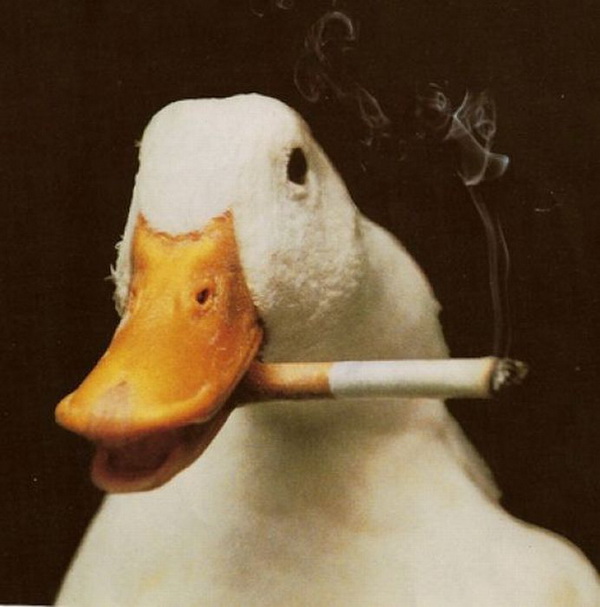
“If I were a betting man, I would bet that it is the Higgs. But we can’t say that definitely yet. It is very much a smoking duck that walks and quacks like the Higgs. But we now have to open it up and look inside before we can say that it is indeed the Higgs.”

This is the kind of event that changes the language, for better or worse. As Language Log says, who knows what will happen when you open up a smoking duck?

Do you really want to offend my lovely wife and that nice Irish guy at work?

My first poll is included below.  Your vote matters!

I agree with much that Henry Hitchings has to say in The Language Wars, but I’ll leave that discussion for another time.  Here I want to talk about a point on which I disagree with him: political correctness in language usage. Here’s some of what he has to say:

The inherent problem of PC was, and is, that it seeks to extend people’s rights while at the same time curbing their freedoms.  Instead of fostering respect for variety (of people, of cultures, of experiences), it stresses differences: we are not to think of the common good, but instead must recognize a growing number of special social categories.  This contributes to the increasing atomization of society: shared experiences and values are regarded not as things to cherish, but as reflections of constraint, evidence of the oppression of the individual and his or her particularity…. [N]egative attitudes precede negative names, and reforming language in the interest of equality is not the same thing as accomplishing equality.

I have to admit that I am unable to see what’s so problematic about political correctness in language.  (Political correctness in other areas, such as education and scientific inquiry, raise much more vexing issues.)  I wish Hitchings had given some examples of usages that advocates of political correctness would deplore but that he would find acceptable.

Here’s a case to consider.  My lovely wife is of Irish extraction.  She finds the term paddy wagon to be offensive.  And she’s not alone.  So does this nice Irish guy at work.  So do lots of Irish people.  The actual etymology of paddy wagon is unclear.  Does paddy refer to the Irish policemen who used the wagon?  Or the Irish drunks they threw into the wagon?  But whatever.  Rightly or wrongly, some Irish people find the term offensive.

So, would you use the term or not?  Here’s my first attempt at a poll.  Let’s find out what the blogosphere says!

To my mind, political correctness is just good manners.  If you want the right to use the term paddy wagon, knowing that you are offending people who aren’t in general hypersensitive and who aren’t out to score political points, go ahead.  Strike a blow for your freedom to act like a jerk!  Avoiding the term will do nothing to redress real evils, as Hitching puts it.  Too bad!  The jerk who is forced by cultural norms not to act like a jerk will will decide he is the victim of oppressive language orthodoxy.  And he’ll still be a jerk.  But he won’t annoy my lovely wife, and that’s worth something!