In which a miracle is performed

Pontiff is (among other things) about miracles of various sorts, and their paradoxical effect on the people who perform them, and the people on whom they are performed. In the novel, the new pope has a reputation as a healer.  Before being elected to the papacy, he was the courageous leader of the Church in a nameless African country.  In this flashback, he has been imprisoned by the country’s maniacal dictator, Leonard Tokomi.  One night he is pulled from his prison cell, and he assumes he is going to finally be executed.  Instead, he is brought to the presidential palace.

What, then? Did Tokomi want to kill him himself? That seemed more than plausible; there were rumors of far worse outrages that had taken place inside the palace walls.

He was led through softly lit hallways and up a flight of stairs, until finally he faced a couple of enormous men standing guard in front of a set of equally enormous double doors.

“He is to go in alone,” the army officer instructed the guards. The guards said nothing, but searched Gurdani thoroughly. When they were satisfied, one of them grunted, and the officer removed his handcuffs. “Even though you are alone, you will be watched every moment,” the officer said to him. “Do not think of trying anything, or you will be dead before the thought is finished.”

Gurdani rubbed his wrists and said nothing. One of the guards opened the doors, and the other guard pushed him inside.

He was in a huge room dominated by a large canopied four-poster bed. He was so used to the grim monochrome life of a prison cell that his senses were momentarily overloaded by the luxury that surrounded him—from the vivid wall-hangings to the thick carpet beneath his feet. His brain started to clear, finally, when he say the shrunken figure lying in the bed. At first glance the figure looked like a corpse, but then it raised a bony arm and beckoned to him to come closer.

Gurdani did as he was instructed, and it was only when he was standing next to the bed that he recognized the figure lying before him. It was Tokomi, though so wasted by illness that Gurdani could scarcely believe that this was the monster who had bludgeoned an entire nation into submission through the force of his will.

But his eyes still sparkled with fierce intelligence, and his mouth still twisted into a malevolent sneer. There could be no doubt that Gurdani was now in the presence of the foe he had battled for so many years.

“Welcome, your Eminence,” Tokomi rasped.

He didn’t reply. Tokomi’s face was blotched; he was sweating, and he breathed with difficulty. Death has him in his grip, Gurdani thought. And that made it difficult to think about anything else.

“Are you pleased to see me in this condition, Joseph?” Tokomi went on. In their previous meetings he had always liked to use Gurdani’s first name, as if he were dealing with a child. “Are you savoring the punishment of the wicked?”

“What is it?” Gurdani asked finally. “Cancer?”

Tokomi waved the guess away. “Some new disease. The idiot doctors know nothing about it, except that it is contracted from sexual encounters. Even more reason for God’s punishment, eh? It does nothing itself, they say, but leaves your body open to every other disease that comes along. Not good. Not good.”

Tokomi’s gaze drifted away, and Gurdani tried to figure out why he had been brought here. He didn’t think it likely that Tokomi was seeking a deathbed reconciliation with the Church. If not that, then what? He stood by the bed, waiting to find out.

The dictator finally focused his attention back on Gurdani. “They’re idiots,” he repeated. “They know nothing. They tell me to rest. I haven’t the strength to do anything but rest. Do you see? I’m dying, and they shrug their shoulders and tell me there’s nothing they can do. I’ll let them know how it feels to die!”

Gurdani continued to wait. He had nothing to say to this man.

“So I want you to cure me,” Tokomi said finally.

Gurdani was too taken aback to understand at first. “Me?”

Tokomi managed a grin. “You, Joseph. You who are so close to God. You’ve cured others—I know the stories, I know everything about you. So cure me.” Tokomi reached out a hand toward him, and Gurdani involuntarily shrank back.

“Don’t be afraid, Joseph,” Tokomi said. “God will protect you. He’s protected you very well so far, or you would have been dead years ago. You should thank me for that, as well as God. I didn’t want to risk killing such a favorite of His, for fear of His wrath. Now you must return the favor. Lay your hands on me, and bring me back from the dead.”

Gurdani stared down at him. He couldn’t imagine it—couldn’t imagine trying to save this monster’s life. How desperate must Tokomi have been to ask such a favor of his archenemy! Desperate, but still he obviously enjoyed the position he had put Gurdani in. “Do you play God, your Eminence?” Tokomi demanded. “Do you decide who is worthy of saving and who isn’t? What if you cure me and I repent my sins—wouldn’t that make it worth doing? Wouldn’t God want you to cure me, rather than let me die and go straight to hell?”

“I cure no one,” Gurdani pointed out. “Only God can do such a thing.”

Tokomi waved away the distinction. “He cures through you,” he said. “You are His favorite, and you know it.”

“Will you repent if you are cured?” Gurdani asked.

“But that makes it too easy, doesn’t it?” Tokomi pointed out. “I would say anything to be cured, but how can you be sure I’m not lying, or won’t change my mind? No, you should cure me because you’re a Christian and I am in need.”

“I must also think of the innocent victims of your cruelty—past and to come,” Gurdani responded. “They are in need, too.”

“Is your morality a matter of statistics, then? Do you need to count up the numbers of people helped and hurt before deciding right from wrong? Your God disappoints me, Joseph. I didn’t know He was nothing more than an accountant.”

Tokomi closed his eyes, worn out once again. Gurdani gazed at him. He could almost see the skull beneath the taut skin. His breathing was shallow, irregular. Gurdani could imagine taking a pillow and smothering him right now; it wouldn’t take much to kill him. Could he finish the deed before the guards shot him?

His back was starting to hurt from standing for so long—Tokomi’s doing, of course. A minor beating long ago: one tiny sin among so many. It was strange that tonight he had at last come to understand why nothing worse had happened to him: Tokomi was afraid of him, afraid of the power God had given him. He was as superstitious as most of his subjects, and probably thought of Gurdani as some sort of witch doctor, capable of brewing up spells for evil as well as for good. But Tokomi wasn’t so afraid that he wouldn’t drag his enemy to his deathbed, in desperate hopes of a miracle he of all men least deserved. Did he think he could chop logic to convince Gurdani to do it? Or was he counting on fear, his oldest ally, which worked on many but had never worked on his greatest enemy?

Gurdani had no interest in what Tokomi had to say. Instead he looked into his own heart and tried to understand what Jesus wanted him to do.

The answer was clear. Jesus had not scrupled to cure sinners, and neither would he, who cured only through Jesus’ power. Jesus had never had to deal with someone like Tokomi, but was it possible to imagine him refusing to help? Gurdani couldn’t. He wouldn’t think about the consequences of success—he couldn’t bear to. And what of the consequences of failure? No worse, he supposed, than those of refusing to try. He could only do what was right, and hope for the best.

He leaned over Tokomi and placed a hand on his clammy forehead. Perhaps the guards would misinterpret the action and kill him now. Perhaps he should hope for it to happen before he had a chance to do what he was about to do. But the room remained quiet, except for Tokomi’s ragged breathing. He opened his eyes finally, and they showed surprise and, yes, fear. “Save me,” the fiend whispered, and his bony hand gripped Gurdani’s arm.

Gurdani closed his own eyes. This wasn’t a monster but a human being, he told himself. A child of God. Did anyone besides God love him? Could anyone possibly love him?

And suddenly Gurdani felt himself flooded with love, not just for this man but for all of humanity. So much pain, caused and suffered. So much striving, so much loss. What had all Tokomi’s striving achieved for him but a lonely deathbed, an ending filled with terror and (one could only hope) regret? You can only love, or die.

And then he felt the familiar wind of grace pass through him, and into Tokomi. And for a moment he thought he felt all the weight of Tokomi’s sickness and sinfulness bearing down in turn on him, and he staggered backwards, then crumpled to the floor.

When he looked up Tokomi was staring at him from the bed. The feverish glitter had disappeared from his eyes, replaced by dullness and confusion. Something had happened, but he didn’t know—or was not yet willing to admit—what it was. “Is the feel of my skin so unpleasant it makes you fall to the ground?” he asked, but it was clear his heart wasn’t in the sarcasm.

Gurdani struggled to his feet. “God has touched you,” he said. “You might consider your good fortune. I would say that you may be the luckiest man alive.”

A sneer appeared on Tokomi’s face, then faded again into confusion. “Nice to see you, Joseph,” he replied. “Thank you for your assistance. Let’s be sure to meet again.”

Gurdani gazed at him, then left the room, saying nothing more.

He never did meet Tokomi again. He returned to the prison, where conditions improved markedly for him, presumably on Tokomi’s orders. A couple of weeks later, though, word swept through the cells: It had finally happened; Tokomi had died.

Shot to death by his closest aides, it was said. It was only later that Gurdani pieced together the story. They had gotten used to the idea of their leader dying and begun readying themselves for the new era. When his condition inexplicably improved, they became impatient and took matters into their own hands, murdering him while he slept. Gurdani’s miracle had miraculously accomplished nothing. Except, perhaps, inside Tokomi’s heart. Gurdani would never know what changes God had wrought there.

Chekhov’s gun (and why it matters)

I’ve been rereading Senator and, as with Summit, I found myself a little hazy about some details of its complex plot.  Fairly early in the book, the senator comes across a gun in a drawer in his wife’s dresser.  And my first thought when I read this scene was: Yikes, I hope I didn’t break Chekhov’s rule about guns!

I don’t know if they teach this rule in graduate fiction-writing programs, but they should — it’s that basic.  And, wouldn’t you know, Wikipedia has an entry about it.  Apparently Chekhov stated the rule about four different ways, but his point is clear: If you introduce a gun in a story, you better use it before the story is over.  If you don’t use it, that’s not exactly a plot hole, but in some basic way you haven’t played fair with the reader (or playgoer).

The converse of this is also true: If a character uses a gun near the end of a novel, you better have introduced that gun earlier in the plot.  You can’t just say: “He recalled that his wife had a gun in a dresser drawer that she kept there for protection, so he went upstairs and got it.”

Of course, the rule isn’t just about guns.  In a meeting with his campaign staff after discovering the murder that starts off the novel, the senator notices a bruise on the arm of one of his trusted lieutenants.  If the narrator notices a bruise on someone’s arm, that bruise had better have some significance later on in the story.

So, did I break Chekhov’s rule in Senator?  Ha!  Wouldn’t you like to know!  Coming soon to an ebook store near you….

(By the way, any day now I’m going to start setting down my rules for writing.  None of them are as good as Chekhov’s gun rule, though.)

Damned if I know who killed the chauffeur

Writers are sensitive souls.  When Senator came out, Publishers Weekly gave it a rave review, saying, among other kind things: “The plot remains practically bulletproof, right up to the surprising ending.”  So of course my response was: “Waddaya mean, practically bulletproof?”  I spent many exhausting hours bulletproofing that plot.  Show me the holes!

Mysteries need to play fair with their readers.  You’ve got to give them a fair chance to identify the murderer.  You can’t hold too much back, and ultimately you have to explain everything.  This is not easy, especially with a complex mystery where everyone turns out to be a suspect except the family cat (and I wasn’t sure about her for a while).

This reminds me of the famous story about the movie version of Raymond Chandler’s The Big Sleep. The screenwriters (who included William Faulkner and Leigh Brackett, who later wrote The Empire Strikes Back), couldn’t figure out one plot point, so they wired Chandler to ask: “Who killed the chauffeur?”  Supposedly Chandler wired back: “Damned if I know.”

There are lots of great mystery writers around, but I have difficulty reading them for pleasure–I find myself paying too much attention to the craft.  When I read a novel like 1Q84, on the other hand, it’s purely for pleasure–Murakami’s craft belongs in another literary universe altogether.

One odd thing about the plotting of Senator: when I first outlined the novel, I got the murderer wrong.  At one level, this doesn’t make any sense; I’m the writer, I get to say whodunnit.  But ultimately I understood that the whole novel was pointed towards someone else as the guilty party; in fact, the story made no sense without a climactic scene that was at least three plot twists away from the original person I had fingered for the crime.

That, by the way, is what makes writing really worth while.

“I’m dying — but first let me tell you my life story”

One of the first things you have to figure out when writing a novel is its point of view.

This usually isn’t hard — there just aren’t that many standard options for genre fiction.  For thrillers, a typical choice is a floating third-person point of view — the writer puts you in the head of one character, then another, then another, and that propels you through the story.  That’s the point of view I used for Summit and Pontiff. For mysteries, the typical choice is a first-person or limited third-person point of view.  The writer puts you in one person’s head as he or she tries to figure out the puzzle, and you try to figure it out along with that person.  I use a first-person narrative for Senator and Dover Beach (which is essentially a private-eye novel).

Sometime after I completed the first draft of Senator I decided I needed to tweak the point of view a bit.  It’s still told in the first person, but there is a structure to the narrative; I introduce a framing device.  The senator is typing his story into a computer.  He is writing the story for himself — to try to understand who he is.  As the story starts, we don’t know where he is, or what he’s up to.  Is he hiding from the police? We occasionally see scenes of him in this environment.  They’re written in the first-person present tense, while the bulk of the novel is in the standard past tense.

Essentially, the story is told as a formal flashback — starting at one point in time and then looking back to the events that led to that point in time.  Movies use flashbacks all the time.  (Watching old movies from the 40s and 50s, I sometimes get the impression that there was a law back then mandating the use of flashbacks.  The most recent one I watched was Mildred Pierce; the most famous flashback movie is obviously Citizen Kane.)  In novels, flashbacks just naturally flow into the narrative.  A character is introduced into the narrative, and the writer flashes back to tell his life story, or how he met the protagonist, or whatever.  A first-person narrative is by its very nature a flashback, but we typically don’t see that exact point of time at which the narrative is being told.  When you think about it, this is kind of weird — when does the private eye find the time to narrate the stories of his cases?  Why is he bothering to tell us these stories?

I decided to use the formal flashback structure in Senator because that weirdness was bothering me.  Why is a busy politician telling this story?  The concern I had (and, actually, I still have) is that some people might find the framing device — the senator trying to understand himself — to be borderline pretentious for what is at its core a murder mystery.  Maybe it should be reserved for Citizen Kane and friends.

Life is stupider than fiction (part two)

John Edwards.  Geez.  The Rielle Hunter story was bad enough.  Compared to Jim O’Connor in Senator, Edwards acted like a complete clown — and in a presidential race.  There is probably an interesting story behind his actions.  Why does someone act that crazily?  The death of his son?  His wife’s cancer?  Because he’s been successful all his life and assumes he can get away with it?  Because he secretly wants to be uncovered as a fraud?

But the really interesting story belongs to his aide Andrew Young, the guy who initially claimed that he was the father of Rielle Hunter’s baby.  Married with young children.  A law school graduate.  How do you become so invested in another person’s success that you’d do something like that?

In the novel, O’Connor has an aide named Kevin Feeney who somewhat fits the Andrew Young type.  Kevin is described thusly:

There are two kinds of Irishmen in politics. There are the conventional hard-drinking ward heeler types, who are attracted to politics because so much of it involves simply sitting around and talking and doing favors for one another. And then there are those who are looking for a cause, who need to submerge themselves in an organization that is greater than themselves. These men don’t want to talk; they want to serve. Kevin is such a man.

In the old country, in another era, Kevin might have been a priest, preaching the Vatican party line about sex and marriage to village maidens, content to have his every thought and belief provided for him from on high. Until lately in America he would have ended up a Democrat, but the times are changing, much to my father’s chagrin. Kevin embraced the conservative philosophy as a young man, and then he embraced me. He was a volunteer in my first campaign, and he immediately made himself indispensable. I gave him a job in the AG’s office, and he has been with me ever since. He seems to disappear into the woodwork for long stretches, rarely speaking at our opinionated staff meetings, but he’s always there when I need him.

But I could never have imagined someone as committed to the cause, and as stupid, as Andrew Young.

Life is like fiction (only stupider)

Senator is filled with political consultants who invariably give the senator smart, insightful advice, such as “Don’t go messing around with that beautiful reporter who says she wants to write a book about you.”  In fact, everyone in the novel is pretty darn smart, including the senator, who knows he is screwing up even as he finds that he can’t help himself — that reporter is just too damn beautiful.

Life, you may be surprised to discover, isn’t like that.  One can easily imagine a politician making gaffes in the heat of the battle — you get tired, you’re talking all the time, you forget what your consultants told you….  But how do you explain Romney Communications Director Eric Fehrnstrom’s Etch A Sketch comment? The whole point of Eric Ferhnstrom’s existence is to keep the campaign on message, not to reinforce the criticism that all Romney’s opponents have been leveling at him. He gets paid not to get tired, not to forget the talking points (which he probably wrote), not to make gaffes.

By the way, Wikipedia, which knows everything, has an entry on Michael Kinsley’s definition of “gaffe,” which is “when a politician tells the truth – some obvious truth he isn’t supposed to say.”  What Fehrnstrom said was, of course, completely true, and everyone knows that it’s true.  (As a completely irrelevant aside, Kinsley lived upstairs from me freshman year at the World’s Greatest University.)

Here is the website etchasketchmittromney.com, which shows you how fast gaffes travel in the Internet universe.

The senator has a conversation with his father in Irish code

I thought I’d throw in an occasional excerpt from my novels.  Here’s something from Senator (coming soon to an ebook vendor near you).  It takes place two days after the senator has discovered the dead body of his mistress (Amanda).  Liz is the senator’s wife; Kathleen is his daughter.

My father lives in a pleasant garden apartment in the pleasant Boston neighborhood of West Roxbury. The apartment complex is not exactly elderly housing, but it has more than its share of old people. “Full of old devils like me,” as my father puts it. “But at least there’s a few normal people here, too.” My father is opposed to housing for the elderly. Actually he’s opposed to the elderly as well. Campaign consultants always recommend getting him out on the road talking to senior citizens’ groups about what a swell guy I am and how the Republicans aren’t really going to steal their Social Security checks. But he’s as bad as Liz about campaigning for me. In the first place, he’s not at all sure that the Republicans won’t steal people’s Social Security checks. In the second place, he hates senior citizens’ groups. “Bunch of boring people sitting around complaining about their kids and their arthritis,” he explained to Harold once. “Or they play stupid games and go on stupid outings like they’re in kindergarten. All they’re doing is taking up space until they die.”

Harold decided that my father would not be an asset to the campaign.

My father is in reasonably good health, considering that he hates doctors and goes to them only under duress. Nevertheless, he has convinced himself that he is not long for this world. “I’m rereading Dickens, Jimmy,” he told me. “When I’m through with Dickens, I have this feeling I’ll be through with everything.”

When I showed up on Sunday night, he was in the middle of Bleak House. “Lawyers, Jimmy. Dickens had them pegged.”

“Scum of the earth,” I agreed. I got out the bottle of bourbon and poured us each a drink. “Only thing worse is politicians. Cheers.”

“Cheers.” He sipped the bourbon. In my middle age I have taken to wondering what I’ll look like when I grow old. My father gives me a foreshadowing: black hair gone gray and thin, ears sticking out more, a road map of broken blood vessels visible beneath the skin. He looks more Irish than he has ever looked, as if his heritage is finally asserting itself as he heads toward the grave. He will probably end up a shriveled leprechaun of a man, hunched over in his favorite chair and bewailing the sorry state of the world.

And beneath all the complaints he will probably be content.

“Tough couple of days, sounds like,” he said.

Which was his way of saying that he had followed everything that had happened over the weekend, and his heart went out to me, and if there was anything he could do, I had only to ask. Except that, as a card-carrying Irishman, he would never dream of saying any of that.

“I’ve had better,” I agreed. I’m a card-carrying Irishman, too.

“How’s Kathleen?” Is my granddaughter taking this all right? You can’t ignore your family, Jimmy. Your family is more important than anything.

“Kathleen is doing okay. She was explaining to me about fractals yesterday. A fractal is a measure of something’s complexity. I thought you’d want to know. She showed me some wild patterns you can create on a computer with them. I don’t know how she does it.” I’m paying attention to her, Dad. You don’t have to worry about that.

“Fractals, huh? I had enough trouble with fractions. And those word problems. Someone’s filling the pool while someone else is emptying it. Could never figure that stuff out.”

“She’s way beyond both of us, I think.” I had set his mind at ease. I had survived; Kathleen had survived; the world would go on.

He took another sip of his drink. “I never met a person who got murdered before,” he said. “At least, not that I know of.”

“You met her?”

“Sure. She came out here to interview me—two, three weeks ago.” I tried not to look as if this news surprised me, but my father could tell. “I would’ve cleared it with you,” he hastened to add, “but you know I don’t like bothering you. You haven’t minded before when I give interviews. And then it just slipped my mind.”

“Oh, no, it’s okay, it’s just that… maybe you’ll have to talk to the police now. I hate to get you involved in all this.”

“Don’t worry about it. It’s too bad, though, about her. She seemed very nice.”

“Did you tell her good things about me?”

“Oh, I said you were all right for a Republican. She thought that was very funny.”

“Swell.”

We sat in near darkness and continued our visit, although I found it hard to concentrate. Amanda had been here, had probably sat in this chair. What was she looking for? What did she think she could get from my father?

I asked about his health; he complained. He asked about the campaign; I told funny stories. We talked about Dickens, whom I hadn’t glanced at since college. I offered to do any chores that needed doing; he couldn’t think of any. These Sunday evening visits had been going on for so long that they were now like a ritual. They were probably the most important thing in my father’s life, although he wouldn’t dream of telling me that, any more than I would tell him the truth about Amanda.

The book has about 139,000 more words like those.

Have conservatives always been this crazy?

Senator is in the process of ebookification, so expect some political blogging, alas.

Senator is about a conservative Republican senator from Massachusetts in the middle of a difficult reelection campaign.  Things don’t get any simpler for him when he discovers the body of his mistress, who has been brutally murdered in her Back Bay apartment.  Many interesting complications ensue! And I look forward to recalling what they are when I reread the novel to discover what interesting typos the scanning process introduced into the text.

One of my goals in writing the novel was to make the senator (Jim O’Connor) as sympathetic as possible (so it’s written in the first person, for example).  Who wants to read a novel whose protagonist is a creep?  One of the challenges of meeting that goal is that, as a knee-jerk liberal, I needed to find a way to sympathize with a conservative.  I have to say that I found that easier in the early 90s, when I wrote the novel, than I would find it today.  Because to be a Republican in 2012 is to sign on to the crazy.

I’ll just assert the craziness here; listing the many examples would be too depressing.  But a question of some interest is: what happened to the Republican party?  Is the craziness a recent phenomenon?  Or was it always there?  Rick Perlstein, the author of the infinitely depressing Nixonlandargues that it has always been there.  The standard response to this (which you can see in the comments to his article) is: hey, some liberals believe crazy things too!  Well, sure.  But the crazy liberals are not running the Democratic party.  George Romney could stand up to the crazies in the 60s; Mitt Romney saw what happened to his father, and apparently decided that the only way to become president was to embrace the craziness.

I don’t have sufficient imaginative powers to sympathize with someone like that.

Help me design a cover for Senator!

Senator is next for ebookifying!  So I need to think about the cover.

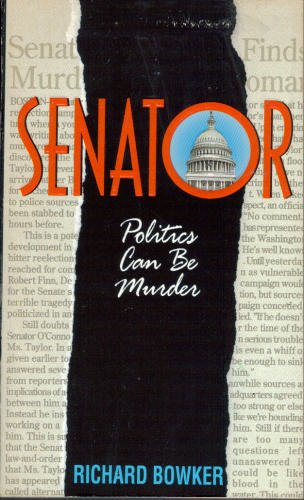
Unlike Pontiff, Senator has existing covers to ponder.

Here is the hardcover cover, which I don’t much like — but maybe you do!  I think the protagonist’s Irishness is not particularly central to the plot.  (In case this isn’t clear, run-of-the-mill authors have no say in the covers for their books, at least in the standard publishing model.)


Here is the paperback cover.


And here is the cover for the Japanese paperback. I have no idea what the text on the cover says.  The shamrock doesn’t mean anything in Japan, I suppose, nor does the Capitol building, presumably.  A bloody knife — that, they get.  Senator actually sold pretty well in Japan.


So, any suggestions?

Faith and Doubt

From the Washington Post, here is an interesting column about Richard Dawkins and belief.  Some folks are enamored of the idea that the famous atheist might have glimmers of doubt about his atheism.  But, as the writer points out, Dawkins has never claimed to be absolutely certain in his atheism — which makes him, strictly speaking, an agnostic.  InThe God Delusion, he puts his certainty that there is no God at 6.5 on a 7-point scale he came up with.  Elsewhere he goes as high as 6.9, apparently.  But he’s not prepared to entirely rule out a deistic sort of God — because he can’t.

And that’s because he’s a scientist, and at the heart of science is doubt.  All knowledge is provisional; nothing is absolutely certain; tomorrow’s data may overturn today’s laws.  There was an interesting debate on some atheist blogs a while back about whether there could be any evidence that would convince the bloggers that there was a God.  It’s a reasonable question.  Almost anything you can think of could have a more plausible explanation than an all-powerful, all-knowing God — mass hallucination, intervention by an advanced race of aliens, previously unknown laws of physics….  But even a complete lack of persuasive evidence doesn’t mean it can’t be true.

For many believers, of course, lack of doubt is something to be proud of.  But, as the column suggests, I expect that most believers cannot be as certain as they would like to be.  A semi-major character in Pontiff has a daughter who was hit by a car when she was a little girl and left severely brain-damaged.  As a result, the mother loses her faith — how can she believe in a God who would do this to her child?  But then the annoying author sets about trying to test her lack of faith when she begins to think her daughter could be “cured” — by meeting the pope, who has a reputation for being a miracle-worker.  If she has faith, maybe God will finally show some mercy….

And of course that is how the battle between faith and doubt is ultimately fought — not in books and debates, but in our needs and hopes and desires.  The woman will do anything for her child — even believe in a God she despises.

The annoying author then provides us with a stunning plot twist in which…

But you don’t want me to tell you.  You want to rush out and buy the book when it arrives at an ebookstore near you.