Are five-word sentences the gospel truth?

Here’s a bland New York Times op-ed making the somewhat uncontroversial point that short sentences are good.  Particularly after long sentences.  Particularly at the end of paragraphs and chapters and novels.  This doesn’t seem like breaking news.  The author starts off with a pretty good story, though:

I learned an important lesson, somewhat unwittingly, on July 19, 1975, while watching an interview with two of my favorite writers, William F. Buckley Jr. and Tom Wolfe. Mr. Wolfe was making fun of an art critic who had begun an essay with the sentence “Art and ideas are one.”

“Now, I must give him credit for this,” said Mr. Wolfe. “If you ever have a preposterous statement to make … say it in five words or less, because we’re always used to five-word sentences as being the gospel truth.”

If that’s true, maybe I should end everything with a five-word sentence.

It turns out my writing group spent some time considering a six-word sentence I used to end a chapter of the novel I’m writing.  Here’s the sentence:

And then I heard the screams.

Pretty good, huh?  But folks were worried that readers would infer that multiple people were screaming, rather than one person screaming multiple times, which is what I intended.  Well, maybe. So someone suggested:

And then I heard the screaming.

But that didn’t seem to solve the original problem.  And it added an extra syllable to the sentence.  I didn’t like that extra syllable.  So we ended up with:

And then I heard the scream.

That solved the problem of multiple people screaming.  But it was somehow less powerful than the image of the narrator hearing scream after scream.

That’s where we left it.  Staring at the pixels, I’m tempted to make the last word plural once again.  Back where we started.  Maybe I should drop the “And” at the beginning.  That’ll give me the magic five-word sentence.  I could probably spend a lot of time figuring this out.

That’s why writing is fun.
“Senator” promo at Ereader News Today

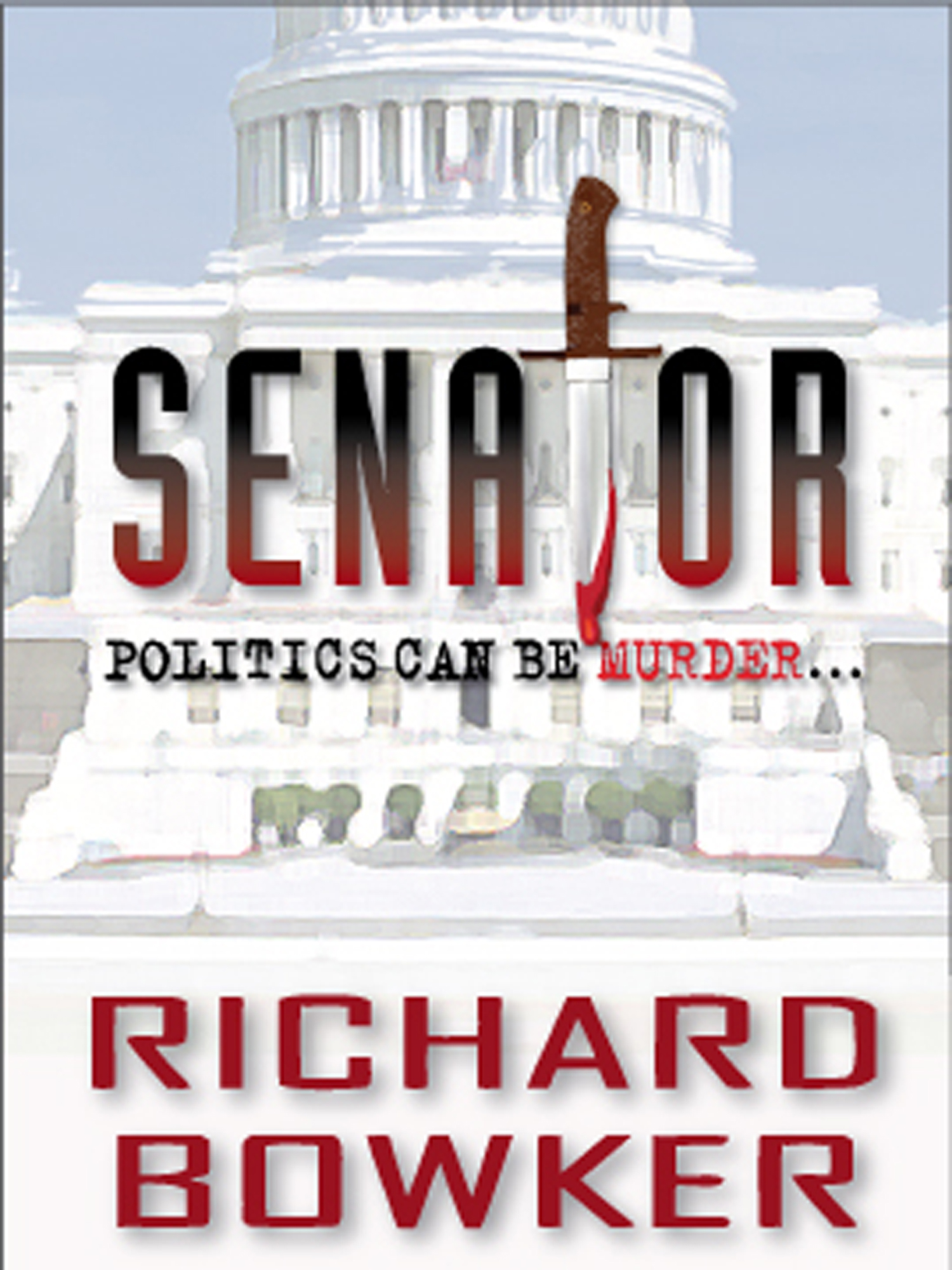
Hey, do me a favor and go over to this Facebook site and Like the “More Kindle Deals for 9-3-13” topic.  Getting lots of likes makes Ereader News Today happy.  Or you can go straight to the site, where Senator is one of their Kindle deals of the day.  Buying a copy would make them even happier.  It would make me happy, too.  At $0.99, how can you go wrong?

Senator final cover

The Senator promotion at Barnes & Noble is certainly doing what it’s supposed to do.  The book is now #56 on the Nook bestseller list, which puts it ahead of Volumes 2 and 3 of the Fifty Shades trilogy, among other interesting and no doubt worthy books.

Finally, I’ve gotten a couple of nice reviews of The Portal on Amazon but could use a lot more, if you’re interested in helping out.  I’m told that the Nook edition will appear any day now.

First Rowling, then Shakespeare… who’s next?

The Times today has an article about the possibility that Shakespeare wrote a passage in an edition of The Spanish Tragedy, an early Elizabethan play by Thomas Kyd.  The original computer analysis (by Brian Vickers) was very similar to that used to suggest that J. K. Rowling was the author of The Cuckoo’s Calling, which we talked about here.  Big Think describes what Vickers did:

Sir Brian has employed software called Pl@giarism–a free program developed by Maastricht University to catch law students cheating on their written work–to search a database of the 58 different plays performed in London between 1580 and 1595. But Sir Brian isn’t looking to catch anyone cheating. Rather, he is looking for examples of so-called “self-plagiarism.” The Pl@giarism software identifies every occasion that a sequence of three words appears in Shakespeare’s known works, and then looks for repetitions of these sequences in an unattributed text. Some of these word sequences are common, everyday collocations such as “by the way” or “Yes, my lord.”

Excluding those phrases, Sir Brian focuses on word sequences that are unique to Shakespeare. For instance, the word sequence “eyebrows jutty over” appears only twice in all of Elizabethan drama. One instance is in Shakespeare’s Henry V, written in approximately 1599. The only other instance is found in the fourth edition of Thomas Kyd’s “The Spanish Tragedy,” published in 1602. This version contains additions to five scenes, totaling 320 lines. In these short passages, Sir Brian found 46 collocation matches that are completely unique to Shakespeare’s poems and plays written before 1596. That evidence is hard to argue with.

What got the Times’ attention was another paper that focuses on Shakespeare’s handwriting and how that helps explain oddities in the passage:

In a terse four-page paper, to be published in the September issue of the journal Notes and Queries, Douglas Bruster argues that various idiosyncratic features of the Additional Passages — including some awkward lines that have struck some doubters as distinctly sub-Shakespearean — may be explained as print shop misreadings of Shakespeare’s penmanship.

“What we’ve got here isn’t bad writing, but bad handwriting,” Mr. Bruster said in a telephone interview.

What I couldn’t find in a cursory Google search was the actual passage in question.  It’s easy enough, though, to find the standard sample of Shakespeare’s messy handwriting–the passage from the manuscript of the play Sir Thomas More that is generally agreed to be by Shakespeare:

Next time, should J. K. Rowling disguise her writing style?

Here’s an interesting interview on Science Friday with Patrick Juola, the guy who’s computerized analysis helped identify J. K. Rowling as the author of the mystery The Cuckoo’s Calling.  He gives much more detail about exactly what kind of analysis he did over at Language Log.  Essentially, he compared the novel to works by Rowling, P.D. James, Ruth Rendell, and Val McDermid on four linguistic variables: distribution of word lengths, use of the 100 most common English words, and two other tests based on authorial vocabulary.

So, the final score? The results look “mixed,” but pointing strongly to Rowlng. There were certainly a couple of likely losers: nothing at all pointed to Rendell as a possible author, and only one test, and an unreliable one at that, suggested James. McDermid could be a reasonable candidate author, but the word length distribution seemed almost entirely uncharacteristic of her. The only person consistently suggested by every analysis was Rowling, who showed up as the winner or the runner-up in each instance.

One of the comments to Juola’s Language Log post suggests that a determined author can defeat analyses like these.  This is referred to as “adversarial stylometry.”  There are two basic approaches: obfuscation, where you try to simply hide your own style, and imitation, where you try to copy someone else’s style.  (A third approach is machine translation, where you translate an original passage using machine translation services.)  I doubt that any of this is worth Rowling’s time, but you might consider it if, say, you’re a whistleblower who wants to remain anonymous.

Of course, all of this analysis is overshadowed by the Onion’s shocking revelation that J.K. Rowling’s books were really written by Newt Gingrich:

“Assuming a fake identity really gave me a lot of freedom to build out the world of Hogwarts and flesh out the characters without drawing unwanted attention to myself or having the novels associated in any way with my political career,” Gingrich said in a statement, confirming reports he wrote the first four books in the fantasy series while still in office, but wrote the remainder before his 2012 presidential run.

Why do people rely on anything besides the Onion for their news?

Writing e-book sales copy — sheesh, it’s harder than you think

I have to trust that my e-book publisher knows more about the business than I do.  They certainly seem to.  They have convinced me to change my title from Portal to The Portal because one-word titles aren’t selling well nowadays, unless you’re James Patterson or Clive Cussler.  OK, fine — they can have the “the.”

Now they have sent me these instructions for the sales copy that will appear online..

Maximum overall word count: 200 words. (this includes sales blurb only)

Ideal length: 150 words

Why the length limits? Readers/people are basically lazy.  Amazon allows for approx 120 words before the reader has to click “read more”.  The incentivizing plot twist (or a strong suggestion of the twist) must appear in the first 120 words.

First Paragraph length max: 250 characters including spaces.  More than that and the number of lines exceeds three on most standard monitors.  More than three lines and the reader tends to “click away” unless the title is highly anticipated.

Apps present a new wrinkle.  200 characters including spaces to incentivize the reader to “click” read more.  Because readers are basically lazy, the buy-now case is best made in the first 200 characters (including spaces).

Copy Structure: Every word in the copy must either introduce the protagonist/antagonist, present the internal or external conflict, or contribute to a  relevant and non-clichéd sub-genre plot twist that sets the book apart. (but not too far apart.  Readers also tend to read in a rut).

OK, then.  The text I came up with here doesn’t fit the guidelines, so there is work to be done.  The limitation on total character count (including spaces) is an interesting modern development.  I’ve just started using Word 2013, and it took a bit of fumbling around before I figured out how to get it to show me the character count.  Sure enough, it will display the number of characters, and the number of characters including spaces, with a single mouse click.  Good job, Microsoft!


What books do you pretend to have read?

Book Riot did an informal poll of its readers about books they pretend to have read.  Here are the top 20:

  1. Pride and Prejudice by Jane Austen (85 mentions)
  2. Ulysses by James Joyce
  3. Moby-Dick by Herman Melville
  4. War and Peace by Leo Tolstoy
  5. The Bible
  6. 1984 by George Orwell
  7. The Lord of the Rings by J.R.R. Tolkien
  8. The Great Gatsby by F. Scott Fitzgerald
  9. Anna Karenina by Leo Tolstoy
  10. Catcher in the Rye by J.D. Salinger
  11. Infinite Jest by David Foster Wallace
  12. Catch-22 by Joseph Heller
  13. To Kill a Mockingbird by Harper Lee
  14. Fifty Shades of Grey by E.L. James
  15. Jane Eyre by Charlotte Bronte
  16. Crime and Punishment by Fyodor Dostoevsky
  17. Wuthering Heights by Emily Bronte
  18. Great Expectations by Charles Dickens
  19. Harry Potter (series) by J.K. Rowling
  20. A Tale of Two Cities by Charles Dickens (21 mentions)

“Pretend to have read” is a slippery category — Pretend to whom?  Your snobby literary friends?  Your co-workers standing around the water cooler?  Your girlfriend the English major who won’t sleep with you if you haven’t finished Ulysses?  Does anyone really care nowadays what you’ve read and what you haven’t read?  Presumably the folks that Book Riot readers hang out with do.

Can you spot the one that isn’t as classic-y as the rest?  I thought you could.  As the Book Riot writer suggests, presumably people pretend to have read Fifty Shades of Grey so they don’t get left out of interesting conversations.

Of the books on the list, I haven’t read Pride and Prejudice and Wuthering Heights (among the nineteenth century classics), and Fifty Shades of Grey and The Infinite Jest (among the recent novels).  I’ve dipped into the Harry Potter books with my kids, but haven’t read any of the novels straight through.

There, I’m glad I could finally get that off my chest.

Why would a novelist Ask Amy about how to handle criticism?

A first-time novelist writes in to Ask Amy with this problem: a friend does not like the way the novelist portrayed a character who is loosely based on her.  The friend has responded with a scathing, personal online review, saying the novelist needs counseling.  The novelist whines to Amy:

How can I convey to her that while this fictional character shares many of her attributes, it is not her?

The novelist published her book using a pseudonym because she was afraid of negative feedback. Amy says:

Negative feedback is one of many risks you take as a writer and until you can truly claim ownership of your work (no matter what name you use), you will be on the run — creatively, anyway.

Amy, that wise woman, is right, as usual.  This is a war a writer cannot win, so it’s not even worth trying.  At an extreme, here is how the conversation will go:

Ex-friend: “That awful character in your novel — it’s based on me.  Admit it.”

Befuddled writer: “How can the character be based on you?  It’s not even human!  It’s a telepathic slug from the planet Remulon!”

Ex-friend: “Sure, you changed a couple of the details.  But everyone can tell it’s me.”

Ultimately, of course, the writer has to choose which matters more: his art or his personal relationships.  And that brings us to this great quote from William Faulkner:

The writer’s only responsibility is to his art. He will be completely ruthless if he is a good one. He has a dream. It anguishes him so much that he can’t get rid of it. He has no peace until then. Everything goes by the board: honor, pride, decency, security, happiness, all, to get the book written. If a writer has to rob his mother, he will not hesitate; the “Ode on a Grecian Urn” is worth any number of old ladies.

Sorry, Mom!

I really don’t care what Harry Bosch had for dinner

I like to listen to Harry Bosch novels on my endless commute.  They don’t require deep thinking, and the narrators are really good. One problem with audio books, though, is you can’t skim.  And there are lots of times in a Harry Bosch novel where I really want to skim.

I won’t bother discussing the endless descriptions of Bosch listening to CDs of jazz performances.  These are by definition boring.  Instead I want to talk about the endless descriptions of the restaurants he goes to and what he orders and what toppings he has on his pizza and how much macaroni and cheese is left over after dinner with his daughter and ARGGH!  Make it stop!

There is, I’m sure, a rationale for this obsession with Harry Bosch and food.  Presumably Connelly wants to show us how cops live in present-day LA.  Here are their hangouts.  Here’s where they eat when they go to court or the shooting range or the forensics lab.  And here’s the kind of food a typical cop likes to eat.  But I don’t care.  Just tell the story.

I have a personal rule for writing that says I don’t put in anything that I’m unlikely to read in someone else’s novel.   Five hundred words about a sunset?  No thank you.  How well a certain Merlot goes with steak tips?  Spare me.  Nothing about women’s shoes.  And, of course, nothing about jazz.  Never, ever, anything about jazz.

Print on Demand

My e-book publisher has started a Print on Demand (POD) service to go along with its e-book publishing services.  I’m going to try it out for Portal.

POD fills a gap in the e-book self-publishing model: some people just prefer a printed book.  A guy at work said he’d like to read one of my books, but what he really wanted was an autographed copy.  Can’t autograph an e-book.  (It seemed kind of weird that a co-worker would want my autograph, but not totally weird.  There’s something about a signed copy of a book that makes it special.)

There are two major players in the POD world: CreateSpace and Lightning Source.  This article explains the differences in mind-numbing detail and ultimately recommends CreateSpace.  My publisher uses Lightning Source.  Oh, well.  The publisher’s model, as with e-books, is that I pay them a (relatively small) amount of money to do all the prep work. They also handle the ongoing dealings with Lightning Source, in return for a small cut of the royalties.  You can eliminate the middleman and do all the work yourself if you use CreateSpace, assuming you have the time and energy; I have neither.  Per-unit royalties through my publisher are much lower than they are for e-books, because there’s so much more overhead in creating a printed book.  The idea is that most of your revenue would be from e-book sales, but the printed option is there for people who prefer it.  I can, of course, buy any number of books at a steep discount, and then sign ’em for my co-workers, give them away to passing strangers, etc.

POD is another blow against the business model of traditional publishing.  Time to give it a shot.

Should we boycott Orson Scott Card because he’s viciously homophobic?

My lovely wife just read a book called Dickens in Love about Dickens’s love affair with Ellen Ternan.  “I didn’t know he was such a creep,” she said.  Well, yeah.  Lots of writers are solipsistic jerks, and lots of them have obnoxious political positions.

One quite reasonable interpretation of the scant documentation of Shakespeare’s life is that he was a money-grubbing, social-climbing adulterer.

Lord Byron probably slept with his half-sister, among many other offenses.

Knut Hamsun (winner of the Nobel Prize for Literature) called Hitler “a preacher of the gospel of justice for all nations.”

I read a bit of Orson Scott Card back in the 80s.  I enjoyed Ender’s Game, although I don’t recall thinking it was anything like a classic.  At some point I gave up on Card because I thought there was something weird about his treatment of violence.  I haven’t been paying attention to him since then, so I didn’t realize he was beyond-bonkers homophobic, to the point of advocating violent revolution to prevent gay marriage:

How long before married people answer the dictators thus: Regardless of law, marriage has only one definition, and any government that attempts to change it is my mortal enemy. I will act to destroy that government and bring it down, so it can be replaced with a government that will respect and support marriage, and help me raise my children in a society where they will expect to marry in their turn.

The movie version of Ender’s Game is coming out in a few months, and people are making noises about boycotting it.  In response, the terrified filmmakers say the movie and the book have nothing to do with gay issues, and, as the 16-year-old star cleverly puts it, “You can’t blame a book for its author.”

Absolutely true.  On the other hand, Card is still among us, and Dickens, Shakespeare, Byron, and Hamsun are not.  He makes money any time we purchase one of his works.  And he hasn’t been shy about expressing his opinions and trying to affect public policy.  There are plenty of good books to read and good movies to watch (well, I could be wrong about the supply of good movies).  I can’t think of any reason to support Card’s career.

By the way, here’s Dickens’s mistress, Ellen Ternan:

And here’s Byron’s half-sister, Augusta Leigh:

And here’s a very unpleasant-looking Knut Hamsun: