The Nook version of The Portal is now up. Here’s your link.

In other Barnes & Noble news, Senator is currently at #49 among Nook e-books. It’s ahead of Dan Brown’s Inferno! It’s also ten times cheaper!

Hey, do me a favor and go over to this Facebook site and Like the “More Kindle Deals for 9-3-13” topic. Getting lots of likes makes Ereader News Today happy. Or you can go straight to the site, where Senator is one of their Kindle deals of the day. Buying a copy would make them even happier. It would make me happy, too. At $0.99, how can you go wrong?
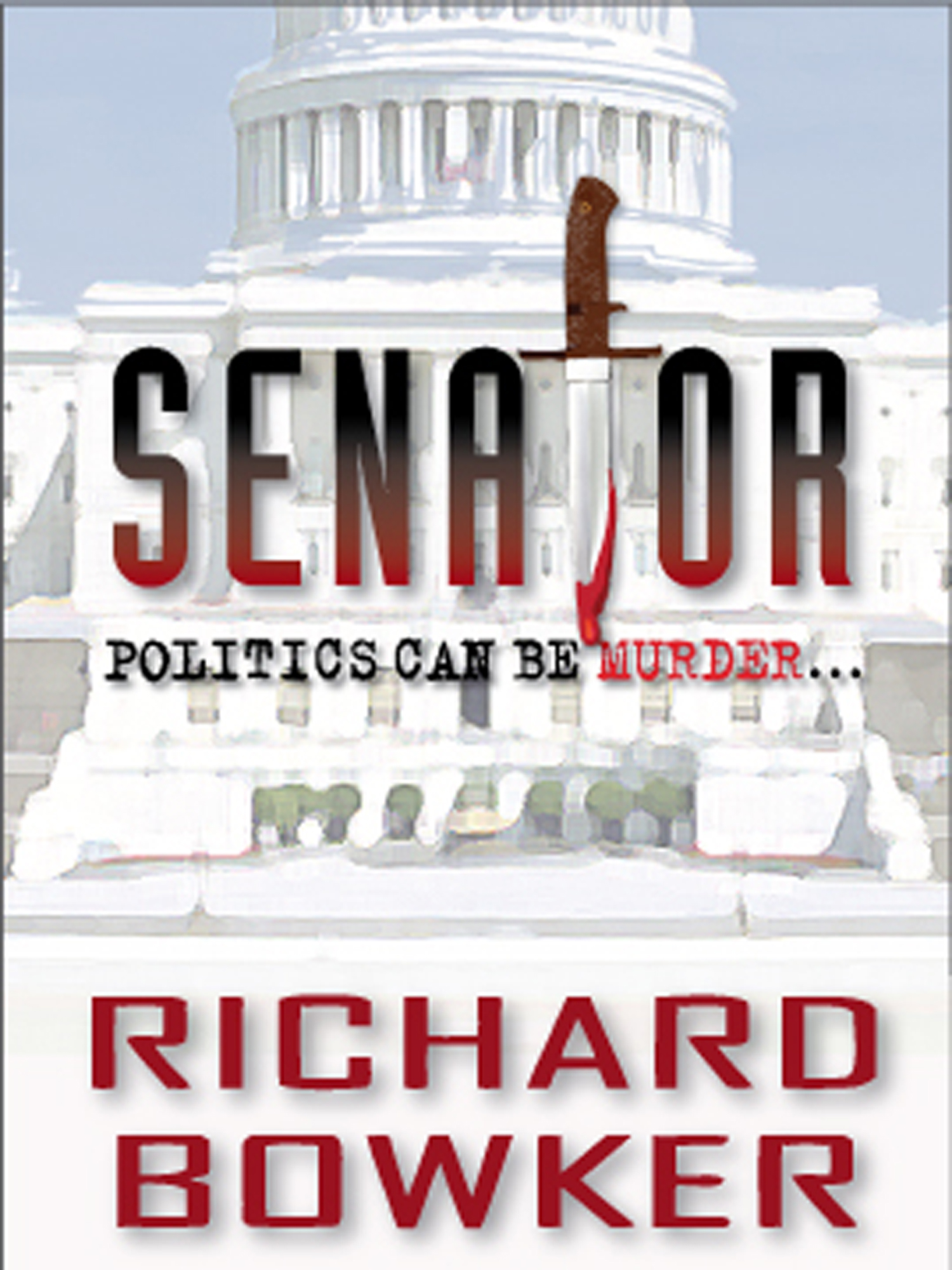
The Senator promotion at Barnes & Noble is certainly doing what it’s supposed to do. The book is now #56 on the Nook bestseller list, which puts it ahead of Volumes 2 and 3 of the Fifty Shades trilogy, among other interesting and no doubt worthy books.
Finally, I’ve gotten a couple of nice reviews of The Portal on Amazon but could use a lot more, if you’re interested in helping out. I’m told that the Nook edition will appear any day now.
Craig Shaw Gardner has finally released the first three books in his hilarious Ebenezum series as e-books. Let the rejoicing begin! Here’s the classic cover for A Malady of Magicks:

Also out are A Night in the Netherhells and A Multitude of Monsters.
I heard Craig read the short story that turned into A Malady of Magicks back in the Harding administration sometime, and I couldn’t believe that anyone could write a story that funny.
Mr. Gardner has also relaunched his blog, this time in our familiar WordPress world. Let’s get him to start adding content!
Senator is currently on sale at Barnes & Noble for the ridiculously low price of $0.99. (Yes, friends, you heard right!) So now would be a good time to pick it up if you’ve got a Nook.
I don’t know how this sort of thing works, but my publisher got the novel a spot on B&N’s “101 Nook Books Under $2.99” promotion. It’s currently on the third page, but the book moves up the pages as its sales rank improves. This promotion is having an effect. A couple of days ago Senator‘s sales rank was somewhere north of 300,000 on B&N, meaning (I suppose) that no one had bought it recently. Currently its sales rank is 460. Maybe someone will finally review it!
Here’s what the cover looks like, in case you’ve forgotten:

It’s time to enter The Portal.
Okay, that’s a bit hokey, but seriously, the Kindle version of The Portal is now available. It’ll be up on Barnes & Noble, iBooks, and other fine sites soon. Those of you who have dipped into the novel on this blog can now have your very own electronic copy for the astonishingly low price of $4.99. (All right, that price isn’t so astonishingly low, but it’s what my publisher decided the thing was worth.)
Customer reviews are critical to the success of an ebook. If you can find it in your heart to write a good review of The Portal at Amazon, that would be very helpful. You don’t have to purchase the book from Amazon, but reviews from verified purchasers count for more.
My publisher and I couldn’t quite agree on sales copy for The Portal. Here is my summary:
In the woods behind his house Larry Barnes makes a spectacular discovery—an invisible portal to a parallel universe, where Burger King has turned into Burger Queen, cell phones are huge, and his home town doesn’t look anything like the place where he lives. When he returns from this world, he makes the mistake of telling his best friend, Kevin Albright, who convinces him to try entering the portal one more time. What could go wrong?
But this time Larry and Kevin find themselves in a very different world. From the moment they step out of the portal they are caught up in a war that pits the United States of New England against New Portugal and Canada. They need to make their way in a world that is utterly alien, without computers or automobiles or telephones. A world in which no one has heard of America, or Mozart, or bacteria. Larry and Kevin face hunger, disease, battle—and, most of all, loneliness. But they also find friendship and family, joy and love. Can they survive the war—and help New England win it? Can they make their way back to the portal and return home? And what will they leave behind if they do make it back?
Exciting and deeply moving, The Portal is a science-fiction adventure you won’t soon forget.
My publisher changed its mind about “Alternate History“. The primary reason: Amazon uses “Alternative History” as its category for ebooks and “Alternate History” for books. So here is today’s cover:
My friend Kathy (who can’t possibly be old enough to be the parent of a tween) complains that using the word “History” on the cover will turn off kids the age of her son. This is interesting. Publishers feel the need to categorize novels, because readers tend to stick to their favorite genres, and it’s much harder to market a novel if it can’t be fit neatly into a genre. (My first agent gave up on me when I sent him Marlborough Street and he had no idea how to pitch it to publishers. My current publisher decided it was a “psychic thriller,” which I guess is a thing.)
Kathy also queries why the novel isn’t marketed directly to tweens — don’t they have their own category? Yes, they do. But I’m pretty sure adults will enjoy The Portal, and if you market a novel specifically to young adults, you’re not going to get any adults reading it (unless you’re J.K. Rowling). So, I dunno. I’d much rather write the stuff than figure out how to market it.
Life is kinda boring. That’s why thriller writers are required to amp things up. There are some vague parallels between Pope John in my novel Pontiff and Pope Francis in the real world. Both were elected to the papacy at least somewhat for geopolitical reasons–my Pope John because he was an African; Pope Francis because he’s from South America. In both cases the new papacy seems to some to be a breath of fresh air after the previous pope: liberals get their hopes up, conservatives start fretting.
But that’s about where the comparisons run out of steam. In real life, Pope Francis has said some things that have gotten liberal hearts a-flutter, but on closer inspection they don’t represent any kind of real change in policy or dogma, just a slight change in emphasis, maybe just a rhetorical device. His recent remarks on gays are an example. It’s nice that he doesn’t want to judge gays; on the other hand, his remarks didn’t hint at changing the Church’s stance on the sinfulness of homosexual behavior, as traditional Catholics (almost gleefully) point out. A change in rhetoric is interesting (and may conceivably affect someone’s life for the better), but it doesn’t make for a thriller.
Anyway, here’s the big speech I give to the new Pope John about change in the Church. He has been asking a bunch of cardinals what they think is the biggest challenge facing the Church–they mention obedience, money, the decline in vocations. Then his secretary of state, Cardinal Valli, asks him what he thinks. We see the scene through the eyes of Cardinal Riccielli, who is head of the Vatican Bank. (It was the scandal around the Vatican Bank that Pope Francis was addressing in his remarks on gays. The Vatican Bank is one area where life is as interesting as fiction.)
What would Valli say when his turn came? Riccielli expected that others were wondering the same thing. Many of them looked to Valli for guidance, for a sense of how to deal with their new leader. But Valli was saying nothing. Finally the pope asked him directly. “Cardinal Valli, surely you have some thoughts on the challenges facing the Church. Would you share them with us?”
And Valli slowly shook his head in response. “Holiness, what I think is of utterly no importance. All that matters is what you think. I ask you to share your thoughts with us.”
The room was silent. Would the pope think Valli was being impertinent? The pope continued to smile, staring at Valli with his large brown eyes, and finally he nodded, almost imperceptibly. “Of course, your Eminence,” he said, so softly this time that Riccielli had to lean forward to hear. “I am not a philosopher, though. I am not a theologian. Some would even say that I am not an especially worldly man. I have spent too much time fighting minor battles in a faraway land. So I am not prepared to make any grand pronouncements. I do want to listen, and learn.
“But I will say this. I believe that the Church’s problem is not that its members are insufficiently obedient to its teachings, but that the Church is insufficiently responsive to the needs of its members. We are in many respects a powerful and effective body, but too many people no longer listen to us; for too many people, we no longer matter. And if we do matter, it is because they believe we are an obstacle to the fulfillment of their humanity and the true expression of their faith.
“I believe this has happened because the Church has become too focused on matters that are not central to the truths we espouse: the reality of Our Lord’s death and resurrection, and our witness to it in this world.
“I have had to counsel a young priest in tears as he petitioned to be laicized. He loved the Church, loved his vocation, but the burden of celibacy was just too great. He was sinning, and he did not want to sin. We have seen far too much of this lately.
“I have talked to young mothers terrified that they would become pregnant again and be forced to bear children they could not afford to feed.
“I have visited AIDS clinics and listened as doctors told me how many of those ravaged people I saw would have remained healthy if the Church had eased its prohibition against the use of condoms.
“We cannot be blind to the very real consequences of our actions and pronouncements. And we must try to find a way back into the hearts of our people. That is what I think I must do as pope.”
Silence again. The uncomfortable silence, Riccielli realized, of people whose worst nightmares have just come true. Krajcek looked as if he were about to have a stroke. Valli stared at his hands and said nothing in response. Did he regret asking the question? No, they needed to hear this, even if most of them disagreed profoundly.
It was left to Rattner to break the silence—Rattner, the sallow, outspoken Austrian, whose resignation from his congregation had been tendered and accepted, and who therefore had nothing to lose. “The Church is not involved in a popularity contest, your Holiness,” he observed. “We have a sacred obligation to protect the Deposit of Faith, and not to bend with every wind that blows.”
Krajcek revived enough to add, “The Church’s positions on contraception, abortion, clerical celibacy—they are long settled. If they cause some people pain—well, perhaps that is because God’s law is not always easy, and people today are always looking for the easy way out.”
Pope John shrugged. “As I said, I am making no grand pronouncements. I wish only to share some of my thoughts. I don’t ask for your agreement, I ask only that you hear me out, and keep an open mind.”
Keep an open mind. Did the pope think this was merely an abstract theological discussion? Riccielli wondered. Didn’t he realize that his every utterance in this room would be dissected and interpreted like a passage from Revelation, that they would go flying to the far corners of Christendom, repeated and amplified and distorted? In his soft-spoken way he had all but declared war on most of these men, challenging their most basic beliefs, their views of themselves and their Church. They were not likely to keep an open mind.
No one seemed inclined to offer further challenges, however. Were they too shocked? Or too frightened of what he might say next? Rufio offered some pious babble in an attempt to improve the mood, but he didn’t get much response. Finally the pope thanked everyone profusely and brought the meeting to a close.
And this is the setup for the thrillery stuff that follows.
Here’s an interesting interview on Science Friday with Patrick Juola, the guy who’s computerized analysis helped identify J. K. Rowling as the author of the mystery The Cuckoo’s Calling. He gives much more detail about exactly what kind of analysis he did over at Language Log. Essentially, he compared the novel to works by Rowling, P.D. James, Ruth Rendell, and Val McDermid on four linguistic variables: distribution of word lengths, use of the 100 most common English words, and two other tests based on authorial vocabulary.
So, the final score? The results look “mixed,” but pointing strongly to Rowlng. There were certainly a couple of likely losers: nothing at all pointed to Rendell as a possible author, and only one test, and an unreliable one at that, suggested James. McDermid could be a reasonable candidate author, but the word length distribution seemed almost entirely uncharacteristic of her. The only person consistently suggested by every analysis was Rowling, who showed up as the winner or the runner-up in each instance.
One of the comments to Juola’s Language Log post suggests that a determined author can defeat analyses like these. This is referred to as “adversarial stylometry.” There are two basic approaches: obfuscation, where you try to simply hide your own style, and imitation, where you try to copy someone else’s style. (A third approach is machine translation, where you translate an original passage using machine translation services.) I doubt that any of this is worth Rowling’s time, but you might consider it if, say, you’re a whistleblower who wants to remain anonymous.
Of course, all of this analysis is overshadowed by the Onion’s shocking revelation that J.K. Rowling’s books were really written by Newt Gingrich:
“Assuming a fake identity really gave me a lot of freedom to build out the world of Hogwarts and flesh out the characters without drawing unwanted attention to myself or having the novels associated in any way with my political career,” Gingrich said in a statement, confirming reports he wrote the first four books in the fantasy series while still in office, but wrote the remainder before his 2012 presidential run.
Why do people rely on anything besides the Onion for their news?
I have to trust that my e-book publisher knows more about the business than I do. They certainly seem to. They have convinced me to change my title from Portal to The Portal because one-word titles aren’t selling well nowadays, unless you’re James Patterson or Clive Cussler. OK, fine — they can have the “the.”
Now they have sent me these instructions for the sales copy that will appear online..
Maximum overall word count: 200 words. (this includes sales blurb only)
Ideal length: 150 words
Why the length limits? Readers/people are basically lazy. Amazon allows for approx 120 words before the reader has to click “read more”. The incentivizing plot twist (or a strong suggestion of the twist) must appear in the first 120 words.
First Paragraph length max: 250 characters including spaces. More than that and the number of lines exceeds three on most standard monitors. More than three lines and the reader tends to “click away” unless the title is highly anticipated.
Apps present a new wrinkle. 200 characters including spaces to incentivize the reader to “click” read more. Because readers are basically lazy, the buy-now case is best made in the first 200 characters (including spaces).
Copy Structure: Every word in the copy must either introduce the protagonist/antagonist, present the internal or external conflict, or contribute to a relevant and non-clichéd sub-genre plot twist that sets the book apart. (but not too far apart. Readers also tend to read in a rut).
OK, then. The text I came up with here doesn’t fit the guidelines, so there is work to be done. The limitation on total character count (including spaces) is an interesting modern development. I’ve just started using Word 2013, and it took a bit of fumbling around before I figured out how to get it to show me the character count. Sure enough, it will display the number of characters, and the number of characters including spaces, with a single mouse click. Good job, Microsoft!
Book Riot did an informal poll of its readers about books they pretend to have read. Here are the top 20:
- Pride and Prejudice by Jane Austen (85 mentions)
- Ulysses by James Joyce
- Moby-Dick by Herman Melville
- War and Peace by Leo Tolstoy
- The Bible
- 1984 by George Orwell
- The Lord of the Rings by J.R.R. Tolkien
- The Great Gatsby by F. Scott Fitzgerald
- Anna Karenina by Leo Tolstoy
- Catcher in the Rye by J.D. Salinger
- Infinite Jest by David Foster Wallace
- Catch-22 by Joseph Heller
- To Kill a Mockingbird by Harper Lee
- Fifty Shades of Grey by E.L. James
- Jane Eyre by Charlotte Bronte
- Crime and Punishment by Fyodor Dostoevsky
- Wuthering Heights by Emily Bronte
- Great Expectations by Charles Dickens
- Harry Potter (series) by J.K. Rowling
- A Tale of Two Cities by Charles Dickens (21 mentions)
“Pretend to have read” is a slippery category — Pretend to whom? Your snobby literary friends? Your co-workers standing around the water cooler? Your girlfriend the English major who won’t sleep with you if you haven’t finished Ulysses? Does anyone really care nowadays what you’ve read and what you haven’t read? Presumably the folks that Book Riot readers hang out with do.
Can you spot the one that isn’t as classic-y as the rest? I thought you could. As the Book Riot writer suggests, presumably people pretend to have read Fifty Shades of Grey so they don’t get left out of interesting conversations.
Of the books on the list, I haven’t read Pride and Prejudice and Wuthering Heights (among the nineteenth century classics), and Fifty Shades of Grey and The Infinite Jest (among the recent novels). I’ve dipped into the Harry Potter books with my kids, but haven’t read any of the novels straight through.
There, I’m glad I could finally get that off my chest.
 Richard Bowker