In which I run into Edgar Allen Poe

I was walking from the Boston Common over to Jacob Wirth’s after my road race when I ran into this guy with his pet raven at twilight:

2015-06-11 20.18.44
Poe was born in Boston in Boston in 1809, although he went to Virginia soon afterwards.

Poe’s reputation has risen since his death and stays high. In addition to being a writer of fiction and poetry, he was also a good literary critic.  Here is Wikipedia summing up Poe’s opinion of our old friend Heny Wadsworth Longfellow:

A favorite target of Poe’s criticism was Boston’s then-acclaimed poet, Henry Wadsworth Longfellow, who was often defended by his literary friends in what was later called “The Longfellow War”. Poe accused Longfellow of “the heresy of the didactic”, writing poetry that was preachy, derivative, and thematically plagiarized. Poe correctly predicted that Longfellow’s reputation and style of poetry would decline, concluding that “We grant him high qualities, but deny him the Future”.

“We grant him high qualities, but deny him the Future” — is that prescient or what?

Here’s more about the Poe statue.

The road race, you ask?  Don’t ask.  Here’s a photo of the pack going into Kenmore Square.

2015-06-11 19.35.25

Notice that my part of the pack isn’t exactly “running”. The folks heading in the other direction, back from Kenmore Square toward the Common–they’re running. Sheesh.

It is sweet and fitting to die for one’s country

Wilfred Owen wrote this poem in 1917 at a hospital where he was recovering from shell shock.  He died the next year, at the age of 25. Is there any more vivid description of what it is like to die for one’s country?

Dulce Et Decorum Est

Bent double, like old beggars under sacks,
Knock-kneed, coughing like hags, we cursed through sludge,
Till on the haunting flares we turned our backs
And towards our distant rest began to trudge.
Men marched asleep. Many had lost their boots
But limped on, blood-shod. All went lame; all blind;
Drunk with fatigue; deaf even to the hoots
Of disappointed shells that dropped behind.

GAS! Gas! Quick, boys!– An ecstasy of fumbling,
Fitting the clumsy helmets just in time;
But someone still was yelling out and stumbling
And floundering like a man in fire or lime.–
Dim, through the misty panes and thick green light
As under a green sea, I saw him drowning.

In all my dreams, before my helpless sight,
He plunges at me, guttering, choking, drowning.

If in some smothering dreams you too could pace
Behind the wagon that we flung him in,
And watch the white eyes writhing in his face,
His hanging face, like a devil’s sick of sin;
If you could hear, at every jolt, the blood
Come gargling from the froth-corrupted lungs,
Obscene as cancer, bitter as the cud
Of vile, incurable sores on innocent tongues,–
My friend, you would not tell with such high zest
To children ardent for some desperate glory,
The old Lie: Dulce et decorum est
Pro patria mori.

And here is John Singer Sargent’s large painting “Gassed,” completed in 1919 and on display at the Imperial War Museum in London.
Gassed
Gassed© IWM (Art.IWM ART 1460)

In which I attempt to make amends to Henry Wadsworth Longfellow

I wasn’t complimentary to Longfellow’s poem “Paul Revere’s Ride” in this post.  Well, opinions differ.

The other day I was driving through Cambridge’s Mount Auburn Cemetery at twilight, looking for a chapel where a friend of mine was giving a talk.  I didn’t have time to look for graves of famous people (Bernard Malamud and John Rawls, among many others), but I realized afterwards that I must have passed close to Longfellow’s tomb, which looks like this:

And it occurred to me that Longfellow couldn’t have been that bad.  (The Wikipedia article on Longfellow quotes one 20th-century poet as saying: “Longfellow was minor and derivative in every way throughout his career… nothing more than a hack imitator of the English Romantics.”  Well, yeah, I guess so.  But still.)

So I looked up the Longfellow verse that I remember the best from way back in middle school: the opening to his long narrative poem Evangeline.  It’s written in the epic meter dactylic hexameter, a rhythm that doesn’t fit easily to English.  But I think it works well here.  This isn’t immortal poetry–it doesn’t have anything interesting to say–but as poetry it’s pretty good.  What do you think?

This is the forest primeval. The murmuring pines and the hemlocks,
Bearded with moss, and in garments green, indistinct in the twilight,
Stand like Druids of eld, with voices sad and prophetic,
Stand like harpers hoar, with beards that rest on their bosoms.
Loud from its rocky caverns, the deep-voiced neighboring ocean
Speaks, and in accents disconsolate answers the wail of the forest.

This is the forest primeval; but where are the hearts that beneath it
Leaped like the roe, when he hears in the woodland the voice of the huntsman
Where is the thatch-roofed village, the home of Acadian farmers,–
Men whose lives glided on like rivers that water the woodlands,
Darkened by shadows of earth, but reflecting an image of heaven?
Waste are those pleasant farms, and the farmers forever departed!
Scattered like dust and leaves, when the mighty blasts of October
Seize them, and whirl them aloft, and sprinkle them far o’er the ocean
Naught but tradition remains of the beautiful village of Grand-Pre.

Ye who believe in affection that hopes, and endures, and is patient,
Ye who believe in the beauty and strength of woman’s devotion,
List to the mournful tradition still sung by the pines of the forest;
List to a Tale of Love in Acadie, home of the happy.

It’s Shakespeare’s birthday, so let’s randomly replace words with “duck”

Put aside your well-thumbed copy of Timon of Athens and go to this site, obviously created by folks with too much time on their hands.

Friends, Romans, countrymen, lend me your duck.

Note that you can choose the replacement word.

Slurpy, slurpy!  Parting is such sorrow
That I shall say slurpy till it be morrow.

Out, out brief slurpy!

OK, time to go back to Timon of Athens.

Hardly a man is now alive…

This is the 240th anniversary of Paul Revere’s Ride.  Longfellow’s poem starts like this:

Listen, my children, and you shall hear
Of the midnight ride of Paul Revere,
On the eighteenth of April, in Seventy-five;
Hardly a man is now alive
Who remembers that famous day and year.

It was written in 1861, on the eve of the Civil War, so personal memory of the Revolution had just about died out.  The poem itself is pretty bad, but Longfellow did succeed in his aim of creating a national myth.  No one was building statues of Revere before Longfellow’s poem.

(“2010 NorthEnd Boston 4621037522” by Richard Wood from Tacoma, Washington, USA – Boston 2010-05-02-15. Licensed under CC BY 2.0 via Wikimedia Commons)

While I have your attention, let me recommend David Hackett Fisher’s book Paul Revere’s Ridewhich is just fabulous.

Spring, the sweet spring

Here’s what Thomas Nashe has to say about spring:

Spring, the sweet spring, is the year’s pleasant king,
Then blooms each thing, then maids dance in a ring,
Cold doth not sting, the pretty birds do sing:
Cuckoo, jug-jug, pu-we, to-witta-woo!

The palm and may make country houses gay,
Lambs frisk and play, the shepherds pipe all day,
And we hear aye birds tune this merry lay:
Cuckoo, jug-jug, pu-we, to-witta-woo!

The fields breathe sweet, the daisies kiss our feet,
Young lovers meet, old wives a-sunning sit,
In every street these tunes our ears do greet:
Cuckoo, jug-jug, pu-we, to witta-woo!

 Presumably he wasn’t looking out my front door when he wrote the poem:
2015-03-21 07.32.43
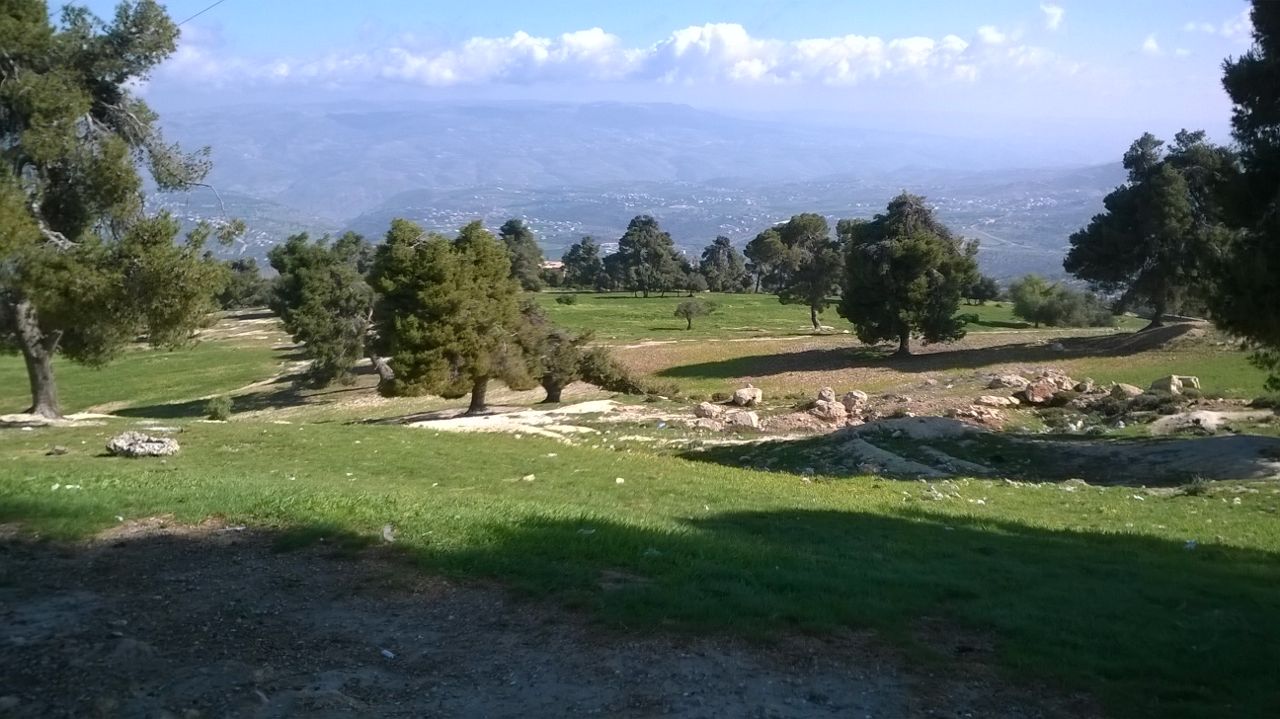
Here’s a view of spring from my son in the north of Jordan today.  Maybe this is what Nashe was thinking of:
2015-03-21 07.28.22
The weather is bound to get better.  Isn’t it?

Fire and Ice

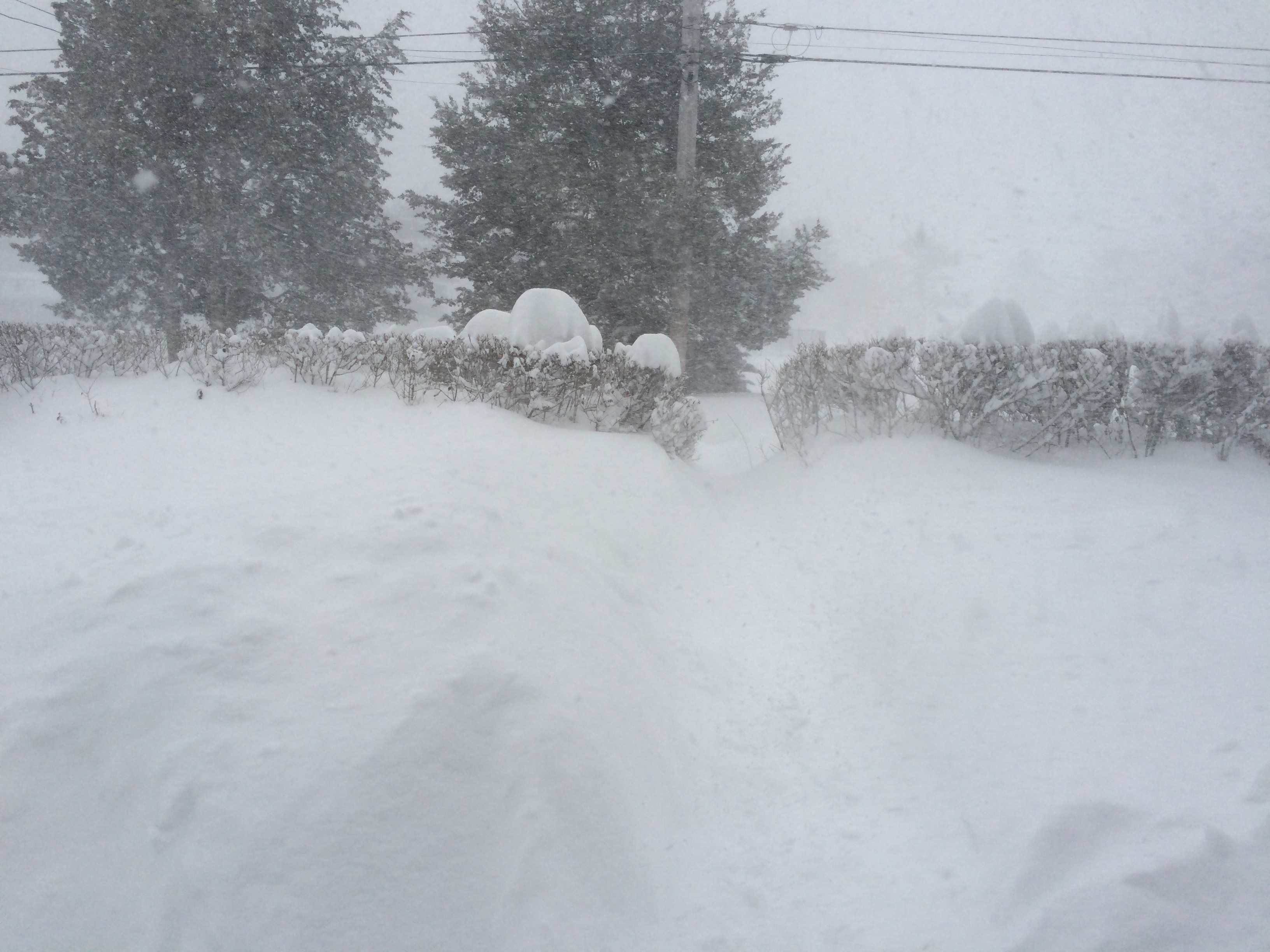
It’s starting to feel like the end times around here.  The heart of our downtown area is closed off because the weight of the snow caused a building to collapse.  I went to a grocery store yesterday, and it was closed — because of structural damage, I assume.  So I went to another grocery store, and couldn’t get into the parking lot.  And today…another blizzard.  The path I have shoveled so many times is disappearing yet again.

2015-02-15 07.49.47

Here are the icicles on my house. I’d go knock ’em down, but the snow is too deep for me to get to them.

2015-02-15 07.55.39

. . . which reminds me of Robert Frost’s poem (first published in 1920) about the end times.  (Today, I’m betting on ice.)

Some say the world will end in fire,
Some say in ice.
From what I’ve tasted of desire
I hold with those who favor fire.
But if it had to perish twice,
I think I know enough of hate
To say that for destruction ice
Is also great
And would suffice.

This is my last snow poem

The South Shore of Massachusetts, where I live, seems to have caught the brunt of the latest in our endless stream of snowstorms. Here’s my backyard, with the snow almost up to the top of that fence.

2015-02-09 09.01.10

And here’s my driveway, looking across to my neighbor’s driveway:

2015-02-09 14.13.27

Once upon a time I liked snow and I posted poems about it.  Well, I just have one poem left.  It was written by my son, back when he was young and cute and innocent, before we all learned about how evil snow is.  It’s called “First Snow”:

I enjoy the first snow,
Even when other don’t,
The benches are layered white,
Everything changes overnight,
Snow puffed out like cotton candy,
Untouched by human feet,
Everything is perfect,
After the first snow.

He now needs to write a sequel called “Eleventy-First Snow” or something.  Let’s find out how perfect everything is then.

Winter is icumen in, Lhude sing Goddamm; but we’ll always have memories of Malcolm Butler to keep us warm

This latest snowstorm has changed my poetical mood from A.A. Milne to Ezra Pound:

Winter is icumen in,
Lhude sing Goddamm,
Raineth drop and staineth slop,
And how the wind doth ramm!
Sing: Goddamm.
Skiddeth bus and sloppeth us,
An ague hath my ham
Damm you; Sing: Goddamm.
Goddamm, Goddamm, ’tis why I am, Goddamm,
So ’gainst the winter’s balm.
Sing goddamm, damm, sing goddamm,
Sing goddamm, sing goddamm, DAMM.

The problem now is that there’s nowhere left to put the stuff you need to shovel.

On the other hand, here are some fan reactions to Malcolm Butler’s interception in the Super Bowl.  Trigger warning: lots of profanity.  Also, may not be suitable for Seahawks fans.

We saw the game in the company of these lovely young women, whose parents were at the game.  Our reaction to the interception was comparable to some of those in the video, and I’m not sure the girls made the most noise.

2015-02-01 18.11.32

The more it snows (Tiddely pom)

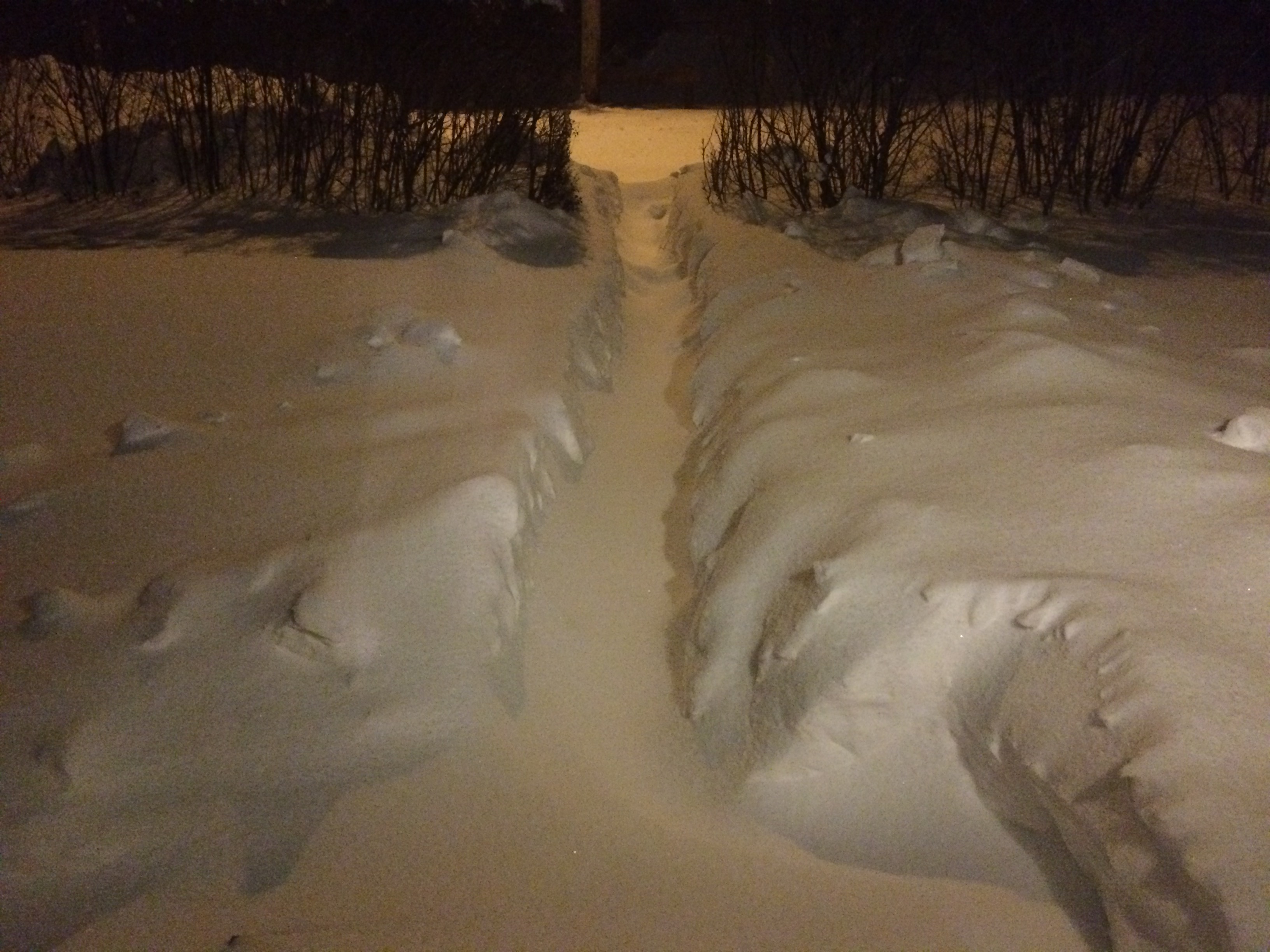
Eight p.m. and it’s still snowing.  We shoveled a while ago, but it doesn’t seem worth the effort.  The plows are undoubtedly coming back, and we’ll have to do it again.

2015-01-27 20.14.01

This is probably our favorite snow poem, by A.A. Milne.  We would recite it to our kids whenever it snowed, and I think eventually they started looking at us funny.

The more it snows (Tiddely pom),
The more it goes (Tiddely pom),
On snowing.

And nobody knows (Tiddely pom),
How cold my toes (Tiddely pom),
Are growing.