Unknown's avatar

About Richard Bowker

Author of the Portal series, the Last P.I. series, and other novels

“So, have you finished that novel of yours yet?”

Shut up.  Really, just shut up.

The plan was to get the sequel to The Portal done in 2015, but 2016 finds me about three-quarters of the way through the second draft.  This isn’t like a George R.R. Martin delay, and I don’t have editors and publishers and translators and millions of readers waiting on me.  It’s just a personal thing.  But still.

What I don’t want to do (and I’m sure Martin doesn’t want to do) is to publish the thing before it’s ready.  I can feel the temptation to declare victory and move on.  But the list of things I want to tweak in the next draft is growing….

So I’ll get there–maybe by March.  Maybe before George R.R. Martin.

What I read in 2015

Highlights, anyway.  Much of it listened to, rather than read.  Listed more or less in order of enjoyment.

H is for Hawk by Helen Macdonald.  An English woman takes up hawking to get over the death of her father.  She tells the story of training the hawk, interspersed with a psychobiography of T.E. White, the author of The Once and Future King.  Well, that doesn’t sound promising, does it?  But it’s glorious.  I felt like I was entering deeply into a wondrous world I never knew existed.  And Macdonald’s narration is also glorious.

Being Mortal by Atul Gawande.  This book, about how we deal with the end of life, has gotten a lot of praise, and it deserves every bit of it.

The Iliad.  Narrated by Dan Stevens.  I talk about it here.

SPQR by Mary Beard.  A history of ancient Rome up to the early 200’s.  I love this kind of book.

Middlemarch by George Eliot.  It still works.

Fore! The Best of Wodehouse on Golf.  I don’t know a mashie from a niblick, but Wodehouse on anything is great.  I was trying to read The Kreutzer Sonata by Tolstoy and kept switching back to this book so I could feel good about life.

CivilWarLand in Bad Decline by George Saunders.  Weird, wonderful stories about weird, wonderful people.  With a lovely afterword about how Saunders finally found his voice and his success.

The Man Who Mistook His Wife for a Hat by Oliver Sacks.  Finally got around to reading this.  Lovely, illuminating stories.

Adverbs by Daniel Handler.  A strange but enjoyable “novel” for adults by the author of the Lemony Snicket series.

Paris 1919 by Margaret MacMillan.  Who doesn’t want to listen to 25 hours of narration about the peace conference after World War 1?  I learned a lot.

Faith vs. Fact by Jerry Coyne.  A good summary of why science works as an explanation of the world and religion doesn’t.  Fairly familiar stuff to people who read Coyne’s web site, but worth getting down on paper.  It probably won’t change many minds, alas.

Life’s Greatest Secret by Matthew Cobb.  Tells the story of the scientific discoveries about DNA, RNA, and genetics, down to the present day.  Great, although a bit too dense for someone listening to it at rush hour.

Sapiens: A Brief History of Humankind  by Yuval Noah Harari.  Harari is a big, big picture kind of guy and has all kinds of provocative ideas, not all of which I agree with.  But I was entertained and educated nevertheless.

Station Eleven by Emily St. John Mandel.  This is a novel about the world after a flu epidemic causes civilization to collapse, with lots of flashbacks to the final days of the world we knew.  It’s been a big best-seller and was nominated for the National Book Award.  I’m a big fan of dystopian novels — I’ve written a few myself!  But this one, despite being very well written, left me a bit cold.  Too many characters and too many plot strands insufficiently developed.  And I really didn’t get the Station Eleven stuff.

Between the World and Me by Ta-Nehisi Coates.  This book was showered with praise and awards, but it left me rather cold.  I’ve enjoyed his shorter work more.  Partly it was the author’s narration, which I thought was rushed.  And I wished he pronounced the word “asked” rather than “axed”.  But I also found it difficult to follow his argument sometimes (if there was an argument).  The centerpiece of the book is the death of one of his college friends at the hands of an out-of-control police officer.  This is a symptom of what’s wrong with America; fair enough.  But the police officer was black, working for a black-controlled police department.  I wanted Coates to connect the dots for me better than he did. Here’s a long review that says what I thought about the book better than I can.

The Six Wives of Henry VIII by Alison Weir.  More than I wanted to know about them, I guess.

I notice that several of these books came my way via BookBub.  And I notice that my Kindle is filling up with BookBub titles that I really want to read, all purchased for $1.99 or less.  Is this the future?  Do we like this future?

Modern Christmas

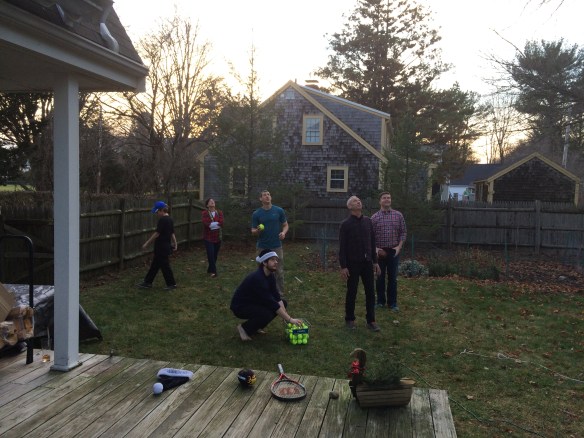
Here are a bunch of folks in our backyard (in 60-degree weather) trying to fling tennis balls and Nerf footballs and whatnot, trying to free a drone that got stuck in the top of our tree:

2015-12-25 15.48.10

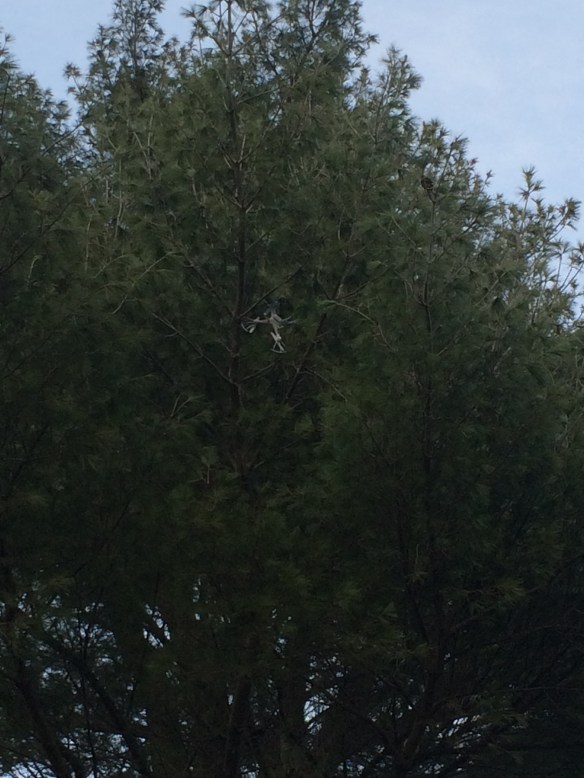
Here is the drone itself, hanging up above us like the star of Bethlehem:

2015-12-25 15.50.21

Note the black “Bah Humbug” Santa hat that my son is wearing.

We didn’t manage to get the drone down, but we’re pretty sure a good wind will free it.  So all is not lost.

It wouldn’t be Christmas without a post about “Love Actually”

See here and here and here for examples in this genre.

The most tear-jerky part of Love Actually is its ending, a sequence of joyous reunions at Heathrow’s International Arrivals Terminal, set to the Beach Boys’ glorious “God Only Knows”.   Like so:

So, we had a joyous reunion with our son the other day at the International Arrivals Terminal of Boston’s Logan Airport, coming home to the States after a couple of years in the Middle East.  And my lovely wife got it in her head that this arrival should also be accompanied by the “God Only Knows” soundtrack, playing it on a speaker attached to her iPhone.

This was a pretty good idea.  Except, you know, for the part where her son would hate it.  He goes over and hugs her, and at the same time disconnects the cord, stopping the soundtrack.  And here is the photographic record of the wonderful reunion, my son beaming at the camera and his mother desperately trying to figure out how to get the music playing again:

2015-12-18 19.33.24

No matter — life is better than any movie.  Welcome home, James!  And happy holidays, everyone.

Emma is 201

Jane Austen’s novel Emma was published on this day in 1815, although this article says that the title page of the first edition gives a publication date of 1816.

The recent BBC ranking of British novels by non-English critics puts Emma at at #19, 8 ranks lower than Pride and Prejudice.  The Guardian puts it at #9 among all English-language novels.  No other Austen novels are on the list.  Huh?  (This is a pretty idiosyncratic list, actually.)

Here’s a very entertaining discussion of Emma from the BBC’s In Our Time podcast.

Time to add it to the to-be-reread list.

Both the year’s and the day’s deep midnight

The shortest day of the year of the year used to be December 13, Saint Lucy’s Day.  Now it’s December 21; Here in the Boston area we get a little over nine hours of sunlight.

Here is John Donne’s great Nocturnal upon Saint Lucy’s Day:

‘Tis the year’s midnight, and it is the day’s,
Lucy’s, who scarce seven hours herself unmasks;
         The sun is spent, and now his flasks
         Send forth light squibs, no constant rays;
                The world’s whole sap is sunk;
The general balm th’ hydroptic earth hath drunk,
Whither, as to the bed’s feet, life is shrunk,
Dead and interr’d; yet all these seem to laugh,
Compar’d with me, who am their epitaph.


Study me then, you who shall lovers be
At the next world, that is, at the next spring;
         For I am every dead thing,
         In whom Love wrought new alchemy.
                For his art did express
A quintessence even from nothingness,
From dull privations, and lean emptiness;
He ruin’d me, and I am re-begot
Of absence, darkness, death: things which are not.


All others, from all things, draw all that’s good,
Life, soul, form, spirit, whence they being have;
         I, by Love’s limbec, am the grave
         Of all that’s nothing. Oft a flood
                Have we two wept, and so
Drown’d the whole world, us two; oft did we grow
To be two chaoses, when we did show
Care to aught else; and often absences
Withdrew our souls, and made us carcasses.


But I am by her death (which word wrongs her)
Of the first nothing the elixir grown;
         Were I a man, that I were one
         I needs must know; I should prefer,
                If I were any beast,
Some ends, some means; yea plants, yea stones detest,
And love; all, all some properties invest;
If I an ordinary nothing were,
As shadow, a light and body must be here.


But I am none; nor will my sun renew.
You lovers, for whose sake the lesser sun
         At this time to the Goat is run
         To fetch new lust, and give it you,
                Enjoy your summer all;
Since she enjoys her long night’s festival,
Let me prepare towards her, and let me call
This hour her vigil, and her eve, since this
Both the year’s, and the day’s deep midnight is.

The top 100 British novels, voted by non-British critics

The BBC polled a bunch of non-British book reviewers and literary scholars to come up with their list.  Note that it’s British novels only — so no James Joyce.

I’m a sucker for articles like this.  The first thing I want to know is how many of these books I haven’t read — or, in this case, writers haven’t even heard of.  I count 13 writers who are completely new to me, most of them from the 1980s on.  I haven’t been keeping up!  There are probably another 20 or so that I’ve known about forever but never read — Doris Lessing, John Galsworthy, Arnold Bennett, Paul Scott, Anthony Trollope, George Gissing . . .

Some more thoughts:

  • I’m glad to see P.G. Wodehouse on the list, if only at position 100.  But another 20 of his novels are just as good as Code of the Woosters and could reasonably have ended up on a list like this.
  • I’m also glad to see Philip Pullman’s His Dark Materials on the list.  Someone at work complained about its being rated higher than The Chronicles of Narnia.  That doesn’t bother me a bit.
  • I’m not a big Kazuo Ishiguro fan, so I’m annoyed that he takes up two spots on the list.  Remains of the Day is #18?  Higher than Emma, Persuasion, and Jude the Obscure?  Really?
  • I liked Ian McEwan’s Atonement, but I don’t think it deserved #15.
  • I didn’t like Ford Madox Ford’s The Good Soldier, so I have no idea what it’s doing at #12.
  • I’m OK with Middlemarch at #1, but I’d put it below Great Expectations, which came in at #4.
  • There’s four Virginia Woolf novels on the list.  Maybe it’s time to re-read her.  I liked To the Lighthouse (#2), but I couldn’t finish Orlando (#66).

I need to read more novels.

Wadi Rum

A wadi is a valley.  “Rum,” according to Wikipedia, is probably from an Aramaic word meaning “high”.  Wadi Rum is a couple of hours south of Amman, Jordan, along a highway my son tells me was funded by Saddam Hussein–one more thing to hold against him.  The most interesting part of the journey was seeing cars and trucks occasionally driving the wrong way in the breakdown lane.  Easier to do this than to go in south to the next U-turn, then go north to another U-turn, then go south again.

Also, what’s with the stacks of tires everywhere?  It’s like they’re growing out of the sand instead of grass.

Wadi Rum was developed as a tourist attraction about 25 years ago.  Before that, the local Bedouins slept in tents and made their living herding goats.  Now they live in small concrete houses, drive tourists around in ATVs, and communicate with each other via cell phones.

We took our tour with a delightful friend of my son’s called Suleiman who runs a camp there called Starlight.  It even has a WordPress blog, although I think someone spent about three minutes setting it up.

Here is the visitor center:

DSCN0078

Here is what you see from the parking lot:

DSCN0076

Here is Suleiman and my wife yakking while the rest of us were climbing a small hill:

DSCN0085

Here is my son and Suleiman’s cute kid Rashid climbing up to look at some Nabatean graffiti from a couple thousand years ago:

DSCN0097

Wadi Rum was the location used to film The Martian and many other movies.  For The Martian, they apparently had to do some post-processing to remove the occasional vegetation:

DSCN0104

But mostly the place is just spectacularly barren:

DSCN0135

Lawrence of Arabia was one of the movies filmed here.  Lawrence is a bit of a controversial figure nowadays, but Suleiman had nothing but good things to say about him.  The is supposed to be the remains of a place where Lawrence stayed in Wadi Rum:

DSCN0105

Here we see a small camp against the backdrop of a massive peak:

DSCN0141

Here’s what a camp looks like close up:

DSCN0140

The tents were fine, although I would have appreciated a flashlight to help me find my way to the bathroom.  (As it was, I used up the battery in my iPhone using it as a flashlight.)  We ate in a tent with Suleiman, his associates, and the rest of the campers.  The food, cooked in a sand pit, was delightful.  I took a pass on the after-dinner hookah.  A full moon prevented us from seeing the spectacular display of stars that is a feature of nights in Wadi Rum.

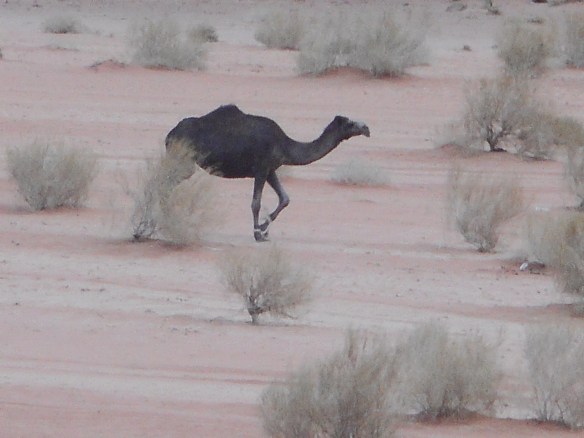
There isn’t much wildlife, but you occasionally see scenes like this:

DSCN0111

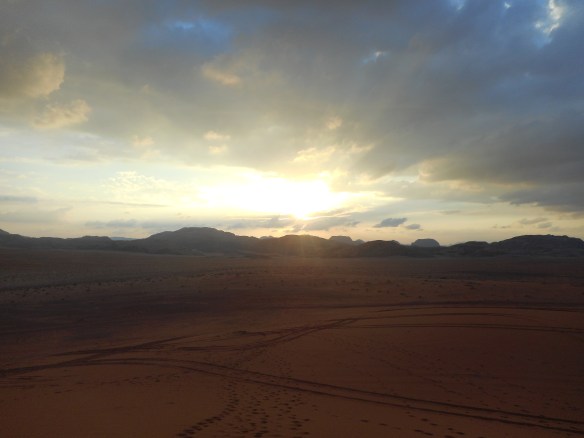
The scenery became particularly breathtaking towards sunset:

DSCN0131

DSCN0145

And early in the morning:

DSCN0159

Amazon is purging book reviews again

This made news a few years ago.  The difference this time is now Amazon apparently may purge reviews from someone an author “knows” online.

Yes, you read that right. This can be someone who has friended you on Facebook, followed you on Twitter, or has done business with you in a way that’s detectable to the Amazon review police….

Amazon spokespeople say that anybody who knows the author might “benefit financially” from the book’s sales, and financial beneficiaries have always been forbidden to review. (I wish I knew how to benefit financially when one of my 873 Facebook friends has a bestseller, but I’m obviously not working this right.)

So how do they determine if you “know” an author, anyway?

They’re not telling.

I’m all for taking down reviews that are fake or paid for in some way (even by the promise of a free book).  But that seems, er, excessive.  The modern method of book marketing involves authors having an online presence–via a blog, Twitter, Facebook….  You’re supposed to find “friends” out there.  Why penalize someone who finds them?

If the purge ever reaches me,  I don’t think it will have much effect.  The vast majority of the reviews my books have received have been from complete strangers . . . I think.  But I don’t really know, since a user can follow my blog with one name and review one of my novels with another.  Can Amazon figure this out?

Yeah, I suppose it can.