Unknown's avatar

About Richard Bowker

Author of the Portal series, the Last P.I. series, and other novels

Winter is icumen in, Lhude sing Goddamm; but we’ll always have memories of Malcolm Butler to keep us warm

This latest snowstorm has changed my poetical mood from A.A. Milne to Ezra Pound:

Winter is icumen in,
Lhude sing Goddamm,
Raineth drop and staineth slop,
And how the wind doth ramm!
Sing: Goddamm.
Skiddeth bus and sloppeth us,
An ague hath my ham
Damm you; Sing: Goddamm.
Goddamm, Goddamm, ’tis why I am, Goddamm,
So ’gainst the winter’s balm.
Sing goddamm, damm, sing goddamm,
Sing goddamm, sing goddamm, DAMM.

The problem now is that there’s nowhere left to put the stuff you need to shovel.

On the other hand, here are some fan reactions to Malcolm Butler’s interception in the Super Bowl.  Trigger warning: lots of profanity.  Also, may not be suitable for Seahawks fans.

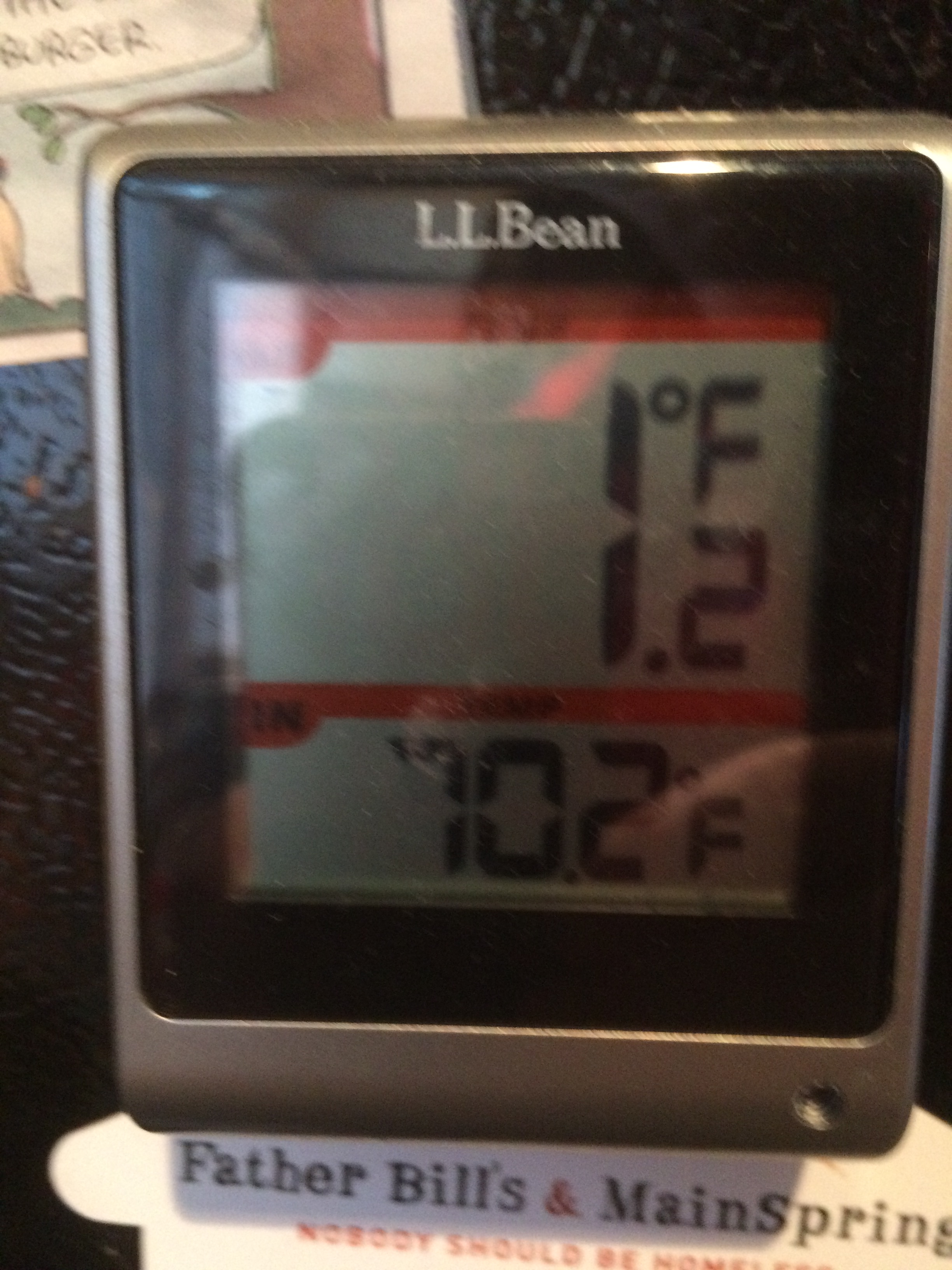
We saw the game in the company of these lovely young women, whose parents were at the game.  Our reaction to the interception was comparable to some of those in the video, and I’m not sure the girls made the most noise.

2015-02-01 18.11.32

“Senator” Free Friday link

Here’s the link for the Free Friday writeup of Senator on Barnes & Noble.

People are already reviewing it, which I think is weird.  As with my previous Free Friday experience, the reviews are bimodal—people either love it or hate it.  Here is a hater who left a comment:

Used the Lord’s name in vain multiple times at the beginning so I read no further.  I don’t recommend this one at all.

Can’t argue with that.  Here are some more favorable comments from Barnes & Noble and elsewhere.  This one is voted the most helpful on Barnes & Noble:

One of Richard Bowker’s best novels — full of characters who are not just interesting but believable. Bowker’s style is clean and spare, but also engaging, vivid, and fast moving. I read this when it first appeared in hardcover, and am glad to see it back in print as an ebook.

And here’s the most helpful review on Amazon:

The beginning of this book put me off. I generally do not care for novels written in the first person, and the first chapters were tedious, another overworked story of the dead mistress whose murder threatens to ruin her high-placed lover. However, once all of the players were identified, I found myself relating to the protagonists and many supporting characters on the same kind of personal level as when I first read Presumed Innocent so many years ago. Bowker creates the flawed hero of the classics, a man driven on the one hand by ambition and on the other,by a sense of honor. Even at the end, the Senator possessed strengths and weaknesses that are not entirely resolved. In other words, he is human. This is not just a fine tuned murder mystery, it is a journey into the very complex issues of guilt and innocence-good and evil. For nearly a quarter century, I was a prosecutor of serious felonies, a position not without personal as well as professional challenges. It was not uncommon for me to sometimes relate to the defendant sitting one chair away at counsel table on a very human level. That did not change the nature of my mission–I was considered a tough prosecutor– but it made me reflect upon the difference between the concept of legal guilt and that of moral evil. This is not a story in which the murderer is arrested, tried and convicted, but its resolution is gratifying. In the past 18 months I have downloaded more than 415 books on my Kindle, and read all but a very few.This is one of the better ones, perhaps when it comes to a political mystery, the very best.

Just one more:

This is one of my favorite Richard Bowker novels — full of characters who are not just interesting but believable. Bowker writes in a clean, spare style that I find engaging and vivid, but also fast moving. I read this when it first appeared in hardcover, and am glad to see it back in print as an ebook.

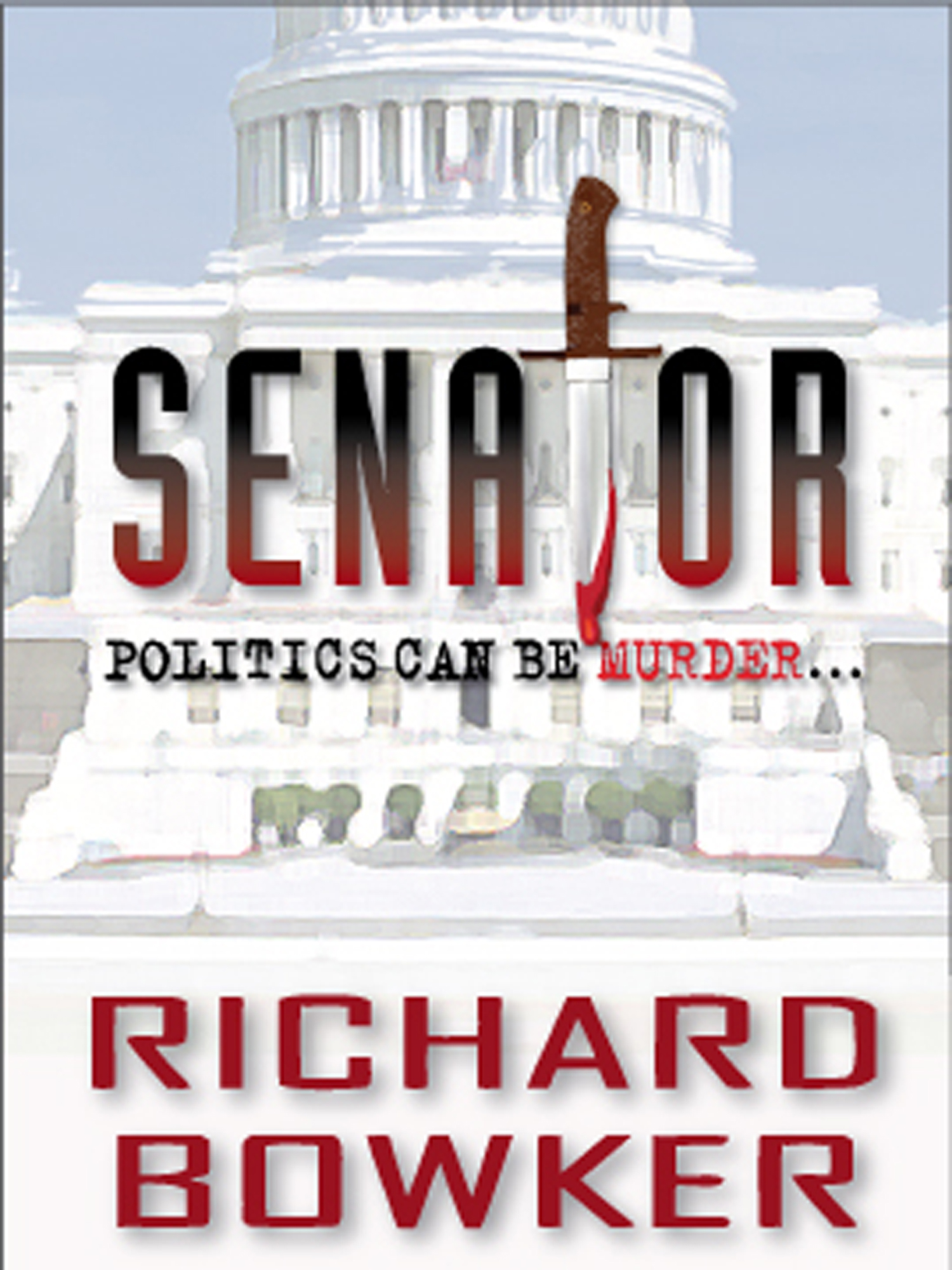
“Senator” is free at Barnes & Noble!

My novel Senator is one of this week’s Free Friday selections at Barnes & Noble, and I just noticed they’ve already changed the price.  Dover Beach was a Free Friday selection a while back; lots of people downloaded it, and it got lots of reviews, most of which were great.  Some of them were, um, interesting.  If you do download and read Senator, please leave a review, and I hope it’s at the reverential/awestruck end of the spectrum.

Senator final cover

The more it snows (Tiddely pom)

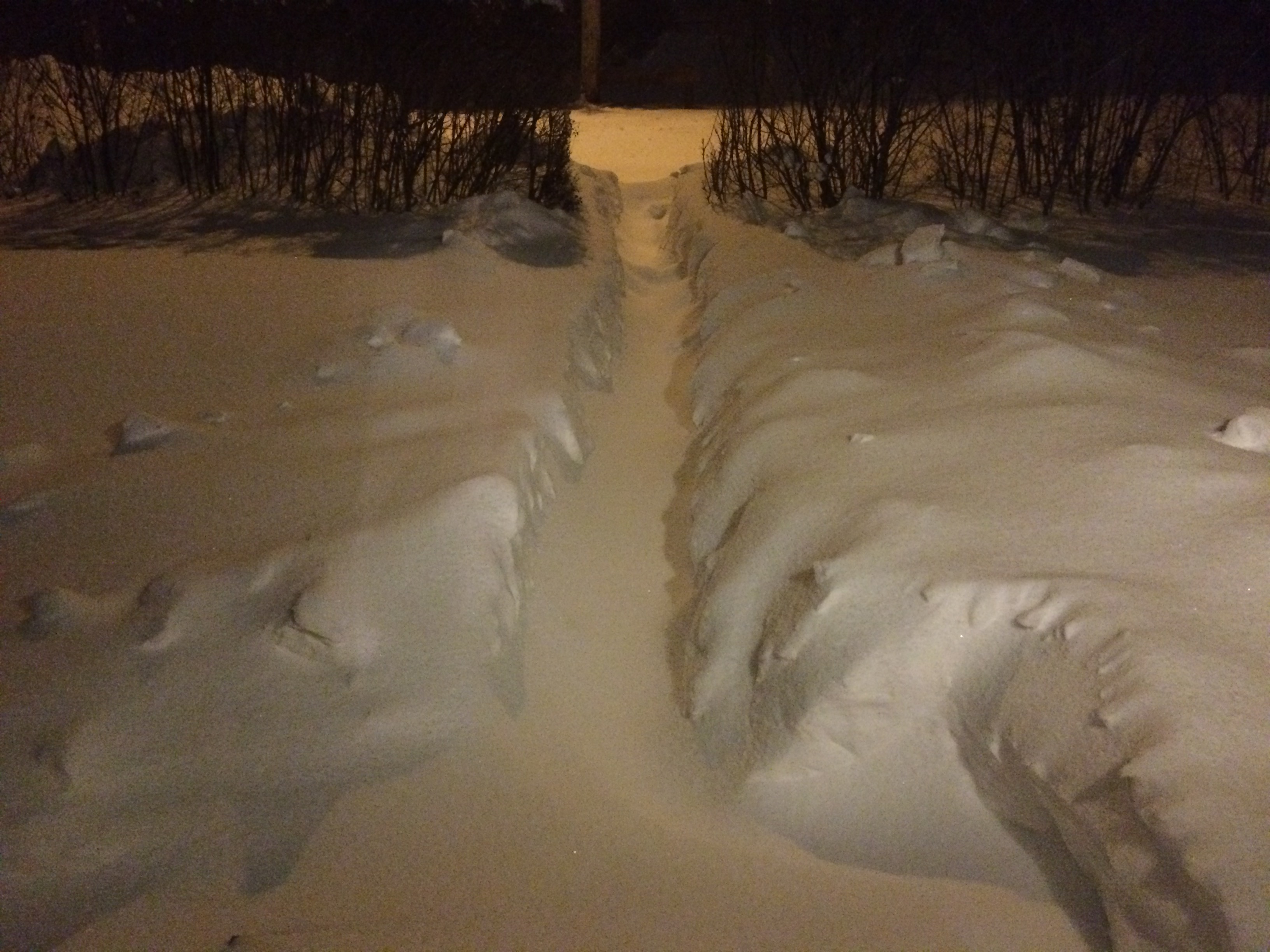
Eight p.m. and it’s still snowing.  We shoveled a while ago, but it doesn’t seem worth the effort.  The plows are undoubtedly coming back, and we’ll have to do it again.

2015-01-27 20.14.01

This is probably our favorite snow poem, by A.A. Milne.  We would recite it to our kids whenever it snowed, and I think eventually they started looking at us funny.

The more it snows (Tiddely pom),
The more it goes (Tiddely pom),
On snowing.

And nobody knows (Tiddely pom),
How cold my toes (Tiddely pom),
Are growing.

The Snow-Storm

Still snowing in my neck of the woods.

2015-01-27 15.55.36

Emerson wrote this poem in 1841, about 30 miles from where I’m sitting by my radiant fireplace, in a tumultuous privacy of storm.

Announced by all the trumpets of the sky,
Arrives the snow, and, driving o’er the fields,
Seems nowhere to alight: the whited air
Hides hills and woods, the river and the heaven,
And veils the farmhouse at the garden’s end.
The steed and traveler stopped, the courier’s feet
Delayed, all friends shut out, the housemates sit
Around the radiant fireplace, enclosed
In a tumultuous privacy of storm.

Come see the north wind’s masonry
Out of an unseen quarry evermore
Furnished with tile, the fierce artificer
Curves his white bastions with projected roof
Round every windward stake, or tree, or door.
Speeding, the myriad-handed, his wild work
So fanciful, so savage, nought cares he
For number or proportion. Mockingly,
On coop or kennel he hangs Parian wreaths;
A swan-like form invests the hidden thorn;
Fills up the farmer’s lane from wall to wall,
Maugre the farmer’s sighs; and, at the gate,
A tapering turret overtops the work.
And when his hours are numbered, and the world
Is all his own, retiring, as he were not,
Leaves, when the sun appears, astonished Art
To mimic in slow structure, stone by stone,
Built in an age, the mad wind’s night-work,
The frolic architecture of the snow.

Snow is general . . .

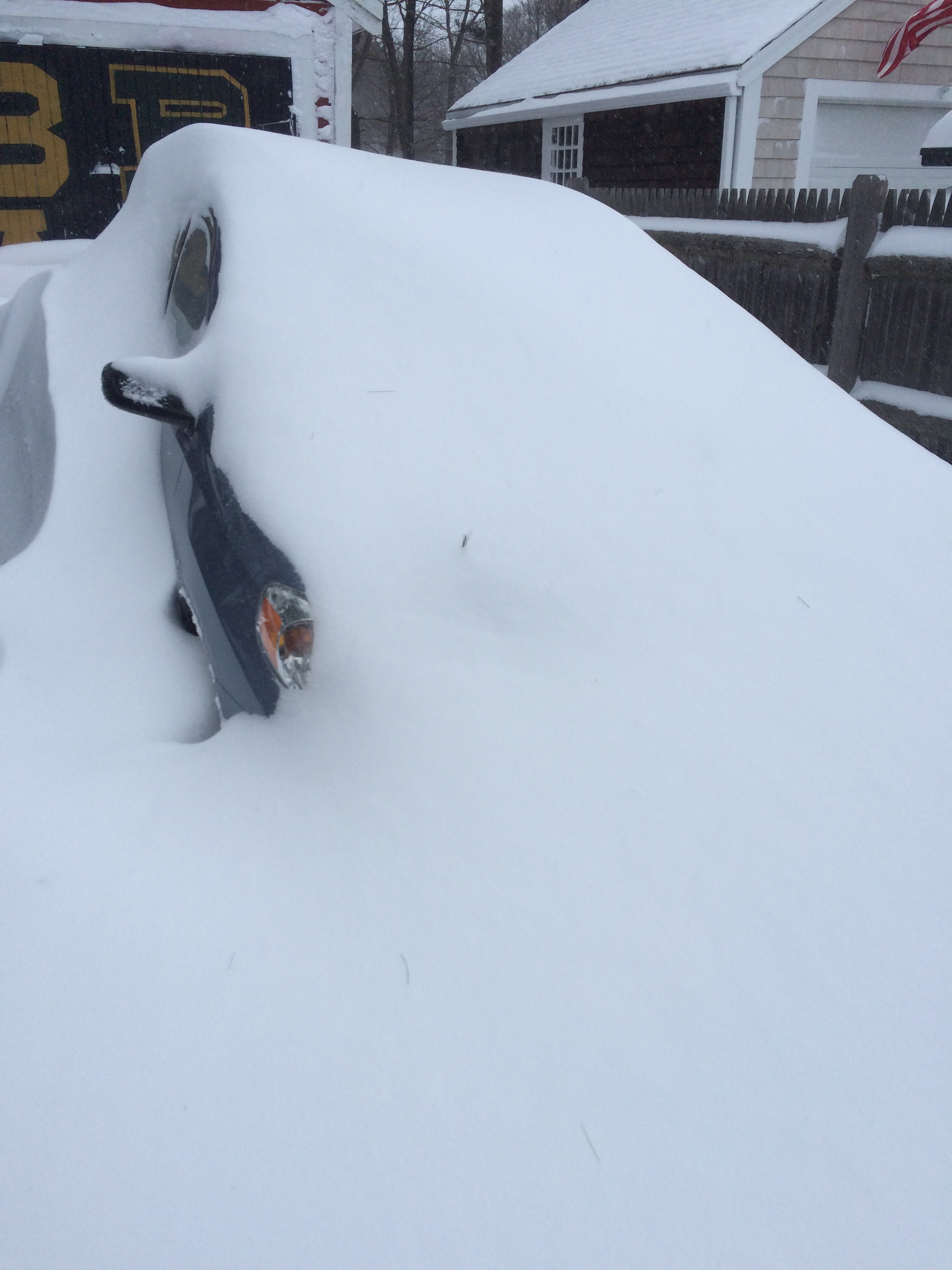
We’re in the middle of a blizzard hereabouts:

2015-01-27 07.23.07

So it’s a good time to read the last paragraph of James Joyce’s “The Dead” (as if there were a bad time):

A few light taps upon the pane made him turn to the window. It had begun to snow again. He watched sleepily the flakes, silver and dark, falling obliquely against the lamplight. The time had come for him to set out on his journey westward. Yes, the newspapers were right: snow was general all over Ireland. It was falling on every part of the dark central plain, on the treeless hills, on the Bog of Allen and, farther westward, softly falling into the dark mutinous Shannon waves. It was falling, too, upon every part of the lonely churchyard on the hill where Michael Furey lay buried. It lay thickly drifted on the crooked crosses and headstones, on the spears of the little gate, on the barren thorns. His soul swooned slowly as he heard the snow falling faintly through the universe and faintly falling, like the descent of their last end, upon all the living and the dead.

Building worlds, and remembering them

A while back I told a friend of mine that I was working on the third book in my Last P.I. series (it’s called Where All the Ladders Start and it will be available incredibly soon now).  He asked me, “How do you keep track of all that’s going on in that world?  The characters’s names, what they look like, and so forth.  Do you maintain a story bible or something like that?”

“Er, um, no,” I stammered.  “But it sure sounds like a good idea.”

This isn’t Game of Thrones, but there really does get to be a lot to keep track of after a while.  Walter’s friend Mickey, who drives Bobby Gallagher’s van — did I give him a last name at one point?  If I did, I sure have no memory of what it is.  How much detail have I provided for the Salvage Market?  What’s the layout of Walter’s house in Louisburg Square?  And what exactly have I said (and not said) about the war that landed everyone into this messy world in which the novels are set?

Luckily, Microsoft Word’s search capabilities are powerful enough that I can home in quickly on the relevant passages in the earlier books.  But I continue to worry that some sharp-eyed reader with a better memory than mine will point out some inconsistency, the way they notice goofs in continuity and historical accuracy in films, goofs that are then listed in excruciating detail on IMDB. (“The cup is by his left forearm in one scene, and then it shifts two inches closer to his wrist in the next!”)

So clearly I should create such a bible.  But really, I rather be writing.  So I guess I’ll just take my chances.

In a league where success whithers away like a desiccated flower…

This over-the-top image is from a column in this morning’s Boston Globe talking about the Patriots.  Notice the atrocity perpetrated on the poor word wither.  It’s an odd mistake, because even my WordPress spellchecker alerts me that whithers is not a word.  And it’s not like this is some late-night game writeup that no one has a chance to edit. Has the Globe laid off all its editors?

Meanwhile, people complain about the low editorial standards in ebooks written by independent authors.  And people are correct.  I’ve been reaching such a book, and it’s hard to believe that the author–or anyone–read the words he typed before the book was published. Surely someone would have noticed that he regularly mistook then for than, that he was unclear about the difference between its and it’s, that the tree he was writing about was a cypress and not a Cyprus.  And on and on.

It doesn’t escape my notice, though, that this book is way more successful than any of mine, with dozens of five-star reviews.  It’s true that some reviewers point out the spelling mistakes, but just as many people seem exercised by the author’s errors in military technology.  (An M-16 apparently fires the 5.56 NATO round, not the 7.62 NATO round.  Who knew?)

Standards are slipping everywhere, and no one seems to care.  Also, you kids get off my lawn!

Books I read in 2014

Some of them, anyway, and in no particular order.  A couple others I’ve talked about previously.

King Leopold’s Ghost — This harrowing book, about the Belgian colonization of the Congo, is depressing enough to make to make you swear off humanity once and for all.

The Origins of Consciousness in the Breakdown of the Bicameral Mind — Written decades ago, the author’s thesis still holds up pretty well, it seems to me.  I read it as an ebook, and the OCR is pretty bad, though.  It has a cameo role in my new novel, Where All the Ladders Start.  See if you can spot it!

The Glory of the KingsThis is a novel by my cousin’s husband, Dan Close, and it’s really good.  It’s about Ethiopia repelling an Italian invasion in 1896, and Dan’s affection for his characters and his deep understanding of the country (he served in the Peace Corps there) shine through on every page.

Someone — Alice McDermott’s novel is the kind I wish I could write but can’t — a series of vignettes from an ordinary life, scattered in time, that add up to way more than the sum of their parts.

All the Shah’s Men — This is the story of the US and British-led coup of the Iranian leader in 1953.  If you want to know why so many people hate us in Iran, this is a good place to start.  We have a lot to be sorry for, but the Iranians don’t come off looking very good either.

Our Mathematical Universe — Max Tegmark is an MIT professor with interesting ideas about multiverses.  I’m incapable of judging the science behind his speculations, but he’s an engaging writer.  Very useful background if you’re interested in writing alternative history novels set in a multiverse.

Inferno — This is a history of Word War 2 by Max Hastings.  I’m not sure why I decided to listen to it, except I had this suspicion that I didn’t know much about the subject, and it turned out I was correct.  Ask me anything about the Battle of the Bulge.  OK, don’t do that.  But at least I now have a clue about what the battle was all about.

The Life and Opinions of Tristram Shandy, Gentleman — I remember being entranced by this novel when I was in high school  Either I have a faulty memory, or I was one weird kid (probably both are true).  The book is occasionally hilarious and charming, but eventually I found the endless digressions annoying, and I started skimming.

Echo Burning — I keep dipping into Lee Child’s oeuvre.  This one is better than some of his later books, but as usual he goes to great lengths to justify why Jack Reacher has to go around killing everyone in sight.

The Demon under the Microscope — I had this suspicion that I didn’t know anything about the development of sulfa drugs in the 1930s, and it turned out I was correct.  A very entertaining story about the discovery of the first antibiotics, and how they changed the world.

Salt — I also had this suspicion that I didn’t have a proper understanding of the role of salt in world history.  Now I do, but I’m not sure I care.  Listening to this book was a mistake; if I had read it, I would have skimmed long sections of it.  Recipes don’t work well in audiobooks.

The Circle — This is David Eggers’ brave-new-worldy novel about modern social media and Facebooky corporations.  I found it predictable and uninteresting, and finally I gave up on it.

Why Nations Fail — The authors have an explanation, which they hammer home relentlessly.  It seemed pretty persuasive to me, but what do I know?

The Origins of Political Order — By Francis Fukuyama.  More than I wanted to know about almost everything.