Unknown's avatar

About Richard Bowker

Author of the Portal series, the Last P.I. series, and other novels

Are five-word sentences the gospel truth?

Here’s a bland New York Times op-ed making the somewhat uncontroversial point that short sentences are good.  Particularly after long sentences.  Particularly at the end of paragraphs and chapters and novels.  This doesn’t seem like breaking news.  The author starts off with a pretty good story, though:

I learned an important lesson, somewhat unwittingly, on July 19, 1975, while watching an interview with two of my favorite writers, William F. Buckley Jr. and Tom Wolfe. Mr. Wolfe was making fun of an art critic who had begun an essay with the sentence “Art and ideas are one.”

“Now, I must give him credit for this,” said Mr. Wolfe. “If you ever have a preposterous statement to make … say it in five words or less, because we’re always used to five-word sentences as being the gospel truth.”

If that’s true, maybe I should end everything with a five-word sentence.

It turns out my writing group spent some time considering a six-word sentence I used to end a chapter of the novel I’m writing.  Here’s the sentence:

And then I heard the screams.

Pretty good, huh?  But folks were worried that readers would infer that multiple people were screaming, rather than one person screaming multiple times, which is what I intended.  Well, maybe. So someone suggested:

And then I heard the screaming.

But that didn’t seem to solve the original problem.  And it added an extra syllable to the sentence.  I didn’t like that extra syllable.  So we ended up with:

And then I heard the scream.

That solved the problem of multiple people screaming.  But it was somehow less powerful than the image of the narrator hearing scream after scream.

That’s where we left it.  Staring at the pixels, I’m tempted to make the last word plural once again.  Back where we started.  Maybe I should drop the “And” at the beginning.  That’ll give me the magic five-word sentence.  I could probably spend a lot of time figuring this out.

That’s why writing is fun.

Thoughts on sales ranking; also, a bad review and a good sunflower

After getting as high as about #46 on the Nook bestseller list, Senator is starting to fade like the Tampa Bay Rays.  Its sudden rise in the rankings got me thinking about how they are calculated. A brief tour of the Internet convinced me that this is a rat-hole from which one may never return.  The algorithms are proprietary and probably change periodically, so it’s all guesswork.

Since I’m dealing with a publisher rather than publishing my books myself, I don’t see the daily sales figures on Amazon and B&N, so there is no easy way for me to see how the ranking tracks these sales numbers.  But lots of self-published writers apparently have nothing better to do, and they are more than happy to opine about who the rankings are calculated.

The consensus, if you care, is that the ranking represents something like a 30-day moving average, with more recent sales weighted more heavily than sales earlier in the cycle. There is probably some residual effect from sales prior to the 30-day period, so a book that sells five copies a year will have a higher ranking than a book that sells one copy. I have no idea if this is anything like the truth, but it seems plausible to me.  And how many sales does a particular ranking represent?  This looks like a reasonable guess.  Of course, that’s for Amazon.  Barnes & Noble would presumably be something like 20% of that.

Anyway, the sales on Barnes & Noble have started to get Senator some reviews there.  Here is a remarkably bad one that I enjoyed (sort of).  It’s by our friend Anonymous and is titled “Awful”:

Was there a good guy anywhere in this mess? However samples at end were even worse and can now avoid all in future mom

What’s impressive about this is that the writer feels obliged to trash the samples as well as the novel.  Also, what’s up with the word “mom” at the end?  Is the writer trying to insinuate that “Anonymous” is actually my mother?  That’s harsh.

To make myself feel better, here’s a photo of some sunflowers from my garden:

sunflowers


Also, the Red Sox just beat the Yankees for the third time in a row, so there’s that.

“Senator” promo at Ereader News Today

Hey, do me a favor and go over to this Facebook site and Like the “More Kindle Deals for 9-3-13” topic.  Getting lots of likes makes Ereader News Today happy.  Or you can go straight to the site, where Senator is one of their Kindle deals of the day.  Buying a copy would make them even happier.  It would make me happy, too.  At $0.99, how can you go wrong?

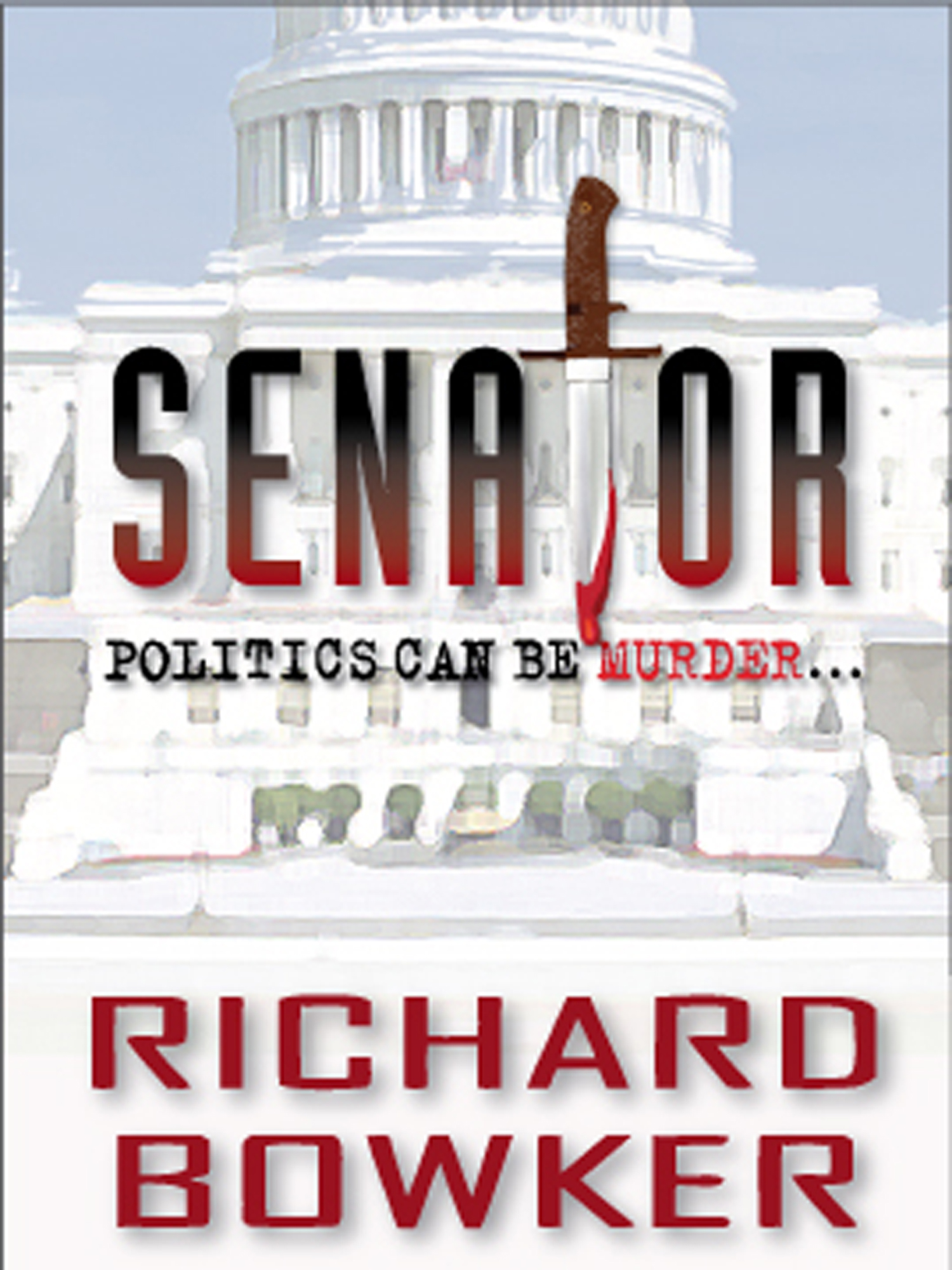
Senator final cover

The Senator promotion at Barnes & Noble is certainly doing what it’s supposed to do.  The book is now #56 on the Nook bestseller list, which puts it ahead of Volumes 2 and 3 of the Fifty Shades trilogy, among other interesting and no doubt worthy books.

Finally, I’ve gotten a couple of nice reviews of The Portal on Amazon but could use a lot more, if you’re interested in helping out.  I’m told that the Nook edition will appear any day now.

Two songs for Labor Day

First, Bob Dylan’s “Workingman’s Blues #2” from the astonishing Modern Times album:

Here is the first verse, which is either deeply profound or just simply hilarious.  Or both. Typical Dylan.

There’s an evenin’ haze settlin’ over the town
Starlight by the edge of the creek
The buyin’ power of the proletariat’s gone down
Money’s gettin’ shallow and weak
The place I love best is a sweet memory
It’s a new path that we trod
They say low wages are a reality
If we want to compete abroad.

And let’s raise a glass to those hard-working people, the Rolling Stones and Guns ‘n’ Roses, performing “Salt of the Earth” live.

Is blame worthy?

I have difficulty wrapping my head around free will.  It’s either me or free will, and I tend to think it’s the latter.

Most people, on the other hand, find it hard to imagine that we don’t have free will.  One of the big advantages of free will is that it lets us blame people for stuff they do, because they could always have chosen not to do that stuff.  And if we can’t blame people for stuff, how can we have a criminal justice system?

Radiolab recently ran a podcast called “Blame“.  The main story involved an epileptic who had surgery to control his disease; a side effect of the surgery was that it made him compulsively download child pornography.  He is arrested and brought to trial.  Is he guilty of a crime?  Should we blame him for his actions?

As neuroscience marches on and we gain a clearer understanding of how the brain works, there will be more and more situations like this, and it will be harder and harder to say that someone is to blame for his misdeeds.  The Radiolab hosts, Jad and Robert, seemed to find this a vexing moral and legal dilemma.  But again, I don’t get it.  If we got rid of blame, we could still have a criminal justice system.  You could still send someone to prison, if only to send a message to other people–other brains–that the person’s behavior is not something that society tolerates.

Blaming people, of course, is deeply satisfying, so I can’t imagine it will ever disappear, any more than religion will.  Still, I can dream.

Bad words from yesteryear

Here’s an interesting little post from the American Heritage Dictionary about words that a substantial percentage of its Usage Panel frowned upon in the mid-1960s. They include balding, choreograph, senior citizen, divorce (as an intransitive verb), and upcoming.

Reading these early ballot results has an oddly disorienting effect, standing as a vivid reminder that creeping changes in the English language have been going on constantly throughout our lives, often without our even noticing. All of the usages listed above have become so commonplace that we don’t bother to ballot them anymore, or to include usage notes for them in the dictionary. No doubt many of the usages that are widely condemned today will, in turn, quietly work their way into standard usage, until one day we’ll wonder why anyone ever objected to them.

I would just quibble with two of the words.

Balding has always struck me as an odd word; it sure looks like the present participle of the verb to bald.  But there is no such verb!  I wouldn’t be at all surprised if I have used the word to describe a character–the word is useful!  But I would never do it without a twinge of guilt.

Senior citizen is, I suppose, a phrase in good standing, but it only feels right to me it in certain contexts, like TV news reports, where euphemisms are more or less expected.  You would never use it in fiction to describe a character, except maybe ironically.

I have written before about words and phrases that seem to be in the process of changing, like jive as a synonym for jibe, and “I have a pit in my stomach” for “I have a bad feeling in the pit of my stomach.”  Let me add the transitive use of the verb graduate, as in, “When I graduate college, I’m going to become an English teacher.”  Interestingly, the battle used to be fought over the active vs. passive usage of graduate: “He graduated from college” vs. “He was graduated from college.”  Who exactly is doing the graduating?  That battle appears to have been lost, although you could still say: “The college graduated 300 seniors last Saturday.”

Is the language falling apart, or is it just changing?

Let’s all join Craig Shaw Gardner in the Netherhells

Craig Shaw Gardner has finally released the first three books in his hilarious Ebenezum series as e-books.  Let the rejoicing begin!  Here’s the classic cover for A Malady of Magicks:

Also out are A Night in the Netherhells and A Multitude of Monsters.

I heard Craig read the short story that turned into A Malady of Magicks back in the Harding administration sometime, and I couldn’t believe that anyone could write a story that funny.

Mr. Gardner has also relaunched his blog, this time in our familiar WordPress world. Let’s get him to start adding content!

Where are all the gay bars in Jordan, and other mysteries of the Middle East

My little post yesterday explaining the Middle East got a lot of views.  Which is odd, because I know nothing about the Middle East.  Like most Americans, my time is spent worrying about Tom Brady’s left knee and Clay Buchholz’s right arm.  Also how to sell my many fine novels.

If you really want to learn about the Middle East, you should get my son to restart the blog he had last year.  Or start a new one where the photos don’t disappear.

Here is the sort of thing I don’t know, and he does:

Son: “The best clubs in Amman are on Rainbow Street.”

Me, making a tiny little joke: “I suppose that’s where the gay bars are.”

Son: “As a matter of fact, that’s right.  They’re not called gay bars, but everyone knows what they are.”

So there you have it.  The gay bars in Jordan are on Rainbow Street in Amman.  Who knew?  Everyone in Amman, apparently.  Here’s a photo of the street.

My son can also tell you about what happens to liquor stores during Ramadan, and the etiquette of letting cab drivers stop for coffee, how people behave when it snows in Amman, and many other interesting facts that you and I don’t know anything about. We just have to get him writing again.