Unknown's avatar

About Richard Bowker

Author of the Portal series, the Last P.I. series, and other novels

It’s midseason, do you know where your Red Sox are?

Sports, especially baseball, is about stories.  Everything has a story: the season, the team, each player, each game.  A good season has lots of good stories; a great season has stories you wish your parents were alive to experience. Like this one:

So where we are with the Red Sox at midseason?

The Good Stories

David Ortiz is having an all-star year, when we were afraid he was on the downhill side.

Jarrod Saltalamacchia has turned into a pretty good player.

Daniel Nava has come back from the bottom of the depth chart to become a pretty good player.  (He was a one-play good story in 2010, when he hit the first pitch he saw in the big leagues for a grand slam.)

Will Middlebrooks and Felix Doubront look like pretty good young players.

And, um, that’s about it.

The Bad Stories

In no particular order:

The team with the third-highest payroll in the majors has a 43-43 record.

The Yankees came back from a nine-run deficit and beat the Red Sox by six.

Josh Beckett sucks for a front-line pitcher.

John Lester sucks for a front-line pitcher.

Clay Buchholz sucks for a front-line pitcher.

Daniel Bard sucked so bad they had to send him to the minors, where he continues to suck.

Dice-K finally came back from his injury, turned out to be the same old Dice-K, then got injured again.

Adrian Gonzalez sucks for a guy getting paid $20 million a year.

Kevin Youkilis sucked, got hurt, came back and sucked some more, then got traded.

Jacoby Ellsbury has missed half the season with an injury.

Carl Crawford has missed half the season with an injury.

I don’t like the way Bobby Valentine chews gum.

I may have missed a few, but I’m thinking the ratio of bad stories to good is about three to one. Things could turn around starting tomorrow, but this doesn’t bode well for my summer.

So, in case things don’t get any better, here’s another memory:

Rules for writing — Rule 3: Rewrite

This is another in my random series of rules for writing, designed for for those among us who aren’t geniuses and therefore don’t get to make our own rules.  This means you.  And me.

Let’s distinguish rewriting from revising.  Revising is when you tinker with stuff you’ve already written.  That’s fun!  Rewriting is when you throw away what you’ve written and start over again.  Start a new computer file.  Go through the whole story or novel again, typing it from scratch.  That can be intimidating.  It can be overwhelming.  It can feel like a complete waste of time, when you encounter paragraph after paragraph that, as far as you can tell, doesn’t need to change.  Why bother?  There are more novels to be written.  The Red Sox are on TV.

In my post about outlining, I stole an image from E. L. Doctorow of writing as a car journey in the darkness, with only your headlights to guide you as you make your way towards your destination.  What happens when you reach that destination?  Do you really want to start the journey all over again?

Well, yes, you do.  If you’re like me, you accumulate notes during your journey — should have made a left turn here, should have driven a little faster in this stretch, should have taken a shortcut to totally eliminate that stretch. Some of these notes may be the basis for revisions, but often they call for much more.  Generally, for me, they accumulate to the point that I need to start from the beginning.

The most obvious example of this was when I figured out that I had come up with the wrong murderer in Senator.  That required rejiggering the whole novel.  Everything needed to be recalibrated, from the opening sentence to the ending.  I’m currently rereading my novel Dover Beach, and I recall one ultimate plot twist that I figured out only when I had finished the first draft.  Without the twist, something basic about the book was out of whack.  The twist occurs at the very end, but I needed to prepare for it throughout the plot.  I can no longer tell exactly where I made the changes, but I figure that’s a good thing — everything in the final product needs to be seamless.

Rewriting is less fun than revision, because it’s more work.  But I find it deeply satisfying.  And it goes much faster than the first draft, which is what causes me to sweat blood.  I have never done more than three drafts — but maybe my work would be better if I had!  At some point I’m content to take the latest draft and revise it.  And revise it, and revise it.

And still I can look at it later and see where the thing has still fallen short.  Here is the famous quotation from Paul Valéry:

A poem is never finished, only abandoned.

This applies to novels, as well, except you have a hundred thousand words to tinker with instead of a hundred.  You can tinker forever, so at some point you have to stop.  But if you stop too soon, you’re not doing your story, or yourself, justice.

In which the narrator of Dover Beach comes up with a title for the book — and it isn’t “Dover Beach”

Here is our first exciting excerpt from Dover Beach, and it’s apropos of this discussion of titles.

It’s early in the novel.  The narrator, Walter Sands, has a strange desire to become a private eye — strange, because he lives in a world that has been devastated by some kind of catastrophe.  At this point, we’re not quite sure what that catastrophe was, but it’s beginning to look like some kind of limited nuclear war.  Walter has a job offer to become a hired gun for a black-market operation, but prefers to pursue his  dream–no longer entirely a dream, however, since he has gotten his first case.  A man has come to him believing he is the cloned offspring of a scientist from MIT, back before the catastrophe.  He wants to track down his “father” and find out why someone is trying to murder him.

Walter is a bookish sort, we are learning, and so he feels the need to come up with a name for his case.  The name, it turns out, is based on an old mystery–Trent’s Last Case.  You probably haven’t heard of it.  But you can download it for free thanks to the nice folks at Project Gutenberg.  (There’s an obscure movie version starring Orson Welles that I have never seen.)  Walter likes the first line of the novel.  So do I; so much so that I made it the epigraph for Dover Beach:

Between what matters and what seems to matter, how should the world we know judge wisely?

Not that Walter knows it just yet, but this is whatDover Beachturns out to be all about.

Anyway, here he is, back from a trip to the wilds of New Hampshire with his black-market friend Bobby, where they traded scavenged antiques for computer parts.  He lives with his girlfriend Gwen and a couple of other people, holding onto each other in the darkness of their fallen world.  He helps Gwen sleep, but he is unable to sleep much himself.

***********

Gwen was waiting for me in the front parlor when I arrived. She was wearing her patched blue robe and a couple pairs of woolen socks. “How did it go?” she asked.

“Oh, fine.”

“No problems?”

I shook my head. “I think I’ll have a glass of cider.” We went out to the kitchen. With Gwen, I was never sure if my lies were successful. I always had the feeling that she understood everything, and that sometimes she just decided to let me get away with one.

She poured us each some cider, and we sat at the table. I told her all about the farm and Lavinia and Mr. Fitch and the electric lights and the tapestries on the wall. And then I remembered something. “I brought you a present.” I reached into my pocket and took out a piece of cake I had grabbed from the Rose Medallion plate.

“Oh, Walter. Thank you.”

“It was either this or a hard disk, and I figured you had more use for cake.”

She smiled and ate the cake.

“Bobby wants me to go to work for him full-time,” I said.

I waited for a response, but none came. She looked at me and sipped her cider.

“I told him to forget it. I’m a private eye now. No time for stuff like that. ”

She nodded, “You must feel good about getting that case.”

“Yeah. Well.” No sense going into it. She knew how good I felt. I finished my cider and stood up. “You should get some sleep,” I said.

Gwen stood up too. She took the lamp in one hand, and my hand in the other, and we went upstairs. We paused as we passed Linc’s bedroom. He was breathing heavily; he muttered something unintelligible in his sleep. Gwen’s hand squeezed mine. We went into our bedroom.

She set the lamp on the night table and pulled the bedcovers down. I took off my shoes. We got into bed, and she put out the lamp.

The darkness was total. We pulled up the covers. I put my arm around Gwen, and she snuggled into the crook of my shoulder. “Do you feel like it?” I asked.

“I guess not,” she said.

“Okay.”

We were silent for a while. The darkness became less total. I could make out the looming bulk of the dresser, the elegant curves of the escritoire, the useless outline of the useless radiator.

“I’m glad you’re safe,” Gwen said.

“So am I,” I said. Glad to see the dresser and the escritoire for another day. Glad to see her. Across the hall, Linc snorted and groaned.

“Someday,” I murmured, “sleep will come easy.”

“And dreams will come true,” Gwen replied.

“Someday.”

We didn’t say anything then. I stroked her hair, and we breathed together, and eventually her breathing became deep and regular. I listened to it for a long while, and then carefully pulled my arm from beneath her head. She settled herself onto the pillow, still asleep. I got out of bed, groped for the lamp, found it, and made my way out into the hall. I was an old hand at this. I lit the lamp in the darkness and walked slowly up the creaking stairs to the third floor. The lamp threw spooky shadows against the walls. I wasn’t afraid of spooks, though; there was too much else to be afraid of in this world. At the top of the stairs, I turned right. More shadows, more spooks, beckoning to me in the dim light, writhing in their lust for life, for freedom. The room reeked of the past, overpowered me with the musty odor of lives lived, of genius spent. It was an odor as exciting as any perfume. I entered the room.

Too many books, Bobby had said. An accusation.

Guilty. I stared at them:

Confess, Fletch

The Dreadful Lemon Sky

The Good-bye Look

Ten Little Indians

The Case of the Amorous Aunt

Green with mildew, brown and brittle with age, dying but not dead yet. Not dead yet.

It occurred to me that I needed a title. What good was a case without a title? Confess, Clone. The Case of the Confused Clone. I was new at this.

The Godwulf Manuscript

God Save the Child

Early Autumn

In those books Spenser was still alive. Still working out at the health club, drinking beer, listening to the Red Sox. Ah, would that it were not fiction. That way madness lies, as Mr. Fitch would say. But maybe you had to be mad to stay alive nowadays. God Save the Clone. Early Winter. No, try again.

Farewell, My Lovely

The Maltese Falcon

Penance for Jerry Kennedy

The Big Sleep

Trent‘s Last Case

Trent’s Last Case. An old, old British mystery with a couple of twists at the end. I took it off the shelf and glanced through it. Private eyes were nowhere to be found, although I liked the first sentence.

Sands’s First Case. The possessive sounded ugly.

Sandman. That was Linc’s nickname for me. I didn’t like it. The Sandman went around putting people to sleep, and I—I only did that for Gwen.

I smiled.

The Sandman’s First Case.

It would have to do, until I came up with something better.

I rummaged through a rotting carton of textbooks until I found one on cellular biology. I took it out, sat in my old, overstuffed armchair, and read by lamplight until dawn. Then I tiptoed back downstairs and got back into the warm bed beside Gwen.

I shut my eyes and snuggled up to Gwen, and after a while sleep came for the Sandman—short and troubled as always, but enough to let him make it through another day.

Can you use a politically incorrect word if people are stupid for thinking it’s politically incorrect?

In response to this post, my very fine commenter Stan offers the case of gyp:

Will Shortz will occasionally use the word GYP in the Times crossword puzzle. Invariably he gets complaints from people who consider it a slur against gypsies. Shotz’s defense is that the word does not derive from gypsy and insists on his right to use it.

So what is your feeling about political correctness in the context of mistaken etymologies?

Here‘s a good post on that particular word.  It seems that the derivation of gyp is at best somewhat cloudy (not unlike that of paddy wagon).  One commenter on the post takes this straightforward position:

If a word is meant to be offensive, or is taken to be offensive, then it is offensive.

But what if there is no question about the word’s derivation, and it has nothing remotely offensive in its history?  That’s where we are with the word niggardly, which clearly predates the offensive term and has a well-understood etymology from ancient Nordic.  Here is an example of the high dudgeon people get into over this word, and others like it:

Unfortunately, in today’s America, actual instances of racism are so rare that false allegations of racism are the new racism. We are left with bizarre new English language rules with perplexing vagaries on usage:  May I use “chink in the armor” when referring to the weakness in the game of non-Asian basketball players, or has the very meaning of a non-racist phrase been so consumed by the slurred meaning of one of its words that we must never again speak, even with historical accuracy, of the practice developed by the men in armor?

Instances of racism are so rare?  Yikes!  What’s America coming to, and how come Blacks have the right to say words that Whites can’t?  (I love the commenter who complains that American English is a literal minefield.)

After the recent Supreme Court decision Eric Cantor sent out a tweet about Obamacare where he said something like “It’s time to call a spade a spade.”  The tweet was subsequently retracted.  A minefield!

Here, by the way, is Google’s history of the use ofniggardly in American English for the past century or so:

Something has been going on here, obviously.  Are people being forced to give up their precious word because of political correctness, or are they becoming naturally more sensitive, even if they are hazy on etymology?

Conservatives have clearly cultivated a sense of victimhood over political correctness.  And language is certainly a minefield, if not a literal one.  But that has always been true, although the mines have generally been related to “correct” usage.  The writer who wrote in regards to in an email to me stepped on a mine, even if she didn’t know it.  With political correctness, the stakes are simply somewhat higher.  Stepping on a usage mine may make someone think you have inferior language skills; stepping on a political correctness mine may make someone think you are an insensitive jerk.  You may not care, safe in your superior knowledge of etymology.  But that doesn’t mean you’re not an insensitive jerk.

Back in college (a long, long time ago) I wrote a review of a Tennessee Williams play, which I said was about “two aging queers.”  In the newsroom, each article from every paper was clipped out and pasted in a large book, where other reporters and editors could write comments about it.  Next to my article, someone took me to task for using the offensive word queers, although he allowed as how it might have been acceptable in context.  Holy shit, I thought.  I’d had a somewhat sheltered upbringing, I guess; I had no idea the word was offensive.

The incident has stayed with me to this day (obviously) and recalling it still causes a shiver of embarrassment.  I had (and have) no wish to be an insensitive jerk.

Others may feel differently.

Why don’t symphony orchestras sell recordings of their concerts?

For its 75th anniversary, Tanglewood is providing 75 recordings from its audio archives.  They provide a free stream of a work each day, and then put it on sale.  So far the recordings range from James Taylor in 2009 to Munch and the Boston Symphony playing Bach in 1955.  The prices are cheap — about a dollar per ten minutes of music.  So far I’ve bought Rudolf Serkin playing Mendelssohn’s First Concerto with the BSO under Ozawa from 1975, and Van Cliburn playing Rachmaninoff’s Third with the BSO and Leinsdorf from 1966.

The sound in the Mendelssohn is a bit distant, and the engineers seemed to have individually miked the people with colds so their coughs could be heard over the clatter of the music.  But I love the piece, and Serkin seems to own it.  I had his version with Ormandy and Philadelphia for a long time.  I played the beautiful second movement in the eighth grade, but the passage work in the finale was too much for me.  Here is Serkin playing the finale:

I saw Serkin at Symphony Hall towards the end of his life playing the last three Beethoven piano sonatas.  That was a peak musical experience.

A special treat on this recording was listening once again to the patrician tones of William Pierce introducing the piece.  He was to the BSO of that era what Johnny Most was to the Celtics.

The sound of the Rachmaninoff is better than that of the Mendelssohn, even though it was recorded nine years earlier.  I have never liked Rach 3 as much as Rach 2.  The first movement works for me, but my mind always seems to wander during the finale.  I can’t tell if Cliburn took the cuts that are pretty standard in the third movement — maybe I’m not the only one whose mind wanders.  Here he is playing (most of) the first movement in Moscow in 1958 during the Tchaikovsky competition that he won:

The Tanglewood project makes me wonder why the BSO and other orchestras don’t make their enormous backlist of concerts available for purchase.  I can understand that there might be rights issues with soloists and guest conductors.  But what about standard performances with just the orchestra and the BSO music director?  Surely the tapes still exist–the BSO currently sells a few compilations “From the Broadcast Archives”.  Do they think there’s not a market?  Why not release a few and find out?

The Higgs Boson and smoking ducks

The excitement over the discovery of the Higgs Boson appears to have been too much for the English language as we know it to cope with:

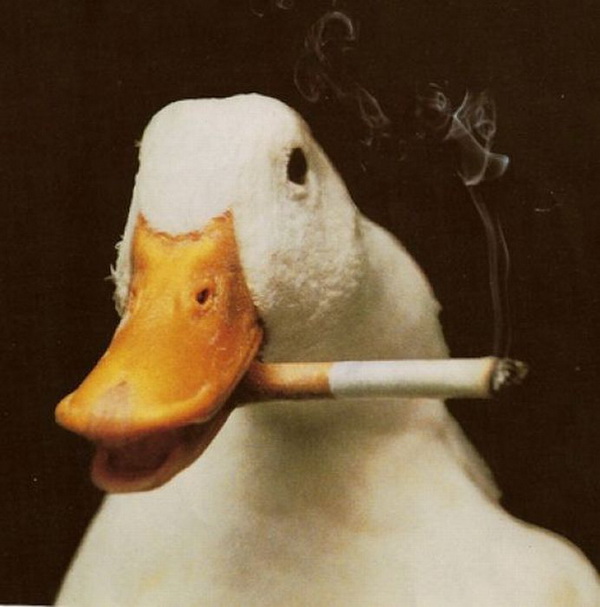
“If I were a betting man, I would bet that it is the Higgs. But we can’t say that definitely yet. It is very much a smoking duck that walks and quacks like the Higgs. But we now have to open it up and look inside before we can say that it is indeed the Higgs.”

This is the kind of event that changes the language, for better or worse. As Language Log says, who knows what will happen when you open up a smoking duck?

The Fourth of July in my little town

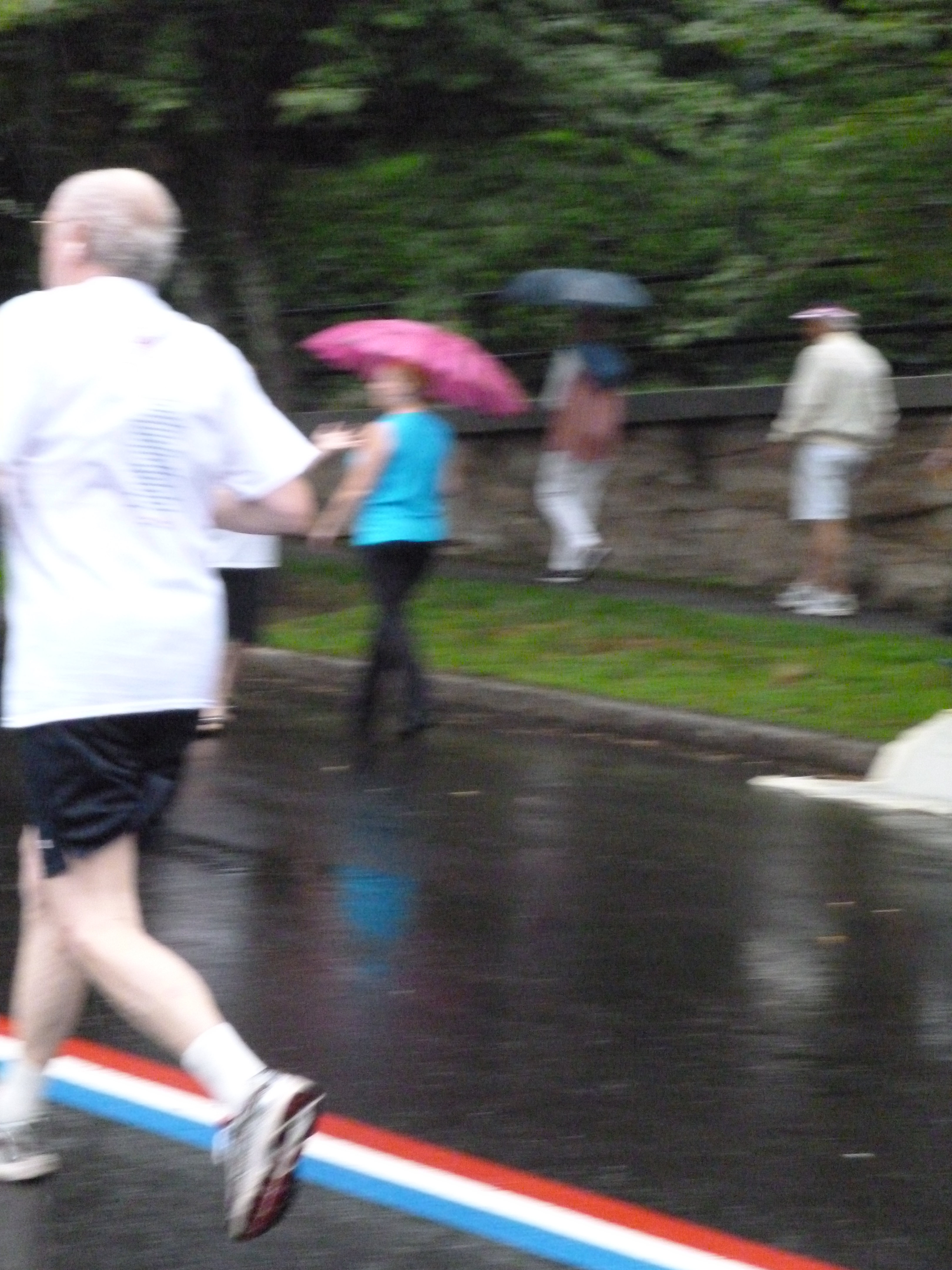
The day began with me and a couple thousand of my friends getting up way too early in to run four miles or so in the rain down Main Street.  I have been doing this for years, so it’s a good way of measuring my physical disintegration. This year, maybe because it was cooler, I was actually a couple of minutes faster than last year.

Here I am close to the finish line, going too fast for the photographer to catch up.  Notice the way my town paints the center line red, white, and blue for the occasion.

Too fast for the photographer

A couple hours after the race people reassemble on Main Street for the parade.  It’s pretty much the same every year.

Here is Uncle Sam, who always leads off the parade:

Here is our world-famous Marching Kazoo Band:

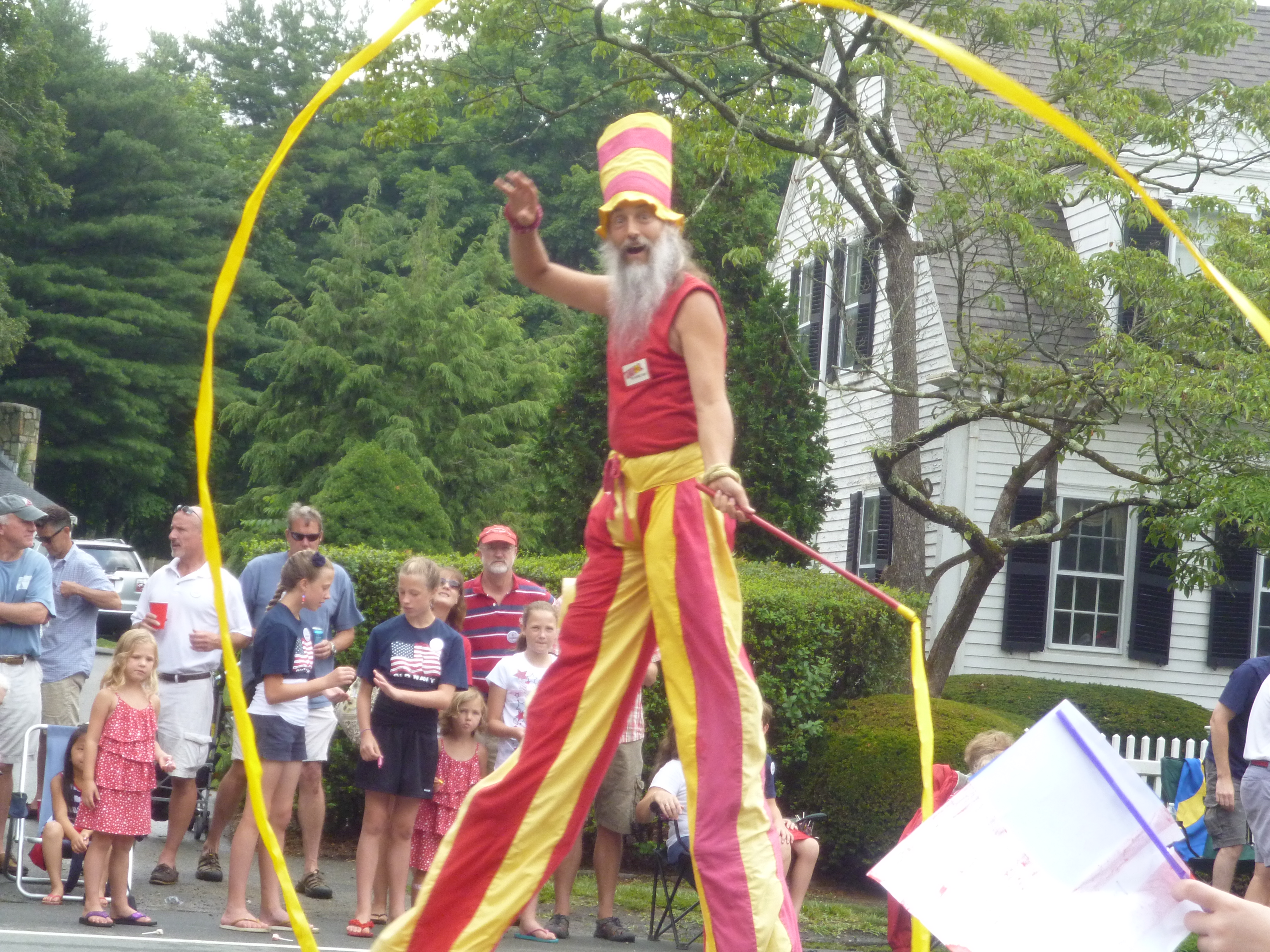
Here’s a tall guy:

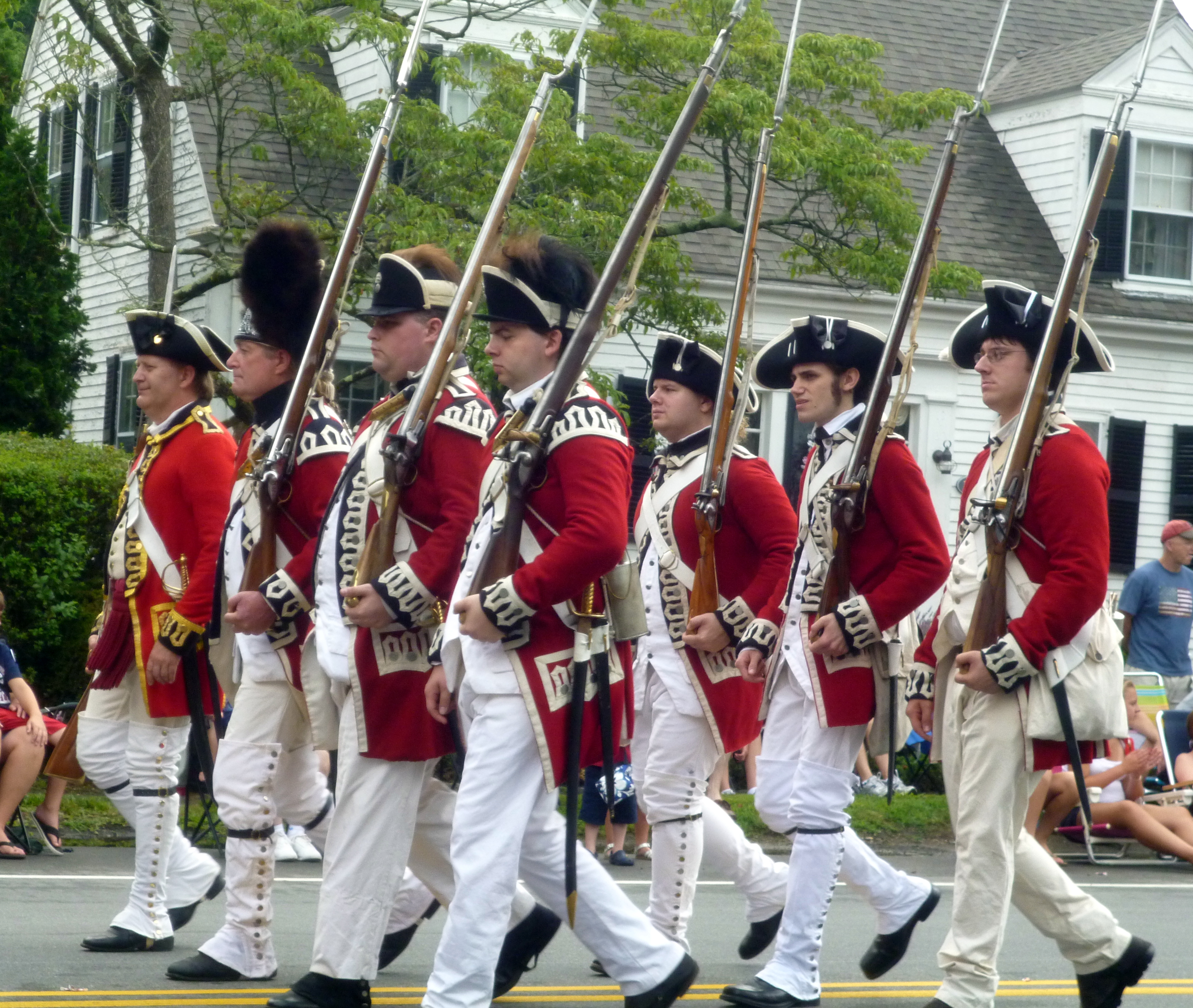
Here are guys pretending to be soldiers:

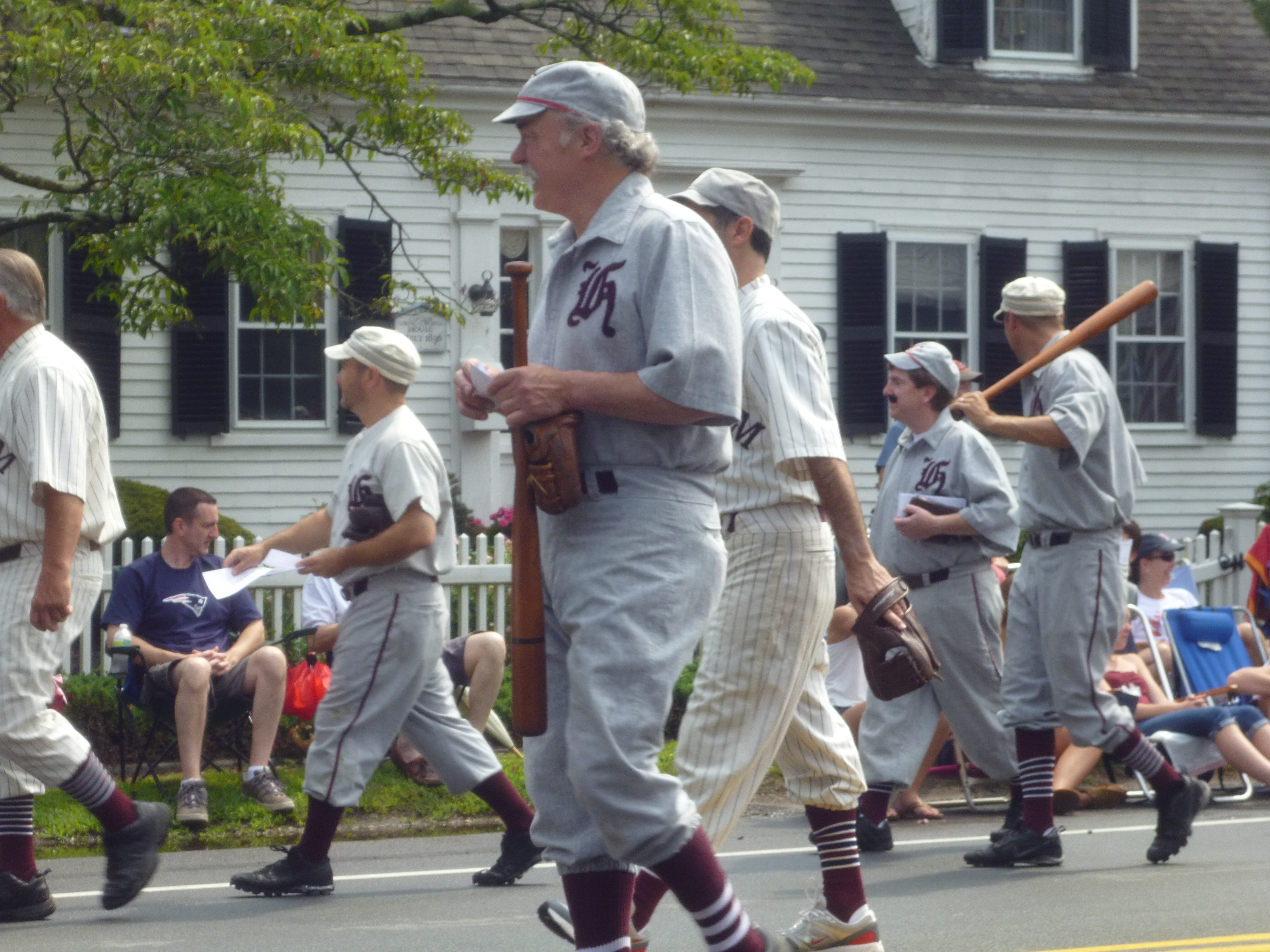
Here are some more guys pretending to be old-time baseball players:

Here are cute kids waiting for people in the parade to throw them candy:

And here is Tom Brady watching some bagpipers.  What’s the Fourth of July without bagpipers?

Don’t you wish you lived in my little town?

Would you buy a used ebook?

One of the many ways in which the Internet has changed the world is that it has made the market for used goods, such as books, much more efficient.  In pre-Internet days, you would have had to work hard or be very lucky to find a used copy of one of my books.  Now you can just go to your computer and order up a used copy of Senator from Amazon for the annoying price of $0.01 (plus shipping).  No matter what the price is, the author doesn’t receive any revenue from the sale.  The seller has the right to sell his physical copy of the book he’s bought; copyright laws are irrelevant.

What about the digital world?  A company called ReDigi is testing whether consumers can resell music they have bought from iTunes.  Record companies are, of course, suing.  One basic issue, apparently, is whether the analogy with used physical books and CDs works in the e-world.  In the physical world, you’re selling an object; once the object is sold, you don’t have it to read or listen to anymore.  ReDigi claims its technology can mimic this state of affairs, but I’m dubious. And I’m dubious that the courts will approve.

ReDigi holds that digital music resale is protected through the First Sale doctrine, which enables consumers to resell any media they have legally purchased. (ReDigi uses a verification system to make sure any music it resells was bought digitally, rather than pirated or ripped from CD.)

EMI responds that the digital copies ReDigi resells are not the same ones that were sold to the consumer—they’re copied several times over the course of the transaction. In the eyes of the copyright laws (which were developed back in analog days), that’s just the same as selling a cassette tape copy of an LP record…. The laws as written simply don’t allow for the possibility of reselling digital media, and it is doubtful that laws permitting it could ever be passed. (Indeed, SOPA looks to take things in the opposite direction.)

The inability to resell your used e-stuff is one of the downsides of the current e-world.  Once you’ve bought an ebook, you’re stuck with it.  I’m not opposed to some amount of sharing at the margins — that’s why I don’t have DRM on my ebooks.  But an organized online market in used ebooks, if it were to come about, sounds like a complete disaster for authors.  Who would pay list price for a “new” ebook if you could get a bit-for-bit identical product for much less?  If that happens, authors will have to write purely for love, not money.

Like bloggers, I guess.