Should a character’s name mean something?

The other day I had to introduce a couple of new characters in my novel and, as usual, this meant I had to pause and figure out what their names should be.  Why is this so hard?

This rule covers some of the basics–don’t confuse your readers with names that are too similar to each other; don’t give a character an ethnic name unless the ethnicity matters…  But there’s a deeper level at which a character’s name may feed into his characterization.  Or not.

Many names have connotations, and a writer needs to be sensitive to them.  “Brittany” says something to readers about a character, and “Edith” says something different. That doesn’t mean you can’t have an Edith who is trailer trash.  But if that’s what you’re up to, you’d better take a little time and explain what you’re doing.

So, the basic question is whether you want the character’s name to carry some of the weight of the characterization.  The more important the character, the less you want to rely on this, I think.  Even Dickens pulled back from his wonderfully evocative names–Havisham, Magwitch, Gradgrind–when it came to his most important or serious characters–Copperfield, Brownlow, Summerson.

Anyway, after ten minutes of pondering the state of my fictional universe, I welcomed Mrs. Fitz and her son Biff into it.  Will they survive my rewrites and second thoughts?  Only time will tell.

How come no one told me about Lee Child?

He’s pretty good!  Which is refreshing, after my experience with Dan Brown.

My friend Doug lent me One Shot. (I’m mistrustful of Doug’s taste in non-Shakespearean Elizabethan drama, but that’s another post.)  The style was clean and serviceable, the characters were sufficiently well developed for a thriller, and the plot was bullet-proof, if you were willing to get into the spirit of the thing.

Jack Reacher is a bit of a stretch.  I expected not to like the superhuman above-the-law vigilante aspect of the character; I prefer heroes with flaws, or at least foibles.  But there was just enough of a sense of humor about the character that I could put up with him.

Here’s what I didn’t like:

  • Amnesia was a major plot device.  Child handled it much better than Dan Brown did, but it’s still a cheap cop-out.
  • The plot seemed a bit too focused on letting Jack Reacher hurt or kill as many bad guys as possible without legal repercussions.  I could do without that, but it seems to be Reacher’s thing.
  • Ultimately, the stakes were too low for all the mayhem.  Spoiler alert: the whole story revolves around kickbacks for paving contracts in a medium-sized Midwestern city. Again, the mystery behind this was handled well, but when it was finally revealed, my attitude was: “People are getting killed left and right for this?”

Still, on the basis of this one novel I’d put Lee Child on a par with Michael Connelly.  Which means I’d happily read or listen to more of his books, without having terrifically high expectations.

Why do authors rewrite?

I’m a big fan of rewriting.  But here’s an article from the Boston Globe making the point that rewriting hasn’t always been the standard.  One reason was technology:

In the age of Shakespeare and Milton, paper was an expensive luxury; blotting out a few lines was one thing, but producing draft after draft would have been quite another. Writers didn’t get to revise during the publishing process, either. Printing was slow and messy, and in the rare case a writer got to see a proof of his work—that is, a printed sample of the text, laid out like a book—he had to travel in person to a publishing center like London.

Another was a philosophical opposition to revisiting your original inspiration.  If you believe that poetry is the spontaneous overflow of powerful emotions, you’re not going to approve of a writing method that is deliberately unspontaneous.

The author points to Modernism as the source of our current deification of rewriting:

The Modernists wanted to produce avant-garde literature—literature that was less spontaneous and enthusiastic than it was startling and enigmatic. In an interview with the Paris Review, Hemingway famously described his “principle of the iceberg”: “There is seven-eighths of it under the water for every part that shows. Anything you know you can eliminate and it only strengthens your iceberg.”

This is all pretty straightforward, although I’d point out that there’s solid evidence that Shakespeare did do some rewriting–for example, of King Lear, where the Quarto version is substantially different from that of the First Folio.  And I think the author doesn’t give enough weight to writing-as-a-job vs. writing-to-create-art. If your next meal depends on getting your novel finished, you’re not going to spend months revising its conclusion.

I’m on board, though, with the author’s discussion of the typewriter’s effect on rewriting.  The typewriter didn’t actually make rewriting easier; in a sense, it made the process harder.

Today we equate a keyboard with speed, the fastest way to get words down, but as Sullivan points out this wasn’t always the case. In fact, a typescript offered a chance to slow down. Most Modernist writers, like Hemingway with “The Sun Also Rises,” wrote by hand and then painstakingly typed up the results. That took time, but seeing their writing in such dramatically different forms—handwritten in a notebook, typed on a page, printed as a proof—encouraged them to revise it aggressively.

This was certainly my experience when I wrote my original drafts by hand.

Finally, the author points out that the computer may paradoxically make us less inclined to rewrite:

Today, most of us compose directly on our computers. Instead of generating physical page after physical page, which we can then reread and reorder, we now create a living document that, increasingly, is not printed at all until it becomes a final, published product. While this makes self-editing easier, Sullivan thinks it may paradoxically make wholesale revision, the kind that leads to radically rethinking our work, more difficult.

I think that’s right.  As I approach the end of the first draft of the novel I’m working on, I’m mulling how to approach the rewrite.  Do I start with the existing Word document, and just edit and add and cut and paste until I’m satisfied with the result?  Or do I re-keyboard the whole thing?  The former is certainly easier; just thinking about the latter makes me tired.  But re-keyboarding might cause me to re-imagine the story at a deeper level, and that might ultimately lead to a stronger finished product.

What’s a writer to do?

Is Jeff Bezos the antichrist? Or maybe just one of the four horsemen of the Apocalypse?

Jonathan Franzen isn’t sure.

In an article for Guardian Review before the publication of his new book, The Kraus Project, he writes: “In my own little corner of the world, which is to say American fiction, Jeff Bezos of Amazon may not be the antichrist, but he surely looks like one of the four horsemen. Amazon wants a world in which books are either self-published or published by Amazon itself, with readers dependent on Amazon reviews in choosing books, and with authors responsible for their own promotion.”

He goes on to say:

“As fewer and fewer readers are able to find their way, amid all the noise and disappointing books and phony reviews, to the work produced by the new generation of this kind of writer, Amazon is well on its way to making writers into the kind of prospectless workers whom its contractors employ in its warehouses, labouring harder for less and less, with no job security, because the warehouses are situated in places where they’re the only business hiring.”

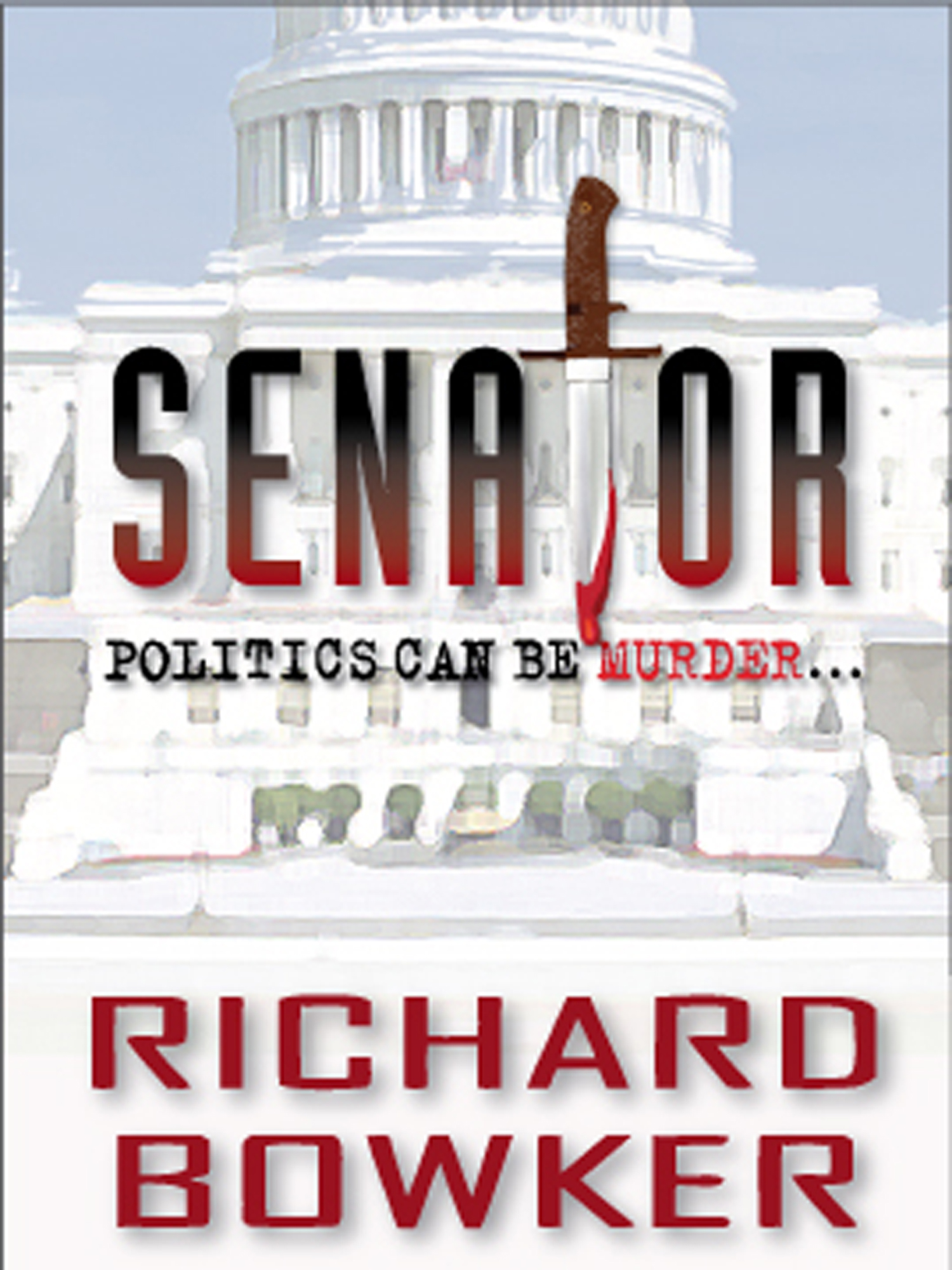
This is the dystopian vision of Scott Turow and the Author’s Guild, where every move that Amazon makes is greeted as the next step towards the end of literature as we know it.  And I just don’t get it.  Amazon, and the e-book revolution, have certainly made publication more democratic.  It’s now open to anyone, which of course means there will be more junk available.  But do these folks really believe that there will be no way for readers to distinguish the good writers from the bad?    My novel Senator has a bunch of reviews on Amazon, and the review deemed most helpful by readers also happens to be (in my opinion) the best of the bunch.  Read that review, and you’ll get as good a sense of the novel as any newspaper review.

Further, do they really think that, even if Amazon controlled the entire publishing industry, it wouldn’t have an incentive to find and publish great books? And do they really think that Amazon can control the entire publishing industry?  Jonathan Franzen is a world-class writer with a large following.  If he wanted to bypass Amazon and self-publish on jonathanfranzen.com, he could do it.  Or, he could start his own publishing house, giving his imprimatur to the kind of fiction he thinks the world wants; no one is going to stop him, and the barriers to entry are minimal.

I’m also a little baffled by this view that Amazon is destroying the financial prospects of good writers.  Writers have no financial prospects!  They have never had any financial prospects!  If anything, Amazon has opened the doors to a whole class of writers who were shunned by the traditional publishing industry but now at least have a chance at reaching an audience, thanks to the Internet.

Finally, I just want to say that the Red Sox are back in the playoffs thanks to a complete-game victory by John Lackey.  And that’s one of those sentences I never thought I’d write.

Still looking for reviews of “The Portal”

I’ve gotten three very nice ones so far, but I could use some more.

In case you’ve forgotten, here’s the outline and first chapter.   And here’s the cover, which helpfully informs you that it’s an alternative history novel:

9781614174639


And, apropos of nothing, here’s a photo of my little town’s charming harbor on a late summer’s day:

2013-09-15 17.18.13

Rules for writing — Rule 12: End a chapter with a bang, not a whimper

My last post, on short sentences, reminded me that I haven’t been adding to my rules for writing, a somewhat randomly numbered series of guidelines that I try to follow, and you probably should too, if you’re writing mainstream novels.

The short sentence I discussed in that post came at the end of a chapter, which, as the Times article rightly pointed out, is a very good place to put a short sentence.  But what’s up with chapters?

Chapters are a nebulous concept.  If you were to ask me “How long should a chapter be?”, my response would be “I dunno.”  I don’t have a rule for that.  Sometimes you have a set piece that demands to be its own chapter, and the length is determined by the length of the set piece, but at other times you have a more or less continuous flow of action, or rapid-fire viewpoint changes, and it’s not at all obvious what function the chapter is playing, other than giving the reader an obvious place to stop reading, turn out the light, and go to sleep.

But you don’t want the reader to stop reading!  You don’t want the reader to go to sleep!

So the obvious thing to do is to end the chapter with something that forces the reader to keep reading into the next chapter.  And then I heard the screams. End of chapter.  What screams?  Who is screaming?  Better turn the page and find out.

This is the cliff-hanger approach to movie serials, and it’s such an obvious narrative ploy that I shouldn’t have to explain it to you.  Except that I keep screwing this up!  Twice so far in the first draft of the novel I’m writing I’ve ended a chapter with my narrator going to sleep.  That’s nuts — it’s an open invitation to the reader to go to sleep too.  If the narrator is safe in bed and nothing is going to happen till morning, there’s no reason to keep reading.  My writing group has had to gently remind me that the narrator shouldn’t go to bed at the end of the chapter — he should get whacked on the head by an unseen adversary, or discover a corpse, or fall into a bottomless ravine.  Or, you know, hear an unidentified person screaming.  And they couldn’t be more correct.

I’ll get this right in the second draft.  But in the meantime, I should print out this blog post and pin it next to my computer.  Let’s not screw up again.

Are five-word sentences the gospel truth?

Here’s a bland New York Times op-ed making the somewhat uncontroversial point that short sentences are good.  Particularly after long sentences.  Particularly at the end of paragraphs and chapters and novels.  This doesn’t seem like breaking news.  The author starts off with a pretty good story, though:

I learned an important lesson, somewhat unwittingly, on July 19, 1975, while watching an interview with two of my favorite writers, William F. Buckley Jr. and Tom Wolfe. Mr. Wolfe was making fun of an art critic who had begun an essay with the sentence “Art and ideas are one.”

“Now, I must give him credit for this,” said Mr. Wolfe. “If you ever have a preposterous statement to make … say it in five words or less, because we’re always used to five-word sentences as being the gospel truth.”

If that’s true, maybe I should end everything with a five-word sentence.

It turns out my writing group spent some time considering a six-word sentence I used to end a chapter of the novel I’m writing.  Here’s the sentence:

And then I heard the screams.

Pretty good, huh?  But folks were worried that readers would infer that multiple people were screaming, rather than one person screaming multiple times, which is what I intended.  Well, maybe. So someone suggested:

And then I heard the screaming.

But that didn’t seem to solve the original problem.  And it added an extra syllable to the sentence.  I didn’t like that extra syllable.  So we ended up with:

And then I heard the scream.

That solved the problem of multiple people screaming.  But it was somehow less powerful than the image of the narrator hearing scream after scream.

That’s where we left it.  Staring at the pixels, I’m tempted to make the last word plural once again.  Back where we started.  Maybe I should drop the “And” at the beginning.  That’ll give me the magic five-word sentence.  I could probably spend a lot of time figuring this out.

That’s why writing is fun.

“Senator” promo at Ereader News Today

Hey, do me a favor and go over to this Facebook site and Like the “More Kindle Deals for 9-3-13” topic.  Getting lots of likes makes Ereader News Today happy.  Or you can go straight to the site, where Senator is one of their Kindle deals of the day.  Buying a copy would make them even happier.  It would make me happy, too.  At $0.99, how can you go wrong?

Senator final cover

The Senator promotion at Barnes & Noble is certainly doing what it’s supposed to do.  The book is now #56 on the Nook bestseller list, which puts it ahead of Volumes 2 and 3 of the Fifty Shades trilogy, among other interesting and no doubt worthy books.

Finally, I’ve gotten a couple of nice reviews of The Portal on Amazon but could use a lot more, if you’re interested in helping out.  I’m told that the Nook edition will appear any day now.

Let’s all join Craig Shaw Gardner in the Netherhells

Craig Shaw Gardner has finally released the first three books in his hilarious Ebenezum series as e-books.  Let the rejoicing begin!  Here’s the classic cover for A Malady of Magicks:

Also out are A Night in the Netherhells and A Multitude of Monsters.

I heard Craig read the short story that turned into A Malady of Magicks back in the Harding administration sometime, and I couldn’t believe that anyone could write a story that funny.

Mr. Gardner has also relaunched his blog, this time in our familiar WordPress world. Let’s get him to start adding content!