My novel “Dover Beach” is available for $0.99!

While I’m shilling for my books here, I should mention that the first book in my Last P.I. series, Dover Beach, is available on Amazon for a mere $0.99.  That’s like almost free!  The idea here, of course, is to get you into the series so you’ll buy Books 2 and 3.  Did I mention that Book 3, Where All the Ladders Start, is available now?

DOVER-BEACH-COVER1L

(There’s a certain amount of snow in Dover Beach, as I recall, but it’s not that bad.  Really it isn’t.)

Here’s a customer review:

Richard Bowker presents an awesome look at the role of a P.I. in a post-apocalyptic world. My first reaction was what on Earth would the remains of society need a Private Investigator for—it’s unlikely a P.I. would be hired to checkout phony insurance claims when there ain’t no more insurance companies. Richard builds a compelling plot with polished nuances sparkling for the reader. The plight of the survivors in Boston is rather frightful. The contrast between the shattered United States and merry old England is striking. He provides a nicely developed depth to his cast of players, and with all things considered, their surroundings are believable. I liked how he addresses real world money issues and there isn’t a P.I. with a pocket full of cash—but a meal at a London McDonalds is affordable. Richard did a marvelous job of resolving all the dangling loose ends—including a few dangling parts the reader doesn’t suspect are dangling—so to speak.

My new novel “Where All the Ladders Start” is available now!

My new novel Where All the Ladders Start is out on Amazon, Barnes & Noble, Google Play, and other fine ebook retailers.  For those of you who haven’t been paying attention, it’s the third book in my Last P.I. series, which also includes Dover Beach and The Distance Beacons. In this one, our hero, Walter Sands, investigates the disappearance of the charismatic leader of the Church of the New Beginning. Twists and turns ensue, along with lots of humor and a few Deep Ideas.

Ladders cover final jpeg

(Note to local readers: even though there is snow on the cover, no shoveling takes place in the novel, and only a small amount of dangerous driving.  This is the nice kind of snow, not the kind of never-ending, soul-destroying snow that is falling as I type these words.)

The ebook is priced at a mere $4.99.  A print version will be available shortly.  If you want a print copy, let me know and I can send you an autographed copy at a discount.

Two readers have already left reviews of Where All the Ladders Start.  Here’s the first, which was up before I even knew the book was available:

fantastic series, rich characters, read this, read the whole series!

it may seem like hyperbole but I LOVE the characters and ideas that roam the world they are set in, and so should you. give this a try!

And here’s the second:

Most excellent.
I look forward to the next in the series.

So I really don’t see why you don’t just go buy the book right now.  You don’t even have to go out into the snow!

My own Imitation Game

Went to see The Imitation Game, and it’s pretty good!  Alan Turing was, of course, a seminal figure in computer science, and his imitation game, or Turing Test, provides an interesting way of thinking about artificial intelligence.

It turns out that I include a Turing Test in my novel Replica.  Here’s the setup: After an assassination attempt, President Randall Forrester has ordered the kidnapping of brilliant scientist Shana York so that she can create an android replica of him to take his place at public events.  Now she is holding a Turing Test to see if Forrester’s frightened aide, George Hunt, can tell the difference between the real president and the fake one.  The scene begins with Forrester confronting his replica, and continues with the test.

The door opened, and Forrester stood there, grinning. The grin disappeared as his eyes met those of his replica. Shana felt the android’s hand slip from her shoulder.

They looked like twins reunited after a lifetime—except there was no joy on their faces, only a kind of frightened fascination. Neither spoke.

“Do you still want the test?” Shana asked after a while.

Forrester glanced at her irritably, as if she had intruded on Replica coversomething that didn’t concern her. He managed a cold smile. “Of course. I just felt like spending a quiet moment ahead of time with my friend here. I must say he’s a handsome fellow.”

“You should check out the size of his ego, too.”

The smile didn’t waver. “That’s precisely the sort of thing I will be checking out,” he said. He advanced into the room. Shana had been obsessed with the man for so long that it wasn’t even disconcerting to be in a room with two of him. There could have been a dozen Forresters, and they would only have seemed natural projections of her state of mind.

Forrester went right up to the android, reached out a hand, and stroked his jaw. The android didn’t move. “He came from a scraping they took of the inside of my cheek,” Forrester said. “Is that a miracle or an obscenity? Both, undoubtedly. How does it feel to be an obscenity, my friend?”

The android didn’t reply.

Forrester looked at Shana. “What is he, the village idiot? That’s not the way I would act if someone insulted me.”

“He does what I tell him to do,” Shana responded. “If you want him to act like you, I’ll tell him to.”

“I see.” He turned back to the android. “If Ms. York told you to jump headfirst out the window, would you do it?”

The android slowly nodded.

Forrester laughed. “Ever get the temptation, Ms. York?”

“Yes, but I manage to remind myself that he isn’t you.”

“Of course. You know, I had you pegged from the start, Ms. York. But enough. Why don’t you run ahead while I make sure my friend’s tie is knotted properly and his hair is combed just like mine. I’m dying to find out how well George does in picking out his boss.”

Shana didn’t like leaving the android alone with Forrester, but that was stupid; soon enough she hoped to leave him for good. “All right. When you get downstairs, Randall,” she said to the android, “you are the president. Understood?”

“Understood.”

Shana left them and went down to the hot, dusty parlor where Hunt was sitting in a wing chair covered with a graying sheet. “A few minutes,” she said.

He nodded, and they waited in silence.

When the two of them finally came downstairs, Shana could feel Hunt become tense. Twice as many Forresters to be afraid of. She tried to pick out the real one. She couldn’t. “Well, George, are you ready?” one of them said. “Be careful, your job depends on this.”

The other one said, “That was clever. That was really clever.”

The first one’s smile faded a little. “Don’t patronize me, you zombie.”

“Oh, I get it—you pretend you’re me losing my temper. Too facile. You’ll have to do better than that.”

The first Forrester swiped at the dirty sheet covering the couch and sat down. “I don’t see why we have to do this in filth,” he muttered. “Come on, George. We’ll stop bickering if you ask us something penetrating and clever.”

Shana turned to Hunt. He looked as if he were about to become ill.

“Come on, George,” Forrester-standing-up said. “We can’t spend the entire campaign here.”

“Tell me about our education policy in the second administration,” Hunt offered.

“Oh, George, how dull. You helped write the plank, of course. For one thing, we’re going to propose a stiff tax on automated equipment designed to replace humans. We’ll use those funds to establish retraining programs for laid-off workers. We’ll also provide bonuses and other incentives for people who retrain as teachers. That way, we’ll provide both a disincentive for layoffs and a boost for education.”

“He could’ve got that answer out of The New York Times, George,” Forrester-on-the-couch remarked. “You and I know what we’re really up to. These disincentive laws are just window dressing. If we get the kind of majorities in Congress we expect—”

“I see the game,” Forrester-standing-up interrupted. “Take whatever I say and go it one better. Why don’t you ask him a question and let me act smug and superior.”

“Don’t interrupt me,” the other one said. “I don’t allow zombies to interrupt me.”

Forrester-standing-up turned on Shana, the veins in his forehead bulging. “Is that all you’ve managed to accomplish here—to teach this thing how to insult me?”

“Bravo!” the seated Forrester shouted. “What you’ve actually taught him is a good imitation of me with my dignity wounded.”

“Oh, now you’ve got him judging my performance.” He mopped his brow. “Come on, George. The test is over. Surely you can make up your mind by now.”

“Now he’s acting decisive and presidential, George. ‘The war is over and I’ve won.’ Notice that the creature still hasn’t shown that it knows anything. Keep going, George. Ask obscure questions. Probe. You can do it.”

“I can’t,” Hunt said softly.

“What’s the problem, George?”

“Don’t let him browbeat you, George.”

“Oh, for God’s sake, George.”

Hunt looked at Shana. “I can’t stand any more,” he said.

“You don’t know which is which?”

He shook his head. “Do you?”

“No.”

“What do you mean you don’t know?” they both shouted in unison.

Shana walked behind the two Forresters, who both turned and glared at her. She put her hands behind each one’s head. When she touched the one who was seated, he suddenly smiled, and she smiled back. She gave a slight tug, and he slumped forward. She held out the cartridge to the one who was standing up. “Here you are, Mr. President,” she said. There was the slightest emphasis on the word you.

The room was silent. Forrester ignored the proffered cartridge. Shana stood behind the android, her free hand on his shoulder. He was soaked with sweat, and so was she.

Then Forrester started to laugh, so loud the furniture seemed to vibrate with his merriment. “You really couldn’t tell, could you, George?”

Hunt shook his head.

“Well, the joke’s on me, obviously. Fifty-four years of developing a personality, and here Ms. York comes along in a few months and duplicates it. What do you think of that, George?”

“It’s what you wanted, isn’t it?”

“Oh, absolutely, I’m delighted. Congratulations, Ms. York.”

Shana didn’t respond.

“Suddenly modest, are we? Most commendable. Anyway, you’ve done it. So let’s get started, shall we, George?”

“Right away?”

“Why not? Let the android give that damn speech in St. Louis tonight. What’s after that?”

“Breakfast meeting in Atlanta, news conference at the White House.”

“I should do the news conference, I suppose. I can come back here for the substitution, and you can update me on what went on. Any problem with that?”

Hunt shrugged and looked at Shana. “Can you get him ready?”

Shana breathed deeply. “It’ll take a while. I’ll have to implant some memories to give him a reason for being here. Any ideas?”

“Oh, George brought me here to check the place out for campaign strategy sessions,” Forrester suggested. “Can you make him believe that?”

“If you give me some time.”

“Yes, well, George will wait for you. I have better things to do.”

“And afterwards I’m free to leave?”

“Oh, of course. I’m sure George has worked it all out. And, Ms. York, let me just say how much I’ve enjoyed our little meetings.”

“You’re too kind,” Shana replied. She bent down and reinserted the cartridge in the android’s skull. “Let’s go upstairs,” she murmured to him.

“And don’t jump out any windows, my friend,” Forrester added. “I need you.”

The android ignored him and followed Shana.

Okay, it’s not exactly the way Turing imagined it.  But, hey, it’s a novel!

“Senator” Free Friday link

Here’s the link for the Free Friday writeup of Senator on Barnes & Noble.

People are already reviewing it, which I think is weird.  As with my previous Free Friday experience, the reviews are bimodal—people either love it or hate it.  Here is a hater who left a comment:

Used the Lord’s name in vain multiple times at the beginning so I read no further.  I don’t recommend this one at all.

Can’t argue with that.  Here are some more favorable comments from Barnes & Noble and elsewhere.  This one is voted the most helpful on Barnes & Noble:

One of Richard Bowker’s best novels — full of characters who are not just interesting but believable. Bowker’s style is clean and spare, but also engaging, vivid, and fast moving. I read this when it first appeared in hardcover, and am glad to see it back in print as an ebook.

And here’s the most helpful review on Amazon:

The beginning of this book put me off. I generally do not care for novels written in the first person, and the first chapters were tedious, another overworked story of the dead mistress whose murder threatens to ruin her high-placed lover. However, once all of the players were identified, I found myself relating to the protagonists and many supporting characters on the same kind of personal level as when I first read Presumed Innocent so many years ago. Bowker creates the flawed hero of the classics, a man driven on the one hand by ambition and on the other,by a sense of honor. Even at the end, the Senator possessed strengths and weaknesses that are not entirely resolved. In other words, he is human. This is not just a fine tuned murder mystery, it is a journey into the very complex issues of guilt and innocence-good and evil. For nearly a quarter century, I was a prosecutor of serious felonies, a position not without personal as well as professional challenges. It was not uncommon for me to sometimes relate to the defendant sitting one chair away at counsel table on a very human level. That did not change the nature of my mission–I was considered a tough prosecutor– but it made me reflect upon the difference between the concept of legal guilt and that of moral evil. This is not a story in which the murderer is arrested, tried and convicted, but its resolution is gratifying. In the past 18 months I have downloaded more than 415 books on my Kindle, and read all but a very few.This is one of the better ones, perhaps when it comes to a political mystery, the very best.

Just one more:

This is one of my favorite Richard Bowker novels — full of characters who are not just interesting but believable. Bowker writes in a clean, spare style that I find engaging and vivid, but also fast moving. I read this when it first appeared in hardcover, and am glad to see it back in print as an ebook.

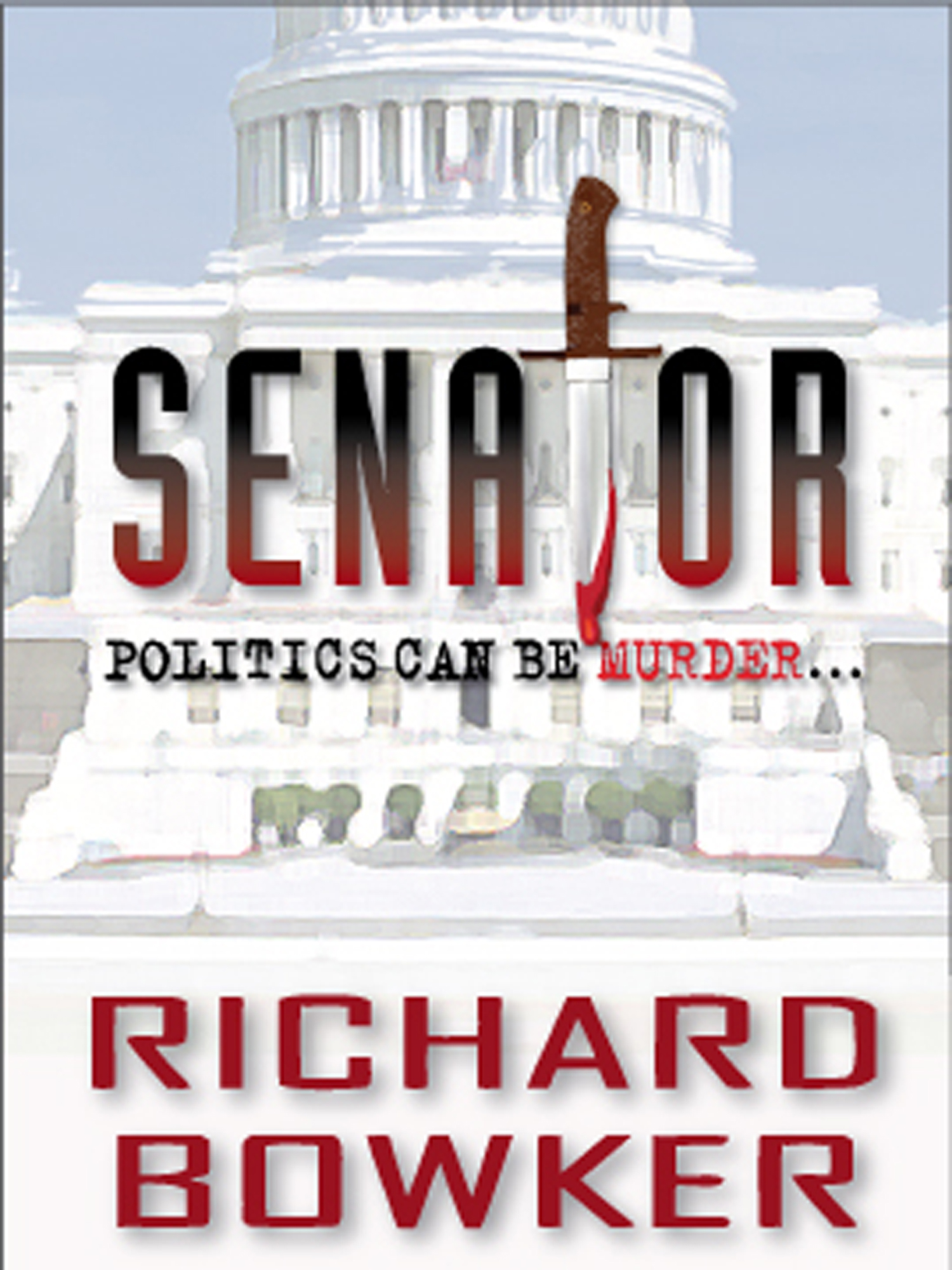
“Senator” is free at Barnes & Noble!

My novel Senator is one of this week’s Free Friday selections at Barnes & Noble, and I just noticed they’ve already changed the price.  Dover Beach was a Free Friday selection a while back; lots of people downloaded it, and it got lots of reviews, most of which were great.  Some of them were, um, interesting.  If you do download and read Senator, please leave a review, and I hope it’s at the reverential/awestruck end of the spectrum.

Senator final cover

Building worlds, and remembering them

A while back I told a friend of mine that I was working on the third book in my Last P.I. series (it’s called Where All the Ladders Start and it will be available incredibly soon now).  He asked me, “How do you keep track of all that’s going on in that world?  The characters’s names, what they look like, and so forth.  Do you maintain a story bible or something like that?”

“Er, um, no,” I stammered.  “But it sure sounds like a good idea.”

This isn’t Game of Thrones, but there really does get to be a lot to keep track of after a while.  Walter’s friend Mickey, who drives Bobby Gallagher’s van — did I give him a last name at one point?  If I did, I sure have no memory of what it is.  How much detail have I provided for the Salvage Market?  What’s the layout of Walter’s house in Louisburg Square?  And what exactly have I said (and not said) about the war that landed everyone into this messy world in which the novels are set?

Luckily, Microsoft Word’s search capabilities are powerful enough that I can home in quickly on the relevant passages in the earlier books.  But I continue to worry that some sharp-eyed reader with a better memory than mine will point out some inconsistency, the way they notice goofs in continuity and historical accuracy in films, goofs that are then listed in excruciating detail on IMDB. (“The cup is by his left forearm in one scene, and then it shifts two inches closer to his wrist in the next!”)

So clearly I should create such a bible.  But really, I rather be writing.  So I guess I’ll just take my chances.

Books I read in 2014

Some of them, anyway, and in no particular order.  A couple others I’ve talked about previously.

King Leopold’s Ghost — This harrowing book, about the Belgian colonization of the Congo, is depressing enough to make to make you swear off humanity once and for all.

The Origins of Consciousness in the Breakdown of the Bicameral Mind — Written decades ago, the author’s thesis still holds up pretty well, it seems to me.  I read it as an ebook, and the OCR is pretty bad, though.  It has a cameo role in my new novel, Where All the Ladders Start.  See if you can spot it!

The Glory of the KingsThis is a novel by my cousin’s husband, Dan Close, and it’s really good.  It’s about Ethiopia repelling an Italian invasion in 1896, and Dan’s affection for his characters and his deep understanding of the country (he served in the Peace Corps there) shine through on every page.

Someone — Alice McDermott’s novel is the kind I wish I could write but can’t — a series of vignettes from an ordinary life, scattered in time, that add up to way more than the sum of their parts.

All the Shah’s Men — This is the story of the US and British-led coup of the Iranian leader in 1953.  If you want to know why so many people hate us in Iran, this is a good place to start.  We have a lot to be sorry for, but the Iranians don’t come off looking very good either.

Our Mathematical Universe — Max Tegmark is an MIT professor with interesting ideas about multiverses.  I’m incapable of judging the science behind his speculations, but he’s an engaging writer.  Very useful background if you’re interested in writing alternative history novels set in a multiverse.

Inferno — This is a history of Word War 2 by Max Hastings.  I’m not sure why I decided to listen to it, except I had this suspicion that I didn’t know much about the subject, and it turned out I was correct.  Ask me anything about the Battle of the Bulge.  OK, don’t do that.  But at least I now have a clue about what the battle was all about.

The Life and Opinions of Tristram Shandy, Gentleman — I remember being entranced by this novel when I was in high school  Either I have a faulty memory, or I was one weird kid (probably both are true).  The book is occasionally hilarious and charming, but eventually I found the endless digressions annoying, and I started skimming.

Echo Burning — I keep dipping into Lee Child’s oeuvre.  This one is better than some of his later books, but as usual he goes to great lengths to justify why Jack Reacher has to go around killing everyone in sight.

The Demon under the Microscope — I had this suspicion that I didn’t know anything about the development of sulfa drugs in the 1930s, and it turned out I was correct.  A very entertaining story about the discovery of the first antibiotics, and how they changed the world.

Salt — I also had this suspicion that I didn’t have a proper understanding of the role of salt in world history.  Now I do, but I’m not sure I care.  Listening to this book was a mistake; if I had read it, I would have skimmed long sections of it.  Recipes don’t work well in audiobooks.

The Circle — This is David Eggers’ brave-new-worldy novel about modern social media and Facebooky corporations.  I found it predictable and uninteresting, and finally I gave up on it.

Why Nations Fail — The authors have an explanation, which they hammer home relentlessly.  It seemed pretty persuasive to me, but what do I know?

The Origins of Political Order — By Francis Fukuyama.  More than I wanted to know about almost everything.

Eternity’s End

My friend Jeff Carver has been running a highly successful BookBub promotion of his epic Nebula-nominated science-fiction novel Eternity’s End. Only 99 cents!  But hurry–this is the sale’s final weekend!

Here’s the star-spanning description:

The Flying Dutchman of the stars! Rigger and star pilot Renwald Legroeder undertakes a search for the legendary ghost ship Impris—and her passengers and crew—whose fate is entwined with interstellar piracy, quantum defects in space-time, galactic coverup conspiracies, and deep-cyber romance. A stand-alone Star Rigger novel, and an excellent starting point for readers new to the Star Rigger Universe. A Nebula Award finalist, from the author of The Chaos Chronicles.

I have always wanted to write novels about interstellar piracy, quantum defects in space-time, galactic coverup conspiracies, and deep-cyber romance.  But somehow Jeff always beats me to it.

The hardest thing about writing fiction…

. . . is transitions.

I have spent most of the day getting my characters from one place to another.  They were doing something interesting in the place they left.  I am confident that they’ll do something even more interesting when they arrive at their destination.  There’s really not a whole lot to say about the journey, though.  You can’t just say, “After a dull journey they arrived where they were going.”  But you don’t want to go on for too long about what they saw and heard and thought about and felt during the journey, because none of that really matters.  You have to right-size the thing.

I’m exhausted.

High standards in publishing

Here’s a passage from Kurt Vonnegut’s first novel, Player Piano (1952), which imagines a world in which managers and engineers run the world.  A woman is explaining why she has become a prostitute.  Turns out her husband is an unsuccessful novelist.  In this world, all novels are reviewed by the National Council of Arts and Letters.

“Anyway,” said the girl, “my husband’s book was rejected by the Council.”

“Badly written,”  said Halyard primly.  “The standards are high.”

“Beautifully written,” she said patiently.  “But it was 27 pages longer than the maximum length, its readability quotient was 26.3, and–”

“No club will touch anything with an R.Q. above 17,” explained Halyard.

“And,” the girl continued, “it had an antimachine theme.”

Halyard’s eyebrows arched high.  “Well!  I should hope they wouldn’t print it!  What on earth does he think he’s doing?  Good lord, he’s lucky if he isn’t behind bars, inciting to advocate the commission of sabotage like that…”

The writer is ordered to go into public relations rather than fiction-writing, and he refuses.

“This husband of yours, he’d rather have his wife a– Rather, have her–” Halyard cleared his throat “–than go into public relations?”

“I’m proud to say,” said the girl, “that he’s one of the few men on earth with a little self-respect left.”

This comes to mind when reading this story, about Amazon removing a novel from sale because it had too many hyphens:

“When they ran an automated spell check against the manuscript they found that over 100 words in the 90,000-word novel contained that dreaded little line,” he says. “This, apparently ‘significantly impacts the readability of your book’ and, as a result, ‘We have suppressed the book because of the combined impact to customers.’”

Reynolds complained, pointing out “that the use of a hyphen to join two words together was perfectly valid in the English language”, and says he was told by Amazon: “As quality issues with your book negatively affect the reading experience, we have removed your title from sale until these issues are corrected … Once you correct hyphenated words, please republish your book and make it available for sale.”

This article treats the issue humorously, but it does play into the doomsday predictions of writers like Ursula K. LeGuin that Amazon is aiming to control who and what we can read. After all, if they can control the number of hyphens in a novel, can’t they control its readability quotient?

Well, sure. But the difference between our world and Vonnegut’s is that Amazon has competition (at least, so far) and will respond to a public outcry (again, so far).  I can imagine a world where this would be different, but that dystopian future is not here yet.

(By the way, I found Player Piano much less compelling than it was when I first read it.  Vonnegut hadn’t quite found his voice yet.)