The Snow-Storm

Still snowing in my neck of the woods.
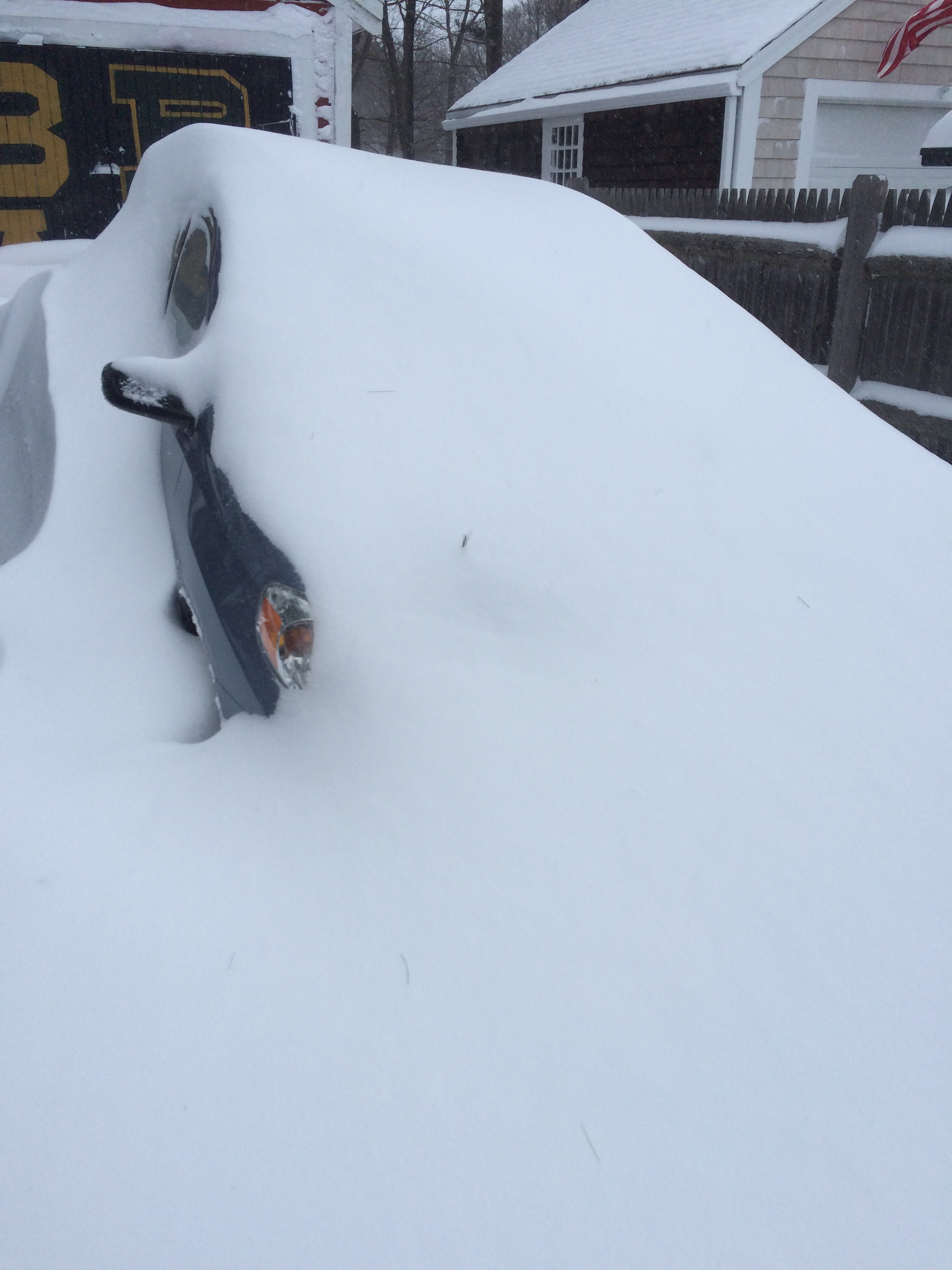
2015-01-27 15.55.36

Emerson wrote this poem in 1841, about 30 miles from where I’m sitting by my radiant fireplace, in a tumultuous privacy of storm.

Announced by all the trumpets of the sky,
Arrives the snow, and, driving o’er the fields,
Seems nowhere to alight: the whited air
Hides hills and woods, the river and the heaven,
And veils the farmhouse at the garden’s end.
The steed and traveler stopped, the courier’s feet
Delayed, all friends shut out, the housemates sit
Around the radiant fireplace, enclosed
In a tumultuous privacy of storm.

Come see the north wind’s masonry
Out of an unseen quarry evermore
Furnished with tile, the fierce artificer
Curves his white bastions with projected roof
Round every windward stake, or tree, or door.
Speeding, the myriad-handed, his wild work
So fanciful, so savage, nought cares he
For number or proportion. Mockingly,
On coop or kennel he hangs Parian wreaths;
A swan-like form invests the hidden thorn;
Fills up the farmer’s lane from wall to wall,
Maugre the farmer’s sighs; and, at the gate,
A tapering turret overtops the work.
And when his hours are numbered, and the world
Is all his own, retiring, as he were not,
Leaves, when the sun appears, astonished Art
To mimic in slow structure, stone by stone,
Built in an age, the mad wind’s night-work,
The frolic architecture of the snow.
“I Feel Fine” is 50!

Yesterday we pondered the genius of John Donne.  Today we honor another British genius, John Lennon.  Fifty years ago this week “I Feel Fine” was the number one song in the US.  Seems like only yesterday.

Donne was a great poet, but it clearly never occurred to him to add guitar feedback to a rock-and-roll song.  It fell to Lennon to come up with this idea three centuries later.

A Nocturnal Upon Saint Lucy’s Day, Being the Shortest Day

Saint Lucy’s Day is December 13, which used to coincide with the Winter Solstice.  “Lucy” is derived from the Latin word for light, and Saint Lucy’s Day is celebrated as a festival of light in Scandinavian countries.. Here is John Donne’s great poem about dark and light, loss and love, death and rebirth.

‘Tis the year’s midnight, and it is the day’s,
Lucy’s, who scarce seven hours herself unmasks;
The sun is spent, and now his flasks
Send forth light squibs, no constant rays;
The world’s whole sap is sunk;
The general balm th’ hydroptic earth hath drunk,
Whither, as to the bed’s-feet, life is shrunk,
Dead and interr’d; yet all these seem to laugh,
Compared with me, who am their epitaph.

Study me then, you who shall lovers be
At the next world, that is, at the next spring;
For I am every dead thing,
In whom Love wrought new alchemy.
For his art did express
A quintessence even from nothingness,
From dull privations, and lean emptiness;
He ruin’d me, and I am re-begot
Of absence, darkness, death—things which are not.

All others, from all things, draw all that’s good,
Life, soul, form, spirit, whence they being have;
I, by Love’s limbec, am the grave
Of all, that’s nothing. Oft a flood
Have we two wept, and so
Drown’d the whole world, us two; oft did we grow,
To be two chaoses, when we did show
Care to aught else; and often absences
Withdrew our souls, and made us carcasses.

But I am by her death—which word wrongs her—
Of the first nothing the elixir grown;
Were I a man, that I were one
I needs must know; I should prefer,
If I were any beast,
Some ends, some means ; yea plants, yea stones detest,
And love; all, all some properties invest.
If I an ordinary nothing were,
As shadow, a light, and body must be here.

But I am none; nor will my sun renew.
You lovers, for whose sake the lesser sun
At this time to the Goat is run
To fetch new lust, and give it you,
Enjoy your summer all,
Since she enjoys her long night’s festival.
Let me prepare towards her, and let me call
This hour her vigil, and her eve, since this
Both the year’s and the day’s deep midnight is.

Happy belated birthday to William Blake

I seemed to have missed it by a day.  Here is his great poem “London”.  Did anyone ever write a better phrase than “mind-forg’d manacles”?  And did any two words ever pack more of a punch than “marriage-hearse”?

I wandered through each chartered street,
Near where the chartered Thames does flow,
A mark in every face I meet,
Marks of weakness, marks of woe.

In every cry of every man,
In every infant’s cry of fear,
In every voice, in every ban,
The mind-forg’d manacles I hear:

How the chimney-sweeper’s cry
Every blackening church appals,
And the hapless soldier’s sigh
Runs in blood down palace-walls.

But most, through midnight streets I hear
How the youthful harlot’s curse
Blasts the new-born infant’s tear,
And blights with plagues the marriage-hearse.

Birches at sunrise

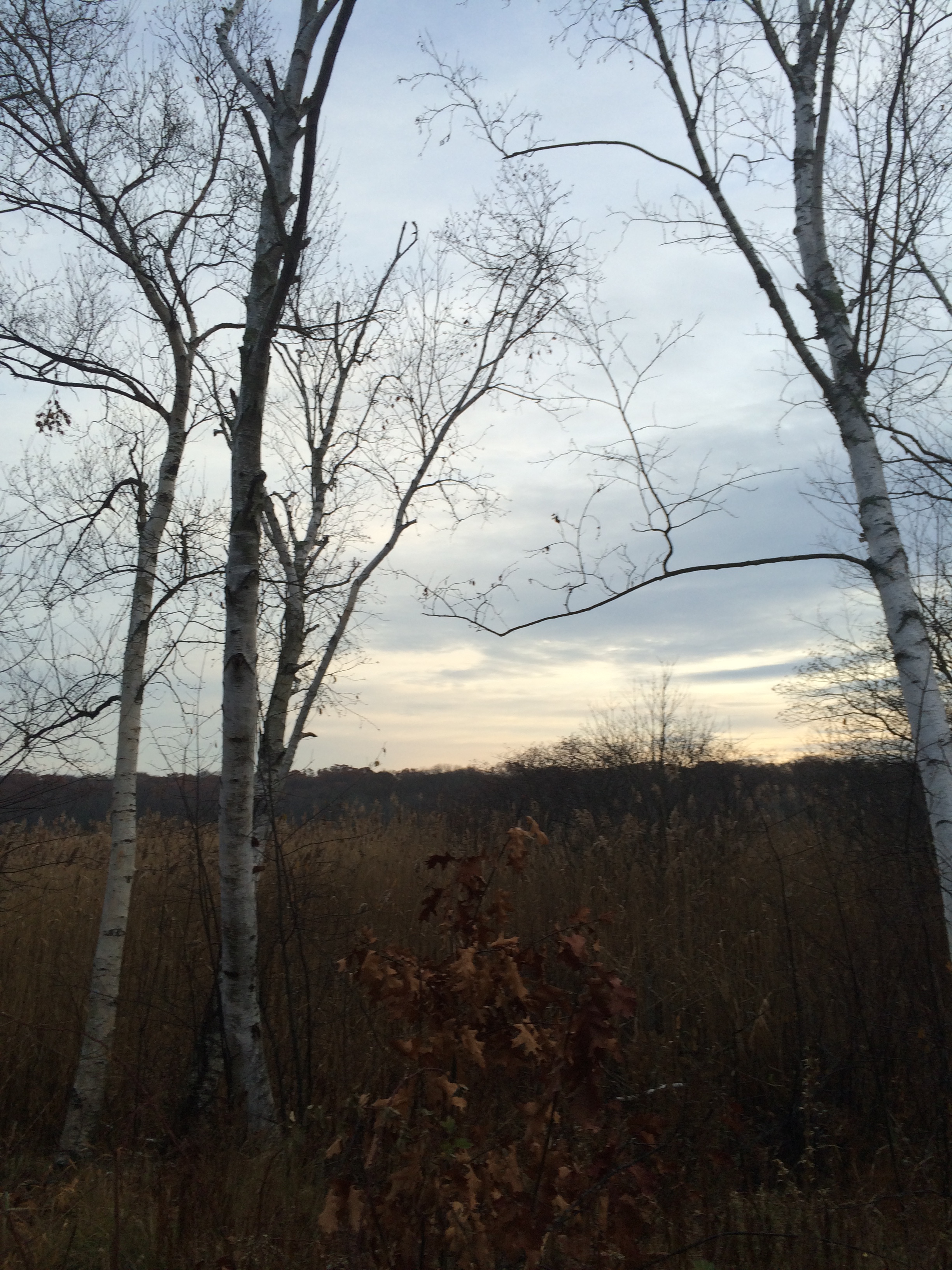
Let’s give thanks for birches!

2014-11-25 07.03.29While we’re at it, let’s also give thanks for poetry:

. . . Earth’s the right place for love:
I don’t know where it’s likely to go better.
I’d like to go by climbing a birch tree,
And climb black branches up a snow-white trunk
Toward heaven, till the tree could bear no more,
But dipped its top and set me down again.
That would be good both going and coming back.
One could do worse than be a swinger of birches.

Frost wrote the poem “Birches” just about a century ago.  How time flies!

Happy Thanksgiving!

Where All the Ladders Start

I have looked at the novel I’ve been working on in all different seasons, at all different times of day, and I have finally decided its title is Where All the Ladders Start.  Readers of a poetical persuasion will recognize the quote from the ending of the Yeats poem The Circus Animals’ Desertion:

I must lie down where all the ladders start
In the foul rag and bone shop of the heart.

Deciding to give the books in my Last P. I. series titles lifted from poems is one of the many ways in which I strive to be a commercial failure.  Couldn’t I have come up with something clever — liking naming them after numbers, or colors, or letters of the alphabet?

Anyway, I am declaring the novel “pretty much done.”  So you’ll have a chance to take a look at it before very long.