Why didn’t Republican elites try to stop Trump?

I’ve been too busy finishing my novel to blog about my many insightful political observations.  But anyway, I was reading many discussions in the media over the past few days about how the Republican elites failed to stop Trump.  The canonical text is this article in the New York Times.

In public, there were calls for the party to unite behind a single candidate. In dozens of interviews, elected officials, political strategists and donors described a frantic, last-ditch campaign to block Mr. Trump — and the agonizing reasons that many of them have become convinced it will fail. Behind the scenes, a desperate mission to save the party sputtered and stalled at every turn.

This became obvious to me as I worked out in my local gym in the mornings leading up to the New Hampshire primary.  The Boston TV stations reach into New Hampshire, so we see all the campaign ads aimed at NH voters.  I would be on the treadmill looking at the news on three separate TVs, and each of them would be running the same set of ads.  And none of them were negative ads aimed at Trump.  I can see why the individual candidates wouldn’t run them–they were too busy trying to bolster their own campaigns.  But why not an outside SuperPAC?  Why wouldn’t Mitt Romney dump a few million dollars into this?

The Massachusetts primary is coming up this Tuesday, and the latest poll shows Trump getting 43% of the vote.  And where is our popular, moderate Republican governor Charlie Baker?  Sitting silently on the sidelines, now that the candidate he endorsed, Chris Christie, has dropped out.  Why won’t he use any of his political capital to try to stop Trump?

If I were a rational Republican (and I don’t know how many of them there are), I would be gnashing my teeth.  But of course, if they were really rational, they would long ago have abandoned the modern Republican party.  Here is Josh Marshall in Talking Points Memo:

Trump is very little different from the average candidate Republicans elected in 2010 and 2014, in terms of radical views and extreme rhetoric. All he’s done is take the actual GOP issue package, turn it up to eleven and put it on a high speed collision course with RNC headquarters smack in the middle of presidential election year.

Why does someone with a dirty secret go into politics?

I don’t know much about Dennis Hastert, but his problem sure sounds familiar.  Apparently he has a dirty secret in his past, and he spent a lot of money to make sure it stayed secret.  It strikes me as a bit odd that someone would choose a political career knowing that he had such a secret lurking in his part.  But this is, of course, the way politicians are.  A major plot element in my novel Senator involves just such a situation: Senator Jim O’Connor (who has his own problems) finds out about his opponent’s dirty secret.  What should he do about it?  Should he use the knowledge to destroy his opponent?

What would you do?  Well, you’re not a politician, so that doesn’t matter.  It’s these moral conundrums that interested me most in writing the novel..

Knee-jerk liberalism and me

I tend to describe myself as a knee-jerk liberal.  But free speech seems to be an issue where conventional liberalism and me have parted company.  The recent incident in Garland, Texas is a case in point.  Pam Geller, as far as I can tell, is a creep, and her “Draw Muhammad” contest was a deliberate provocation.  On the other hand, here is the New York Times:

Those two men were would-be murderers. But their thwarted attack, or the murderous rampage of the Charlie Hebdo killers, or even the greater threat posed by the barbaric killers of the Islamic State or Al Qaeda, cannot justify blatantly Islamophobic provocations like the Garland event.

Actually, sure it can.  Here is the conservative David Frum (inventor of the phrase “Axis of Evil”) in response:

Anti-Muslim bigotry is a real and ugly phenomenon. But there’s a necessary distinction to be drawn between vilifying people and repudiating their beliefs. Blasphemy isn’t bigotry. Applying the single term “Islamophobia” blurs that difference: conflating the denial of a belief with discrimination against the believer.

Is that such a difficult distinction to make?  And later:

We owe equality and respect to persons. Ideas and beliefs have to prove their worth. Pamela Geller, the organizer of the Garland, Texas, “Draw Muhammad” contest, attracts criticism because she so often pushes up to and over the line separating criticism of ideas from vilification of groups of people. She’s an uncomfortable person to defend. But that’s often true of the people who test the rights that define a free society.

This all seems perfectly sensible to me.  I don’t think I’m becoming grumpy in my old age.  I think conventional liberalism has lost its way here, and that’s bad for the country.

Here’s another long-time liberal who is having problems with this.

I don’t think Geller’s goal was to provoke a murderous attack. Perhaps verbal attacks, but of course that’s Charlie Hebdo’s goal, too, for the reaction to its mockery of all religions was absolutely predictable. Charlie Hebdo existed to mock and provoke. By all means, says the Times, let’s not publish cartoons of the prophet, for whatever one’s motivation, it will “serve only to exacerbate tensions and to give extremists more fuel.” That goes for both Geller and Charlie Hebdo. What is the newspaper saying here? Apparently, that we should keep our hands off religion, at least those faiths whose adherents become murderous when offended.

I’m still Charlie

I’ve changed back to my regular header image, but je suis encore Charlie.

I’ve seen some people (like David Brooks and Glenn Greenwald) complain that the Charlie Hebdo cartoons were stupid, racist, and unfunny, and where was the outrage when someone or other published published an anti-Semitic cartoon?  This seems to me to miss the point.

A few years ago an atheist science blogger, P.Z. Myers, got hold of a Eucharist.  He dithered about what to do with it for while, and then finally he threw it in the trash with torn-up copies of the Koran and The God Delusion.  This was a childish stunt designed to make an obvious point.  But if he had been murdered by an enraged Catholic or Muslim (or, I suppose, Richard Dawkins), it changes from being a childish stunt to a fundamental issue of what we should be allowed to do and say in our society.  Most of us don’t go out of our way to offend people, but we need to stand up for people’s right to be offensive.

Life is stupider than fiction: robot politician edition

A friend sent me a link to this article, noting that “someone has been reading your book.”

“The election for U.S. House for Oklahoma’s 3rd District will be contested by the Candidate, Timothy Ray Murray,” Murray wrote in a press release posted on his campaign website. “I will be stating that his votes are switched with Rep. Lucas votes, because it is widely known Rep. Frank D. Lucas is no longer alive and has been displayed by a look alike.”

On the website, Murray claims that Lucas and “a few other Oklahoma and other States’ Congressional Members,” were executed “on or about” Jan. 11, 2011 in southern Ukraine.

“On television they were depicted as being executed by the hanging about the neck until death on a white stage and in front of witnesses,” the website claims. “Other now current Members of Congress have shared those facts on television also. We know that it is possible to use look alike artificial or manmade replacements, however Rep. Lucas was not eligible to serve as a Congressional Member after that time.”

The book in question is my novel Replica, whose basic plot is evident from its cover:

Replica cover

Replica was by far the most successful of my novels when it was first published. So far it hasn’t gotten much love as an e-book. Is it the cover? The price? It’s a pretty good book!  Here’s what Publisher’s Weekly said when it came out:

While maintaining a highly readable pulp-fiction style, Bowker takes the narrative through a gripping array of turnabouts, doublecrosses and twists.  Readers will be guessing the story’s outcome until the very end.

And here’s a customer review:

I’m not sure exactly what I expected when I bought this book, but I didn’t expect it to explore terroristic politics, development of artificial intelligence, and some of the challenges of AI/human relationships … all without becoming bogged down in the esoteric nature of the technologies involved.

It starts out more or less the way I thought it would, with various entities coming together to make it possible (and plausible) to substitute the President with an android. Almost everything after that, though, was a surprise … with plenty of twists and turns and misdirections and characters developing in ways you probably won’t expect.

This is a good read, and amazingly so given how long since its original publication. It’s not too often that near-future books involving technology or politics (and especially a combination of the two) are written such that they don’t become badly dated in a decade. This one is still fresh, a fun read.

Are there 25 good movies about American politics?

Here is Vanity Fair’s list of the 25 best movies about American politics.  But… but…

All the President’s Men, sure. The Candidate, fine.  Dr. Strangelove?  It’s not exactly about politics, but OK.  All the King’s Men, A Face in the Crowd?  Of course.

But, um, The Queen?  Isn’t that sort of, you know, about British politics?  (The same folks brought us Frost/Nixon, which isn’t on the list, and probably should be.)  The same goes for In the Loop.

The American President is about American politics, of course, but really, it’s not that good a movie — it’s Aaron Sorkin clearing his throat before embarking on The West Wing.  If we want throat-clearing, what about including The Ides of March, which seems to be Beau Willimon’s warm-up for House of Cards?

Another omission from the list: the charming Dave, starring Kevin Kline and Sigourney Weaver.  Also, was I the only one who liked Primary Colors, with John Travolta and Emma Thompson portraying the fictional equivalent of the Clintons?

I’ve seen most of the movies on the list.  One that I’d never even heard of is Gabriel Over the White House, a 1933 fantasy produced by William Randolph Hearst. VF says:

Walter Huston plays a hack president-elect who gets into an automobile crack-up shortly after he’s sworn in. He is subsequently possessed by a spirit (see title) who guides his actions, which include staging firing squads on Ellis Island and bullying the world into submission by brandishing a super-secret military weapon. Quasi-fascism: it gets things done!

Sounds like it’s worth watching!

Senator currently one of “101 Nook Books Under $2.99” at Barnes & Noble

Senator is currently on sale at Barnes & Noble for the ridiculously low price of $0.99.  (Yes, friends, you heard right!)  So now would be a good time to pick it up if you’ve got a Nook.

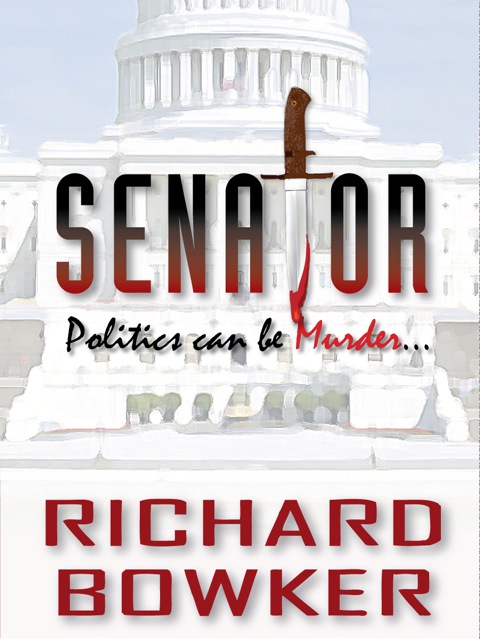
I don’t know how this sort of thing works, but my publisher got the novel a spot on B&N’s “101 Nook Books Under $2.99” promotion.  It’s currently on the third page, but the book moves up the pages as its sales rank improves. This promotion is having an effect.  A couple of days ago Senator‘s sales rank was somewhere north of 300,000 on B&N, meaning (I suppose) that no one had bought it recently.  Currently its sales rank is 460.  Maybe someone will finally review it!

Here’s what the cover looks like, in case you’ve forgotten:

Senator-Cover2

What this senate race needed was a good murder mystery

Like, er, this one.

Democrat Ed Markey has defeated Republican Gabriel Gomez for the right to represent Massachusetts in the U.S. Senate for the next 18 months or so.  My affluent little town, which is a couple of towns over from where Gomez lives, went 55-45 for Gomez, but turnout in the high school gym wasn’t that great:

2013-06-25 08.31.55

This was like a TV show that has lasted a season too long, and the replacement actors just don’t have the sizzle of the people they replaced: Markey came across as a standard-issue Democrat who has been in Washington too long, and Gomez came across as a standard rich Massachusetts Republican who has nothing to offer but vague promises about bridging the partisan divide.

Also, the Bruins lost, so who cares?  We’ll have to do this again next year, when John Kerry’s term is up, and maybe the Republicans will find a better candidate.  Maybe Scott Brown will have had enough of making easy money as a lobbyist and Fox News commentator.  Markey should be vulnerable, but other than Brown, Massachusetts Republicans don’t have much to offer.

Maybe the governor’s race will have a murder mystery.