Unknown's avatar

About Richard Bowker

Author of the Portal series, the Last P.I. series, and other novels

Now where was I?

I had a great couple of weeks away from my novel.  Real life is great!  But now what?  What are these characters supposed to be doing?  Wasn’t there some plot point I wanted to add right around here?  Didn’t I note that down somewhere?  I have this other note, but what does it mean?

I came across a good piece of writing advice once from Graham Greene (I think).  Don’t stop writing when you reach a difficult part; stop when you reach an easy part.  That makes it easier for you get rolling the next time you sit down to write.  Why don’t I pay more attention to Graham Greene?

Actually, even the easy stuff seems difficult after a couple of weeks.  Surfing the Internet certainly seems like a more attractive option than rewriting that sentence.  And I really ought to recheck my email — it’s possible someone has written me in the past five minutes.

OK, let’s try again.  Blogging is just one more excuse.
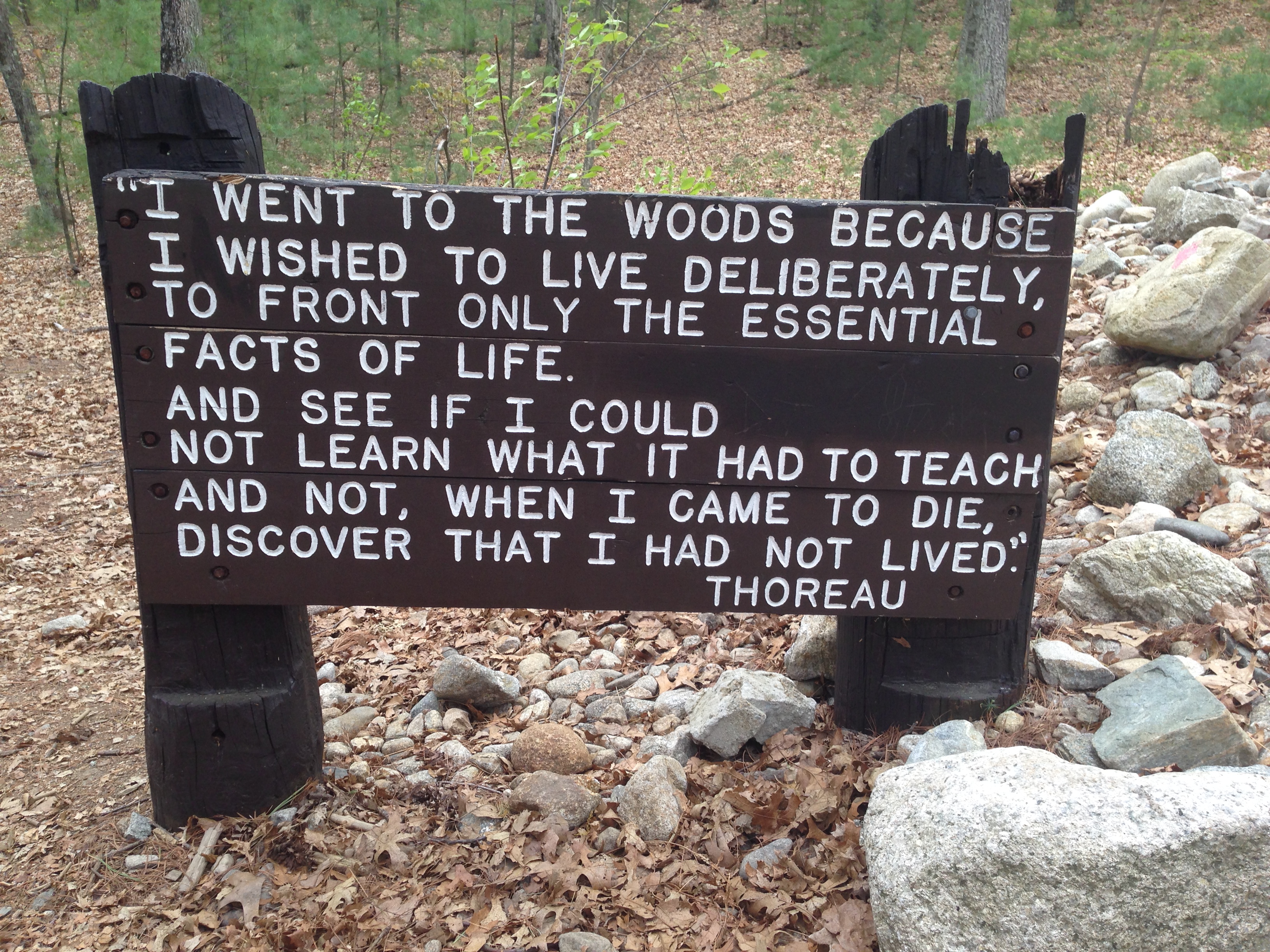
Walden Pond, 160 years on

2014-05-15 14.55.18

My edition of Walden notes that, of all the English-language books published in 1854, only two are still read: Dickens’ Hard Times and Henry David Thoreau’s Walden.

My son spends a lot of his time shepherding college kids around the historic sites of Jordan, and he has begun to realize that there were plenty of historic sites in his own back yard that he hadn’t visited.  Walden Pond is one of them.  He’s home for a couple of weeks, so we went for a visit.

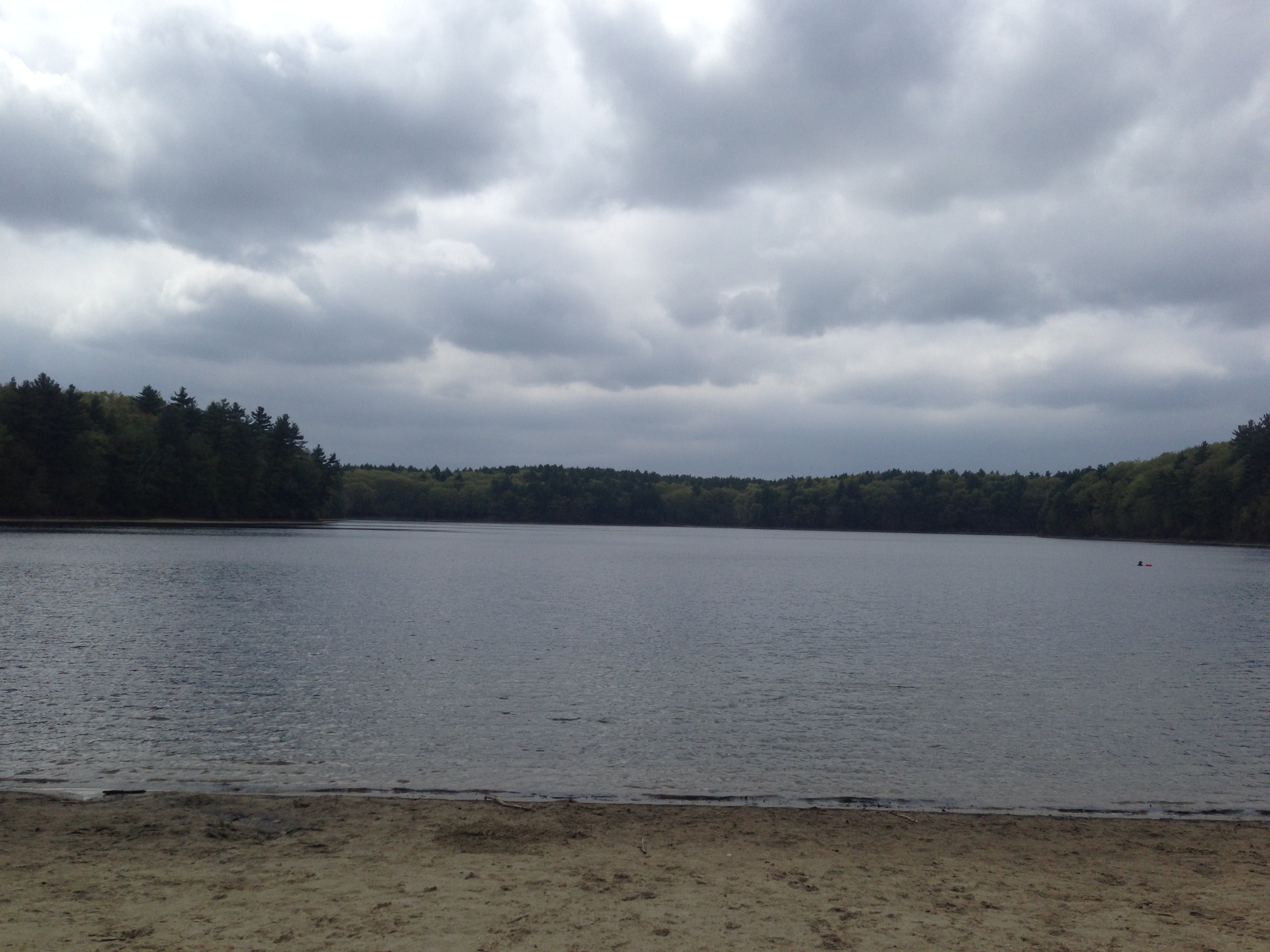
2014-05-15 14.20.37

A hundred and sixty years on, Walden Pond is part suburban bathing beach, part national literary landmark. Moms tend toddlers playing in the sand while Japanese tourists troop past, taking photos of each other.  Overhead, planes fly by headed for Hanscom Field.  As rush hour approaches, a traffic jam develops on Route 126, just a few yards from the pond.  On the far side of the pond the train line that was just built in Thoreau’s day is still in use, ferrying commuters to and from North Station.

You tramp half a mile from the bathing beach to the site of Thoreau’s cabin:

2014-05-15 14.56.10

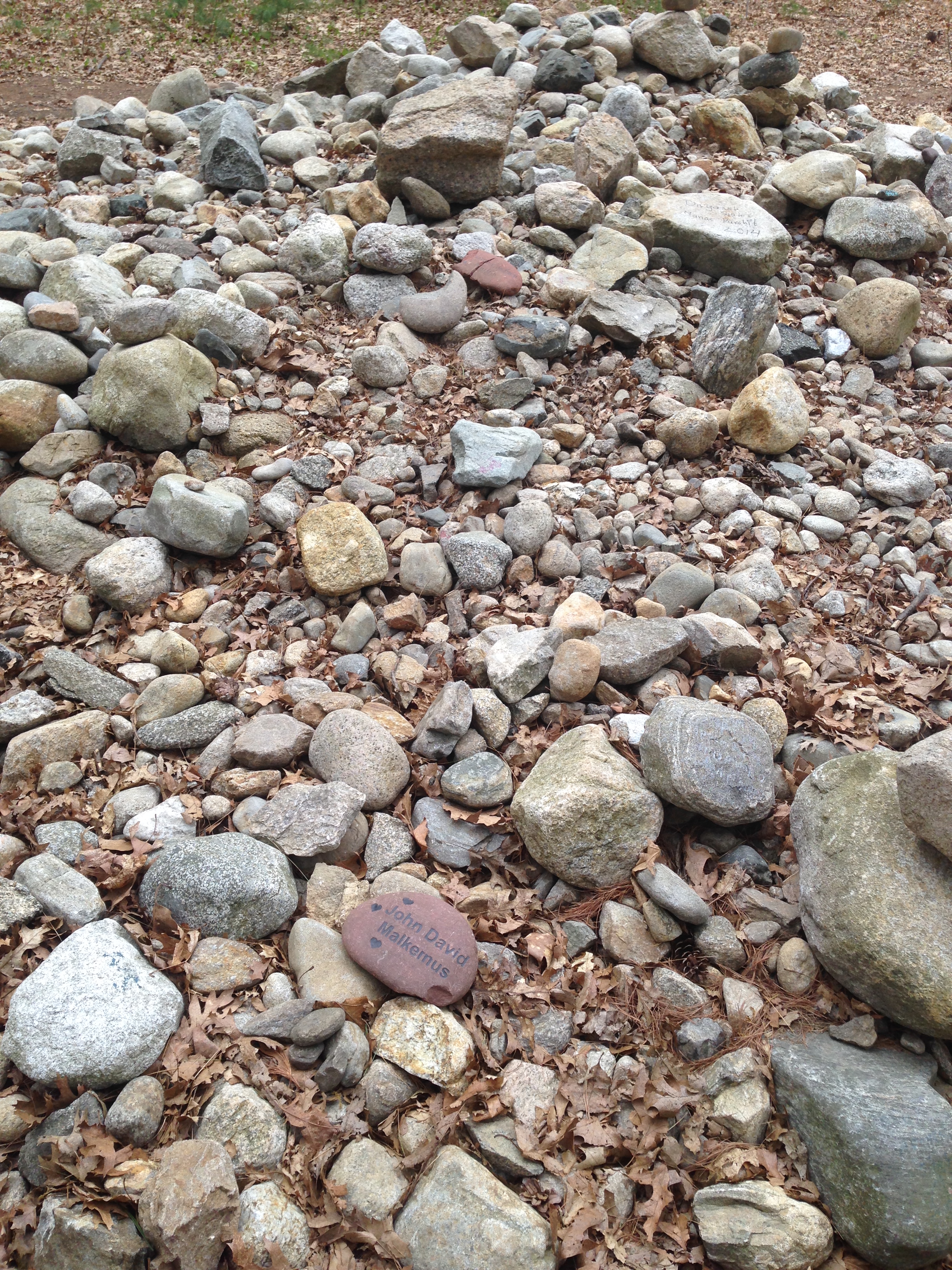
People leave rocks behind in homage to Thoreau:

2014-05-15 15.01.58

The original cabin is long gone.  But back in the parking area, you can visit a replica. It is tiny:

2014-05-15 17.07.45

In front of the cabin is a statue of Thoreau.  Here is a touristy shot of my son showing Thoreau and Arabic-language novel he’s been reading:

2014-05-15 17.09.01

Walden is a strange book. I find a lot of it boring, but in the midst of an uninteresting passage I’ll be astonished by a beautifully crafted insight. Here’s a familiar one that seems appropriate for graduation season:

If you have built castles in the air, your work need not be lost; that is where they should be. Now put the foundations under them.

Writers in Movies: The New York Times gets into the act

Last Sunday’s Book Review had a pair of essays on the topic “Why is it so hard to capture the writer’s life on film?”  This a question that seems easy enough to answer.  Thomas Mallon captures it like this:

Because no one wants to watch somebody typing, Hollywood often makes movies about writers who stop writing. It’s easier, and more entertaining, to show them being Technicolorfully destroyed by fame or drink or premature success.

And he brings up one of my favorite writer’s movies, Wonder Boys:

The hard part is always trying to show writers doing what they actually do. The Michael Douglas character occasionally sits at his Selectric wearing a woman’s bathrobe, like a pitcher’s lucky underwear, trying to summon more phrases for his already overlong, inert manuscript.

It seems a bit odd that there are so many movies about people whose lives are so fundamentally boring.  My guess — and it’s only a guess, mind you — is that this is because many movies are written by writers.  Anyway, these essays are pretty good, and they provide me with several additions to my list of writerly movies to watch (or re-watch):

Barton Fink
Deconstructing Harry
Julia
The Hours
Beloved Infidel
Capote

And, in particular, Bright Star, which I’ll blog about next.

Why give away an e-book?

The Portal continues to be free on Amazon and Barnes & Noble.  The main idea here is to generate customer reviews, because reviews are what stimulate e-book sales.  As my publisher says:

The more reviews, the more sales. In other words, “people are interested in buying what other people are interested in reviewing”. This is the basic definition of Social Engagement.

Reviews are hard to come by, actually.  I don’t know what percentage of readers leave reviews, but it can’t be very high.  Giving the book away for a while increases the pool of readers, which increases your odds of getting reviews.

My publisher is more interested in the number of reviews than how positive the reviews are, but obviously that matters to the author!  It also matters to some potential advertisers, who aren’t interested in promoting books unless they have received a certain number of reviews at a certain quality level (e.g., at least 10 reviews, average higher than 4.0).

Here are the first couple of (five-star) reviews that have come in as a result of this promotion. Both readers have a similar reaction — which is exactly the reaction I was hoping for, actually. This one is titled “A Lot of Heart”:

I thought at first this was going to be another YA gimmicky novel with kids complaining about their lives and using the device of dimension travel just to come up with random quirky things, but this book is much more than that. You really get to know and care about the characters, and things move along quite well and not predictably. The really surprising part is the life lessons learned by the characters – they really leave you with something more than just a fun little read. Glad I read it!

And this one is titled “Very Enjoyable”:

Really enjoyed this book. At first I thought it was going to be kind of silly but it didn’t take long till I could hardly put the book down. I found myself identifying with the curiosities of Larry.

Really hope there is a second in the series coming!

So, thanks to these readers, and everyone else who takes the time to leave a review.

Colorado baseball

I happened to be in Denver last Saturday and found my way to Coors Field:

2014-05-03 16.45.18

It’s a beautiful place.  The Rockies were playing the Mets, and the batters on both teams were having fun: the final score was 12-11 Rockies.  (The Rockies’ home batting average is something like 40 points higher than that of any other team.)

Here are some differences from Fenway Park:

  • I saw a bunch of girls wearing prom dresses — what’s up with that?
  • There were incessant contests between innings — very annoying.
  • The Rockies manager pulled a double switch.  The DH is OK, but figuring out the strategy around pitchers batting is one of the joys of baseball.
  • Fenway Park doesn’t have vegetation in the outfield:

2014-05-03 17.02.53

Here was the scene after a Rockies grand slam:

2014-05-03 20.04.04

There was a bit of a Boston flavor to the game: the Rockies starter was ex-Red Sox Franklin Morales, who was terrible.  And the Mets’ middle reliever was old friend Dice-K Matsuzaka, the most annoying pitcher who ever lived.  Luckily, he didn’t have one of his four-walk, three-strikeout, 40-pitch innings that made you want to swear off baseball forever.  Maybe middle relief is where he belongs.

“The Portal” is now free on the Nook!

For a limited time only, presumably.  Presumably Amazon will follow suit before long and lower its price to zero, but you should probably go ahead and pay real money for it anyway.

9781614174639

Here’s a recent 5-star customer review from Amazon:

In this new entry in the Young Adult fiction category, Richard Bowker explores questions of our relationship to the world we live in by telling the tale of a young adolescent who discovers a portal to an alternate version of that world. By creating that world as one with underdeveloped technology, he is able to paint a vivid picture of what life might have been like in the mid 18th century in colonial New England (even though the portal is not a time-travel device). His characters are well-drawn, and his descriptions of battle scenes between the New Englanders and the Portuguese soldiers are gripping, especially with regard to the angst his protagonist, Larry Barnes, feels about having killed an enemy. In the end, Larry has to make a choice — one that is surprisingly difficult and thought-provoking and which wouldn’t have been anticipated earlier in the story.

Writers in movies: Hemingway & Gellhorn

Another in an occasional series.

Like An Invisible WomanHemingway & Gellhorn is about a famous novelist’s relationship with a woman — in this case, the war correspondent Martha Gellhorn.  This was an HBO original movie and got a ton of Emmy nominations.  Unlike An Invisible Woman, this movie has an A-list actress, Nicole Kidman, playing the woman.  She’s pretty good!  Clive Owen as Hemingway, however, never convinced me the way Ralph Fiennes as Dickens convinced me.  Surely the director (Philip Kaufman) could have found an American who’d have done a better job. (At least an American could have gotten the accent right.)

The other major problem with the  movie is the script.  It never settles down and becomes about anything.  It just dramatizes a series of real-life incidents, usually with clever camera work and editing, and that becomes the film.

We do, of course, see Hemingway writing, and I assume they got that right.  He types standing up, his typewriter on a dresser, floating discarded sheets of paper in the direction of a wastebasket at his feet. He types as bombs fall in the street outside, and he types after a long night of drinking, while Gellhorn is too hung over to get out of bed.  And the script is full of what I assume are accurate Hemingway quotes, such as: “Writing’s like Mass.  God gets mad if you don’t show up.”  All good stuff.  But they didn’t make me like the movie.

Print on Demand reaches “Lore of the Underlings”

My friend John Klobucher has created an interesting fantasy universe in his episodic series Lore of the Underlings.  He has now collected the first set of episodes in old-fashioned book form:

Print books are great!  You can read them in the bathtub, and I’m pretty sure they don’t require batteries.  So pick up a few.

Note that John did the cover art.  He also creates podcasts of the episodes, where he does the narration and all the voices.  Plus he composes original music for them.

He’s a bit of a show-off.