Unknown's avatar

About Richard Bowker

Author of the Portal series, the Last P.I. series, and other novels

Conclave!

The world is about to get a new pope–should anyone care?  I doubt it.  We might conceivably see an American or African pope, and we’ll certainly see a younger one.  But I can’t imagine we’ll get a pope who has significant doctrinal differences from Benedict.  The new pope might make noises about ecumenism and inclusiveness and forgiveness and so forth, but he won’t really change anything fundamental about the Church.  The folks who would make those sorts of changes aren’t in the College of Cardinals.

People will be interested in the conclave where the pope is elected, since it’s an inherently fascinating and dramatic process.  I did a lot of research on conclaves for Pontiff.  Here is the chapter where I describe the final vote for a new pope.  The details are always changing, but what I describe here was accurate as of the time of John Paul II.

**************

Eligo in summum pontificem…

Cardinal Antonio Riccielli stared at the Latin phrase printed at the top of the small rectangular card. I choose for Supreme Pontiff…

He took his pen and scrawled a name on the bottom of the card. He was supposed to disguise his handwriting to preserve the secrecy of the ballot, but that hardly seemed worth the effort. Everyone knew whom he supported, whom he would support to the bitter end.

Marcello Valli.

He looked at the name, and then at the man, seated across from him in the Sistine Chapel. The hawk nose, the high forehead, the piercing eyes that betrayed nothing of what he was thinking. Another ballot, another chance. But the chance was slipping away—had already slipped away, many of his original supporters thought, and there seemed to be nothing they could do about it.

One maneuver was left, perhaps. If no one got a two-thirds majority in the next day, the rules allowed the cardinals to vote that election was to be by simple majority, thereby totally changing the dynamics of the conclave. Would it help Valli? It couldn’t hurt. Valli clearly wasn’t going to get the Third-World bloc, but if they could keep the Curial cardinals in line, plus the Europeans and most of the North Americans…

He could perhaps put together a majority. But that required them to make it through the next few ballots, with the cardinals weary and eager for a resolution. The conclave had lasted far too long already. They were tired of each other’s company day and night, while the world waited. And meanwhile Valli’s vote count had steadily slipped, as the cardinals cast about for other candidates who might attract sufficiently widespread support to claim the throne of Saint Peter. One after another, candidates had surfaced, only to fade without reaching the two-thirds majority, none able to receive enough support from the various blocs fighting for the soul of the Church.

On this ballot Riccielli was worried about Carpentier, the genial Canadian. The man was a moron, but he was hard to dislike, and Riccielli knew what others might be thinking: wouldn’t it be good to have someone as pope who was less, well, high-powered than they were used to? Someone who could stay away from controversy and simply make Catholics feel good about their religion again. If we can’t get our man, maybe this guy would do. And he’s old enough that we won’t have to put up with him for long. Carpentier had received an astounding twenty votes on the ballot before lunch. Was there a movement afoot? Would people suddenly decide that he was the solution to their problem?

If there was a movement, Riccielli hadn’t been asked to be a part of it. So he could only guess, and fret.

The voting was beginning. Riccielli folded his ballot and awaited his turn to approach the altar. The ceremony and rituals attached to every aspect of the conclave had inspired awe in him at first, but at this point he found them merely irritating. Couldn’t they just vote and get on with it? Nothing to be done, though. The Church lived by its rules.

He watched Carpentier walk past on his way to the altar, plump and red-faced. What was he thinking? Was his mind frothing with excitement about what might happen to him in a few minutes? Or was he utterly terrified at the prospect confronting him? Impossible to tell from the appropriately solemn look on his face. One learns that look, of course. You can be thinking about yesterday’s football match or the bottle of expensive wine chilling for tonight’s dinner, and still appear as if you are meditating about Christ’s Passion. They had all been priests far too long not to have mastered that skill.

Finally Riccielli’s turn arrived. He walked slowly down the long aisle, between the ranks of red-robed cardinals arrayed along the walls of the chapel. He undoubtedly looked every bit as solemn and prayerful as Carpentier. At the altar he knelt and held up his ballot. “I call as my witness Christ the Lord who will be my judge,” he intoned, “that my vote is given to the one who before God I think should be elected.” Then he stood and went up to the large chalice on the altar. He put the ballot on the paten that covered the top of the chalice, then picked up the paten and slid the ballot into the chalice, where it nestled in among the others. There, it was done, yet again. He returned to his seat, and the next cardinal went up to repeat the ritual.

Nothing to do but wait now. The infirmarii returned with the votes of the cardinals too ill to attend the session. As the last cardinals went up to the altar, Riccielli could hear the rustling in the ancient chapel, could feel the anticipation growing. Would this be the ballot when the election ended, when the new era began? Or would the black smoke rise from the chimney once more, forcing them to keep trying?

The rituals after the balloting were especially excruciating. The cardinals chosen by lot this afternoon to be the scrutineers now had to do their duty. The first scrutineer picked up the chalice and shook it to mix up the ballots. Then he brought the chalice to the table in front of the altar, where he took out the ballots and counted them to make sure that the number matched the number of elector cardinals in the conclave. When Carpentier had been scrutineer the previous morning he had miscounted, causing considerable consternation until his fellow scrutineers straightened things out. The pope should at least be able to count, Riccielli thought blackly.

After counting the ballots the three scrutineers sat at the table and began the job of tallying the votes. The first scrutineer unfolded a ballot, wrote down the name printed on it, then passed it to the second scrutineer, who did likewise. Then the third scrutineer read the name out loud. Fortunately the third scrutineer this afternoon was Cardinal Heffernan, who had given more than his share of hellraising sermons and had a loud, clear voice. “Cardinal Valli,” he announced.

Riccielli started counting mentally. It was not considered proper to keep score on paper.

“Cardinal Carpentier.

“Cardinal Gurdani.

“Cardinal Valli.

“Cardinal Gurdani.

“Cardinal Carpentier.

“Cardinal Lopez.

“Cardinal Gurdani…”

It was only after fifteen or twenty votes had been announced that Riccielli realized he hadn’t been counting Gurdani’s votes, yet the African seemed to be attracting a lot of support. Riccielli looked down to where he was sitting, on Riccielli’s side of the aisle. Couldn’t tell much from his distant profile, but then, one never could tell much about Gurdani. He could scarcely remember hearing the man speak. More of a cipher than Carpentier.

“Cardinal Gurdani.

“Cardinal Carpentier.

“Cardinal Gurdani… ”

But surely Gurdani couldn’t be elected, Riccielli thought nervously. Everyone said so. Few connections within the Curia. His country was too small; he’d been named a cardinal only to protect him from that insane dictator who’d thrown him into prison. And he was unacceptable to the Americans—too critical of the country and its policies in Africa. There weren’t enough American cardinals to block him, obviously, but no one could ignore the power of the American Church.

Besides, Riccielli had heard his Italian was terrible. Maybe you could elect a non-Italian to be Bishop of Rome, but how could you elect someone who couldn’t even speak the language?

“Cardinal Valli.

“Cardinal Gurdani.

“Cardinal Gurdani… ”

After he called out each name, Heffernan took the ballot and pierced it with a threaded needle through the word Eligo. The stack of ballots on the thread was growing, as was the rustling and murmuring among the cardinals. Riccielli glanced over at Valli, still sitting motionless and, apparently, emotionless, his eyes on the scrutineers. Then he looked at Carpentier. Was his red face a little paler than it had been? Did he sense that his moment had slipped away? Had his short-lived movement been overtaken by yet another?

“Cardinal Gurdani.

“Cardinal Gurdani.

“Cardinal Lopez.

“Cardinal Gurdani… ”

Carpentier would have been all right, Riccielli realized. He would have had his photo taken with nuns and told jokes at papal audiences and said comforting things after natural disasters. He would have been called the people’s pope, or some such nonsense. He would have waffled enough on the controversial issues to give some comfort to the liberals, without having the nerve to do anything that would annoy the conservatives. And he would have left all of them alone to do their business. Perhaps they should have all backed Carpentier from the beginning. In retrospect Valli was too holy, too intellectual, too distant. Certainly too identified with the Curia. He scared people. He never had a chance.

And what of Gurdani? An unknown, and therefore by definition frightening. The black pope. They used to apply that phrase to the head of the Society of Jesus; perhaps they’d have to come up with a new, less confusing sobriquet for the Jesuit. Gurdani had an inspiring story, what with standing up to the dictator and saving people from the famine and all. And there were those rumors about his healing powers… Choosing him would make people feel good about themselves and their religion. Look how universal the Church is, how modern, how enlightened! But the pope had to be more than a symbol. He had to rule, he had to lead, he had to make hard decisions.

Riccielli glanced up at Michelangelo’s magnificent ceiling, at God’s finger reaching out to give life to Adam. Were the cardinals reaching out to give life to a black pope? If so, what kind of creature were they creating?

And then the counting was finished. The first two scrutineers started adding up their totals. Cardinal Heffernan tied the ends of the thread and placed the stack of ballots into a box. Soon the right chemicals would be added—for black smoke or white, depending on the outcome; they would then be burned in the tiny stove in the corner, and in this primitive fashion the waiting world would learn the results of the ballot. When the scrutineers were done, the three revisers came over to check their work. All had to be in agreement. There could be no possibility of mistake or subterfuge, no claims of unfairness or error.

Cardinal Magee leaned over to Riccielli. “The witch doctor’s got it,” he murmured. “Quite a surprise, eh?”

“Oh, I knew it would be him all along,” Riccielli joked lamely.

Magee laughed. “You and the Holy Spirit.”

The scrutineers and revisers called up Agnello, the dean of the College of Cardinals. He conferred with them for a moment, and the chapel grew quiet. Then Agnello looked up and smiled. “Habemus papam,” he said with a smile, and the conclave erupted in cheers.

Riccielli looked across at Valli. His expression hadn’t changed.

Cardinal Agnello approached Gurdani.

* * *

Joseph Gurdani watched Agnello approach as if in a dream. Absurdly, he thought of one of his prison guards walking toward him. He had the same leaden sense of dread in his stomach. It is starting again, he would think as the guard approached. The one he was thinking of always had a smile on his face, much as the cardinal was smiling now. One of his front teeth was gold, so the prisoners called him Goldy. Goldy’s boots always gleamed, and he never went anywhere without his rifle. And whenever he approached you, you could be sure that the butt of that rifle would end up in your stomach, the dread turning into a hard ball of pain.

It is starting again.

Giuseppe Agnello was a wizened but spry old man. He seemed to have difficulty being as solemn as his role demanded. He stopped in front of Gurdani and gazed at him, his gray eyes sparkling. “Hello, Joseph,” he whispered in badly accented English, bending close.

“Ciao, Giuseppe,” Gurdani replied, speaking the same words in badly accented Italian.

Then Agnello straightened and said aloud, “Do you accept your canonical election as Supreme Pontiff?”

You can turn them down, of course. It is not like going to prison—though in fact Gurdani had had a choice then, as well. It had been an easy one for him, though not for many others. Prison or freedom. Pain or pleasure. Good or evil. So many choices through a lifetime, leading to this moment, this ultimate decision.

He had no desire for the burden they wanted to place on him. But his decisions had always been made on a simple basis: What does God want of me? If God wanted him to take the rifle butt in the stomach with a smile and a prayer for his torturer, he would do so. Sometimes, of course, it is not easy to discern God’s wishes; sometimes it is the height of pride and folly to assume you know them.

But not now, he realized. Not with the princes of the Church gazing at you, asking you to lead them. God had not brought him this far, only to see him turn into a coward.

“With deepest humility,” Gurdani said in a clear voice, “with the realization that I am the least worthy among us, but with complete trust in God’s wisdom and help, I accept.”

There was loud applause. Agnello nodded cheerily. It was the correct answer. “By what name do you wish to be called?” he asked.

His first decision, Gurdani realized. The world would interpret it however it chose. He thought of his mother. Would she have been astonished, proud, overwhelmed at this moment? No, even this would not have caused her to bend. Of course you can do it, Joseph, he could hear her say, her eyes blazing with determination. You can be better than anyone. You just have to try harder. Think of your father. Think of what he would have wanted.

His father, dead of cholera when Gurdani was only two. Nothing more than a shadow in his memory—and possibly a false one at that, woven from his mother’s stories and his own longings. Such a great man, Joseph. He loved learning. He loved Our Lord. He expected great things from you. You must not let him down.

Who, next to his mother, was more important in his life? Whom did he want more to honor?

His father, John Gurdani.

“I take the name John.”

Agnello beamed, as if this were the very name he himself would have chosen. And then he led Gurdani down to the altar. The scrutineers’ table had been removed and an ornate carved wooden chair put in its place. “Now it’s time for us to pledge our obedience to you,” Agnello explained, seating him in the chair. “I will be honored to be the first.”

The old man got down on his knees. “Your Holiness,” he began…

This won’t do, Gurdani thought. He arose from the chair and helped the cardinal to his feet. “Please, Giuseppe, there is no need,” he said.

“Not from me, perhaps,” Agnello murmured, “but from some of these fellows, you’ll want to get all the promises you can.”

Gurdani laughed and embraced him. “If they’re as bad as you suggest, no amount of promises will help,” he pointed out.

And then the other cardinals approached, one by one. Many of them Gurdani scarcely knew—just a name, a reputation. Others, like Agnello, were his friends and allies. And he knew that Agnello was right: some of the men who were greeting him and promising their loyalty and obedience were his enemies, though he could only guess who. The Curial cardinals, presumably; some of the Americans. Perhaps the defeated candidates and their backers. One in particular was important to him.

“Cardinal Valli,” he said when the man was in front of him, “you would have been a far worthier choice than I.”

Valli inclined his head. “Your Holiness is very kind.”

Valli had been the old pope’s cardinal secretary of state. He knew everyone and everything. Eminently papabile. In other times, perhaps, he would have been the natural successor to the papal throne. Now they were looking for someone new and different, apparently, and Gurdani had been the man who fit the bill. “This is a very heavy burden that has been placed on me,” he went on. “I will need your help.”

“All I have, all I am, is at your disposal,” Valli responded, with another small bow.

Gurdani reached out and shook the Italian cardinal’s hand warmly. “That is very good news,” he said. “We will talk.”

“I look forward to it, Your Holiness.”

When the new pope had finished with the cardinals, it was time to meet the world. But first he had to dress for the part.

He was escorted to the small scarlet-walled sacristy off the chapel. “This is called the Room of Tears,” Agnello said. “I can’t imagine why.”

“Perhaps one can guess,” Gurdani replied.

In it were three simple white cassocks—small, medium, and large. A tailor stood by with safety pins, ready to fit him. The small cassock would do, of course. He removed his elaborate red and white cardinal’s robes and stared down at his scrawny body. Such a frail vessel. He put on the cassock. The tailor fussed with it until he apparently deemed it sufficiently papal, and then retired. Gurdani doubted that he ever would look papal, to some at least. A small black man with grey hair and a squint. A head that habitually bent to one side, like a bird’s. A back that was no longer quite straight, due to events he did not wish to dwell on just now. To some he would look quite ridiculous, he was sure. Worse, an insult to the Church, a disgrace to the throne of Saint Peter.

Abruptly he sat down on a small bench. Was he supposed to cry now, in the Room of Tears? Well, he wouldn’t, he decided after a moment. He wasn’t worthy, but then, no one was, no one could be.

He slid from the bench and knelt stiffly on the tiled floor. He was certain that many of his predecessors had knelt here like this, praying for the strength to do the impossible. It was all you could do—ask for some of God’s strength, so that you could carry out His will.

After a while he got to his feet and left the room. Again he was escorted, this time outside, to the loggia overlooking Saint Peter’s Square, filled now with a writhing, jostling, banner-waving throng. Agnello presented him to the multitudes waiting there in the twilight, clearly delighted at the opportunity to shock them. And Gurdani could hear—no, he could feel—the gasp as people caught their first glimpse of the small black figure who was now the leader of the Roman Catholic Church.

He approached the microphone and paused, waiting for silence. “I don’t speak Italian well,” he began finally. “But I promise I will learn. There is so much I need to learn. I need your help—I need the world’s help—to do this job. But most of all I need God’s help. I ask you to pray for me, and for our Holy Mother the Church. And in return I will give every ounce of my strength to this role that has been thrust upon me.”

And then he sketched a blessing in the chilly air while the crowd cheered.

Domine, non sum dignus, Gurdani thought as he gazed out at the sea of faces. Lord, I am not worthy. You just have to try harder, his mother’s voice echoed in his mind. There would be no tears. What would his father have said? He thought of Goldy—dead of AIDS, he had heard. He thought of all who had shaped him, for good or ill. And his blessing was for them, as well as for this crowd filled with the curious and the devout, and the billion Catholics whose leader he had just become.

God is in us all, he thought. The evil and the good. The torturer and the tortured. Let us come together in His spirit, to do His will.

And thus began the reign of Pope John the Twenty-Fourth.
Amazon has a patent on selling used ebooks — are we doomed?

A few months ago I vented about the possible advent of a market for used ebooks, which (if legal) would doom the quaint custom of writing in return for money. Now it turns out the Amazon has patented a way to create a digital marketplace for ebooks and other kinds of digital objects. As this Wired article describes it, the mechanism would be similar to the one used by Amazon’s Kindle e-book lending process.  When you lend the ebook book, your access to it is cut off for the term of the loan.

The proposed used digital marketplace would take that one step further. Instead of loaning the access rights of an e-book, music file, video or application, in exchange for some cash, the original owner of the digital file would transfer the rights to use that file to another party permanently.

If the file were downloaded to a device, after the sale, the original owner would be unable to access the file. the data would still be on the device until deleted by the original owner, but access to the contents of that file would be turned off.

The Wired article floats various theories about what Amazon is up to here.  The one that makes most sense to me is that this is just another way for Amazon to bypass traditional book publishers and record companies. For authors to get a cut of the resale money, they might have to deal directly with Amazon, rather than via a middleman.  I can’t imagine that Amazon wouldn’t offer some kind of royalty on these resales, because then they risk having top authors simply refuse to publish their works for the Kindle.  But I could be wrong–nothing seems to have stopped Amazon from selling used print books.  And, as the Wired article points out, used ebooks aren’t going to have dogeared pages or ripped covers.  They’d be just as good as the new version, only cheaper.  Who wouldn’t like that–except the starving author?

Portal, an online novel: Chapter 19

In the refugee camp, Larry has finally met his family.  They are much the same as in his own world, but their circumstances in this world are utterly different.

In particular, in this world Larry died as an infant.  And his mother senses something about him . . . he seems to fill a gap in her heart.

Larry returns to Coolidge Palace with some decisions to make, as artillery booms in the distance and the final battle for Boston is about to begin.

*********************

Chapter 19

The carriage raced through the deserted streets towards Coolidge Palace.  “What do you mean?” I asked Peter.  “Chat about what?”

“Wouldn’t know,” Peter replied.  “The president doesn’t tell me what’s on his mind.”

“Are people mad at me?”

Peter chuckled.  “I imagine they’ve more important things to be worrying about, lad.”

We reached the palace in no time.  The guards let our carriage through the gates, and we raced up the long drive to the front steps.  There was still a lot of activity on the palace grounds, I noticed.

“Hurry, lad,” Peter said when the carriage stopped.  I got down from the bench and ran up the steps.  A green-coated butler wearing a wig opened the door for me.

Lieutenant Carmody was standing in the entrance hall, looking seriously annoyed.  “Where did you get to?” he demanded.

“Well, uh, I–”

“Never mind.  Let’s go.”  He headed off down a long hallway to the president’s office.  Another butler bowed and let us in.

President Gardner was seated by the fire, along with General Aldridge, Professor Palmer, Vice President Boatner, and the foreign minister, Lord Percival.  The president wasn’t wearing his wig; he looked tired.  “Ah, you’ve brought Master Barnes,” he said when we entered.  “Excellent.  Have a seat.  General Aldridge was just finishing one of his gloomy reports.”

We bowed and sat down.  The warmth of the fire felt great after being outside all day.

“The Canadian artillery pieces on the Cambridge side of the Charles are firing almost continuously,” General Aldridge said.  “Damage is light so far except in the refugee camp by the river.  The goal, presumably, is to create confusion and panic prior to the main assault.”

“And the Portuguese?”

“A similar strategy south of the city, except the firing is more intermittent.  They may be conserving their ammunition.”

“And the balloons?” the president asked.  “The electricity?  All this work taking place on my back lawn–where are we with it?”

General Aldridge turned to Professor Palmer.  “Professor?”

“Four balloons are in use at strategic points around the city, Your Excellency,” he said.  “Two more are being completed tonight.  The balloons are tethered, with ropes sufficiently long that soldiers in the balloons will be able to easily view the enemy’s troop dispositions by telescope.  We have developed a semaphore signaling system that allows them to send the information back to the soldiers on the ground, so that they can adjust our own deployments of artillery and troops.”

“Can’t the enemy just train their fire on the balloons and shoot them down?” Vice President Boatner asked.  He looked as glum as he had the first time I saw him.

“The balloons are out of range of enemy artillery.  They’ll be safe.”

“What about wind, snow, ice?” the president asked.

Professor Palmer nodded.  “Weather is a concern, Excellency, particularly wind.  But on calm days, the balloons will be effective.”

“One might say that the balloons have already served their purpose,” Lord Percival pointed out.  “The enemy negotiators have seen the balloons floating over the palace.  And that has provoked a change in their attitude.”

The president raised a hand.  “We will get to that,” he said.  “First I want to hear about the electrified fences.”

Professor Palmer spoke up again.  “We have had some difficulty getting the batteries to hold sufficient charge,” he said.  “We’ve tried generating the electricity directly, but–”

“Yes, yes,” the president interrupted.  “These details are fascinating, I’m sure, but we need to know the consequences.  What can we do now?

“We have fences that can be deployed across a limited area,” the professor replied.  “The shorter the fence, the more significant the shock it will impart.”

“The plan is to expose gaps in the fortifications that will be filled by the fences,” General Aldridge explained.  “We hope the enemy will choose to attack in these gaps and be thrown into confusion by the shocks they receive.  We may also be able to inflict some injuries.”

“That’s all very well,” the vice president responded, “but neither these fences nor the balloons give us a decisive military advantage.  We are still besieged by enemy forces that far outnumber our own.  Our citizens are dying of disease and starvation, and looting and riots are widespread.  The refugee camps are about to explode.  The chaos and suffering will only increase if the siege continues.

“Lord Percival is correct, however: our bargaining position has improved somewhat.  At our negotiating session today, the enemy made what they termed their final offer: to let us maintain a civilian administration in New England as long as we disband our army and acknowledge the co-sovereignty of Canada and New Portugal.  This seems to me to be a far better outcome than we could have hoped for a month ago.  We would be foolish not to take it, and instead risk the future of our nation on a battle we have no hope of winning.”

“Solomon, when do you expect the battle?” the president asked.

“Not likely to be tomorrow,” General Aldridge replied.  “But no more than a day or two after that.  We assume the attacks will be coordinated.  The Portuguese are still moving troops up towards the fortifications.  Once they’re in place, they won’t delay further.”

That shut everyone up for a minute.  Then President Gardner looked at me.  “Master Barnes, what do you hear?” he asked.  “Do the people in the city want us to surrender, or fight?”

I thought.  How could I summarize what I had heard in the camp?  Sarah Lally was all for surrender.  Matthew was all for fighting.  Mom longed to go back to the farm and have Dad be safe.  “I think people just want it to be over, Your Excellency,” I said.  “Whatever you do, do it soon.”

That brought nods from everyone.

“Might I add one more thing?” Professor Palmer said.  “Obviously we have not achieved everything we would have liked with electricity.  But we have a new understanding of its power.  If we can continue to work on it, I believe its potential is limitless.”

President Gardner’s eyes rested on me for a moment before he replied.  “We would need our independence in order to reap the rewards of such work,” he remarked.

“That is correct.”

Vice President Boatner looked like he was going to say something, but instead he folded his arms and stared into the fire.  A clock in the corner of the room struck the hour.  We waited.

The president turned to the vice president and Lord Percival.  “Reject the enemy’s final offer,” he instructed them.  “Break off negotiations, and escort the diplomats back to the front lines.  We have nothing left to say to those who would destroy us.  Solomon,” he said, turning to General Aldridge, “do what you have to do, and quickly.  We will show them what New Englanders are made of.”

General Aldridge stood up and bowed.  “Thank you, Excellency.”

I expected the vice president to say something, but he simply shrugged.  He seemed to know there was no point in arguing.  We all got up, bowed, and left the room.  The meeting was over; the decision had been made.

“Never thought I’d see the day,” Professor Palmer said as we walked down the corridor away from the office.  “His Excellency showing some gumption.”

The Vice President stopped us at the front door of the palace.  “If we can help in any way,” he said to General Aldridge, “let us know.  All our lives are in your hands.”  He didn’t seem happy about it.

The general nodded.  “Thank you, Randolph.  The first thing you can do is pray for us.”

We hurried out into the night and heard the sounds of the artillery once again.  “William, Alexander, come with me,” General Aldridge said to the lieutenant and the professor.  “There is much to be done.  Larry, you can return to headquarters.”

“And stay there,” Lieutenant Carmody ordered.  “I don’t know what you’ve been up to, but you’re too important to be wandering around the city.”  He signaled to Peter to take me.

Instead of getting into the carriage, I climbed up next to Peter once again.  “Any news?” he asked as we headed out of the palace grounds.

“We’re going to fight,” I replied.

He didn’t seem surprised.  “There’ll be many of us dead before the week is out, then,” he said.  He didn’t look awfully upset about it.  It was just a statement of fact.

“Aren’t you scared?” I asked.

He shrugged.  “I try not to think about it,” he said.  “This battle’s been coming for such a long time.  So we’ll all just do our duty when it finally arrives.”

We weren’t stopped on the way to headquarters.  “Thanks, Peter,” I said when he dropped me off in the courtyard.

“Don’t be wandering around the city, lad,” he advised me.  “The lieutenant’s right.  The situation is dangerous enough–don’t go looking for trouble.”

I went directly to the mess–I was starving.  All they could give me was the usual: salt pork, stale bread, and tea.  It would have to do.  Then I went up to my room, too tired to think, but knowing I had a huge decision to make.  Was I going to disobey Lieutenant Carmody and return to the camp?

I put out the lamp and dropped down onto my lumpy mattress,

When I closed my eyes, I saw my mother–tired and worried, just trying keep her family alive in that awful camp.  Dad wasn’t around, Cassie was about to go off the deep end.  It was so familiar, but so much worse than anything in our safe world.

I had to go back, I decided.  No matter what.  I had to help her.

But how?

Winter Images

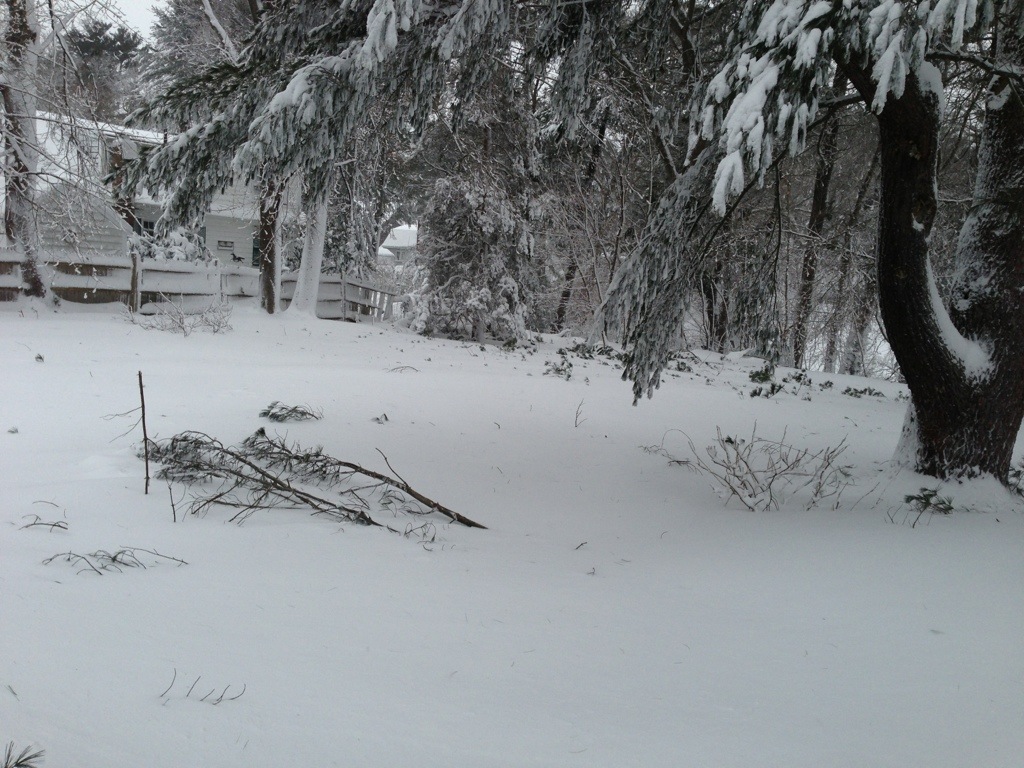
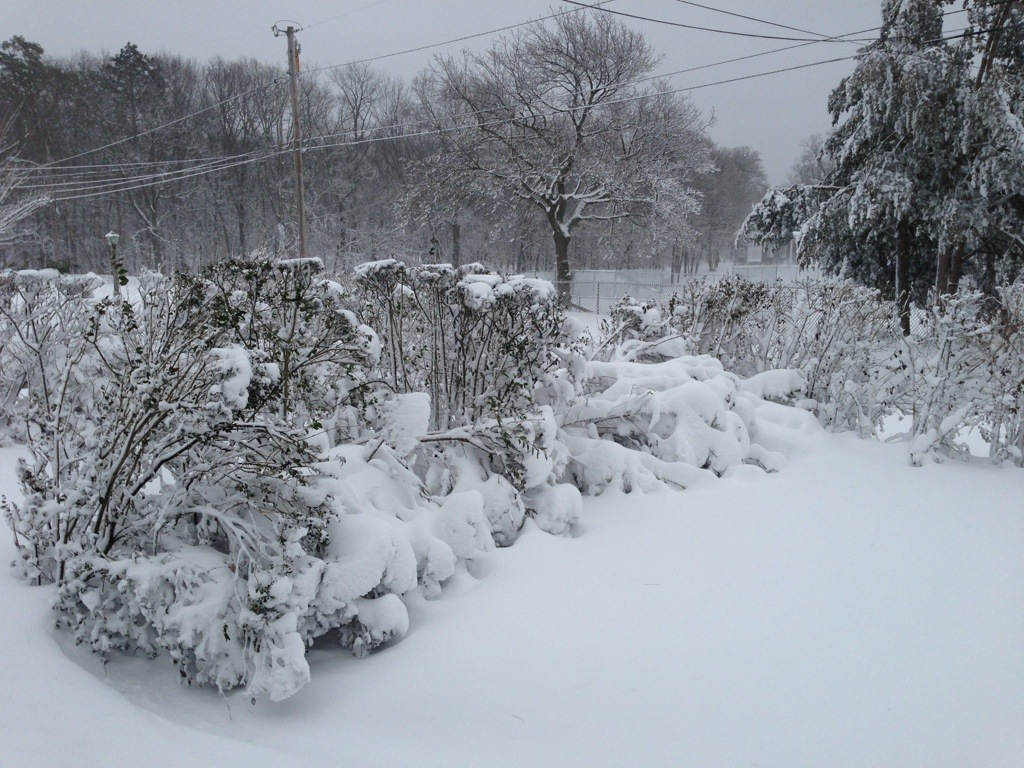
Following up on my new year’s resolution to include more photographs in the blog, here are some winter images. First, a Tom Whelan photo of frost crystals:

He says:

[Ice crystals] only form on cold nights, with temps from 5 to 12 degrees F. These were on a leaf in a shallow brook, just an inch or so deep. The black water was a welcome background. I think it looks like a butterfly!

This one, from Michael Leacher, is called “Winter Water”:

Last but least, here is one I call “Some big icicles I saw one time when I was out taking a walk”:

ice

Stay warm!

Portal, an online novel: Chapter 18

We’re about halfway through this story of Kevin and Larry’s adventures in an alternate universe, where Boston is under siege from the forces of Canada and New Portugal.  Kevin is still in the hospital, recovering from his bout with a dread disease unique to this world.  Larry has made his way back to the refugee camp on the outskirts of Boston, hoping to find this world’s version of his family.  He thinks he has spotted a girl from his English class in the water line at the camp.  But has he really?

*********************

Chapter 18

I tried one last time.  “You’re not Nora Lally?”

She looked puzzled.  “I’m Sarah Lally,” she said, “Not Nora.”

“From Glanbury?” I asked.

“Yes.”  She put her buckets down.  “Your accent–are you from these parts?  Do I know you?”

Same person, different first name.  I felt a tremendous sense of relief.  It made sense, right?  They had old-fashioned names here.  They wouldn’t necessarily be called the same thing as in our world.

I didn’t know how to answer her question.  It’s me, Larry, I wanted to say.  From English class?  I gave that oral report on Mark Twain last year, and you laughed a couple of times–remember?  “No, I guess you don’t know me,” I managed to say.

“But how do you know my surname?”

For all the time I’d spent thinking about meeting someone in the camp, I hadn’t really come up with the right answer for that sort of question.  Should I tell her the truth?  If not, what story could I possibly come up with?  I decided to do what Kevin and I had done with the Harpers–just ignore the hard questions.  So instead I just asked my own.  “I wonder, Sarah–do you know the Barnes family?”

A wagon came lumbering down the path, and we had to get out of the way.  My heart was pounding as I waited for her response.  “Of course I know the Barnes family,” she said.  “They have the farm over next to the Johnson’s.  Do you know them, too?”

“Yeah, I–I’m related.  Are they here by any chance, in the camp?  I’ve been looking for them.”

Sarah nodded.  “Mostly all of us are here, sad to say.”

Finally.  I thought I was going to explode from excitement.  “Do you know where they are?  Could you–would you take me to them?  I’d be really grateful.”

“Surely.”  She stared at me.  “You do look like a Barnes, I believe.  What’s your name?”

“Larry.  Larry, uh, Palmer.”

“Larry.”  She smiled.  “Pleased to meet you, Larry.”  She held out her hand, and I shook it.  It was the first time I’d ever touched Nora–I mean, Sarah.  Her hands were rough and chafed.  This was way different from going to school at The Gross.

“Can I help you with those buckets?” I asked

She looked down at them and sighed.  “That would be very kind of you,” she said.  “I tire so much more easily nowadays.  We can drop them off with my family, and then I’ll take you to the Barneses.”

I picked up one of the buckets, and we started walking.  “What part of the camp does your family live in?” Sarah asked.

“I’m not staying in the camp.  We live in the city.”

She looked at me.  “I don’t understand,” she said.  “Then why are you here?”

“I wanted to find them–the Barneses.  We’ve never met.”

“But I thought you were related.”

This was already getting complicated.  “It’s a long story,” I said, hoping that Sarah didn’t ask to hear it.

Luckily she didn’t.  Instead she started asking me about how things were going in the city.  Did we have enough to eat?  Was there a lot of robbery and looting?  What news had I heard about the war?  The distant booming seemed louder now.  Were we fighting the enemy at last?

I told her what I knew, which was a lot more than she did.  But I couldn’t exactly make her feel optimistic about the war.

“I know we’re not supposed to say this, but I think it would be better if we surrendered, don’t you?” she said.  “My father has joined the army–all the men have gone.  It would be wonderful if he didn’t have to fight.  At least we’d be safe, and we could leave this wretched camp and go back home.”

“Sure, if the Portuguese let you go home,” I said.

“You think they’d take our farm?”

“I don’t know.  If we surrender, what’s to stop them from taking everything?”

“Oh my,” she murmured.  “That’s very true.”

It certainly was easy to talk to Sarah.  Why had I been so frightened of Nora back at school?  Not that it mattered anymore.

“Well, here’s our little home of the moment,” Sarah said.  It was the usual–a wagon, a sickly-looking horse, a makeshift tent.  A couple of kids were playing next to the wagon.  One of them had a cricket bat and was trying to whack the other one.  We set the buckets down.  “Jared, Thomas, stop that,” she ordered them.  “Where’s Mother?”

“In the food line,” one of them replied.  The other one stuck his tongue out at her.

“Charming,” she said.  “Larry, let’s go find your relatives.  You two, mind you don’t upset the buckets.  And don’t kill each other.”

My relatives.  Sarah said it so casually, like visiting them was something we did every day.  “Are they near here?” I asked.

“Not far.  We Glanbury folks tried to stay close together.  It’s all so different and frightening in the camp–it’s good to have familiar faces.”

That reminded me.  “Is there an Albright family here?”

“I don’t know anyone of that name.  Are they from Glanbury?”

“I think so,” I said.  “Is it possible they live in Glanbury and you haven’t heard of them?”

Sarah shook her head.  “It’s such a small town.  Everyone knows everyone else.”

Poor Kevin.  He wasn’t going to want to hear that.  We started walking.  “Do you see the Barnes family much?”

“Jared and Thomas play with their boy.  But there’s no one my age in the family.”

“How many children do they have?”

Sarah gave me another look.  She was probably thinking: If they’re my relatives, how come I didn’t know how many children they had?  But she answered my question.  “They have the boy–Matthew–and Cassandra.  She’s a couple of years older than me.”

Cassandra?  What kind of name was that?  Cassie’s real name in our world was Catherine.  Was she called Cassie here?

But that didn’t matter.  The big news was: no Larry.  That made things less complicated–the universe wasn’t going to explode–but I guess I was sort of disappointed.  “And Mr. Barnes–is he in the army, like your father?” I asked.

“Oh, yes.  Look, there they are.”

I looked.  Another wagon, another tent made out of ragged sheets and blankets, another horse who looked ready to keel over at any second.  There was also a small, smoky fire, over which a girl sat hunched, looking tired and gloomy.  A boy was climbing up the side of the wagon, chattering to no one in particular.  And there was a woman telling him to get down this instant, he was going to hurt himself.

I was home.

Sarah and I walked over to them.  The girl–my sister–looked up.  “Hello, Cassie,” Sarah said.

So she was called Cassie, just like in my world.  She just stared at Sarah and said nothing.

Sarah kept talking.  “This is Larry Palmer,” she said.  “He is, um, a relative of yours?”

Cassie turned her gaze to me without much interest and shrugged.  “I don’t know him.”

Then my mother turned around.  She looked older.  Her hair had streaks of gray, and her eyes had little wrinkles around them.  But she was my mom, no doubt about it, and my heart leaped when I saw her face.  She, too, stared at me–a very different stare from Cassie’s.

I wanted to run into her arms, but I held back.  “Your name is Larry–Lawrence?” she whispered.

Her voice sent chills down my spine.

“Yes,” I managed to say.  “Larry Palmer.”

“Who’s that?” Matthew called out from the top of the wagon.  “Hello, I’m Matthew Barnes.  Are you from Glanbury?  That’s where we’re from.  My pa’s in the army, and he’s going to fight the Portuguese.  I wish I could fight them.  Are you old enough to be a soldier?”

“Be silent, Matthew,” my mother said, without taking her eyes off me.  Her gaze felt awfully strange.  Almost unbearably strange.  It was as if, somehow, she recognized me.

“Palmer,” she said finally.  “I don’t recognize the name.  You say you’re related to us, Larry?”

“I think so.”  I’d been trying to come up with a story.  “My mother–she died of smallpox when I was little–but she said once that she was related to the Clement family.”  That was my Mom’s maiden name.  “And a girl from the Clement family had married a man named Barnes from Glanbury.”

“What was your mother’s name?” Mom asked.  “How was she related to the Clements?”

“Her name was Annie,” I said.  I was making this up as I went along.  “I really don’t remember how she was related.  The story just kind of stuck in my mind for some reason.  So I thought–I thought I’d see if I could find you here in the camp.”

“He lives in the city,” Sarah said.  “He came here specially to look for you.”

That got Cassie’s attention.  “You came here, and you didn’t actually have to?” she asked.  “That’s the foolishest thing I ever heard of.”

“Mind your manners, Cassandra,” Mom said.

“Can you get us out of here?” Cassie asked me.  “Can we stay with you?”

I’d have liked to, but there was no way I was going to be able to pull that off.  “No, I’m sorry,” I replied.  “No one’s allowed out now.”

Cassie turned away, no longer interested in me.  But Mom–that was how I thought of her already–still was.  I was afraid she was going to keep on quizzing me about my story, but she didn’t.  “I don’t recall any relative of mine named Annie,” she said. “Probably a second cousin or some such.  But no matter.  You’re very welcome, of course.  I wish we had something to offer you, but you see how things are here.”

“Why not offer him tea in the parlor?” Cassie muttered.

“That’s okay–I mean, that’s fine,” I said, ignoring Cassie.  “Maybe we can just talk.”

“Well, I have to go back,” Sarah said, “before Jared and Thomas maim each other.  It was a pleasure to meet you, Larry.  Perhaps we’ll meet again.”

She really seemed to mean it.  “Thanks for everything,” I said.

Sarah smiled and gave a little curtsy.

“It’s getting dark,” Mom said to me.  “Won’t you be out after curfew?  And the artillery–”

“I’ll be all right,” I assured her.  “The police just make sure you’re on your way home.”

Mom looked doubtful, but clearly she wanted me to stay.  I sat down by the fire with her.  Cassie looked at me the way she always did–like she couldn’t believe she had to put up with my existence.  Matthew climbed down from the wagon and started peppering me with questions.  Mom mostly just gazed at me with that kind of puzzled look she’d had when she first heard my name.

I pretended I was Professor Palmer’s son, but I tried not to say too much, afraid I’d start getting confused with the stuff I had to make up.  I was pretty sure Cassie didn’t believe me, although I had no idea why she thought I’d be lying.  Probably she couldn’t believe she was related to someone who was a professor at Harvard.  Eventually I got the conversation off of me and onto their lives.

“We’re just farmfolk, as they call us in the city,” Mom said.  “Nothing special.  Though I wonder if we’ll ever see our farm again.”

Cassie looked disgusted.  “Fine with me if we don’t,” she replied.  She hated farm work, I was sure.  I figured she wanted to move to the city, wear a wig and a fancy dress, and go to dinner parties at Coolidge Palace.

“Please don’t say that, Cassandra,” Mom said softly.  “The farm is all we have in this world.”

Cassie looked glumly into the fire and pulled her shawl more tightly around her.  “Then we don’t have anything,” she said.  “You think we’re actually going to win this war?  You think we’ll actually be able to go back to our farm, as if nothing happened?”

“Pa is going to whip those Portuguese!” Matthew said.  “You wait and see!  We’ll be back home by New Year’s.”

“Do you go to school, Matthew?” I asked.

Matthew looked delighted.  “Not any more!”

Mom shook her head.  “We keep talking about setting up some kind of schooling in the camp.  We shouldn’t just let the children run wild, day after day.”

“You should let me join the army, like Pa,” Matthew said.  “I can help.  Can’t help anyone if all I’m doing is learning how to read and cipher.”

“The army doesn’t need little boys,” Mom said.

“It needs something,” Cassie muttered.

“I think the army will have some surprises for the Portuguese and the Canadians,” I said.

“Oh, I do hope you’re right,” Mom said.

“What about the airships?” Matthew said.  “Lots of people have seen them in the city.  Above the palace, they say.  Have you seen them, Larry?”

“Yes,” I said.  “I have.”

“Are they big?”

“They’re pretty big.”

“I’ll bet we can shoot cannonballs right down on the enemy from the air.  The Portuguese won’t have a chance!”

Mom was clutching a handkerchief and twisting it tightly.  To keep from crying, I realized.  She was worrying about Dad, but she didn’t like to cry in front of her children.  Just like Mom in my world.  Everything about their lives had been different, I thought.  But at bottom, they were entirely the same.  “Is Mr. Barnes able to visit you here?” I asked.

“Just a couple of times,” she said.  “They’re very busy with their training and building the fortifications and such.  He’s not really a soldier, you know.  It’s just that they need every man they can get.”

“I’m sure he’ll be fine.”

“If something happens,” she said, twisting the handkerchief, “we may never find out.  Things are so upside-down.”

Matthew reached over and patted her hand.  Even Cassie looked sympathetic.  “Pa’s a dead shot,” she said.  “And he knows how to take care of himself.”

“Yes, yes he does.”

We were silent for a while, and then I asked more questions, learned a little more about them.  Matthew helped a lot on the farm.  He knew how to ride and shoot and fish.  Mom sewed the family’s clothes and cooked and worked in the fields during planting and harvest seasons.  Cassie said everything was boring and she was going to get a job in the city just as soon as she could, if by some miracle we won the war.  On Sundays they all went to church in their wagon; their horse’s name was Gretel.  Occasionally there was a dance in the church hall on Saturday night.  There were lots of parties around Harvest Day.  Their life had been quiet and happy, until the war.

I didn’t notice how dark it was getting until Matthew spoke up.  “If we don’t get in the food line soon, we’ll not have supper,” he pointed out.

“I did it this morning,” Cassie was quick to say.

“Of course,” Mom said.  “It’s my turn.  Larry, you really should be going.”

“I know.”  The sun had set, and the curfew would be starting soon.  But I didn’t want to leave.  It had been so long since I’d heard Matthew babble or seen Cassie sulk . . .

“Come with me, Larry,” Mom said.  “Just for a minute.  Cassie, watch your brother.”

We got up and headed for the food line.  “They say it can’t last,” Mom said to me.  “A few days more at most.  Too many people, too little food, and the soldiers are needed for fighting, not for guarding us.”

“I’m sure you’ll be all right.”

“Some people are going mad from the wait and the hardship,” she went on.  “Cassie is very unhappy.”

Cassie is always unhappy, I wanted to tell her.  “I think we’ve got a good shot at winning,” I said, desperate to make her feel better.

We reached the food distribution area.  There were several long lines heading towards a big wooden building much like the one where I’d helped to load the sacks of grain so long ago; soldiers were everywhere, carrying rifles.  They looked like they were more than willing to use them.  We got into one of the lines.

“Larry, how old are you?” Mom asked.

She was staring at me the way she had when I first showed up.  “Almost thirteen,” I said.

“Almost thirteen,” she repeated, and she nodded, as if this was the answer she had expected.  “Larry, Lawrence.  This is very strange.  You see, we had–we had a little baby.  We named him Lawrence, too.  He died of a fever when he was two months old.  He would have been exactly your age, if he had lived.”

I shivered, and not from the cold.

A tear leaked out of her eye.  “He was so brave, but he just couldn’t hold on.  This world was too harsh for him.  And to think: he could be just like you today.”

So, that’s what had happened to me in this universe: dead when I was just a baby.  My family had never gotten to know me.  “I’m very sorry,” I managed to say.  “It’s . . . it’s a big coincidence.”

Mom touched my arm, which was something she did when she got really emotional.  “I know it will be hard, Larry, but if you can  . . . come back and visit us again.  It’s like you . . . you fill up an empty space in my heart.”

“I’ll be back,” I said.  “Tomorrow.”

“Thank you.”  She squeezed my arm.  “Thank you, Larry.  Of course, if you can’t make it, I understand.  You should really stay at home, of course.  The city is so dangerous.  But maybe later, if things work out, you could come visit us in Glanbury.”

“Sure.  I’ll do that too.”

She smiled at me.  “Now you should go.”

She looked so frail, yet so brave, standing in that long line, with her shawl wrapped around her.  I couldn’t stand the idea that she had to face this camp without Dad, when I could be here to help her.  But she was right; it was time to go.

She leaned over and kissed my forehead, and then I left her there in the line.

I made my way back to the side gate where they’d let me in.  The old man was gone, but a few people were still there, begging to be let out.  The guards were different from the ones who’d been there earlier.  I showed my pass to one of them.  “Sergeant Hornbeam said you’d let me out if I showed you this,” I said.

The guard took the pass and studied it, the way the sergeant had.  “You can leave,” he said, “but I don’t know where you can go.  It’s after curfew.”

“I know,” I replied.  “I just need to get back to army headquarters.”

He just shook his head.  “Well, good luck to you.”

Once again the guards fixed bayonets to keep the other people from charging the gate, and they let me out.

It was dark and cold, and I had a long way to go.  The artillery hadn’t let up.  But I didn’t really care.  I felt so different.  I felt as if everything had changed.

My family was here.  I had found them.  Even if they were farmfolk, they weren’t really that different from the family I had left behind.

I had gotten used to not thinking about my family–it was too painful.  But now I couldn’t help but think about them–at least, this world’s version of them.  I would steal some food from the mess for them, I thought.  Maybe I could find them some warm clothes, too.  If Lieutenant Carmody tried to stop me from coming back, I’d just run away.

I passed by the barracks; there were a few soldiers outside it; they glanced at me as I passed by, but no one spoke to me, no one mentioned the curfew.  The hole Chester had been digging was filled up now.  It looked sinister in the darkness.

I hurried through Cheapside.  The streets were deserted.

Kevin was probably worried about me, but I couldn’t get to the hospital tonight.  Maybe tomorrow.  He’d be disappointed that there weren’t any Albrights, but that couldn’t be helped.

What if the battle had started?  Could I get back to the camp?  What would happen to Kevin?

My mind just kept racing.  I didn’t even notice how hungry and tired I was.  I didn’t notice that my stomach still hurt from where that kid had punched me.  And I wasn’t even particularly scared–I was just too excited.

I noticed a few people, hurrying like me along the streets, staying in the shadows.  There weren’t any carriages or wagons.  And I didn’t see any policemen.  I recalled the first night Kevin and I had spent in this world.  We were so scared, but the streets had been busy and full of life.  Would they ever be like that again?

I almost made it back to headquarters before I ran into the cop.  He saw me from across the street and yelled at me to stop.  I thought about running, but he took out his pistol and aimed it at me, and I figured I shouldn’t take the risk.  He came over and grabbed me by the collar.  He was big and stupid-looking, and he sure was angry.  “What are you doin’, sneakin’ around after curfew?” he demanded.  “Shoot on sight, those are the orders.  Want me to shoot you, you little sneak?”

“Officer,” I said, “I have a pass and–”

“I don’t care about your pass.  There’s no passes for curfew, those are the orders.”  He started shaking me.  What was he so angry about?

Just then a carriage came around the corner at top speed.  The policeman started yelling at the driver, who came to a stop next to us.

It was Peter.

“It’s curfew,” the policeman screamed at him, waving his pistol.  “Get down from there.”

“This is official army business, mate,” Peter said.  “Let the boy go and everyone’ll be happy.”

“Those aren’t the orders,” the policeman replied.  “No exceptions to curfew–those are the orders!”

Peter calmly picked up a rifle and aimed it at him.  “I’d hate to have to blow a hole in your stomach, mate,” he said, “but I need that boy.”

The policeman looked outraged, and for a second I thought he was actually going to try to shoot Peter with his pistol.  But he thought better of it and let me go.  I scrambled up onto the bench next to Peter.  “This isn’t right,” the policeman pointed out.  “You have a curfew, you got to–”

But I didn’t hear the rest as the horses clattered off down the street.  “Thanks, Peter,” I said.

“Been looking all over for you, mate,” he said.  “Thought you might be at the hospital, but you weren’t.”

“Sorry,” I said.  I noticed we were heading away from headquarters.  “What’s going on?”

“Oh, nothing much,” Peter replied.  “Just that the President of New England wants to have a chat with you.”

Amazon Author Central: Tracking your ignominy in real time

Want an easy way to feel like a failure?  Become an author and check out Amazon Author Central, which provides a wealth of statistics about how badly your books are doing.  The depressing news is updated hourly, so you can check back multiple times during the day to increase your feelings of worthlessness.  Here, for example, is a snapshot of how I stack up against other fiction writers over the past month.  The trend slopes upward a bit, but in a fairly narrow range of mediocrity.

ScreenHunter_05 Feb. 02 10.30

Amazon also offers graphs by category (I’m close to breaking into the top thousand in science fiction!) and by individual book. In the old days, authors would get their bad news via semiannual unintelligible statements from publishers.  Are we better off today?  I suppose. Theoretically, you could use all this information to plot your marketing strategies or judge their effectiveness, if you’re the sort of author who has marketing strategies.  But mostly it’s just another way of wasting your time when you should be working on your next book.  After all, that’s the one that’s going to make you famous!

Portal, an online novel: Chapter 17

Lying in his dismal hospital bed, Kevin has convinced Larry to return to the refugee camp and look for their families.  Do they even exist in this world?  Can Larry help them?  He decides that he has to find out.  So he sneaks off from Coolidge Palace, makes his way through Cheapside, and talks his way into the desperately crowded camp.  And now he has to search it . . .

***************

Chapter 17

“Help me, help me, I’m dying!”

An old man was kneeling on the ground by the gate.  He grabbed my leg and wouldn’t let go.

The other people ignored him.  His eyes were watery; he didn’t have any teeth.  His whole body was shaking.

“I’m sorry,” I said.  “There’s nothing–”

“I have no one,” he said.  “I can’t make it to the food line.  Please help, else I’ll die.”

“I’m sorry,” I repeated.  “I don’t . . . I can’t . . . ”  I pulled away from him; he wasn’t strong enough to stop me.

Maybe this was a big mistake, I thought.

My next thought was: It really stinks in here.

I moved away from the gate and looked around.  I thought the place had been crowded before, but now there were people everywhere, jammed together for as far as I could see alongside the narrow dirt paths.  All the animals were gone, too, except for some sad-looking horses and donkeys.  I remembered the cows and goats and oxen tied to the wagons that people were driving into the city the day Kevin and I arrived.  Eaten by now, I figured, or dead of starvation.

I started walking.  That first night, things had been kind of mellow in the camp: people singing, kids playing, old men smoking pipes in front of fires . . .  Now all the mellowness was gone.  People were mostly just sitting down, on the ground or in their wagons, wrapped in blankets, staring back at me with dead eyes.  A lot of the men were holding rifles in their laps.  With soldiers afraid to enter the camp, I guess I understood why.  There were lots of people walking along the paths, too; some of them looked pretty scary, like they’d kill you if they thought you had a loaf of bread on you. I really didn’t feel like asking anyone if they knew a Barnes family from Glanbury.  Just looking at people made me nervous.

So I walked.  And I thought: How am I going to find anyone in this huge, crowded place?  What if I don’t recognize my family?  What if my father has a beard, or Cassie has a different hairstyle, or they’re all so bundled up that I walk right past them?

I wandered around for a long time until I started to get tired.  I stopped at an intersection of two paths and tried to decide what to do.  Should I just give up?  I couldn’t stay here forever.  I still had a long walk back through Cheapside to headquarters.

I realized that I had a lump in my throat.  Now that I was here, now that I’d taken the risk and gotten myself in trouble with Professor Palmer and Lieutenant Carmody, I really didn’t want this to be a waste of time.  I really wanted to find my family, or Kevin’s family, or someone.  Mostly I wanted my original idea to come true–I wanted to help my mother.

Then I saw a fight break out.  “You filthy picker!” someone shouted.  And two kids my age were dragging another kid down to the ground, where they started punching and kicking him.

I started to turn away.  Not my problem, like the old man by the gate.  But no one else was breaking up the fight, and it looked like the kid on the ground was going to get killed.

Something made me go over there.  “Hey!” I shouted, and I dragged one of the kids away from the fight.  He was short but tough-looking.  He glared at me.  “What’s your problem, mate?” he demanded.

Meanwhile the kid they were beating up managed to scramble away.  He got to his feet and looked at me for a second, then started to run away.  The other kid took off after him.  The tough-looking kid broke away from my grasp and punched me in the stomach.  I gasped for breath and my legs buckled; he really knew how to punch.  But he didn’t stay to punch me again; instead, he turned and ran after the other kids.

When I managed to catch my breath I started running after all of them.  Because the kid they had been beating up was Stinky Glover.  Not as fat as in our world, but I’d recognize that face anywhere.

I couldn’t find them, though.  They were lost in the maze of paths.  I kept going until I was sure it was useless, and then I stopped to catch my breath again.

A picker.  That was slang in this world for a thief.  It figured that Stinky would be a picker.

I had lost him, and that was bad.  But still, I was excited.  If Stinky was here, then Kevin was right.  Why couldn’t my family or his family be here too?  I just had to keep looking.

But where?  Just wandering around wasn’t working.  There had to be a better way.

In the distance I saw people lined up.  For food?  The privies?  I went over to the line.  Everyone had a bucket.  They were waiting for water, I realized.

The line moved fairly quickly.  I walked alongside, trying to glance at the people in it.  As usual, they looked back at me suspiciously.  Who was I?  Was I going to cut in front of them?  I didn’t recognize anyone.  At the front of the line was a little stream that went through a corner of the camp.  People were filling their buckets from the stream.  There were plenty of soldiers there to keep the line orderly.  I recognized one of them–he had been loading the sacks of grain that wicked hot first day.  He nodded to me.  “What’re you doing here, mate?” he asked.

“Just looking for someone.”

“Most everyone passes by here sooner or later.  No lack of water at least.  And it’s not giving everyone the flux the way it did back in September.  Still not the cleanest stream in the world, y’understand.”

Mr. Harper had mentioned the flux.  I figured it was something like diarrhea.  “What happens when the stream freezes?” I asked.

“Ah.  None of us’ll be here by that time, I trust.  If we are, there’ll be worse things to worry about than the flux.”

He fell silent, and I studied the people in line.  Even though it only took a few seconds to fill your buckets, the line stretched out a long ways.  If it was this bad getting water, I wondered what it was like getting food–if there still was any food.  People probably spent a lot of their day just standing in line.

I stuck my hands stuck in my armpits to keep them warm.  Sometimes I’d walk up and down the line.  Sometimes I sat on a tree stump nearby.  Occasionally there was a fight when someone tried to cut into the line, and the soldiers would move quickly to break it up.  But for the most part people just shuffled along in silence waiting their turn.  A lot of them looked too tired to fight, or to care about anything.

At some point I noticed a distant booming.  Artillery, I decided.  Had the final battle started?  The booming quickly became constant.  An old woman standing in line started to weep.

It was getting late.  I wasn’t going to make it back to headquarters before curfew.  I had my pass, but that wasn’t going to do much good if some policeman decided to shoot me.  And how much trouble was I was going to be in if I did make it back?  I was afraid to leave, though.  If I left, would I ever be able to return?

I was getting hungry.  And thirsty, watching all that water go by.  I must’ve stopped paying attention for a while.  I know I was feeling sorry for myself, even with these people all around me who were a lot worse off than I was, even with Kevin lying bored to death in the hospital.  So I didn’t see her until she had already gone to the river and filled her buckets.

Long black hair, shining blue eyes–I knew it was her, even wearing a long skirt and a shapeless jacket.  Even looking exhausted and worried.

My first response was the same one I felt in English class, in the cafeteria, in the world neither of us inhabited now.  I couldn’t say anything to her.  I was just too shy.  She had already gone past me when I got over it.  Things had changed.  This was important.

“Nora!” I called out.

She just kept walking.

I went after her.  “Nora?” I repeated when I had caught up to her.

There was no recognition, just puzzlement and suspicion, in those blue eyes.  “My name’s not Nora,” she said, and my heart sank.

In which I review “Why Does the World Exist: An Existential Detective Story” using upgoer5

This is the book I’m talking about. And this explains the words I’m using (and not using). Why am I doing this? Because this is my writing place!

Why is the world here? Why is there something instead of nothing? We’ve talked about this before. In this book, a man goes around talking to men (they are all men) who have thought a lot about this question. They all have different ideas.

Some people believe that God made everything. But then who made God? Where did God come from? Is God just “there”? Where is “there”? And why is God the way He is and not some other way?

Some people think that something just pops out of nothing. But if this is possible, why is it possible? Why is the way things are exactly this way and not some other way?

Some people believe there are many, many worlds — many “everythings” — and each one may have a different way that things are. Maybe everything that could be, is. But why? Why isn’t there just nothing, which is the most simple way for things to be?

Some people think this has something to do with us, and the way we can think. Maybe there is something instead of nothing just so we can be here. Some other people think this idea is really stupid.

The man writes about what these people look like and where they live. He eats with many of them and he talks about what they eat. Most of them know each other; none of them agree with each other.

In the book, he also talks about his dog dying and then his mother dying. This makes him sad and it made me sad, but I’m not sure what this has to do with why there is something instead of nothing.

In the end, I don’t think he knows the answer to this question. And we don’t, either. Probably we will never know. Should that make us sad?

Should authors feel bad when they kill off a character?

Here I talk about the problem that pops up when you kill off a character in a series, only to realize later you’d like to have him around.  A more interesting issue is your emotional relationship with characters you create.  Should it bother you when you kill them off?  I was talking to a reader about Pontiff, where (not much of a spoiler alert) a sympathetic character dies at the climax.  She wasn’t especially bothered by this, because it was a bit of a twist on what she was expecting, but it made perfect sense in the context of the plot.  Which was the effect I had hoped to achieve.

But I had grown to like that character.  I wished her nothing but the best!  I was sorry she had to die!  This didn’t stop me from killing her, all the same.  It wasn’t a question of morality; it was a question of aesthetics.  Your readers aren’t going to care about your characters if you don’t care about them yourself.  But you’re the boss — not the characters.

This brings me to the case of the angelic character Little Nell in Dickens’ The Old Curiosity Shop  The novel was serialized, as all of his novels were, so readers could follow the decline of the little girl’s health week by week. Wikipedia says:

The hype surrounding the conclusion of the series was unprecedented; Dickens fans were reported to storm the piers of New York City, shouting to arriving sailors (who might have already read the last installment in the United Kingdom), “Is Little Nell alive?” In 2007, many newspapers claimed the excitement at the release of the last volume of The Old Curiosity Shop was the only historical comparison that could be made to the excitement at the release of the last Harry Potter novel, Harry Potter and the Deathly Hallows.

Dickens lived life and wrote fiction in a higher key than anyone else. so it’s not surprising that he was as upset by her death as his readers were.

Dickens was traumatized by the death of Little Nell.  As he was writing it he felt as though he were experiencing the death of one of his children.  It also brought back painful memories of the death of his sister-in-law, Mary Hogarth.

But a novelist has gotta do what a novelist has gottta do.

Here, if you can bear to read it, is Dickens’ description of Little Nell in death:

She was dead. No sleep so beautiful and calm, so free from trace of pain, so fair to look upon. She seemed a creature fresh from the hand of God, and waiting for the breath of life; not one who had lived and suffered death. Her couch was dressed with here and there some winter berries and green leaves, gathered in a spot she had been used to favor. “When I die, put near me something that has loved the light, and had the sky above it always.” Those were her words.

She was dead. Dear, gentle, patient, noble Nell was dead. Her little bird, a poor, slight thing the pressure of a finger would have crushed, was stirring nimbly in its cage, and the strong heart of its child-mistress was mute and motionless forever! Where were the traces of her early cares, her sufferings, and fatigues? All gone. Sorrow was dead, indeed, in her; but peace and perfect happiness were born, imaged in her tranquil beauty and profound repose.

This is great stuff, although you may be inclined to agree with Oscar Wilde: “One would have to have a heart of stone to read the death of little Nell without dissolving into tears…of laughter.”