Help me make Senator free on Amazon!

Just follow these easy steps.  You owe it to me.  Okay, you don’t owe me nothin’, but I’d certainly appreciate it!

1. Go to Amazon’s Senator sales page by clicking this link.

2. Scroll down to PRODUCT DETAILS and click on tell us about a lower price.

3. On the next screen, click the circle nest to Website (Online).

4. In the box next to URL: paste this link: http://itunes.apple.com/us/book/senator/id546721642?mt=11

5. In the price box enter 0.00.

6. Click Submit Feedback.

7. When the Close Window button appears, click it.

8. Repeat as often as you like, starting with step 2.

Note that Amazon is already discounting the book to 99 cents.  But free would be better.

And even better would be if you could leave a glowing review for the book if you’ve read it (and especially after you’ve downloaded it, because that makes you a “verified purchaser”).

Thanks!

iBooks? My books! ebooks? Free books!

Update: In comments, Jeff provides the magical link to Senator in the iTunes library.  He also reminds me to tell folks to go to the Senator page on Amazon and inform them that you’ve found Senator for a lower price elsewhere.  That’s how a book gets to be free for the Kindle–you can’t just tell Amazon to give it away.

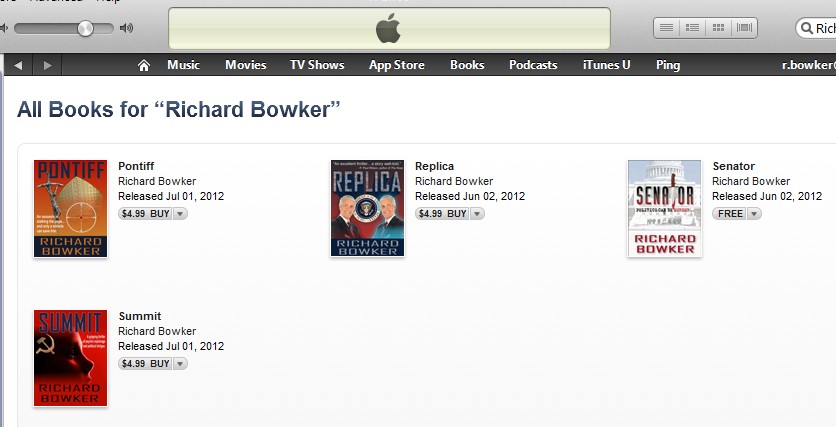
The four novels I have so far released in ebook format are now available on Apple’s iBook store.  Yay!  I don’t know how to link to these guys, but here’s what they look like in iTunes:

Eagle-eyed readers will notice that Senator is free.  That’s right–for a limited time only, it’s available for insanely low price of zero dollars and zero cents.  That’s pretty darn cheap!  At this price, quantities can’t last, so you’d better pick up yours quickly, before Apple runs out.

For those of you who picked up Senator at a higher price, my apologies.  As I noted here, we’ve made some changes to our business model.  I’m using an outside publisher to get my stuff onto sites like iBooks, as well as to goose sales generally.  A standard way to do that is to give a book away and get people hooked so that they’ll buy the others.

Anyway, here is the great (and tragic) Phil Ochs singing his great song “Changes,” just a couple of years before his death.  In a kinder, fairer world, Phil Ochs would have been as long-lived and honored as Dylan.

There’s gonna be some changes made

. . . starting around July 30.

It’s pretty easy to get your ebooks up on Amazon and Barnes & Noble; it’s somewhat more complicated putting them on sites like iBooks and Kobo.  You can do it yourself, via a nice outfit like Smashwords, but that involves Smashwording your ebooks, and I’m just too lazy, or (probably) incompetent.  So I’m taking a different route.  This will all fall into place pretty soon now, and then all you Apple bigots will be happy.

So here’s a video to celebrate:


Would you buy a used ebook?

One of the many ways in which the Internet has changed the world is that it has made the market for used goods, such as books, much more efficient.  In pre-Internet days, you would have had to work hard or be very lucky to find a used copy of one of my books.  Now you can just go to your computer and order up a used copy of Senator from Amazon for the annoying price of $0.01 (plus shipping).  No matter what the price is, the author doesn’t receive any revenue from the sale.  The seller has the right to sell his physical copy of the book he’s bought; copyright laws are irrelevant.

What about the digital world?  A company called ReDigi is testing whether consumers can resell music they have bought from iTunes.  Record companies are, of course, suing.  One basic issue, apparently, is whether the analogy with used physical books and CDs works in the e-world.  In the physical world, you’re selling an object; once the object is sold, you don’t have it to read or listen to anymore.  ReDigi claims its technology can mimic this state of affairs, but I’m dubious. And I’m dubious that the courts will approve.

ReDigi holds that digital music resale is protected through the First Sale doctrine, which enables consumers to resell any media they have legally purchased. (ReDigi uses a verification system to make sure any music it resells was bought digitally, rather than pirated or ripped from CD.)

EMI responds that the digital copies ReDigi resells are not the same ones that were sold to the consumer—they’re copied several times over the course of the transaction. In the eyes of the copyright laws (which were developed back in analog days), that’s just the same as selling a cassette tape copy of an LP record…. The laws as written simply don’t allow for the possibility of reselling digital media, and it is doubtful that laws permitting it could ever be passed. (Indeed, SOPA looks to take things in the opposite direction.)

The inability to resell your used e-stuff is one of the downsides of the current e-world.  Once you’ve bought an ebook, you’re stuck with it.  I’m not opposed to some amount of sharing at the margins — that’s why I don’t have DRM on my ebooks.  But an organized online market in used ebooks, if it were to come about, sounds like a complete disaster for authors.  Who would pay list price for a “new” ebook if you could get a bit-for-bit identical product for much less?  If that happens, authors will have to write purely for love, not money.

Like bloggers, I guess.

Life is stupider than fiction: The Pope’s butler did it; Fox news reporter hired to help Vatican improve its image

I have alluded to this Vatican scandal before: The pope’s personal butler has been arrested for passing secret documents to some journalist.  The head of the Vatican bank has been fired:

The Holy See’s travails became clearly evident on May 17, with the publication of a book, Your Holiness: The Secret Papers of Benedict XVI, in which the Italian journalist Gianluigi Nuzzi reproduced dozens of leaked letters, memos and cables, many of them from within the office of the Pope. Then came the ouster of the head of the Vatican Bank, Ettore Gotti Tedeschi, who on Thursday received a vote of no confidence from the bank’s overseers, in part because he was suspected of passing on confidential documents. Finally, there was the arrest the next day of one of the men closest to the pontiff, his personal butler, Paolo Gabriele, who was caught with sensitive papers in his possession.

And this all presumably has to do with a power struggle within the Vatican:

Many Vatican watchers have speculated that the drama is the fall out of a struggle for power between Pope Benedict XVI’s second-in-command, Secretary of State Cardinal Tarcisio Bertone, and rival cardinals and the Vatican’s veteran diplomatic staff, which has resented him since his arrival. “Bertone is effectively under fire,” says Magister. “If the government of the church is in such disastrous condition, then it’s clear that the head of the state needs to answer for these.”

So yesterday the pope came up with a strong response to the scandal: he hired someone from Fox News to be the Vatican’s media adviser.  Smart move!  The Vatican will become fair and balanced!  It reports, you decide!  Here are the other kinds of things this guy will deal with:

Benedict’s now-infamous speech about Muslims and violence, his 2009 decision to rehabilitate a schismatic bishop who denied the Holocaust, and the Vatican’s response to the 2010 explosion of the sex abuse scandal are just a few of the blunders that have tarnished Benedict’s papacy.

Of course, there is no indication that the Vatican will actually change its beliefs or practices as a result of this move.  The Vatican will do what it does; Benedict will believe what he believes; things will presumably just be messaged more smoothly.

Here, by the way, is an exhaustive Wikipedia article about Benedict’s speech that caused such problems with Muslims.  Good job promoting religious dialogue, Benedict!

Anyway, let me just remind folks that Pontiff numbers among its many characters the Vatican secretary of state, the head of the Vatican bank, and the pope’s butler (really, his personal aide).  Plus scenes of Fenway Park!  And it’s currently available for the astonishingly low price of $0.99!

Pontiff available for $0.99 on Amazon!

Here.  The price has already been sliced at Barnes & Noble.  Buy now — you may never see prices this low again!  You could get yourself the Kindle edition of Knocking on Heaven’s Door, but it would set you back $14.99.  Why in the world would you do that?  You could buy War and Peace for $0.99, but you’ve already read War and Peace.  Why would you want to read it again?  Logic demands that you buy Pontiff.

I’m just sayin’.

Barnes & Noble would prefer not to compete with Amazon on ebook pricing

This is dog-bites-man news, I suppose, but Barnes & Noble is opposed to the idea of having to compete with Amazon on the price of ebooks.  They have made their case in a court filing in the Department of Justice’s lawsuit against Apple and several publishers.

“We think that the Department of Justice got this wrong,” Gene DeFelice, the company’s general counsel, said in an interview. “The settlement destroys independently negotiated commercial relationships. It harms authors, innocent publishers and bookstores, including small-business owners. And it also punishes consumers who stand to benefit from increased competition and lower prices brought about by the agency model.”

Here’s some background on the DOJ suit.

The crux of the disagreement, it seems, is whether the “commercial relationships” were “independently negotiated.”  The DOJ contends that there was collusion, because none of the publishers could afford make a deal with Apple that guaranteed higher ebook prices (via the agency model) if its competitors weren’t going to follow suit (and, probably, Apple wouldn’t have made that deal).

Note that it’s not just the agency model that’s at issue, but the “most favored nation” status granted Apple, in which publishers agree that they must use the agency model with all other ebook distributors if they use it with Apple.  This is what prevents Amazon from undercutting Apple’s prices.

In any case, Barnes & Noble (who isn’t a party to the suit, just a very interested bystander), claims that prices will go up as a result:

Barnes & Noble replied to us with a statement from general counsel Gene DeFelice, who says “The settlement is likely to lead to predatory pricing and increase monopoly by Amazon.” The settlement will also decrease competition, leading to “less choice and increased prices in medium and long term,” DeFelice said.

This is the scenario that I just don’t get.  Right now I buy ebooks on Amazon and read them on the Kindle app on my iPad.  If Amazon starts raising prices, I’ll just go buy my ebooks at the Apple store and read them on the Apple reader for the iPad.  Further, if ebook prices do go up, that would make the prices of hardcover and softcover books attractive once again, which should please Barnes & Noble (assuming they’re still around at that point).  Where does the monopoly pricing power kick in?

Of course, authors are worried, because their royalties may go down.  Bricks-and-mortar bookstores are worried, because their sales may go down.  The world is changing, for everyone.  The question is what can the various parties do–legally–to protect their interests in the new world.

Pontiff available for $0.99!

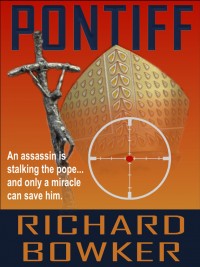
While I was busy doing the ebook work for Senator and Replica, I reduced the price of Pontiff at Barnes & Noble to $0.99, mainly to see how the process works. I informed the nice folks at Amazon about the change, and we may see them reduce their price in response–they’re not about to lose Pontiff sales to their bitter crosstown rival!  Anyway, this lower price won’t last forever, so now is the time to buy!

Pontiff is a religious thriller very much not in the Dan Brown tradition, although the Vatican intrigue it features does appear to have been ripped from today’s headlines.  The lower price is not a reflection of the quality of the novel! To persuade you of this, here is Chapter 2, where we see the College of Cardinals in the Sistine Chapel making an unexpected choice for pope.  The point-of-view character, Cardinal Riccielli, figures prominently in the novel’s intrigue.

**********

Eligo in summum pontificem…

Cardinal Antonio Riccielli stared at the Latin phrase printed at the top of the small rectangular card. I choose for Supreme Pontiff…

He took his pen and scrawled a name on the bottom of the card. He was supposed to disguise his handwriting to preserve the secrecy of the ballot, but that hardly seemed worth the effort. Everyone knew whom he supported, whom he would support to the bitter end.

Marcello Valli.

He looked at the name, and then at the man, seated across from him in the Sistine Chapel. The hawk nose, the high forehead, the piercing eyes that betrayed nothing of what he was thinking. Another ballot, another chance. But the chance was slipping away—had already slipped away, many of his original supporters thought, and there seemed to be nothing they could do about it.

One maneuver was left, perhaps. If no one got a two-thirds majority in the next day, the rules of the conclave allowed the cardinals to vote that election was to be by simple majority, thereby totally changing the dynamics of the conclave. Would it help Valli? It couldn’t hurt. Valli clearly wasn’t going to get the Third-World bloc, but if they could keep the Curial cardinals in line, plus the Europeans and most of the North Americans…

He could perhaps put together a majority. But that required them to make it through the next few ballots, with the cardinals weary and eager for a resolution. The conclave had lasted far too long already. They were tired of each other’s company day and night, while the world waited. And meanwhile Valli’s vote count had steadily slipped, as the cardinals cast about for other candidates who might attract sufficiently widespread support to claim the throne of Saint Peter. One after another, candidates had surfaced, only to fade without reaching the two-thirds majority, none able to receive enough support from the various blocs fighting for the soul of the Church.

On this ballot Riccielli was worried about Carpentier, the genial Canadian. The man was a moron, but he was hard to dislike, and Riccielli knew what others might be thinking: wouldn’t it be good to have someone as pope who was less, well, high-powered than they were used to? Someone who could stay away from controversy and simply make Catholics feel good about their religion again. If we can’t get our man, maybe this guy would do. And he’s old enough that we won’t have to put up with him for long. Carpentier had received an astounding twenty votes on the ballot before lunch. Was there a movement afoot? Would people suddenly decide that he was the solution to their problem?

If there was a movement, Riccielli hadn’t been asked to be a part of it. So he could only guess, and fret.

The voting was beginning. Riccielli folded his ballot and awaited his turn to approach the altar. The ceremony and rituals attached to every aspect of the conclave had inspired awe in him at first, but at this point he found them merely irritating. Couldn’t they just vote and get on with it? Nothing to be done, though. The Church lived by its rules.

He watched Carpentier walk past on his way to the altar, plump and red-faced. What was he thinking? Was his mind frothing with excitement about what might happen to him in a few minutes? Or was he utterly terrified at the prospect confronting him? Impossible to tell from the appropriately solemn look on his face. One learns that look, of course. You can be thinking about yesterday’s football match or the bottle of expensive wine chilling for tonight’s dinner, and still appear as if you are meditating about Christ’s Passion. They had all been priests far too long not to have mastered that skill.

Finally Riccielli’s turn arrived. He walked slowly down the long aisle, between the ranks of red-robed cardinals arrayed along the walls of the chapel. He undoubtedly looked every bit as solemn and prayerful as Carpentier. At the altar he knelt and held up his ballot. “I call as my witness Christ the Lord who will be my judge,” he intoned, “that my vote is given to the one who before God I think should be elected.” Then he stood and went up to the large chalice on the altar. He put the ballot on the paten that covered the top of the chalice, then picked up the paten and slid the ballot into the chalice, where it nestled in among the others. There, it was done, yet again. He returned to his seat, and the next cardinal went up to repeat the ritual.

Nothing to do but wait now. The infirmarii returned with the votes of the cardinals too ill to attend the session. As the last cardinals went up to the altar, Riccielli could hear the rustling in the ancient chapel, could feel the anticipation growing. Would this be the ballot when the election ended, when the new era began? Or would the black smoke rise from the chimney once more, forcing them to keep trying?

The rituals after the balloting were especially excruciating. The cardinals chosen by lot this afternoon to be the scrutineers now had to do their duty. The first scrutineer picked up the chalice and shook it to mix up the ballots. Then he brought the chalice to the table in front of the altar, where he took out the ballots and counted them to make sure that the number matched the number of elector cardinals in the conclave. When Carpentier had been scrutineer the previous morning he had miscounted, causing considerable consternation until his fellow scrutineers straightened things out. The pope should at least be able to count, Riccielli thought blackly.

After counting the ballots the three scrutineers sat at the table and began the job of tallying the votes. The first scrutineer unfolded a ballot, wrote down the name printed on it, then passed it to the second scrutineer, who did likewise. Then the third scrutineer read the name out loud. Fortunately the third scrutineer this afternoon was Cardinal Heffernan, who had given more than his share of hellraising sermons and had a loud, clear voice. “Cardinal Valli,” he announced.

Riccielli started counting mentally. It was not considered proper to keep score on paper.

“Cardinal Carpentier.

“Cardinal Gurdani.

“Cardinal Valli.

“Cardinal Gurdani.

“Cardinal Carpentier.

“Cardinal Lopez.

“Cardinal Gurdani…”

It was only after fifteen or twenty votes had been announced that Riccielli realized he hadn’t been counting Gurdani’s votes, yet the African seemed to be attracting a lot of support. Riccielli looked down to where he was sitting, on Riccielli’s side of the aisle. Couldn’t tell much from his distant profile, but then, one never could tell much about Gurdani. He could scarcely remember hearing the man speak. More of a cipher than Carpentier.

“Cardinal Gurdani.

“Cardinal Carpentier.

“Cardinal Gurdani… ”

But surely Gurdani couldn’t be elected, Riccielli thought nervously. Everyone said so. Few connections within the Curia. His country was too small; he’d been named a cardinal only to protect him from that insane dictator who’d thrown him into prison. And he was unacceptable to the Americans—too critical of the country and its policies in Africa. There weren’t enough American cardinals to block him, obviously, but no one could ignore the power of the American Church.

Besides, Riccielli had heard his Italian was terrible. Maybe you could elect a non-Italian to be Bishop of Rome, but how could you elect someone who couldn’t even speak the language?

“Cardinal Valli.

“Cardinal Gurdani.

“Cardinal Gurdani… ”

After he called out each name, Heffernan took the ballot and pierced it with a threaded needle through the word Eligo. The stack of ballots on the thread was growing, as was the rustling and murmuring among the cardinals. Riccielli glanced over at Valli, still sitting motionless and, apparently, emotionless, his eyes on the scrutineers. Then he looked at Carpentier. Was his red face a little paler than it had been? Did he sense that his moment had slipped away? Had his short-lived movement been overtaken by yet another?

“Cardinal Gurdani.

“Cardinal Gurdani.

“Cardinal Lopez.

“Cardinal Gurdani… ”

Carpentier would have been all right, Riccielli realized. He would have had his photo taken with nuns and told jokes at papal audiences and said comforting things after natural disasters. He would have been called the people’s pope, or some such nonsense. He would have waffled enough on the controversial issues to give some comfort to the liberals, without having the nerve to do anything that would annoy the conservatives. And he would have left all of them alone to do their business. Perhaps they should have all backed Carpentier from the beginning. In retrospect Valli was too holy, too intellectual, too distant. Certainly too identified with the Curia. He scared people. He never had a chance.

And what of Gurdani? An unknown, and therefore by definition frightening. The black pope. They used to apply that phrase to the head of the Society of Jesus; perhaps they’d have to come up with a new, less confusing sobriquet for the Jesuit. Gurdani had an inspiring story, what with standing up to the dictator and saving people from the famine and all. And there were those rumors about his healing powers… Choosing him would make people feel good about themselves and their religion. Look how universal the Church is, how modern, how enlightened! But the pope had to be more than a symbol. He had to rule, he had to lead, he had to make hard decisions.

Riccielli glanced up at Michelangelo’s magnificent ceiling, at God’s finger reaching out to give life to Adam. Were the cardinals reaching out to give life to a black pope? If so, what kind of creature were they creating?

And then the counting was finished. The first two scrutineers started adding up their totals. Cardinal Heffernan tied the ends of the thread and placed the stack of ballots into a box. Soon the right chemicals would be added—for black smoke or white, depending on the outcome; they would then be burned in the tiny stove in the corner, and in this primitive fashion the waiting world would learn the results of the ballot. When the scrutineers were done, the three revisers came over to check their work. All had to be in agreement. There could be no possibility of mistake or subterfuge, no claims of unfairness or error.

Cardinal Magee leaned over to Riccielli. “The witch doctor’s got it,” he murmured. “Quite a surprise, eh?”

“Oh, I knew it would be him all along,” Riccielli joked lamely.

Magee laughed. “You and the Holy Spirit.”

The scrutineers and revisers called up Agnello, the dean of the College of Cardinals. He conferred with them for a moment, and the chapel grew quiet. Then Agnello looked up and smiled. “Habemus papam,” he said with a smile, and the conclave erupted in cheers.

Riccielli looked across at Valli. His expression hadn’t changed.

Cardinal Agnello approached Gurdani.

* * *

Joseph Gurdani watched Agnello approach as if in a dream. Absurdly, he thought of one of his prison guards walking toward him. He had the same leaden sense of dread in his stomach. It is starting again, he would think as the guard approached. The one he was thinking of always had a smile on his face, much as the cardinal was smiling now. One of his front teeth was gold, so the prisoners called him Goldy. Goldy’s boots always gleamed, and he never went anywhere without his rifle. And whenever he approached you, you could be sure that the butt of that rifle would end up in your stomach, the dread turning into a hard ball of pain.

It is starting again.

Giuseppe Agnello was a wizened but spry old man. He seemed to have difficulty being as solemn as his role demanded. He stopped in front of Gurdani and gazed at him, his gray eyes sparkling. “Hello, Joseph,” he whispered in badly accented English, bending close.

“Ciao, Giuseppe,” Gurdani replied, speaking the same words in badly accented Italian.

Then Agnello straightened and said aloud, “Do you accept your canonical election as Supreme Pontiff?”

You can turn them down, of course. It is not like going to prison—though in fact Gurdani had had a choice then, as well. It had been an easy one for him, though not for many others. Prison or freedom. Pain or pleasure. Good or evil. So many choices through a lifetime, leading to this moment, this ultimate decision.

He had no desire for the burden they wanted to place on him. But his decisions had always been made on a simple basis: What does God want of me? If God wanted him to take the rifle butt in the stomach with a smile and a prayer for his torturer, he would do so. Sometimes, of course, it is not easy to discern God’s wishes; sometimes it is the height of pride and folly to assume you know them.

But not now, he realized. Not with the princes of the Church gazing at you, asking you to lead them. God had not brought him this far, only to see him turn into a coward.

“With deepest humility,” Gurdani said in a clear voice, “with the realization that I am the least worthy among us, but with complete trust in God’s wisdom and help, I accept.”

There was loud applause. Agnello nodded cheerily. It was the correct answer. “By what name do you wish to be called?” he asked.

His first decision, Gurdani realized. The world would interpret it however it chose. He thought of his mother. Would she have been astonished, proud, overwhelmed at this moment? No, even this would not have caused her to bend. Of course you can do it, Joseph, he could hear her say, her eyes blazing with determination. You can be better than anyone. You just have to try harder. Think of your father. Think of what he would have wanted.

His father, dead of cholera when Gurdani was only two. Nothing more than a shadow in his memory—and possibly a false one at that, woven from his mother’s stories and his own longings. Such a great man, Joseph. He loved learning. He loved Our Lord. He expected great things from you. You must not let him down.

Who, next to his mother, was more important in his life? Whom did he want more to honor?

His father, John Gurdani.

“I take the name John.”

Agnello beamed, as if this were the very name he himself would have chosen. And then he led Gurdani down to the altar. The scrutineers’ table had been removed and an ornate carved wooden chair put in its place. “Now it’s time for us to pledge our obedience to you,” Agnello explained, seating him in the chair. “I will be honored to be the first.”

The old man got down on his knees. “Your Holiness,” he began…

This won’t do, Gurdani thought. He arose from the chair and helped the cardinal to his feet. “Please, Giuseppe, there is no need,” he said.

“Not from me, perhaps,” Agnello murmured, “but from some of these fellows, you’ll want to get all the promises you can.”

Gurdani laughed and embraced him. “If they’re as bad as you suggest, no amount of promises will help,” he pointed out.

And then the other cardinals approached, one by one. Many of them Gurdani scarcely knew—just a name, a reputation. Others, like Agnello, were his friends and allies. And he knew that Agnello was right: some of the men who were greeting him and promising their loyalty and obedience were his enemies, though he could only guess who. The Curial cardinals, presumably; some of the Americans. Perhaps the defeated candidates and their backers. One in particular was important to him.

“Cardinal Valli,” he said when the man was in front of him, “you would have been a far worthier choice than I.”

Valli inclined his head. “Your Holiness is very kind.”

Valli had been the old pope’s cardinal secretary of state. He knew everyone and everything. Eminently papabile. In other times, perhaps, he would have been the natural successor to the papal throne. Now they were looking for someone new and different, apparently, and Gurdani had been the man who fit the bill. “This is a very heavy burden that has been placed on me,” he went on. “I will need your help.”

“All I have, all I am, is at your disposal,” Valli responded, with another small bow.

Gurdani reached out and shook the Italian cardinal’s hand warmly. “That is very good news,” he said. “We will talk.”

“I look forward to it, Your Holiness.”

When the new pope had finished with the cardinals, it was time to meet the world. But first he had to dress for the part.

He was escorted to the small scarlet-walled sacristy off the chapel. “This is called the Room of Tears,” Agnello said. “I can’t imagine why.”

“Perhaps one can guess,” Gurdani replied.

In it were three simple white cassocks—small, medium, and large. A tailor stood by with safety pins, ready to fit him. The small cassock would do, of course. He removed his elaborate red and white cardinal’s robes and stared down at his scrawny body. Such a frail vessel. He put on the cassock. The tailor fussed with it until he apparently deemed it sufficiently papal, and then retired. Gurdani doubted that he ever would look papal, to some at least. A small black man with grey hair and a squint. A head that habitually bent to one side, like a bird’s. A back that was no longer quite straight, because of events he did not wish to dwell on just now. To some he would look quite ridiculous, he was sure. Worse, an insult to the Church, a disgrace to the throne of Saint Peter.

Abruptly he sat down on a small bench. Was he supposed to cry now, in the Room of Tears? Well, he wouldn’t, he decided after a moment. He wasn’t worthy, but then, no one was, no one could be.

He slid from the bench and knelt stiffly on the tiled floor. He was certain that many of his predecessors had knelt here like this, praying for the strength to do the impossible. It was all you could do—ask for some of God’s strength, so that you could carry out His will.

After a while he got to his feet and left the room. Again he was escorted, this time outside, to the loggia overlooking Saint Peter’s Square, filled now with a writhing, jostling, banner-waving throng. Agnello presented him to the multitudes waiting there in the twilight, clearly delighted at the opportunity to shock them. And Gurdani could hear—no, he could feel—the gasp as people caught their first glimpse of the small black figure who was now the leader of the Roman Catholic Church.

He approached the microphone and paused, waiting for silence. “I don’t speak Italian well,” he began finally. “But I promise I will learn. There is so much I need to learn. I need your help—I need the world’s help—to do this job. But most of all I need God’s help. I ask you to pray for me, and for our Holy Mother the Church. And in return I will give every ounce of my strength to this role that has been thrust upon me.”

And then he sketched a blessing in the chilly air while the crowd cheered.

Domine, non sum dignus, Gurdani thought as he gazed out at the sea of faces. Lord, I am not worthy. You just have to try harder, his mother’s voice echoed in his mind. There would be no tears. What would his father have said? He thought of Goldy—dead of AIDS, he had heard. He thought of all who had shaped him, for good or ill. And his blessing was for them, as well as for this crowd filled with the curious and the devout, and the billion Catholics whose leader he had just become.

God is in us all, he thought. The evil and the good. The torturer and the tortured. Let us come together in His spirit, to do His will.

And thus began the reign of Pope John the Twenty-Fourth.

Replica is now available from Amazon and Barnes & Noble!

Replica is now available from Amazon and Barnes & Noble for the embarrassingly low price of $4.99.

Replica is a near-future thriller about creating an android replica of the president of the United States.  It’s filled with clever plot twists, interspersed with occasional reflections on what makes us human.  Here’s the prologue, which I posted once before, but admit it, you’ve forgotten it already.

***********

It was the last day of his life, and the man in the blue nylon jacket was getting nervous.

He stood on the common, hands stuffed in his pockets. It was a little after two by the town-hall clock. He would be dead by a quarter to three.

The crowd was growing now. Lots of Norman Rockwell families: pink-cheeked grandmas, kids in snowsuits clutching balloons, strong-boned women pushing strollers. Plenty of bored, burly policemen. And the occasional gimlet-eyed man in a gray overcoat, watching.

The high school band was playing next to the temporary stage; a young woman was testing the sound system; the hot-chocolate vendors were doing terrific business. What better way to spend a Sunday afternoon?

He hadn’t expected to be nervous. But everything was real now, and nothing can prepare you for the reality of death.

He had parked his car in a supermarket lot at the edge of town. It occurred to him that he could turn around, walk back to it, and drive away. Life would go on.

This struck him with the force of great insight. He had been anticipating this day for so long now that the idea of living it like any other day was strange and compelling.

Which would be harder: dying, or living with the knowledge that he had failed?

A helicopter swooped by, and then returned to hover overhead. The band played “From the Halls of Montezuma.”

He remembered sitting in the bleak apartment and listening to the others spin their crazy schemes. They were dreamers; worse than dreamers, because they thought they were doing something wonderful and dangerous, when all they were really doing was wasting their lives. “You’re trying to get something for nothing,” he told them, “and you’re not clever enough for that. If you want to do this, then you’ve got to be willing to risk everything—and then it becomes easy.”

But they weren’t willing. And he was. So he had left them behind, to end up here and take the risk.

He had been on the road for days. The distance to be traveled was hardly great, but he felt a need to disappear, to find some anonymity in the grimy motels and the self-service gas stations and the fast-food restaurants. Family, lovers, friends, work—it would be easier, he had thought, if he left them all far behind.

But here he was, and it was hard.

Distant sirens. Little boys had climbed the bare trees; infants were perched on parents’ shoulders, necks craned, placards waved. Flashing lights, the roar of motorcycle engines, the cheering of the crowd…

…and there he was! Yes, look, in person—something to tell your grandchildren. Reach out and maybe he’ll touch your hand!

The man in the blue nylon jacket stood in the crush and gaped like all the rest. The reality of his prey was paralyzing. The high forehead gleaming in the sunlight as if polished, the sharklike smile, the large nose red from the cold… Look, it’s him!

We’re both going to die.

He was on the stage now, waving. A local politician stood at the microphone and gestured for quiet. “It is my great privilege…”

Hard to breathe. The anger was returning before the man had spoken a word. How could they cheer him? Why couldn’t they see?

Would one of the gimlet-eyed men notice that he wasn’t cheering?

The introduction was finished; the cheers continued.

The man on the stage waited for silence, then began. Bad joke, gratitude to the crowd for coming out on such a cold January day. Then on to the substance.

“Four years ago, when I came to New Hampshire, I asked a simple question: do you think your lives are as good as those of your grandparents? As meaningful. As rich in the things that make life worth living. Now as you know, in a couple of years we will be celebrating America’s two hundred and fiftieth birthday as a nation. So today I want to ask you fine people a slightly different question: do you think your lives are as good as those of the men and women who brought this great nation into existence? They had no jets to take them across the country, no robots to do their work, no nuclear weapons to wipe out their enemies. But I think you’ll agree they had a better chance at happiness than many of us have today, a better chance to attain the dignity and self-respect that go with having a purpose in this life, even if the purpose is as basic as providing food for your family.”

How could he say that stuff—and how could the crowd listen to it? Inoculated, anesthetized, sanitized, with twice the life-span of their ancestors and half the pain, they didn’t know how good they had it. Maybe they wouldn’t know until they destroyed what they had.

“For years we have been fooling ourselves that technological progress must inevitably produce happiness. But now we have come to realize that it produces merely complexity, and tension, and fear. The technologists say: machines make life easier. I say: I don’t want my life easy; I want it real. The technologists say: you can’t pick and choose your progress. I say: why not? I’ll be happy to let them cure cancer, but I’ll be damned if they’ll force me to own a robot. The technologists say: you can’t stand in the way of the future. I say: wanna see me?”

The crowd roared. Someone slapped him on the back. He jammed his hands deeper into his pockets. He should be past trying to understand or to argue now. He should just get ready to do what had to be done.

“And now they are going beyond even robots; they are putting robot brains into living human flesh. They call these creatures androids. I call them the work of the devil, and if I do nothing else during my second administration, I am going to see that their manufacture and sale is made illegal in this great nation.”

As he watched and listened, the speaker’s head seemed to grow until it filled his field of vision. He imagined it exploding, like a ripe melon dropped on concrete. He imagined the screams and the terror, the hands pointing at him, grappling with him; imagined everything as he had imagined it a hundred times before. But he had run out of time for imagining now; reality was here, ready. He had only to seize it.

He didn’t move, and the speech continued.

“I know many of you have been put out of work by robots and similar machines. And in trying to get the jobs that remain, you find yourself competing with immigrants who are willing to work for pennies. Now, contrary to what my opponents are always saying, I have nothing against immigrants. When the wars of the millennium broke out, it was right and fitting that we extended our generosity to their victims. But over twenty years have passed, and we are still paying the price for our good deeds. I say: enough is enough! Let’s put a stop to immigration! Let’s call a halt to the incursions of technology on the quality of our lives! Let’s regain control of our nation!”

Cindy Skerritt. He hadn’t thought about her in years. He wondered how she was doing. Still living in Montpelier? Still fooling around with those stupid Tarot cards? Geez, they had had some good times together. Why did they ever break up? He could be in Montpelier by nightfall.

He could turn around, walk back to his car, and drive away.

He didn’t want to die.

Maybe he could kill the man and still escape. Why not? He wouldn’t miss. He knew he wouldn’t miss.

The common was overrun with Secret Service agents. He had even seen one with a robot scanner; they were convinced a techie was going to send out a robot to do the deed. But they couldn’t be everywhere, couldn’t watch everything. He just needed a little distance.

He made his way through the crowd out onto the sidewalk. It was full of cops standing next to their cycles, waiting for the motorcade to resume. He crossed the street. A few people were perched on the steps of town hall. He looked around. There was nobody by the Methodist church. He sauntered over to it and turned. He was almost directly behind the stage now, and he no longer had a clear shot.

But he wouldn’t miss.

He climbed the stairs and stood in front of the white double doors. He casually tried them. They were unlocked. He opened one a little and stepped back inside. The stage was still visible, his target still there, head bobbing slightly as he reached the climax of his oration.

His dying words.

“I truly believe that for the first time in generations we are headed in the right direction—toward an America that is more concerned with its people than with its machines, more concerned with its spiritual well-being than with its physical comfort, more concerned with life than with progress. If you will give me your help once again—”

He imagined walking through the streets, unnoticed in the turmoil, getting into his car, driving away. No one would even know he had been in town. Montpelier by nightfall.

And a lifetime to enjoy the memory.

He took the gun out of his pocket and lifted it into firing position. The crowd was cheering.

And the people on the stage were on their feet, applauding, surrounding the man, shaking his hand. The speech was over.

“Hey, what are you doing?”

He fired and fired and fired. Felt the arm clutching at him, heard the cheers turn to screams, saw the jumble of bodies on the stage, the pointing fingers. Then he turned and faced his attacker.

It was a minister, overweight, jowls trembling with fright. Doing his duty even though it meant he was going to die. He knew that feeling. He shrugged off the minister’s feeble grip and shot him in the face.

Blood everywhere. Had to get out of here. He raced down the center aisle of the church, taking off his bloody jacket as he ran. The place smelled of furniture polish and flowers. Had to get out. Past the pulpit, through a door, into darkness. His knee banged into something sharp. He cursed and limped ahead. He found a knob, turned it, and saw sunlight. He forced himself to run down the stairs and along the side street. Which way to his car? If he could only get to his car, everything would be all right.

He heard sirens, squealing tires. He veered onto the sidewalk and dived into a shop.

It was a drugstore, brightly lit, antiseptic. No customers—just a pharmacist, bald, skinny, terrified. He realized he still had his gun in his hand.

The clock over the counter said quarter to three.

“Rear door,” he gasped.

The pharmacist pointed past the shelves of pills. The man hurdled the counter and made his way through a storage room piled high with empty cartons. The door was bolted. He slid the bolt back and wrenched the door open. A dumpster, a car, a chain-link fence with houses beyond. He headed for the fence.

The wire ripped his pants, cut into his hands. He didn’t feel it. A Doberman was running toward him. He shot it, then noticed it was on a leash. A woman stared at him from her kitchen window.

He ran.

Had to find his car. The parking lot couldn’t be far. Montpelier by nightfall. Sirens everywhere.

Cindy, will you tell me my fortune?

His knee was on fire. Couldn’t run much farther.

Just around the corner. I’m sure it’s—

The first shot hit him in the shoulder as he reached the corner. The car wasn’t there. All he saw was flashing blue and red. He stopped and breathed the pure cold air.

The car wasn’t there.

He wanted to apologize to that woman for killing her Doberman. Reflex. Unavoidable.

The second shot hit him in the left buttock.

And a lifetime to enjoy the memory.

The third and fourth shots hit him in the spinal column and the right kneecap, respectively, and he fell to the ground. The fifth shot smashed through the rib cage and lodged in his heart.

The thing of it was, he didn’t know if he had succeeded. And now he would never know.

Senator now available from Amazon, Barnes & Noble!

Senator is now available from Amazon and Barnes & Noble for the egregiously low price of $4.99.

Senator is a meditation on family, loyalty, and politics, wrapped up in a complex murder mystery that takes place during a grueling political campaign.

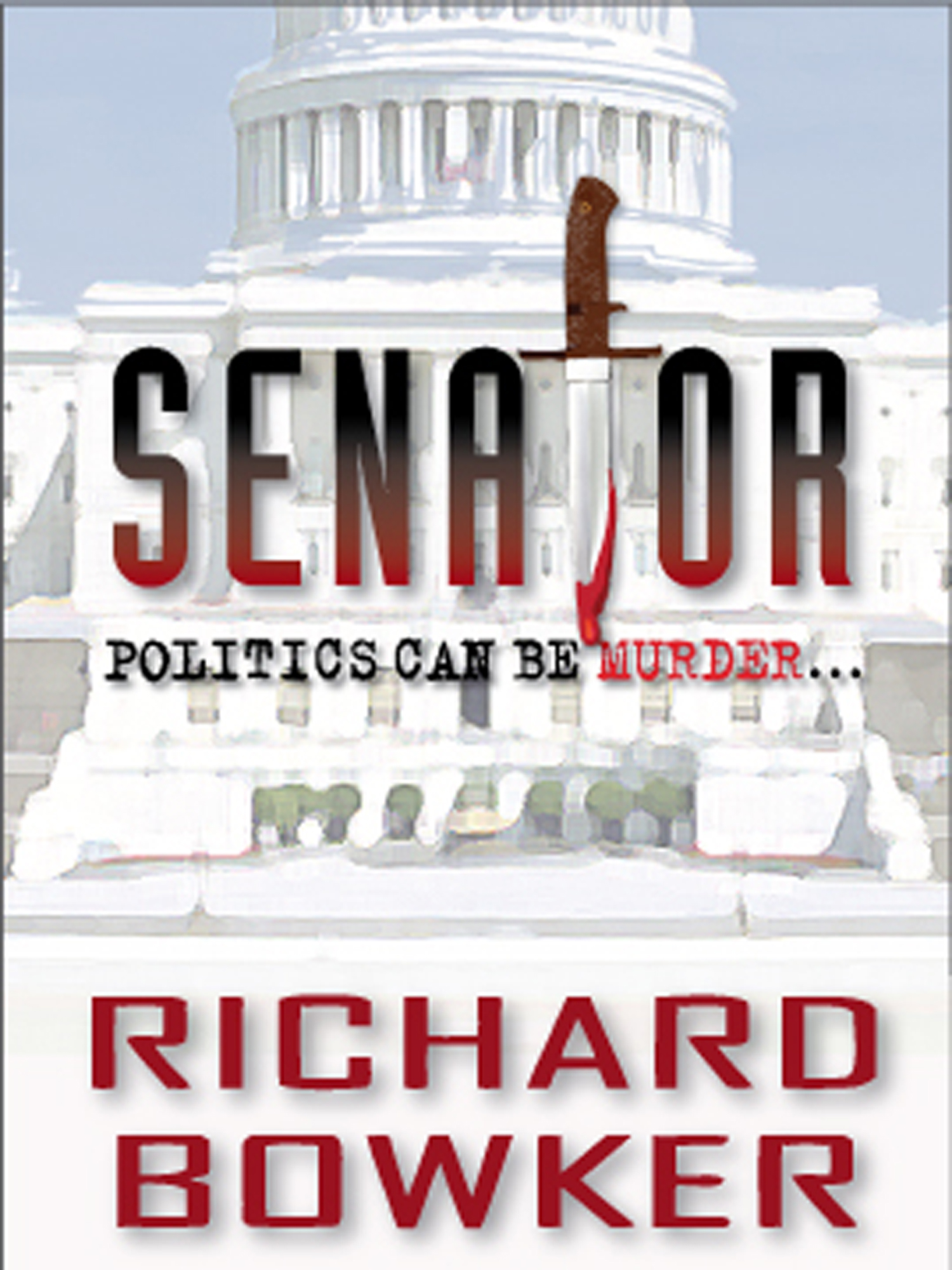
The cover is by the great Jim McManus.

Here is the first chapter.

***********

I am a politician.

I stare at the blank screen, and that is the first thing I can think of to write.

It’s astonishing, really. I have never thought of myself as a politician. I certainly didn’t plan to become one. Even as I campaigned, as I shook hands and kissed babies, gave canned speeches and attended endless fund raisers, it didn’t occur to me that these activities were defining me; I always thought of them as simply a means to an end. Until now. Now, when it has all changed forever.

I’m a politician, and I have just finished the toughest campaign of my life. But it isn’t just the campaign I want to write about in this unfamiliar room, on this intimidating machine. Because I want to be something more than a politician, and that will require an understanding of far more than the mechanics of running for public office. It won’t be easy to find that understanding.

But this is where I have to start.

* * *

The battle had been shaping up ever since Bobby Finn announced in late spring that he was going to run against me, but the public didn’t pay attention until after the primary. Couldn’t blame them; we were both lying low—raising funds, doing research, plotting strategy. Neither of us had opposition in the primary, so we spent our time stockpiling ammunition; better to do that than to use it up early and risk having nothing left for the final struggle.

But even when we started in earnest, people were slow to react to the legendary confrontation. The pros blamed it on the weather. It was a soggy September. Flights were delayed, parades canceled; people at factory entrances and subway stops rushed past us to get out of the perpetual rain. Even indoors the crowds were small and inattentive, worried more about whether their basements were flooding than about who would get their vote for senator. Maybe after the baseball season, the pros thought. Eventually they would have to take an interest.

Eventually they did, but Lord, it wasn’t the way I wanted.

I may as well start with the Friday evening it all began. Just another speech—this one to the Newton Republican Women’s Club. Not an especially important event; I was preaching to the converted, and there were only a couple of local reporters there to take my message to the masses. My mind was far away, but still, it went well; the fine ladies laughed at the jokes and applauded at the proper places and were generally thrilled to be in my presence. A politician is an actor whose performance never ends.

Kevin Feeney was with me. It was his job to grab me away from the fine ladies as soon as possible after my speech. Let them blame him, not me, for not staying longer. Sorry, ladies. I’m a slave to my schedule, and Kevin is its keeper.

He did his job—he always does—and together we headed out into the fog and drizzle. He held an umbrella over the two of us as we stood in the parking lot. “Let me drive you home, Senator,” he said.

“Don’t be silly. What’ll we do with the extra car? Take the night off. Relax.”

“You should have let me drive you here.”

By using my own car, I had provided the evening with a logistical complication that Kevin found unnerving. He was supposed to take care of me, and I wasn’t cooperating. “I managed to get here by myself, Kevin,” I said. “I’m sure I can make it back. Go home. Introduce yourself to Barbara and the kids. I’ll see you in the morning.”

Kevin still didn’t look happy. His wife and children came in a distant second in his loyalties. But I wasn’t going to argue with him; I had more important things to do. I got into my Buick and opened the window. “Go home, Kevin,” I repeated. And then I left him standing forlornly in the parking lot.

I didn’t feel sorry for him; in fact, I didn’t give him another thought. Kevin would always be there. I drove along Commonwealth Avenue, an oldies station on low, the windshield wipers keeping time with Neil Sedaka. Generally I like driving alone—offstage, if only for a while. But tonight the pleasure was soured. I had a problem, and I had to solve it by myself.

At a stoplight I picked up the car phone and dialed a number. After the fourth ring the answering machine clicked on: “Hi, this is Amanda Taylor. I can’t come to the phone right now, but—” The light turned green, and I slammed the receiver down.

Maybe she’s there, I thought. Maybe she just isn’t answering.

But maybe it would be better if she weren’t there. I had a key.

Newton turned into Brighton, and the big old Victorian houses gave way to dorms and apartment buildings, laundromats and convenience stores and bars. I come from Brighton, but not this part; this was academic territory. First Boston College and then Boston University, the campus sprawling in urban disarray on both sides of the road for a mile or two before petering out in the dance clubs and record stores and pizza joints of Kenmore Square. To the right, the light towers above Fenway Park blazed in the darkness; the Red Sox were trying to get the game in despite the fog. Big advance sale, probably. I cursed silently: ten thousand extra cars in the neighborhood.

I made my way through the chaos of Kenmore Square traffic and into the Back Bay, where Commonwealth Avenue became elegant once again. I didn’t pay attention to the stately elms and old brick town houses, though; like everyone else in the Back Bay, I was looking for a place to park.

The best I could find was a “residents only” space on Gloucester Street. I decided that I didn’t have a choice, so I pulled into it. I got out of the car and opened my umbrella. At least the fog would make it less likely that I’d be recognized; I didn’t need a conversation about abortion or someone’s Social Security benefits just now. I started walking.

If she was there, what would I say? It was important not to lose my temper. I didn’t need an argument. Above all, I didn’t need her angry at me. And I did need to know what was going on.

If she wasn’t there, I would have to wait for her. This couldn’t be put off.

The building was on Commonwealth, between Gloucester and Fairfield. Out front a low hedge surrounded a magnolia tree, glistening in the light from an old-fashioned streetlamp. Black wrought-iron bars enclosed the windows in the basement and first floor. In the basement I could see the flicker of a TV through the bars. A woman approached, walking a Doberman. The Doberman paused at the streetlamp; the woman stared at me. Where had she seen that face before? I hurried up the front steps and inside.

I closed the umbrella and glanced around. A row of mailboxes to the right. On the wall next to them, a handwritten notice about a lost cat. On the floor beneath, a few faded sheets advertising a Scientology lecture. The ever-present smell of disinfectant. I had caught a whiff of the same disinfectant once in a bathroom at a fund raiser and found myself becoming aroused. I expect that will happen to me again someday. I rang her bell; no answer. I didn’t want to hang around the lobby. As usual someone had left the inner door unlocked. I opened it and hurried up the stairs.

I never took the elevator. You can avoid being seen if you pass someone on the stairs; it’s impossible in an elevator. I took out my keys and started looking for the one I wanted. By the time I reached the third floor, I had found it. The door was there in front of me. My heart was pounding—from racing up the stairs; from the tension of the coming confrontation. I put the key into the lock, and that’s when I knew that something was wrong.

The wood around the lock had been splintered and gouged, as if someone had attacked it with a hammer. I tried the knob; the door was locked. I turned the key, and the door swung open.

“Amanda?” I called out, closing the door behind me.

No answer. I moved into the living room. My heart sank. The place had been ransacked: books and tapes and compact disks pulled off shelves, papers scattered on the rug, the glass coffee table upended. A spider plant lay on its side, its pot cracked, dirt trailing from it like blood from a wound. “Amanda?” I whispered, a prayer now: She wasn’t here; she was at a friend’s place; she was at the police station. “Amanda?”

On the floor next to the bookshelves I saw several large shards of glass. It took me a moment to recognize them; they were the remains of her crystal ball. “I wish I knew where all this was going to end up,” she had said to me once, smiling wistfully. “I wish I had a crystal ball I could look into and see the future.” So I had bought one for her. A joke. It was the only present I had ever given her. It had never done her much good, and now, shattered into a dozen pieces, it looked more useless than ever.

I wanted to run away. I wanted to rewind the tape and start over again. This wasn’t it. The scene was supposed to be entirely different. She should be standing here, beautiful, frightened, apologetic. She had made a mistake. She could explain everything. Nothing for me to worry about.

But my will wasn’t strong enough to change reality, and I knew that running away would only make things worse. So I forced myself to move through the apartment, pleading with God to make it empty.

Her bedroom seemed untouched. So was the bathroom. The little second bedroom she used for an office was a mess; the desk drawers were all open, and her floppy disks were scattered on the floor like shingles ripped from a roof by a hurricane. But her computer was on, humming softly in the silence. On the screen, white words against a black background. I stepped into the room and read the words:

she had to die she had to die she had to die she had to die she had to die she had to die she had to die she had to die she had to die she had to die she had to die she…

They swam in my vision; they merged and twisted as I stared at them and tried to change their meaning. They are only words, I thought. Words can lie. Or they can just be words, sound without content, a speech to nice Republican ladies.

One last room.

I walked past the words and into the kitchen, and that’s where I found her.

She was sprawled on the black tile floor. Her white shirt was torn and bloody; her eyes were open, and they stared unblinking at the ceiling. They seemed amazed that this was the last thing they would see. I reached down and touched her wrist; she was cold.

I looked around wildly. Was her murderer lying in wait for me as well? But I had searched already; I was alone. I closed her eyes, and then I closed my own, slumping down beside her on the floor. The apartment, the city were silent; the only sounds were the hum of the computer in the next room and the thumping of my heart. She was cold. She was dead.

Amanda.

At that moment I would have given back everything I had accomplished, everything I had achieved, for Amanda to be alive again.

But it wasn’t going to happen. My life ticked inexorably onward, and gradually my grief yielded to the pressures of the moment. After a while I forced myself to open my eyes. I haven’t been to a great many crime scenes in my life, but I’m not unfamiliar with murder. I tried to look at Amanda clinically. No rigor mortis, so she’d been dead less than eight hours. On the floor, the bottom of her arm was purplish from the blood settling there, so lividity had started. That meant she’d been dead at least a couple of hours.

Someone had murdered Amanda in the late afternoon.

And I thought: Exact time of death is going to be important.

Her clothes were intact, except for where she had been stabbed. At least she hadn’t been raped, thank God. There was a bruise on her right forearm—where her attacker had held her? There were cuts on her hands and arms—where she had tried to defend herself?

On the floor near the sink I saw a kitchen knife, its blade dark with dried blood. I recalled using that knife to chop celery one evening.

Oh, Lord, I thought: fingerprints. And then the pressures started to overwhelm me. I had to do something. I was in terrible trouble.

I crawled over to the knife. I took out my handkerchief and wiped the handle—

—and immediately felt stupid and evil. It had been months since I had used the knife. My fingerprints couldn’t possibly have been on it. What mattered more: saving my career or finding out who had murdered Amanda?

But then I realized that finding out who had murdered Amanda was just as likely to end my career as having my fingerprints on the knife. This murder couldn’t be a coincidence.

So what should I do? Run away? Go outside and howl in the fog? I couldn’t think of anything that would help. I don’t deserve any credit for it, but finally I decided to do what civilization had taught me to do. I went into the bedroom and called the police.

I gave the dispatcher the address and told her there had been a murder. She asked for my name, and I gave that to her as well. She didn’t seem surprised. There are plenty of James O’Connors in Boston.

Then, continuing to be responsible, I called Harold White. No answer. I tried Roger Simmons next. He was home. “Hi, Roger. Jim.”

“Jim, how are you? What can I—”

“I’m at a murder scene, Roger. I discovered the body. I just called the police. They haven’t arrived yet.”

“Jesus Christ,” he whispered.

“I need you,” I said. I gave him the address.

“Jim,” he said, “I’m not sure I’m the person you want. You know I haven’t done criminal in—”

“That’s okay. Between the two of us it’ll all come back. And get hold of Harold if you can. He isn’t answering.”

“All right, but—”

I hung up. I didn’t feel like chatting with Roger.

I sat on the edge of the bed and looked around. Lights were on, I noticed: in the living room, here in the bedroom. Did that mean she had been alive into the evening? The time of death matters.

But it had been foggy all day, and the apartment was dark anyway, so—

So what? Amanda was dead.

I looked down at the black comforter on the bed. Black comforter, black rugs, white walls. “Why is everything black and white?” I asked her the first time I saw her apartment. I was nervous; I needed to talk.

“I have no style,” she said. “Decorating’s easier if you stick to black and white.”

I didn’t believe her. She oozed style. “I think it’s because you’re a journalist,” I said. “Journalists like extremes. Good guys and bad guys. Saints and sinners.”

“All right,” she said. “Have it your way.”

“So am I a good guy or a bad guy?” I persisted.

And then she smiled at me. That sensuous, knowing smile, the smile of a prom queen watching the gawky boy try to ask her for a dance. “I don’t know,” she said. “But I intend to find out.”

The words were filled with menace in the remembering. I thought of her white shirt, now stained red. I thought of her white skin turning purple against the black floor. I heard sirens.

I thought of what I had come here to find out. Too late for that now. If it was here, hidden somewhere in the computer or the pile of floppy disks, I was ruined. But I thought: At least I can’t let them find out we were lovers.

We had been careful, I knew. No presents, no mementos. No risks. Was there anything—

Yes. A Polaroid snapshot we had taken with a timer one night after a bottle of wine: the two of us kissing openmouthed on the edge of the bed. Where I was sitting now. We didn’t stop kissing when the flash went off and the camera spat out the photo. Afterward I suggested that we burn it, but she refused. “I need something to remind me of you when you’re not here,” she insisted. Were those words another lie? I hadn’t thought so at the time. She kissed me again, and I didn’t object when she kept the photo.

She had put it in the drawer of her night table, beneath her birth control pills. Could it still be there? Perhaps she had thrown it away in anger or despair; more likely she was saving it for evidence. I opened the drawer. The pills were where I remembered them; I picked them up, and there was the photograph. I stuck it in my pocket without looking at it. And then I held my head in my hands and started to cry for the first time since I was twelve years old.