The Times’ public editor weighs in on the paper’s Amazon Derangement Syndrome

It doesn’t surprise me that Margaret Sullivan, the public editor New York Times, has finally seen fit to weigh in on its absurdly one-sided coverage of the Amazon/Hachette dispute.  The column’s title, “Publishing Battle Should Be Covered, Not Joined” sums up her opinion.  The reporter, David Streitfeld, insists that he’s just covering the controversy.  Sullivan isn’t quite buying it:

MY take: It’s important to remember that this is a tale of digital disruption,not good and evil. The establishment figures The Times has quoted on this issue, respected and renowned though they are, should have their statements subjected to critical analysis, just as Amazon’s actions should be. The Times has given a lot of ink to one side and — in story choice, tone and display — helped to portray the retailer as a literature-killing bully instead of a hard-nosed business.

I would like to see more unemotional exploration of the economic issues; more critical questioning of the statements of big-name publishing players; and greater representation of those who think Amazon may be a boon to a book-loving culture, not its killer.

That sounds about right to me.

Things I don’t understand about the war between Amazon and Hachette

The dispute between Amazon and Hachette has continued long enough that it probably qualifies as trench warfare.  Everyone seems to have an opinion about the conflict, even though neither Amazon nor Hachette is being very specific about their positions.  Amazon clearly wants to lower ebook prices, and Hachette wants to keep them higher to avoid cannibalizing print sales.  Amazon has flexed its muscles by refusing to discount books by Hachette authors and limiting their availability, among other things.

OK, fine.  I can understand how authors, even non-Hachette authors, could be angered and possibly worried by Amazon’s actions.  But here are some things I don’t understand.

Why is the New York Times presenting such a one-sided view of the war?  Here is their latest article, titled “Literary Lions Unite in Protest over Amazon’s E-book Tactics”.  Well, I suppose it’s news that authors like Philip Roth and Ursula K. LeGuin have come out in opposition to Amazon, but you will search in vain in the article for a quote from anyone supporting Amazon.  It’s not like they are hard to find.

Why are these authors so certain about Amazon’s evil motives?  Here is a quote from LeGuin:

“We’re talking about censorship: deliberately making a book hard or impossible to get, ‘disappearing’ an author,” Ms. Le Guin wrote in an email. “Governments use censorship for moral and political ends, justifiable or not. Amazon is using censorship to gain total market control so they can dictate to publishers what they can publish, to authors what they can write, to readers what they can buy. This is more than unjustifiable, it is intolerable.”

Huh?  The matter at hand is a contract dispute in which Amazon wants to sell Hachette’s books at a lower price.  How do we get from there to censorship and total control of publishers, authors, and readers?  And how is Amazon making books impossible to get?  I went looking for a book to buy my lovely wife for her birthday.  It happened to be published by Little Brown, a Hachette company, so it wasn’t immediately available.  I went over to the Barnes & Noble site and found it there.  I didn’t want to pay extra for shipping to get it in time, so I stopped in at the Barnes & Noble store and got it there.  Slightly more expensive and more inconvenient than getting it shipped to me by Amazon Prime, but no big deal.

Why don’t the authors focus on the more basic issue?  Lee Child mentions it in this colloquy with J. A. Konrath: Why does Amazon care so much about ebook prices?

One thing few people know about me is I love ironing.  I just moved, which was a great excuse for a new ironing board.  I checked Amazon, naturally, who had boards ranging from $18 all the way to $220.  Has Amazon approached the expensive manufacturer and said, “C’mon, pal, America needs cheaper ironing boards!  Think of the children!”  No, it said, “Sure, throw it up on the site and we’ll see if anyone’s interested.  We trust our customers to decide for themselves.” . . . Can you explain in detail why the e-book market shouldn’t operate the same way as the ironing board market or the amplifier market?  Why do e-book buyers – uniquely – need Nanny Amazon to save them from deciding for themselves?  Are books special?  Are they different?  Or are there others factors in play?

Well, I don’t know the answer to that.  Why does Amazon care so much about ebook prices?  I assume it’s because of the Kindle.  Amazon wants t ebooks attractively priced so people will want to read them on this device that Amazon sells.  But I don’t know.

Why do self-published authors go against their own self-interest by supporting lower ebook prices for books from traditionally publishers?  If Hachette wants to charge $12.99 for their ebooks, isn’t that good for those of us charging $4.99 and less for books that are every bit as good as Hachette’s?  But most self-published authors that I’m aware of are firmly on Amazon’s side.  One reason, I suppose, is that Amazon has done right by these authors, and as a result they approve of Amazon’s model — lower prices leading to more sales.  More people reading more books is just a good thing.

It sure is an interesting time in the world of publishing.

My favorite customer review so far

A satisfied Amazon customer writes about The Portal:

Product was sent on time and as expected. Thank you.

You may say that there’s some mix-up here: the satisfied Amazon customer actually thought she was reviewing something entirely different — a printer cartridge or a dog collar or a box of trash bags.  I prefer to think that she likes my novels so much that, when she discovered that the The Portal was “as expected,” she was moved to give it five stars and express her deepest gratitude.

That’s perfectly plausible, right?

What you can do when you’re not writing

  1. Go for a run and listen to Chopin.  Listening to Chopin doesn’t generally make you run faster, but for me, running is about survival, not speed.
  2. Sit on your deck, drink a Little Sumpin’ ale, and read Middlemarch.  This ale is the perfect complement to a long Victorian novel.  Middlemarch doesn’t have the humor and passages of stupendous genius that mark a Dickens novel, but it also doesn’t have the absurd coincidences and simpering female characters. Reading the novel, though, is taking me about as long as writing my own.
  3. Watch The Two Mrs. Carrolls, an entertaining but incredibly bad 1947 thriller starring Humphrey Bogart (a tad out of character playing an insanely murderous artist) and Barbara Stanwyck, who only gradually comes to the realization that the artist she married is also insanely murderous. It features a ridiculously primitive application of Chekhov’s gun — “Here, I happen to have this gun.  Why don’t I leave it with you in case the Yorkshire strangler happens by?”  It also features what I’ll call the principle of “Barbara Stanwyck’s gun” — in a movie of a certain era, if the female lead is pointing a gun at the villain at the climax, she will find herself unable to shoot the guy, for no apparent reason.  The villain will easily disarm her, but the hero will arrive in the nick of time to save her from certain death.
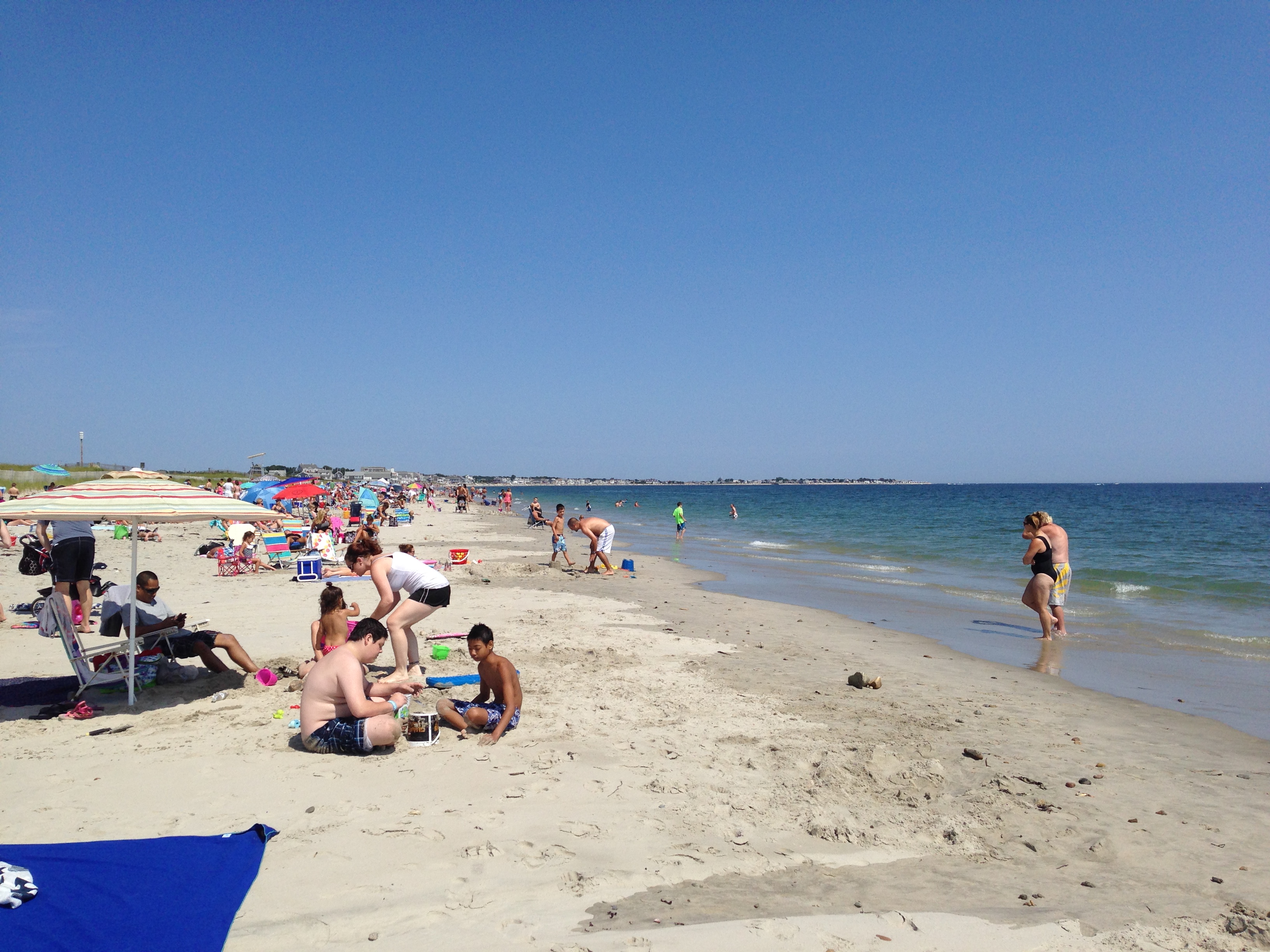
  4. Go to the beach and complete the Sunday Sudoku.  I am man enough to admit that I am often unable to complete the Sunday Sudoku.  However, I’m here to tell you 2014-08-10 11.22.20that I completed it in near-record time today.  Was it the salty air?  Or the knowledge that I didn’t have an unfinished novel to return to?
  5. Read the two-page open-letter to Amazon in the New York Times signed by a bazillion famous authors, telling Amazon to basically quit using them as leverage in their negotiations with Hachette.  Color me unimpressed.  Here is one response to it, via The Passive Voice.
  6. Come up with a couple more ideas for your novel.  Well, yes, that can happen, too.

“Replica” is now free on Kindle!

Not wanting to be left behind, Amazon has now made Replica free for the Kindle.

It is my considered opinion that people like free stuff.  Replica is currently #236 among all free ebooks on Amazon.  It is #4 among Technothrillers, which is how my publisher classifies the novel, although I’d tend to call it a science fiction thriller.  Anyway, grab your copy now before they run out, and please write a customer review when you’ve read the thing.


Kindle Unlimited — threat or menace?

Amid yesterday’s depressing news about bombs and rockets and body parts strewn on the ground, we find out that Amazon has created a Netflix-like Kindle subscription service to compete with Oyster and Scribd.  The Passive Voice has a couple of posts about this, here and here.

For now, Kindle Unlimited appear to offer mostly indie books in the Kindle Select program, plus a sprinkling of mainstream books.  There are none from the Big Five publishers, apparently, unless the author owns his or her own ebook rights.  Presumably participation in Kindle Unlimited becomes yet another item to negotiate with these publishers.

My books aren’t there because the publisher I work with doesn’t like the premise of Kindle Select, which requires selling your ebook exclusively via Amazon.  (BookBub, it turns out, gives preference in its decision-making process to books available from multiple sources.)  Of course, if other ebook vendors collapse, things might change.  And it’s also possible that Amazon could retool the Kindle Select program to make it more attractive to authors who currently aren’t signing up.

Some articles I’ve read think that Kindle Unlimited is another step in reducing author’s incomes, the way Spotify and its ilk are causing problems for musicians.  Beats me.  It also seems likely that, unlike Spotify and Netflix, Kindle Unlimited serves a bit of a niche market: people don’t read as much as they listen to music or watch TV.  Ten dollars a month isn’t much money, but I couldn’t justify spending it, given the amount of reading I have time to do.  And unless the selection were virtually unlimited, I’d probably find the service too frustrating.

Amazon vs. Hachette: The competition starts taking advantage

For all the articles I’ve read about Amazon’s hardball tactics in their battle with Hachette, I have seen little discussion of the risk it’s taking.  They are obviously leaving an opening for the competition.  The Times finally ran an article about what’s happening on that front.  An independent Seattle bookstore hand delivered copies of J. K. Rowling’s new book along with a “Hachette swag bag.”  And the big vendors were also taking advantage:

On Walmart.com on Thursday, “The Silkworm” was one of three books featured on the books’ home page at 40 percent off, or $16.80. Walmart has also promoted the book with ads on Facebook and through mass emails to its customers promoting Hachette books. On Barnes & Noble’s site, “The Silkworm” was one of four of “the week’s biggest books.” A digital edition for the Nook was $11.99. It was Barnes & Noble’s No. 2 best-seller on Thursday. On Bookish, the website that the major publishers started last year to combat Amazon, it was the first “new and notable” release featured, and was selling for $19.60.

This doesn’t mean Amazon will back down, or that it won’t win.  But it surely is taking a risk.

“Who’s going to blink first?” mused Mr. Sindelar, the independent bookseller. “That’s what everyone wants to know. I have no idea. But a lot of our customers told us they were buying from us explicitly as a protest against Amazon. We live in Seattle, where people go to farmers’ markets. They don’t want to limit the diversity of where they shop. I think this has helped people realize that if Amazon is the only option, that’s putting way too much power in one company.”

Publishers as gatekeepers

One of the arguments made on behalf of mainstream publishers in the Amazon-Hachette war is that publishers act as gatekeepers — keeping the junk out of the market and using their editorial skills to improve the books they do let into the market.  Here’s a writer offering up a paean to these gatekeepers in the the pages of Publishers Weekly:

In a market of unlimited book options, how does an audience make choices? At the moment, most of that burden is carried by the book business. The publicity and marketing campaigns and cover designs and flap copy—the things that publishers do—are not just methods of selling books; they’re also readers’ main tools for discovering books. The same is true of the curating and merchandising in stores, and book coverage in the media. Without reviews, staff recommendations, and endcap displays, unlimited choices aren’t narrowed down—they’re overwhelming.

Second, if all books become cheap or free to readers, then writers are unlikely to earn much (if anything). Who will want to write if writing doesn’t pay?

Third, without the gatekeepers, those who do write will create books that are worse—and not just authors whose dormant genius must be drawn out by patient editors, but all authors. Every book that doesn’t first have to get past a gatekeeper or two, or 10, before being put in front of the public will be worse.

He then goes on to describe how much his manuscript was improved in the process of being submitted to agents and publishers.  Well, your mileage may vary; mine certainly did.  As I’ve mentioned elsewhere on this blog, the editorial support and advice I got while I was part of the mainstream publishing world ranged from trivial to nonexistent.  Editors didn’t have the time or the interest or the talent to make my novels better.

Two further points.  First, the main idea behind being a gatekeeper is to keep out the bad stuff. But of course fallible human beings are making judgments that could well be wrong.  The most poignant case of this was John Kennedy Toole’s amazing A Confederacy of Dunces, shunned by mainstream publishers and only published by an obscure university press years after his suicide at the age of 31.

Less poignant, but of more immediate interest to me, is my novel The Portal, which my agent several years ago declined to market, deeming it unpublishable.  So now it’s out there in the self-published universe, and the rave customer reviews are starting to pile up.  Here’s one of many:

A Terrific Read! I wasn’t sure what to expect when I started reading this. Would the promising story idea deflate once it got past the initial set-up, as so many other books do? It definitely did not, and stayed entertaining all the way through – I could not put it down. I have kids around the same age and I really felt for these boys – they’re lost and are doing whatever they can to stay alive, stay together and hopefully get home. Glad the book was complete in itself, but it would be great to see them have more adventures like this. Overall, two very enthusiastic thumbs up!

(The semi-poignant part of this saga is that in the years after my agent rejected it I managed to lose the final draft — no hard copy, no soft copy.  Luckily, my friend Jeff managed to hang on to the final Word file.  Apparently he had more faith in it than I did!)

The second point is that gatekeepers are going to let stuff through that they shouldn’t.  Not all books that come out from major publishers are worth reading, or are as good as they could possibly be. The two most recent Jack Reacher books could certainly have been improved — one by going through another draft, the other by being tossed into the wastebasket.  But apparently the publisher doesn’t care — they just want a Jack Reacher book every year.

I don’t know anything about Emma Donoghue, but her latest novel, Frog Music, is a historical mystery and apparently very different from her previous “worldwide bestseller,” Room.  The Boston Globe hated it, the New York Times hated it, and lots of Amazon and (especially) Barnes & Noble customers also hate it.  My guess is that her publisher, Little Brown (part of Hachette), was hoping for another Room, but this is what the author delivered to them.  So they were stuck publishing something they didn’t much like.  (Also, the Kindle version costs $12.99, which suggests that the e-book pricing wars haven’t quite started yet — it’s actually a buck cheaper at B&N.  So I’d just like to mention that you can buy pretty much all of my e-books for the price of one Frog Music.)

Thoughts on Amazon vs. Hachette

Amazon is apparently playing hardball in negotiations with the publishing conglomerate Hachette, and as usual people are outraged.  As usual, I find it hard to understand what the problem is.  Certainly some Hachette authors will be hurt in the short run, but that’s not really Amazon’s concern.  Authors are always buffeted by changes in the marketplace. There is certainly a possibility that Amazon will become something of a monopsony — the only place to which publishers can sell their books.  But the remedy here is legal, not calling Jeff Bezos an extortionist.

Joe Nocera of the New York Times sums things up like this:

No matter what you think of Amazon’s tactics, they surely don’t violate any laws. It is acting the way hardheaded companies usually act — inflicting some pain on the party in a dispute to move it toward resolution. On some level, the book industry has never fit comfortably in the contours of big business. But over the years, as one house after another was bought by conglomerates, as they merged with each other, as they tried to increase profits with the kind of regularity that pleases Wall Street, they began the process of commoditizing books.

Jeff Bezos? He’s only taking that process to its logical extreme.

One other thing: Nocera mentions Walmart and cable companies as examples of big companies that squeeze its suppliers.  But books are not fungible, the way air conditioners and other things you buy at Walmart are; if you want J.K. Rowling’s latest book, you’re not going to accept a substitute.  And there are way more suppliers for books than there are cable providers for your home.  If Amazon makes it hard for you to buy a Hachette book, Barnes & Noble will happily take your order — and, if they have any brains, they’ll give you a special discount.

The only issue here is that Kindle users are more or less tied to Amazon for their e-books.  But if they find that they can’t get a lot of their favorite titles on the Kindle, maybe they’ll buy a different e-reader.  This is no different from Netflix, which has a large but incomplete selection of movies and TV shows to stream.  If their selection doesn’t satisfy you, you have to go to Hulu or some other vendor.  Not having their books available from every conceivable bookseller is not great for authors and their readers, but it’s also not the end of the world.

Robot price wars — or, why does someone think my novel is worth $2425.70?

In his comment on the previous post, Jeff Carver pointed me to this article from a couple of years ago about an Amazon seller that charged $23 million dollars for an obscure academic book.

Eisen watched the robot price war from April 8 to 18 and calculated that two booksellers were automatically adjusting their prices against each other.

One equation kept setting the price of the first book at 1.27059 times the price of the second book, according to Eisen’s analysis, which is posted in detail on his blog.

The other equation automatically set its price at 0.9983 times the price of the other book. So the prices of the two books escalated in tandem into the millions, with the second book always selling for slightly less than the first. (Not that that matters much when you’re selling a book about flies for millions of dollars).

The incident highlights a little-known fact about e-commerce sites such as Amazon: Often, people don’t create and update prices; computer algorithms do.

I haven’t paid much attention to this sort of thing, since my old books are out of print, and I don’t get any royalties from their sales.  But this got me to take a look at their current prices, and it turns out that you can pick up what’s described as a new hardcover copy of my novel Senator for a mere $2425.70.  I love the extra 70 cents tacked on at the end.  (The book described in the CNN article currently tops out at $9899.00.)

But the “robot price war” explanation for the $23,000,000 book about insect development can’t explain the weird price for Senator, or the equally absurd price I spotted yesterday for The Portal. In both cases, there were no competitive prices — no other “new” hardcovers of Senator, no other used copies of The Portal.  So there has to be something else going on — either bad software, or stupid humans.  Or, I suppose, both.