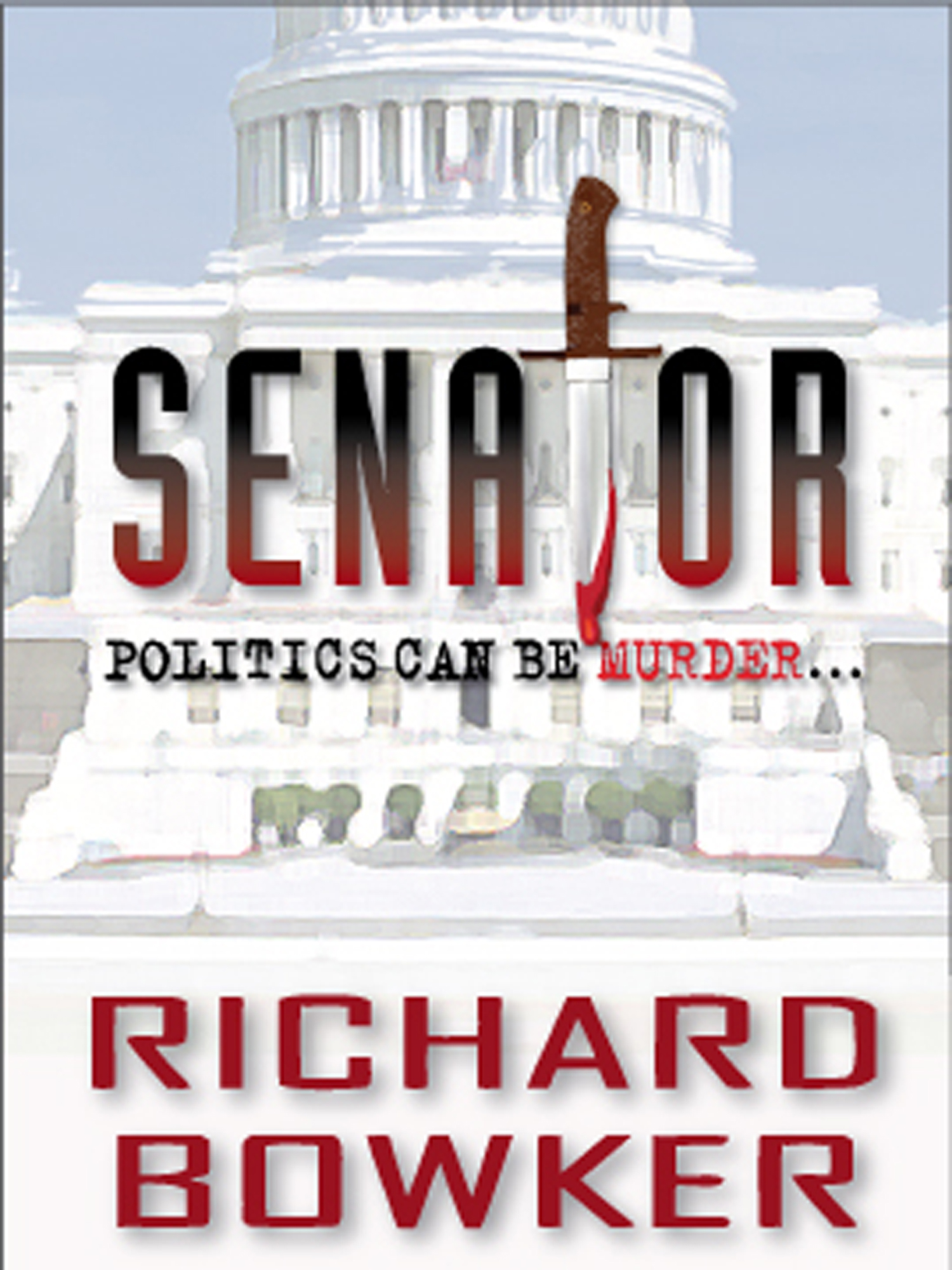
“Senator” is free at Barnes & Noble!

My novel Senator is one of this week’s Free Friday selections at Barnes & Noble, and I just noticed they’ve already changed the price.  Dover Beach was a Free Friday selection a while back; lots of people downloaded it, and it got lots of reviews, most of which were great.  Some of them were, um, interesting.  If you do download and read Senator, please leave a review, and I hope it’s at the reverential/awestruck end of the spectrum.

Senator final cover

In a league where success whithers away like a desiccated flower…

This over-the-top image is from a column in this morning’s Boston Globe talking about the Patriots.  Notice the atrocity perpetrated on the poor word wither.  It’s an odd mistake, because even my WordPress spellchecker alerts me that whithers is not a word.  And it’s not like this is some late-night game writeup that no one has a chance to edit. Has the Globe laid off all its editors?

Meanwhile, people complain about the low editorial standards in ebooks written by independent authors.  And people are correct.  I’ve been reaching such a book, and it’s hard to believe that the author–or anyone–read the words he typed before the book was published. Surely someone would have noticed that he regularly mistook then for than, that he was unclear about the difference between its and it’s, that the tree he was writing about was a cypress and not a Cyprus.  And on and on.

It doesn’t escape my notice, though, that this book is way more successful than any of mine, with dozens of five-star reviews.  It’s true that some reviewers point out the spelling mistakes, but just as many people seem exercised by the author’s errors in military technology.  (An M-16 apparently fires the 5.56 NATO round, not the 7.62 NATO round.  Who knew?)

Standards are slipping everywhere, and no one seems to care.  Also, you kids get off my lawn!

Eternity’s End

My friend Jeff Carver has been running a highly successful BookBub promotion of his epic Nebula-nominated science-fiction novel Eternity’s End. Only 99 cents!  But hurry–this is the sale’s final weekend!

Here’s the star-spanning description:

The Flying Dutchman of the stars! Rigger and star pilot Renwald Legroeder undertakes a search for the legendary ghost ship Impris—and her passengers and crew—whose fate is entwined with interstellar piracy, quantum defects in space-time, galactic coverup conspiracies, and deep-cyber romance. A stand-alone Star Rigger novel, and an excellent starting point for readers new to the Star Rigger Universe. A Nebula Award finalist, from the author of The Chaos Chronicles.

I have always wanted to write novels about interstellar piracy, quantum defects in space-time, galactic coverup conspiracies, and deep-cyber romance.  But somehow Jeff always beats me to it.

High standards in publishing

Here’s a passage from Kurt Vonnegut’s first novel, Player Piano (1952), which imagines a world in which managers and engineers run the world.  A woman is explaining why she has become a prostitute.  Turns out her husband is an unsuccessful novelist.  In this world, all novels are reviewed by the National Council of Arts and Letters.

“Anyway,” said the girl, “my husband’s book was rejected by the Council.”

“Badly written,”  said Halyard primly.  “The standards are high.”

“Beautifully written,” she said patiently.  “But it was 27 pages longer than the maximum length, its readability quotient was 26.3, and–”

“No club will touch anything with an R.Q. above 17,” explained Halyard.

“And,” the girl continued, “it had an antimachine theme.”

Halyard’s eyebrows arched high.  “Well!  I should hope they wouldn’t print it!  What on earth does he think he’s doing?  Good lord, he’s lucky if he isn’t behind bars, inciting to advocate the commission of sabotage like that…”

The writer is ordered to go into public relations rather than fiction-writing, and he refuses.

“This husband of yours, he’d rather have his wife a– Rather, have her–” Halyard cleared his throat “–than go into public relations?”

“I’m proud to say,” said the girl, “that he’s one of the few men on earth with a little self-respect left.”

This comes to mind when reading this story, about Amazon removing a novel from sale because it had too many hyphens:

“When they ran an automated spell check against the manuscript they found that over 100 words in the 90,000-word novel contained that dreaded little line,” he says. “This, apparently ‘significantly impacts the readability of your book’ and, as a result, ‘We have suppressed the book because of the combined impact to customers.’”

Reynolds complained, pointing out “that the use of a hyphen to join two words together was perfectly valid in the English language”, and says he was told by Amazon: “As quality issues with your book negatively affect the reading experience, we have removed your title from sale until these issues are corrected … Once you correct hyphenated words, please republish your book and make it available for sale.”

This article treats the issue humorously, but it does play into the doomsday predictions of writers like Ursula K. LeGuin that Amazon is aiming to control who and what we can read. After all, if they can control the number of hyphens in a novel, can’t they control its readability quotient?

Well, sure. But the difference between our world and Vonnegut’s is that Amazon has competition (at least, so far) and will respond to a public outcry (again, so far).  I can imagine a world where this would be different, but that dystopian future is not here yet.

(By the way, I found Player Piano much less compelling than it was when I first read it.  Vonnegut hadn’t quite found his voice yet.)

We’re on Google Play! And Scribd!

When Google started selling books, their site was a bit of a mess, and my publisher stayed away. Now things look much better, and my publisher is onboard. You can see my books here, along with all the other stuff that comes along when you search for my name. The one weirdness is that their list prices are much higher than you see on other sites, but the prices are discounted so that they end up around those standard prices.

My publisher is also onboard with Scribd, the book subscription service that competes with Kindle Unlimited.  The idea, as we’ve discussed before, is to be a Netflix for books. For $8.99 a month, you can download as many books as you like from their catalog. They have fewer books than Kindle Unlimited, but they’re better quality.  From the author’s perspective, they pay better royalties than Kindle Unlimited and, most important, they don’t demand exclusivity.

Finally, their interace is really nice.  Here’s Scribd’s page for The Portal:

scribd

Amazon vs. Hachette — The Final Blog

Amazon and Hachette have finally settled.  Thank goodness.  The settlement appears to follow the outlines of Amazon’s recent agreement with Simon & Schuster — the publisher can set its own price for its ebooks, but they get better terms if the price is in the range Amazon likes.  This is exactly how it works with independent authors — we only get the lovely 70% royalty if we set our price between a dollar and $9.99.  Anything higher or lower, we only get 35%.

This all seems perfectly reasonable.  Clearly, Amazon wasn’t trying to put mainstream publishers out of business.  It wasn’t trying to destroy literature and “disappear” authors.  It was using its clout as a reseller to get ebook prices where it thought they ought to be, to maximize sales. Business as usual.

Hugh Howey sums it up:

Conflating our love of books with the virtuousness of those who package them is a very bad idea. Publishers belong to multi-national, multi-billion dollar corporations. They need to make profits. They do this by pushing prices up on readers and pushing wages down on writers. I don’t blame them for that (though I do try to pressure them to be more fair to both parties).

The people I blame are those who should do their homework, understand this business better, and get on the right side of these debates. The real damage has been done by those who refuse to fight for the little guys; the real damage has been done by the parties who seem to think that publishers can do no wrong and that Amazon can do no right.

This includes the New York Times and many other traditional media outlets. It includes The Authors Guild and Authors United. By waging a PR campaign without understanding the issues (often stating things that were patently untrue), these parties caused severe damage and helped to prolong this negotiation. They aligned themselves with a party that has broken the law to raise prices and refuses to pay authors a decent digital royalty. I don’t think this damage is done intentionally or with malice but by simple ignorance.

The Times’ public editor weighs in on the paper’s Amazon Derangement Syndrome

It doesn’t surprise me that Margaret Sullivan, the public editor New York Times, has finally seen fit to weigh in on its absurdly one-sided coverage of the Amazon/Hachette dispute.  The column’s title, “Publishing Battle Should Be Covered, Not Joined” sums up her opinion.  The reporter, David Streitfeld, insists that he’s just covering the controversy.  Sullivan isn’t quite buying it:

MY take: It’s important to remember that this is a tale of digital disruption,not good and evil. The establishment figures The Times has quoted on this issue, respected and renowned though they are, should have their statements subjected to critical analysis, just as Amazon’s actions should be. The Times has given a lot of ink to one side and — in story choice, tone and display — helped to portray the retailer as a literature-killing bully instead of a hard-nosed business.

I would like to see more unemotional exploration of the economic issues; more critical questioning of the statements of big-name publishing players; and greater representation of those who think Amazon may be a boon to a book-loving culture, not its killer.

That sounds about right to me.

Things I don’t understand about the war between Amazon and Hachette

The dispute between Amazon and Hachette has continued long enough that it probably qualifies as trench warfare.  Everyone seems to have an opinion about the conflict, even though neither Amazon nor Hachette is being very specific about their positions.  Amazon clearly wants to lower ebook prices, and Hachette wants to keep them higher to avoid cannibalizing print sales.  Amazon has flexed its muscles by refusing to discount books by Hachette authors and limiting their availability, among other things.

OK, fine.  I can understand how authors, even non-Hachette authors, could be angered and possibly worried by Amazon’s actions.  But here are some things I don’t understand.

Why is the New York Times presenting such a one-sided view of the war?  Here is their latest article, titled “Literary Lions Unite in Protest over Amazon’s E-book Tactics”.  Well, I suppose it’s news that authors like Philip Roth and Ursula K. LeGuin have come out in opposition to Amazon, but you will search in vain in the article for a quote from anyone supporting Amazon.  It’s not like they are hard to find.

Why are these authors so certain about Amazon’s evil motives?  Here is a quote from LeGuin:

“We’re talking about censorship: deliberately making a book hard or impossible to get, ‘disappearing’ an author,” Ms. Le Guin wrote in an email. “Governments use censorship for moral and political ends, justifiable or not. Amazon is using censorship to gain total market control so they can dictate to publishers what they can publish, to authors what they can write, to readers what they can buy. This is more than unjustifiable, it is intolerable.”

Huh?  The matter at hand is a contract dispute in which Amazon wants to sell Hachette’s books at a lower price.  How do we get from there to censorship and total control of publishers, authors, and readers?  And how is Amazon making books impossible to get?  I went looking for a book to buy my lovely wife for her birthday.  It happened to be published by Little Brown, a Hachette company, so it wasn’t immediately available.  I went over to the Barnes & Noble site and found it there.  I didn’t want to pay extra for shipping to get it in time, so I stopped in at the Barnes & Noble store and got it there.  Slightly more expensive and more inconvenient than getting it shipped to me by Amazon Prime, but no big deal.

Why don’t the authors focus on the more basic issue?  Lee Child mentions it in this colloquy with J. A. Konrath: Why does Amazon care so much about ebook prices?

One thing few people know about me is I love ironing.  I just moved, which was a great excuse for a new ironing board.  I checked Amazon, naturally, who had boards ranging from $18 all the way to $220.  Has Amazon approached the expensive manufacturer and said, “C’mon, pal, America needs cheaper ironing boards!  Think of the children!”  No, it said, “Sure, throw it up on the site and we’ll see if anyone’s interested.  We trust our customers to decide for themselves.” . . . Can you explain in detail why the e-book market shouldn’t operate the same way as the ironing board market or the amplifier market?  Why do e-book buyers – uniquely – need Nanny Amazon to save them from deciding for themselves?  Are books special?  Are they different?  Or are there others factors in play?

Well, I don’t know the answer to that.  Why does Amazon care so much about ebook prices?  I assume it’s because of the Kindle.  Amazon wants t ebooks attractively priced so people will want to read them on this device that Amazon sells.  But I don’t know.

Why do self-published authors go against their own self-interest by supporting lower ebook prices for books from traditionally publishers?  If Hachette wants to charge $12.99 for their ebooks, isn’t that good for those of us charging $4.99 and less for books that are every bit as good as Hachette’s?  But most self-published authors that I’m aware of are firmly on Amazon’s side.  One reason, I suppose, is that Amazon has done right by these authors, and as a result they approve of Amazon’s model — lower prices leading to more sales.  More people reading more books is just a good thing.

It sure is an interesting time in the world of publishing.

Copywriting for dummies: tooting my own horn

One of the challenges of being an independent author is that you’re responsible for everything associated with publishing your book, including editing, cover design, and marketing.

I haven’t outsourced writing the marketing material for my recent novels.  Hey, I’m a writer!  I can do that!  But it ain’t easy.  Your job is to write a couple hundred compelling words explaining why the world should be thrilled to read your book.  Where to begin?

Anyway, here’s my first attempt at marketing copy for Where All the Ladders Start.  Does this make you want to part with three or four of your hard-earned dollars?

What I wanted to say was this:

The novel is about religion and family, not necessarily in that order.  It involves two separate cases, which causes it to be about a third longer than the first two novels in the Last P.I. series.  In the course of the novel, our protagonist reads the following books:

  • A Tale of Two Cities
  • Middlemarch
  • Great Expectations
  • An unnamed Harry Bosch novel
  • Selections from the collected poems of William Butler Yeats

His friend Doctor J, who has very different tastes in literature, reads the following books:

  • Civilization and Its Discontents
  • A Genealogy of Morals
  • The Origins of Consciousness in the Breakdown of the Bicameral Mind

And the following things happen to our hero:

  • He is whacked on the head with a rock
  • He fights off a pack of feral humans in the wilds of Somerville
  • He is arrested for murder
  • He is shot at twice
  • He skins his knee
  • He rips his new pants climbing a fence
  • He is lectured to by several people about the meaning of history and the danger of making bad career choices
  • Against his better judgment, he travels to New York City

But most of that didn’t make it into the copy.

Maybe I should at least try to say something about Middlemarch?