Unknown's avatar

About Richard Bowker

Author of the Portal series, the Last P.I. series, and other novels

Hardly a man is now alive…

This is the 240th anniversary of Paul Revere’s Ride.  Longfellow’s poem starts like this:

Listen, my children, and you shall hear
Of the midnight ride of Paul Revere,
On the eighteenth of April, in Seventy-five;
Hardly a man is now alive
Who remembers that famous day and year.

It was written in 1861, on the eve of the Civil War, so personal memory of the Revolution had just about died out.  The poem itself is pretty bad, but Longfellow did succeed in his aim of creating a national myth.  No one was building statues of Revere before Longfellow’s poem.

(“2010 NorthEnd Boston 4621037522” by Richard Wood from Tacoma, Washington, USA – Boston 2010-05-02-15. Licensed under CC BY 2.0 via Wikimedia Commons)

While I have your attention, let me recommend David Hackett Fisher’s book Paul Revere’s Ridewhich is just fabulous.

Percy Sledge may be dead, but his song will never die

Here is “When a Man Loves a Woman” sung (pretty well) by someone in the Chinese version of “The Voice”:

OK, fine, but there will never be anything like the original:

Hearkening back to our discussions of first person vs. third person: notice how the song starts out in the third person, and then abruptly changes into the first person, and suddenly becomes infinitely more powerful.  Percy isn’t talking in generalities now; he is talking about himself.  And therefore he’s talking about each of us.

RIP.

No! Not an unreliable narrator!

In my post about first person narrative, I forgot to mention the sub-genre of unreliable first-person narrators.  In my misspent book-reading youth I was quite enamored of such contrivances, even though I’ve never bothered with them in my own writing.  An obvious example of an unreliable narrator is Huckleberry Finn, who often doesn’t quite understand the events or people he’s describing, so readers have to intuit what’s really happening.

But that’s pretty straightforward.  More interesting, to me at any rate, are narrators who at first seem to be reliable, but whom we gradually realize aren’t, thereby requiring us to reassess the entire story.  Just typing that sentence makes me want to re-read Nabokov’s Pnin and Pale Fire, which blew me away when I first read them decades ago.

I watch movies more than I read books nowadays (they’re shorter!), and unreliable narration seems to show up constantly in films and even in TV shows.  Mad Men does it all the time.  In last week’s episode (the first episode of the last half-season), we suddenly see one of Don’s old flames modeling a chinchilla coat for him.  We are never told that this didn’t actually happen–we just have to figure out what’s going on in reality and what’s going on in Don’s somewhat enigmatic imagination.

The one time I really didn’t expect unreliable narration was in Hitchcock’s movie Stage Fright.  This is a straightforward Hitchcock thriller, except for an early flashback that (spoiler alert) turns out to be a false version of a murder.

No! Not an unreliable narrator!

IMDB tells us that audiences were baffled and then enraged by this device, and I think I read somewhere that Hitchcock later called it the worst directorial decision he made in his career.  It certainly gives you a jolt.

As I said, I don’t do this sort of thing in my writing, but I find myself close to the Huckleberry Finn style of unreliable narration sometimes in The Portal and its sequel, both of which are narrated by a young teenager.  Sometimes, to be true to his character, he can’t be allowed to quite understand what’s going on.

I hope this doesn’t enrage my readers.

So that’s what my novel is all about!

When I’m writing a novel, there usually comes a point when I realize what it’s all about.  Not the details of the plot–working them out is a constant process–but the reason I’m bothering to write it.  It’s a bit odd that I never seem to figure this out before I starting in on the thing, but there you have it.

Anyway, I’m deeply into the first draft of the sequel to my novel The Portaland I find that I have suddenly reached this point.  Which is a considerable relief, actually.  Now I’m not just telling a story; I’m telling a story that matters to me.

The fluffy bunnies are here to get their revenge

My friend Craig Shaw Gardner has ever-so-slowly been releasing his funny fantasy novels as ebooks.  His Cineverse Cycle has finally arrived, and that’s a good thing for humanity.  Here’s the overall plot summary, such as it is:

Roger Gordon’s life was dull until a Captain Crusader Decoder Ring unlocked a door to the world of B-movies. Now his life is filled with adventure as he frolics through the silver screen’s weirdest westerns, thrillers, and romances.

The three books are Slaves of the Volcano God, Bride of the Slime Monsterand Revenge of the Fluffy Bunnies.  I have previously expressed my opinion that Revenge of the Fluffy Bunnies is the best book title in the history of Western Civilization.  I stand by this opinion. Here’s its cover:

So why are you just sitting there like a doofus reading my stupid blog?  Go enter the Cineverse!

God’s Bankers and Pontiff: Too Improbable for Fiction

A major subplot of my twisty thriller Pontiff involves the secretive Vatican Bank and a new pope’s desire to clean it up.  There’s a new book out called God’s Bankers by Gerald Posner that goes into 700 pages worth of detail on just this subject.  It’s been getting rave reviews all over the place, including the New York Times.  Much of what Posner talks image002about is familiar to me from my reading when I was working on Pontiff — for example, this:

Posner’s gifts as a reporter and story­teller are most vividly displayed in a series of lurid chapters on the ­American ­archbishop Paul Marcinkus, the arch-Machiavellian who ran the Vatican Bank from 1971 to 1989. Notorious for ­declaring that “you can’t run the church on Hail Marys,” ­Marcinkus ended up ­implicated in several sensational scandals. The biggest by far was the collapse of Italy’s largest private bank, Banco ­Ambrosiano, in 1982 — an event ­preceded by mob hits on a string of investigators looking into corruption in the Italian banking industry and followed by the spectacular (and still unsolved) murder of Ambrosiano’s ­chairman ­Roberto Calvi, who was found hanging from scaffolding beneath Blackfriars Bridge in London shortly after news of the bank’s implosion began to break. (Although the Vatican Bank was eventually absolved of legal culpability in Ambrosiano’s collapse, it did concede “moral involvement” and agreed to pay its creditors the enormous sum of $244 million.)

But I didn’t know this part, which seems too improbable to put into a thriller:

In one of his biggest scoops, ­Posner ­reveals that while Marcinkus was ­running his shell game at the Vatican Bank, he also served as a spy for the State Department, providing the American ­government with “personal details” about John Paul II, and even encouraging the pope “at the behest of embassy officials . . . to publicly endorse American positions on a broad range of political issues, ­including: the war on drugs; the ­guerrilla fighting in El Salvador; bigger defense budgets; the Soviet invasion of Afghanistan; and even Reagan’s ambitious ­missile defense shield.”

I don’t suppose I’ll have the time or the energy to read the book.  The story makes wonderful fodder for thrillers, but it’s pretty depressing to realize that this is real life.

First person, third person

I continue to intermittently make my way through Lee Child’s oeuvre, and I recently listened to The Enemy, from 2004.. It has much of what I’ve come to expect from a Jack Reacher novel: a crackerjack (if occasionally absurd) plot, much gratuitous violence, well-developed (if occasionally absurdly villainous) characters, and a ton of background information, some interesting, some not so much (for example, there is a multi-page essay on crowbars that I could have done without).

What’s different about The Enemy is that it’s told in the first person (and, less importantly, it’s a prequel, taking place back in 1990, when he was still in the military). I didn’t know you could mix third-person and first-person narrative in a series!  Does anyone else do it? It works just fine, although I always have the same reaction to first-person stories like The Enemy: when is the narrator writing this story down?  Why?

This sort of baffles me in the books in my first-person Last P.I. series (the most recent of which, Where All the Ladders Start, is available at fine online retailers everywhere!). Walter’s friend Art, proprietor of Art’s Filthy Bookstore, is always badgering him to write up his cases, and Walter is always making excuses about why he can’t do it.  But in fact, here we are reading the first-person narratives.of those very cases.   How did that happen?  Is Walter lying to Art?  Does the writing take place some time in the future?  No explanation is given, perhaps because no explanation is possible.

I’m pretty sure I’m the only one who worries about stuff like this.

Spring, the sweet spring

Here’s what Thomas Nashe has to say about spring:

Spring, the sweet spring, is the year’s pleasant king,
Then blooms each thing, then maids dance in a ring,
Cold doth not sting, the pretty birds do sing:
Cuckoo, jug-jug, pu-we, to-witta-woo!

The palm and may make country houses gay,
Lambs frisk and play, the shepherds pipe all day,
And we hear aye birds tune this merry lay:
Cuckoo, jug-jug, pu-we, to-witta-woo!

The fields breathe sweet, the daisies kiss our feet,
Young lovers meet, old wives a-sunning sit,
In every street these tunes our ears do greet:
Cuckoo, jug-jug, pu-we, to witta-woo!

 Presumably he wasn’t looking out my front door when he wrote the poem:
2015-03-21 07.32.43
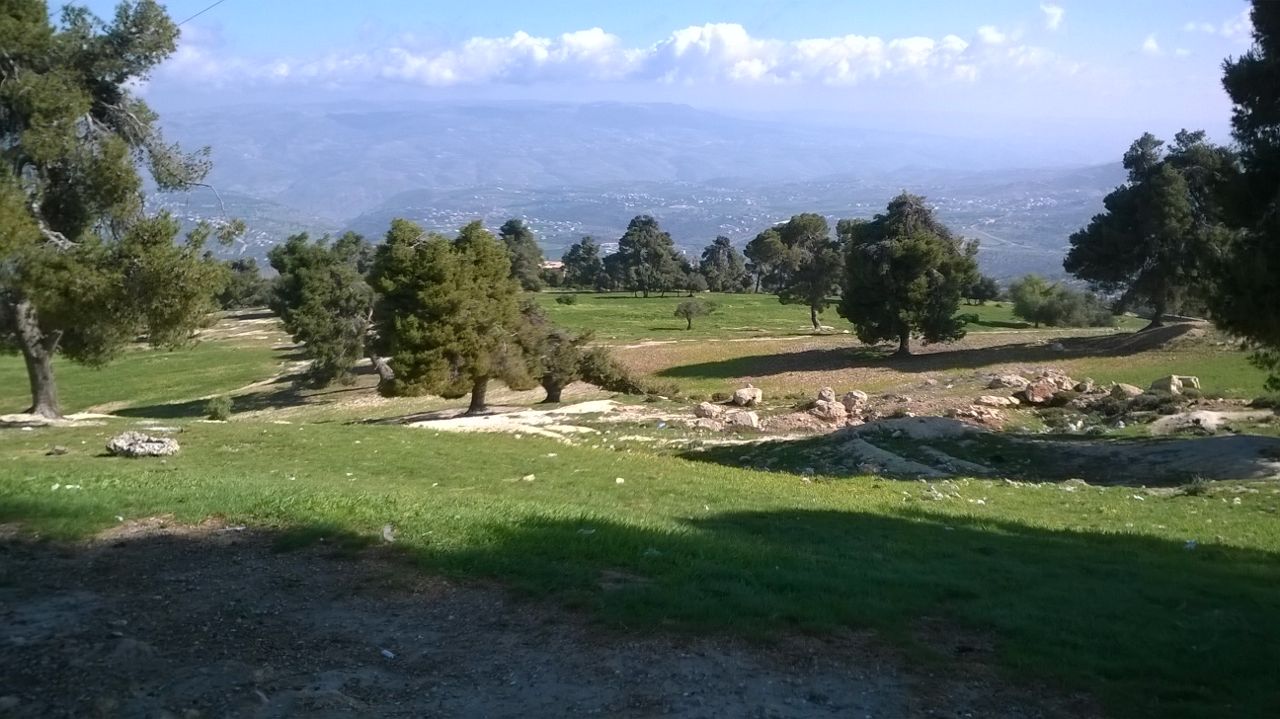
Here’s a view of spring from my son in the north of Jordan today.  Maybe this is what Nashe was thinking of:
2015-03-21 07.28.22
The weather is bound to get better.  Isn’t it?

The Maysles Brothers and “Salesman”

The documentary film-maker Albert Maysles has died, and the media is awash in appreciations.  I’m no expert on documentaries, but the Maysles brothers’ first major film, Salesman, has haunted me ever since I first saw it.  It’s about four door-to-door Bible salesmen from the Boston area in the late 1960s.  They sell Bibles in a grimy Boston winter; they go to a Bible-selling convention in Chicago; they sell Bibles in Florida.  Gradually the film starts to focus on one of the salesmen, Paul Brennan, “The Badger”, who has lost his Bible-selling mojo.  We see him struggle; we see the other salesmen try to help him.  We yearn for him to succeed.

Here is the description of the movie from the Criterion web site:

A landmark American documentary, Salesman captures in vivid detail the bygone era of the door-to-door salesman. While laboring to sell a gold-embossed version of the Good Book, Paul Brennan and his colleagues target the beleaguered masses—then face the demands of quotas and the frustrations of life on the road. Following Brennan on his daily rounds, the Maysles discover a real-life Willy Loman, walking the line from hype to despair.

But, you know, Brennan isn’t really Willy Loman.  There is no dramatic ending to his story.  Nothing is resolved, because in real life, life just goes on.  But it all seems somehow indescribably weird and poignant at the same time.

Here is a brief scene from the movie on YouTube.

Isn’t that strange?  Why did the husband put on that awful version of “Yesterday”?  If he didn’t want his wife to buy the Bible, why didn’t he just say so?  Or did he just like his music loud?  I don’t get it, but it happened, and life goes on.

Part of Salesman‘s appeal for me, I suppose, is that I grew up in Boston (as did the Maysles) and I knew people like Paul Brennan and the other salesmen.  But there’s something universal about the movie–and something unforgettable, for me at least.  Their later movie Grey Gardens is much more famous and is also unforgettable, but that’s at least partially because of the over-the-top characters it focuses on.  In Salesman, the characters are as ordinary as you and me.  And forty years later, I still remember them.