Still, there’s precious little reason to think the Red Sox are going to create much excitement this season. Mike Napoli and Ryan Dempster and Jonny Gomes may be good players and good guys in the locker room, but they aren’t going to sell tickets and make you turn on NESN.
Jackie Bradley Jr. was going to create the excitement. Except that Jackie played a bit at the start of the season and proved that he wasn’t quite ready for prime time. (Oddly, I was right about the new players not selling tickets — the team rarely sold out Fenway.)
Anyway, it’s nice for a championship to come out of nowhere. And it’s nice to feel that that the ghosts of the past have been completely exorcised. When Farrell came out to talk to Lackey in the seventh inning and left him in, my Twitter feed exploded with references to Grady Little. (If you don’t know what I’m talking about, you haven’t been a Red Sox fan for long enough.) But nothing bad happened, the Red Sox won, and the Duck Boats ride again.
Time to change out my header image and return to our regular programming.
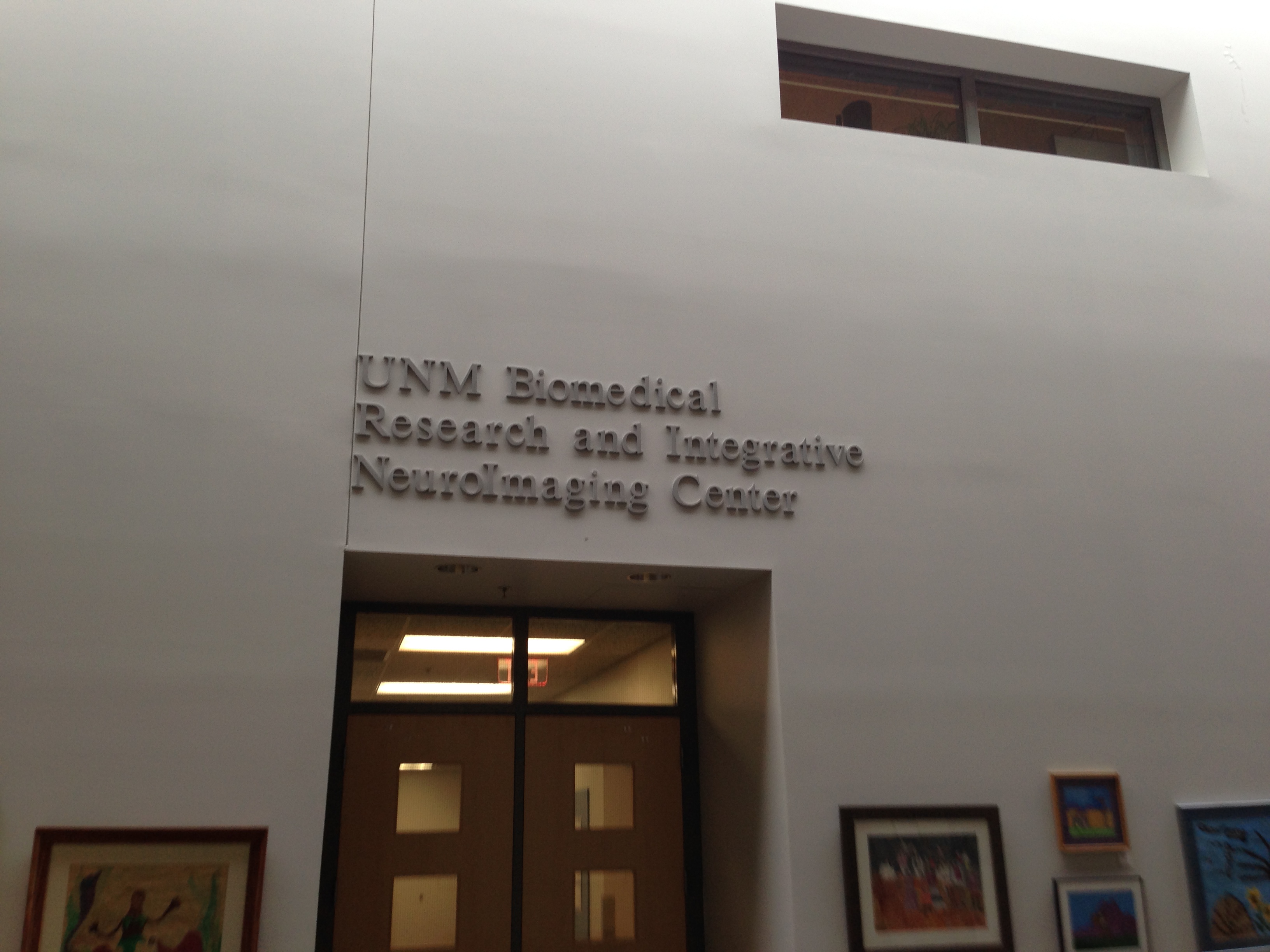
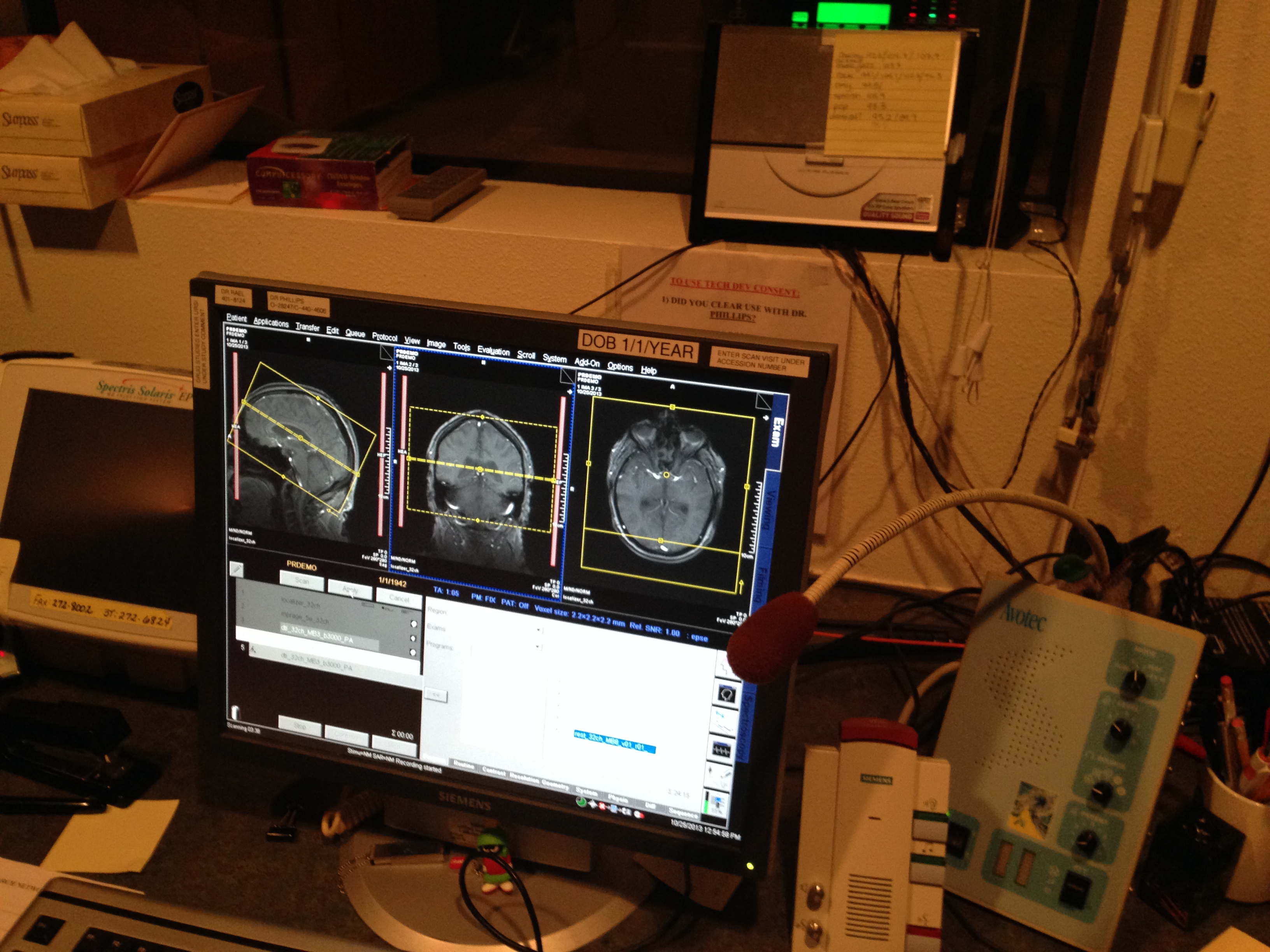
For reasons that are too complicated to go into I found myself at the University of New Mexico a couple of days ago. Go Lobos! Specifically, I spent an interesting morning at this place:Here’s a friend undergoing magnetoencephalography (just for fun):And here’s the brain of another friend undergoing a functional MRI (again, just for fun — we have an odd idea of fun):But enough of the brain stuff! Here we are in funky Madrid, New Mexico (accent on the first syllable), on the scenic route between Albuquerque and Santa Fe:They sell lots of interesting stuff in Madrid!From there we made our way to Santa Fe Plaza, with all the tourists:And here is the courtyard of the lovely New Mexico Museum of Art:Finally, here’s a photo of a Georgia O’Keeffe painting from the Georgia O’Keeffe Museum. Isn’t it gorgeous?
At work today, someone said “We’re really behind the gun on this project.” Hmm. We all got the idea, but the idiom wasn’t quite right. Seems like a mixture of “under the gun” and “behind the eight ball.”
It’s hard to tell from Google how common this usage is, since there are movies and songs that include the words “behind the gun.” But it’s not uncommon. For example:
But what if we’re behind the gun, people are coming over tonight and we have a full day of work ahead of us?
This sort of thing has a name: an idiom blend. This post gives some other examples: page-burner, “It’s not rocket surgery,”“That’s the way the cookie bounces.” Lots of these are funnymalapropisms, but “behind the gun” isn’t quite that bad. Like “I have a pit in my stomach,” it may even work its way into standard usage.
I suppose we should have sympathy for sports writers, forced to come up with copy against a tough deadline. But surely Christopher Gasper of the Boston Globe can do better when he says that the umpire, incredulously, called Pedroia out after the Cardinal shortstop clearly dropped the ball. America was incredulous; the call was incredible.
I wonder if people misuse the word because it sounds like a tonier version of “incredible” — like restive and restless. In any case, it shouldn’t be that hard to get it right, if that’s what you’re paid for. Harrumph.
Other than that, a Red Sox fan had little to complain about in the wake of Game 1.
I would think that, the older I get, the more blasé I would become about the World Series and the Superbowl and all the other sports playoffs. It’s only a game. And it has nothing to do with me. But I find that the games are getting harder and harder for me to watch. Because the stakes are so high for the players. And they are people too.
I blame 1986. People in my neck of the woods remember the 1986 baseball playoffs mainly for the Bill Buckner error in Game 6 of the World Series. Here’s a guy who had an illustrious career ruined because he had a bad back and couldn’t make a routine play when it mattered the most, so the Red Sox had to wait another 18 years to win the World Series. That’s bad enough. But then there’s Donnie Moore. In the ALCS, the Angels were within one strike of defeating the Red Sox and advancing to their first World Series. And then:
The pitch…To left field and deep, and Downing goes back, AND IT’S GONE! Unbelievable! Astonishing! Anaheim Stadium was one strike away from turning into Fantasyland! The Red Sox lead 6-5! You’re looking at one for the ages here. The Red Sox get four runs in the ninth on a pair of two-run homers by Don Baylor and Dave Henderson. —Al Michaels, ABC-TV
Donnie Moore, an All Star that year, made that pitch. He stayed in the game and eventually lost on a Henderson sacrifice fly in the bottom of the 11th. I remember watching that game. What a thrill! The Red Sox then went on to win two more games back at Fenway and advanced to the ill-fated World Series.
Moore was never the same pitcher after that. Angels fans booed him every time he took the field. Three years later, out of baseball after 14 years in the Major Leagues, he shot his wife in front of his children and then killed himself.
This is serious stuff. I no longer remember the names of the Tiger relief pitchers who threw the pitches that Ortiz and Victorino hit for the grand slams in the ALCS. I just hope those pitchers survive to enjoy the kind of reception that Bill Buckner had on Red Sox opening day in 2008:
Young people nowadays? They end their sentences with a rising intonation? So that every sentence sounds sort of like a question?
So, I was listening to a woman on a podcast, and she was describing her mixed feelings about a movie:
“I liked it — question mark?”
She felt the need to verbalize the punctuation mark, because her typical speech pattern couldn’t convey her doubt about whether she actually liked the movie — because every sentence she spoke seemed to convey a bit of doubt anyway.
Another punctuation mark that gets verbalized is the slash used as a conjunction, as in “I walked/ran all the way home.” But I hadn’t realized how far this had gone until my son sent me this post from the Chronicle of Higher Education. Slash has become a word used in everyday writing as well as speech — a new conjunction or conjunctive adverb. The following usage is straightforward: the word is just substituting for the punctuation mark:
Does anyone care if my cousin comes and visits slash stays with us Friday night?
But the following usage, as the author points out, is more interesting:
I really love that hot dog place on Liberty Street. Slash can we go there tomorrow?
Or even:
JUST SAW ALEX! Slash I just chubbed on oatmeal raisin cookies at north quad and i miss you
Here slash has wandered far from the standard use of the equivalent punctuation mark. It is introducing an afterthought or topic shift, without much in the way of a relationship to the previous sentence. That’s super-cool and awesome! (The word chubbed is also super-cool and awesome, by the way.)
The writer concludes:
The emergence of a new conjunction/conjunctive adverb (let alone one stemming from a punctuation mark) is like a rare-bird sighting in the world of linguistics: an innovation in the slang of young people embedding itself as a function word in the language. This use of slash is so commonplace for students in my class that they almost forgot to mention it as a new slang word this term. That young people have integrated innovative slash into their language while barely noticing its presence is all the more reason that conjunctive slash might have staying power.
All of this reminded me of Victor Borge’s famous phonetic pronunciation routine, which YouTube kindly provides:
Life would be much more interesting if we all talked like that.
Jerry Coyne has a post on a study published in Science about how reading literary fiction makes people more empathetic. (He uses the word empathic, which looks to be the same thing, but the WordPress spellchecker objects to it.) Here is the New York Timeswriteup of the study, which uses empathetic.
[The study] found that after reading literary fiction, as opposed to popular fiction or serious nonfiction, people performed better on tests measuring empathy, social perception and emotional intelligence — skills that come in especially handy when you are trying to read someone’s body language or gauge what they might be thinking.
Coyne finds the study unconvincing, as does Steven Pinker in a tweet. The significance levels aren’t all that high, and the empathy level is measured immediately after reading — there is nothing to suggest that the effect, if real, is permanent. And one of the tests of empathy used — where you look at pictures of people and guess what emotions they are expressing — seems really unlikely to be affected by the kind of prose you just read.
The study offers the kind of results that English teachers and writers and fiction lovers will like. Which provides plenty of reason to treat it with a bit of suspicion — it’s easy to be convinced by studies that prove what you already are sure is true.
But in any case, does it matter? I suppose I’d like to be able to tell my kids that they should read good fiction because it will improve their emotional intelligence or social perception or whatever. But even if it does no such thing, they ought to read good fiction because it will make their lives better. That’s my story and I’m sticking to it.
Here is Gillette Stadium in Foxboro at around 7:30:
Here is Fenway Park in Boston about four hours later:
A guy at work has season’s tickets for both the Red Sox and the Patriots. He went to the Saturday night game where the Red Sox managed just one hit, and he left the Patriots game before Brady’s spectacular pass. And he gave away his tickets to the now legendary Big Papi Grand Slam game. That’s life . . .
The other day I had to introduce a couple of new characters in my novel and, as usual, this meant I had to pause and figure out what their names should be. Why is this so hard?
This rule covers some of the basics–don’t confuse your readers with names that are too similar to each other; don’t give a character an ethnic name unless the ethnicity matters… But there’s a deeper level at which a character’s name may feed into his characterization. Or not.
Many names have connotations, and a writer needs to be sensitive to them. “Brittany” says something to readers about a character, and “Edith” says something different. That doesn’t mean you can’t have an Edith who is trailer trash. But if that’s what you’re up to, you’d better take a little time and explain what you’re doing.
So, the basic question is whether you want the character’s name to carry some of the weight of the characterization. The more important the character, the less you want to rely on this, I think. Even Dickens pulled back from his wonderfully evocative names–Havisham, Magwitch, Gradgrind–when it came to his most important or serious characters–Copperfield, Brownlow, Summerson.
Anyway, after ten minutes of pondering the state of my fictional universe, I welcomed Mrs. Fitz and her son Biff into it. Will they survive my rewrites and second thoughts? Only time will tell.






 Richard Bowker