Writers in movies: Third Star

Haven’t done one of these in a while.

Third Star is an indie movie from 2010 starring Benedict Cumberbatch and three other young British actors.  The main character is a 29-year-old aspiring writer who is dying of cancer.  His friends take him on one last journey to a remote bay in Wales.  Along the way they laugh, they cry, and they learn something about life, about friendship, and about loss.

I know what you’re thinking: This is just the kind of movie I want to avoid at all costs.  And you would be right.  The movie is nicely photographed, nicely acted, it contains no superheroes, no one meets cute . . . but it still feels very trite, very paint-by-numbers.  Everyone has his own flaw, his own secret . . . and yet, at the end, we don’t really feel that we know them; instead, we feel manipulated by a screenwriter without anything deep to say.

There are actually two writers in the movie: the dying-of-cancer-so-he-will-never-achieve-his-life’s-ambition writer and the talented-writer-who-could-never-be-as-good-as-his-famous-father-so-he-gave-it-up writer. But there’s never a moment when we really see them as writers.  Cumberbatch’s character feels a generalized sense of loss, of leaving this world too soon, but he never feels this loss as a writer, with stories left untold, with characters left undescribed.

Which is not to say that I can’t empathize with that loss.  I sold my first novel when I was about 30; by that time Cumberbatch’s character would have been dead.  And I recall that one of my strongest reactions was one of relief.  I would never have to think of myself again as an aspiring writer.  Instead, I could now think of myself as a published author.  However unsuccessful my writing career might be, no one would be able to take that away from me.  It surely would have been a cruel fate to be denied that satisfaction. I was hoping I’d get some sense of this from Third Star, but alas, I enjoyed The Two Mrs. Carrolls more.

What you can do when you’re not writing

  1. Go for a run and listen to Chopin.  Listening to Chopin doesn’t generally make you run faster, but for me, running is about survival, not speed.
  2. Sit on your deck, drink a Little Sumpin’ ale, and read Middlemarch.  This ale is the perfect complement to a long Victorian novel.  Middlemarch doesn’t have the humor and passages of stupendous genius that mark a Dickens novel, but it also doesn’t have the absurd coincidences and simpering female characters. Reading the novel, though, is taking me about as long as writing my own.
  3. Watch The Two Mrs. Carrolls, an entertaining but incredibly bad 1947 thriller starring Humphrey Bogart (a tad out of character playing an insanely murderous artist) and Barbara Stanwyck, who only gradually comes to the realization that the artist she married is also insanely murderous. It features a ridiculously primitive application of Chekhov’s gun — “Here, I happen to have this gun.  Why don’t I leave it with you in case the Yorkshire strangler happens by?”  It also features what I’ll call the principle of “Barbara Stanwyck’s gun” — in a movie of a certain era, if the female lead is pointing a gun at the villain at the climax, she will find herself unable to shoot the guy, for no apparent reason.  The villain will easily disarm her, but the hero will arrive in the nick of time to save her from certain death.
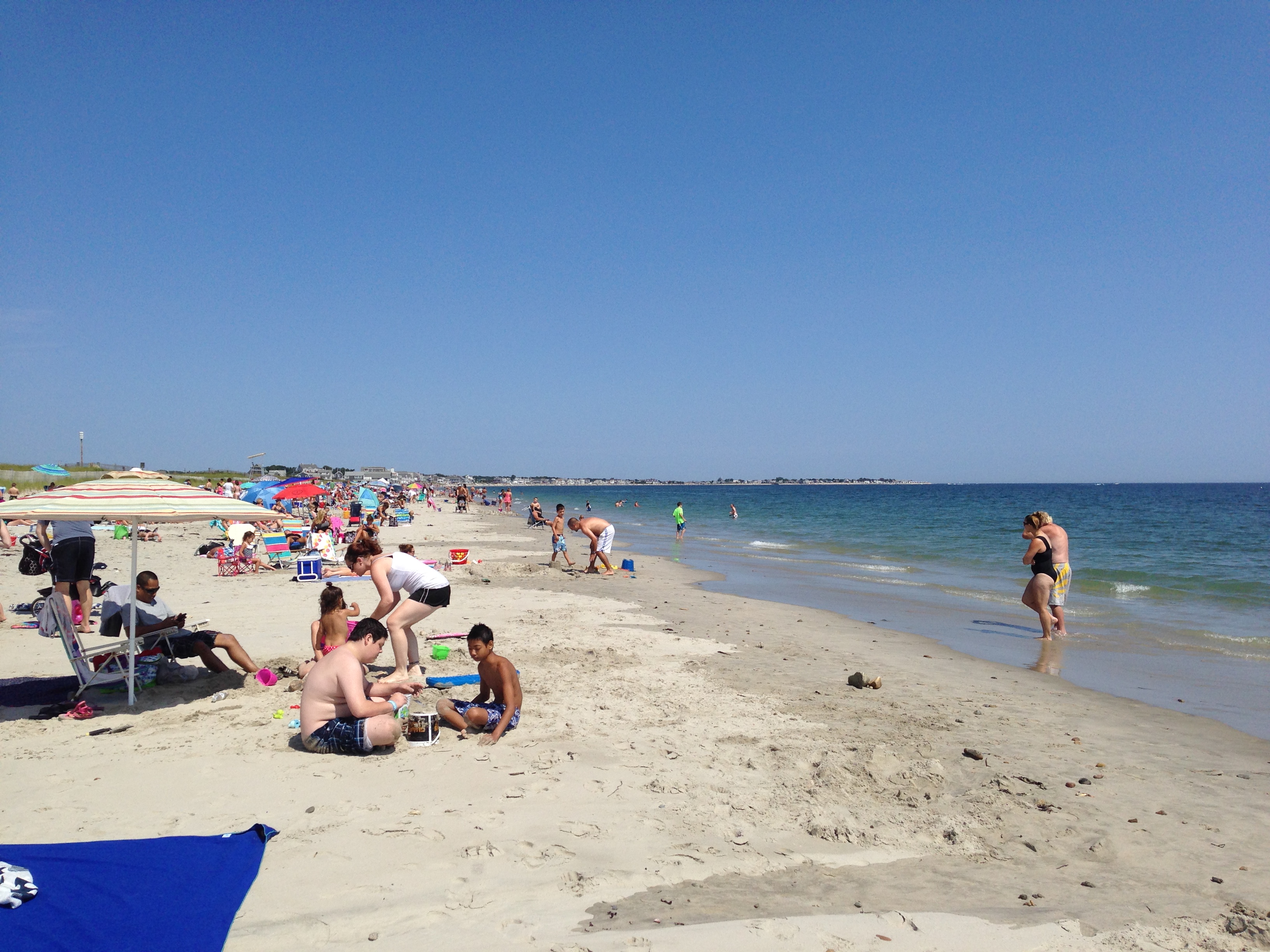
  4. Go to the beach and complete the Sunday Sudoku.  I am man enough to admit that I am often unable to complete the Sunday Sudoku.  However, I’m here to tell you 2014-08-10 11.22.20that I completed it in near-record time today.  Was it the salty air?  Or the knowledge that I didn’t have an unfinished novel to return to?
  5. Read the two-page open-letter to Amazon in the New York Times signed by a bazillion famous authors, telling Amazon to basically quit using them as leverage in their negotiations with Hachette.  Color me unimpressed.  Here is one response to it, via The Passive Voice.
  6. Come up with a couple more ideas for your novel.  Well, yes, that can happen, too.

Draft 3 of my novel is complete — am I done yet?

Probably not.  But at least now I have a draft I can give to folks without having to apologize and explain about all the stuff I’m going to fix, really, no foolin’, I know I didn’t explain what happened to the second car–I’ll get to that.

This draft took just about a month.  It involved changing a basic plot line, which involved changing the characterization of a major character.  Plus the usual tinkering.  Everything seems to make sense now, at least to me.  At least today.  So I’m declaring a partial victory.

Why I’ll never get rich from writing, part xxxvii

This is from Hugh Howey, via The Passive Voice — the way to become successful in online publishing:

The idea is this: Annual releases are too slow to build on one another. And not just in the repetition of getting eyeballs on your works, but in how online recommendation algorithms work. Liliana suggests publishing 5 works all at once. Same day. And she thinks you should have another work sitting there ready to go a month later. While these works are gaining steam, write the next work, which if you write and edit in two months, will hit a month after the “hole” work.

Why does this work? I think it has to do with “impressions,” or the number of times people see a product before they decide to take a chance on it. (In this case, the product is your name.) It also has to do with recommendation algorithms and how new works are treated on various online bestseller lists. From my own experience, I know that it was following WOOL with four more rapid releases that helped my career take off. I followed these five releases a month later with FIRST SHIFT, and I released a work every three or four months after that (SECOND SHIFT, I, ZOMBIE, THIRD SHIFT, plus several short works).

Here I am a year and a half into the writing of my new novel, and I’m close.  But I’m not quite there.  Maybe a couple more months…  Will I have something ready to go a month later?  Yeah.  Sure.  No problem.

Jigsaw Puzzles and Writing

I am a sucker for jigsaw puzzles.  My wonderful family got me a couple for Father’s Day, and they have been sucking up my time ever since.  I really should be helping humanity by liking Facebook pages and retweeting hashtags.  I really should be finishing my novel.  But no, I have to be working on this.2014-07-26 14.01.28

Here are the ways that working on a jigsaw puzzle is better than writing fiction:

  • Each piece has one and only one place where it goes.  Find it, and you’re through with that piece.  None of this tiresome moving paragraphs around and changing motivations and fiddling with adjectives.
  • When you’re done, you’re done.  You don’t have to look at it when you’re finished and think: Maybe that boat on the right should be bigger.  Maybe the water in the middle should be a different shade of blue.
  • Even one of these hard 1000-piece puzzles only takes about a month in your spare time.  You don’t look up at the clock and realize a year has gone by and you’re still not done.

Here are the ways that writing fiction is better than working on a jigsaw puzzle:

  • You don’t lose pieces.
  • When you finish a jigsaw puzzle, no one asks you to do a sequel.
  • Every once in a while you earn a tiny bit of money from your fiction.  No one has ever offered to pay me for doing a jigsaw puzzle.

I’d say it’s about a tie.

The novel was pretty much finished on Tuesday, and then . . .

. . . I woke up on Thursday with An Idea.  But that was OK — the Idea was limited to one section of the novel, and it wouldn’t require much rejiggering.

Then today I squinted at the novel from another angle, and that resulted in Another Idea.  This one would involve changing the motivation of a major character, with consequences through the story.

I think I need to follow up on both of these ideas.

But what will happen when I actually read through my draft?

John Steinbeck famously wrote The Grapes of Wrath in a few months.  Where did I go wrong?


The second draft is done!

As I hoped, the second draft of my novel went a lot faster than the first.  By the time I had finished the first draft, I had pages of notes about what I needed to change, and I came up with lots of new ideas before beginning the second draft.  New characters showed up!  Old characters disappeared!  Motivations got rejiggered!  New plot twists got twisted!

There’s more to be done, but at least now the thing feels like a completed novel.  It exists; before it was more or less a jumble in my mind.

Here’s the kind of thing I’m going to have to do now: the last words of the novel used to be “Gwen repeated.”  But this morning I decided they should be: “Gwen said again.”  But as I say the words over in my mind, I’m not entirely happy with the internal rhyme.  Will anyone care?  No.  But I think I better change them back.  Or maybe not.

A note on the authoring process: somewhere on this blog I’ve talked about rewriting on a computer.  Computers make it easy to use your original draft as the basis for the rewrite, but that lessens the incentive to re-imagine your content.  This time around I started with a blank document, but I copied the first draft into it chapter by chapter.  Often I would use a sentence from the original; occasionally an entire paragraph.  But mostly the text was there to remind me of what was going on, and most of it got deleted as I completed its replacement.  Overall, I managed to reduce the books length by about seven percent, which was one of my goals.  The first draft didn’t feel quite streamlined enough for a private eye novel.

Now on to the tweaking!

BookBub results, one day in

I don’t have any sales figures, alas, for my BookBub promotion for Dover Beach.  But I do have some sales rankings.

Yesterday, before the promotion, Dover Beach was ranked 129,749 among books in the Kindle store.  (This isn’t actually too terrible, by my standards.  It may reflect the price reduction, which occurred a few days ago.)

Today, it’s ranked #470 in the Kindle store.  It peaked in the low 300’s, I think.  It’s currently #13 in the Science Fiction Action category, which puts it in the neighborhood of books by George R. R. Martin and Hugh Howey.  It’s even higher in a couple of Technothriller categories.  (This categorization is insane; don’t read Dover Beach if you’re lookiing for a technothriller.)

The book is ranked #135 on the Barnes & Noble site.

On Kobo, which I never visit, it’s ranked #15 in the Science Fiction category.

This seems promising!  What is also promising is that the book’s very fine sequel, The Distance Beacons, has also moved up from about #270,000 on the Kindle store to about #60,000 (on Barnes & Noble, it’s around #15,000).  The hope, obviously, is that people will gobble up Dover Beach, and then quickly move on to the sequel.  After that, they will be ready to move on to volume 3, which I’m close to finishing if I’d just quit blogging for a while.

Because this is my blog, I’ll take this opportunity to reprint one of the five-star reviews for The Distance Beacons:

The President is coming to town and Walter, the one and only private eye, isn’t given an opportunity to say, “No!, when the government requests his services after threats are made against the very distinguished official. From the beginning, nothing the government does makes sense (LOL) but Walter keeps chipping away at the case, in between repeatedly being beat up and thrown in jail. The closer he comes to solving this complicated case the worse things get for him. You will love this unusual story and get to spend more time with Walter’s menagerie of friends. You will also bellow out a few good laughs at poor Walter’s expense. I can’t wait for another book about this private eye of the future!


Dover Beach goes live on BookBub!

My novel Dover Beach is now featured on the BookBub website, and it’s in the email BookBub sent out to 400,000 science fiction readers.  The book is on sale for the ridiculously low price of $0.99.   Here’s where I discuss the economics of a BookBub promotion.  (If you want to buy the book, click the link on the BookBub page — they’ll get some revenue, and if they get enough click-through sales, this may help convince them to feature another one of my books.)

DOVER-BEACH-COVER1L

My publisher came up with this blurb for the book–there is presumably a word limit:

A Philip K. Dick Award finalist set in a harrowing world devastated by war: Believing himself a clone, Dr. Charles Winfield enlists the help of Wally Sands to expose a top-secret government project. But in his pursuit of answers, Wally uncovers truths about himself — and crosses paths with a killer…

This manages to get two or three things wrong, but whatever; I probably couldn’t have done any better.  Here’s a customer review, titled “A Different but Wonderful Private Eye Story”, that does a better job of capturing what the book is about:

Walter is a quirky private eye like none you’ve ever experienced! The poor fellow stumbles into one disaster after another, making you laugh, cringe, and pity the lovable, determined character. By the way, Walter is a survivor of the downfall of America so he’s familiar with overcoming challenges. As the story unfolds, tidbits are revealed toward understanding what happened. To assist Walter is an eclectic and interesting collection of friends who assist him along the way. They will become like friends to you also. This book has twists and turns, great wit and humor, and very colorful characters. I loved book so much that I ordered the next novel in the series (A Distance Beacon) right away. Great job!

This reviewer gets everything right, except the name of the sequel.  But it’s close!

By the way, there has never been a better time to get one of my books. Senator is also available for $0.99, and The Portal continues to be free.  Here’s a recent five-star review of The Portal, titled “A Lot of Heart”:

I thought at first this was going to be another YA gimmicky novel with kids complaining about their lives and using the device of dimension travel just to come up with random quirky things, but this book is much more than that. You really get to know and care about the characters, and things move along quite well and not predictably. The really surprising part is the life lessons learned by the characters – they really leave you with something more than just a fun little read. Glad I read it!

Amazon vs. Hachette: The competition starts taking advantage

For all the articles I’ve read about Amazon’s hardball tactics in their battle with Hachette, I have seen little discussion of the risk it’s taking.  They are obviously leaving an opening for the competition.  The Times finally ran an article about what’s happening on that front.  An independent Seattle bookstore hand delivered copies of J. K. Rowling’s new book along with a “Hachette swag bag.”  And the big vendors were also taking advantage:

On Walmart.com on Thursday, “The Silkworm” was one of three books featured on the books’ home page at 40 percent off, or $16.80. Walmart has also promoted the book with ads on Facebook and through mass emails to its customers promoting Hachette books. On Barnes & Noble’s site, “The Silkworm” was one of four of “the week’s biggest books.” A digital edition for the Nook was $11.99. It was Barnes & Noble’s No. 2 best-seller on Thursday. On Bookish, the website that the major publishers started last year to combat Amazon, it was the first “new and notable” release featured, and was selling for $19.60.

This doesn’t mean Amazon will back down, or that it won’t win.  But it surely is taking a risk.

“Who’s going to blink first?” mused Mr. Sindelar, the independent bookseller. “That’s what everyone wants to know. I have no idea. But a lot of our customers told us they were buying from us explicitly as a protest against Amazon. We live in Seattle, where people go to farmers’ markets. They don’t want to limit the diversity of where they shop. I think this has helped people realize that if Amazon is the only option, that’s putting way too much power in one company.”