My favorite customer review so far

A satisfied Amazon customer writes about The Portal:

Product was sent on time and as expected. Thank you.

You may say that there’s some mix-up here: the satisfied Amazon customer actually thought she was reviewing something entirely different — a printer cartridge or a dog collar or a box of trash bags.  I prefer to think that she likes my novels so much that, when she discovered that the The Portal was “as expected,” she was moved to give it five stars and express her deepest gratitude.

That’s perfectly plausible, right?

“Shared Notes & Highlights” for Dover Beach

How come I never noticed Amazon’s “Shared Notes & Highlights” section before? According to Amazon, these are “the thoughts and passages that Kindle readers have shared while reading this book.”

Anyway, here are the shared notes and highlights for my novel Dover BeachFeel free to use them on Christmas cards, print them on t-shirts, etc.

“Solipsistic,” I suggested. “As if he were the only person who really existed.”

And:

“I know I’m dying,” he said, “but you’re dying, too, everyone is dying. All that matters is what you do before you take that last breath.”

And:

“Rituals are what bind us together. They shelter us from the terror of loneliness and death. They give life meaning and shape.”

I know I know, these don’t seem like quotes from a private-eye novel.  But I’m pretty sure they work in context. And Dover Beach is not really a standard-issue private-eye novel.

Writers in movies: Third Star

Haven’t done one of these in a while.

Third Star is an indie movie from 2010 starring Benedict Cumberbatch and three other young British actors.  The main character is a 29-year-old aspiring writer who is dying of cancer.  His friends take him on one last journey to a remote bay in Wales.  Along the way they laugh, they cry, and they learn something about life, about friendship, and about loss.

I know what you’re thinking: This is just the kind of movie I want to avoid at all costs.  And you would be right.  The movie is nicely photographed, nicely acted, it contains no superheroes, no one meets cute . . . but it still feels very trite, very paint-by-numbers.  Everyone has his own flaw, his own secret . . . and yet, at the end, we don’t really feel that we know them; instead, we feel manipulated by a screenwriter without anything deep to say.

There are actually two writers in the movie: the dying-of-cancer-so-he-will-never-achieve-his-life’s-ambition writer and the talented-writer-who-could-never-be-as-good-as-his-famous-father-so-he-gave-it-up writer. But there’s never a moment when we really see them as writers.  Cumberbatch’s character feels a generalized sense of loss, of leaving this world too soon, but he never feels this loss as a writer, with stories left untold, with characters left undescribed.

Which is not to say that I can’t empathize with that loss.  I sold my first novel when I was about 30; by that time Cumberbatch’s character would have been dead.  And I recall that one of my strongest reactions was one of relief.  I would never have to think of myself again as an aspiring writer.  Instead, I could now think of myself as a published author.  However unsuccessful my writing career might be, no one would be able to take that away from me.  It surely would have been a cruel fate to be denied that satisfaction. I was hoping I’d get some sense of this from Third Star, but alas, I enjoyed The Two Mrs. Carrolls more.

What you can do when you’re not writing

  1. Go for a run and listen to Chopin.  Listening to Chopin doesn’t generally make you run faster, but for me, running is about survival, not speed.
  2. Sit on your deck, drink a Little Sumpin’ ale, and read Middlemarch.  This ale is the perfect complement to a long Victorian novel.  Middlemarch doesn’t have the humor and passages of stupendous genius that mark a Dickens novel, but it also doesn’t have the absurd coincidences and simpering female characters. Reading the novel, though, is taking me about as long as writing my own.
  3. Watch The Two Mrs. Carrolls, an entertaining but incredibly bad 1947 thriller starring Humphrey Bogart (a tad out of character playing an insanely murderous artist) and Barbara Stanwyck, who only gradually comes to the realization that the artist she married is also insanely murderous. It features a ridiculously primitive application of Chekhov’s gun — “Here, I happen to have this gun.  Why don’t I leave it with you in case the Yorkshire strangler happens by?”  It also features what I’ll call the principle of “Barbara Stanwyck’s gun” — in a movie of a certain era, if the female lead is pointing a gun at the villain at the climax, she will find herself unable to shoot the guy, for no apparent reason.  The villain will easily disarm her, but the hero will arrive in the nick of time to save her from certain death.
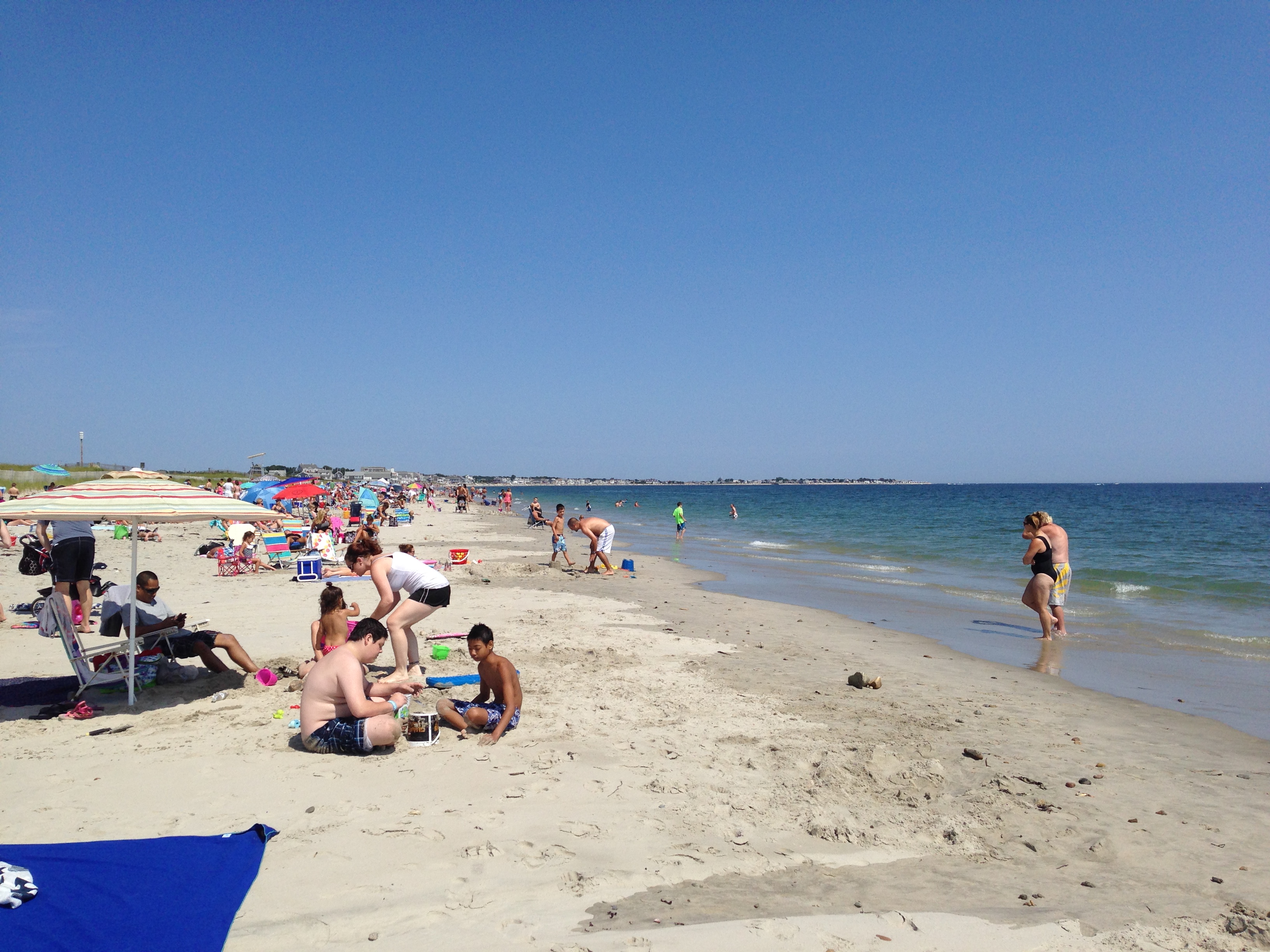
  4. Go to the beach and complete the Sunday Sudoku.  I am man enough to admit that I am often unable to complete the Sunday Sudoku.  However, I’m here to tell you 2014-08-10 11.22.20that I completed it in near-record time today.  Was it the salty air?  Or the knowledge that I didn’t have an unfinished novel to return to?
  5. Read the two-page open-letter to Amazon in the New York Times signed by a bazillion famous authors, telling Amazon to basically quit using them as leverage in their negotiations with Hachette.  Color me unimpressed.  Here is one response to it, via The Passive Voice.
  6. Come up with a couple more ideas for your novel.  Well, yes, that can happen, too.

Draft 3 of my novel is complete — am I done yet?

Probably not.  But at least now I have a draft I can give to folks without having to apologize and explain about all the stuff I’m going to fix, really, no foolin’, I know I didn’t explain what happened to the second car–I’ll get to that.

This draft took just about a month.  It involved changing a basic plot line, which involved changing the characterization of a major character.  Plus the usual tinkering.  Everything seems to make sense now, at least to me.  At least today.  So I’m declaring a partial victory.

Why I’ll never get rich from writing, part xxxvii

This is from Hugh Howey, via The Passive Voice — the way to become successful in online publishing:

The idea is this: Annual releases are too slow to build on one another. And not just in the repetition of getting eyeballs on your works, but in how online recommendation algorithms work. Liliana suggests publishing 5 works all at once. Same day. And she thinks you should have another work sitting there ready to go a month later. While these works are gaining steam, write the next work, which if you write and edit in two months, will hit a month after the “hole” work.

Why does this work? I think it has to do with “impressions,” or the number of times people see a product before they decide to take a chance on it. (In this case, the product is your name.) It also has to do with recommendation algorithms and how new works are treated on various online bestseller lists. From my own experience, I know that it was following WOOL with four more rapid releases that helped my career take off. I followed these five releases a month later with FIRST SHIFT, and I released a work every three or four months after that (SECOND SHIFT, I, ZOMBIE, THIRD SHIFT, plus several short works).

Here I am a year and a half into the writing of my new novel, and I’m close.  But I’m not quite there.  Maybe a couple more months…  Will I have something ready to go a month later?  Yeah.  Sure.  No problem.

People sure do like free ebooks

I sold maybe two copies of my novel Replica in July, while charging a measly $4.99.  We dropped the price to $0.00 a couple of days ago.  The result?  800 downloads on Amazon (I don’t have any data on Barnes & Noble).

I don’t have any great insight to offer.  People like free stuff.  I just hope that some of those 800 folks read the book, like it, and leave me a nice review.  And, maybe, buy one of my other fine novels.

Jigsaw Puzzles and Writing

I am a sucker for jigsaw puzzles.  My wonderful family got me a couple for Father’s Day, and they have been sucking up my time ever since.  I really should be helping humanity by liking Facebook pages and retweeting hashtags.  I really should be finishing my novel.  But no, I have to be working on this.2014-07-26 14.01.28

Here are the ways that working on a jigsaw puzzle is better than writing fiction:

  • Each piece has one and only one place where it goes.  Find it, and you’re through with that piece.  None of this tiresome moving paragraphs around and changing motivations and fiddling with adjectives.
  • When you’re done, you’re done.  You don’t have to look at it when you’re finished and think: Maybe that boat on the right should be bigger.  Maybe the water in the middle should be a different shade of blue.
  • Even one of these hard 1000-piece puzzles only takes about a month in your spare time.  You don’t look up at the clock and realize a year has gone by and you’re still not done.

Here are the ways that writing fiction is better than working on a jigsaw puzzle:

  • You don’t lose pieces.
  • When you finish a jigsaw puzzle, no one asks you to do a sequel.
  • Every once in a while you earn a tiny bit of money from your fiction.  No one has ever offered to pay me for doing a jigsaw puzzle.

I’d say it’s about a tie.

The novel was pretty much finished on Tuesday, and then . . .

. . . I woke up on Thursday with An Idea.  But that was OK — the Idea was limited to one section of the novel, and it wouldn’t require much rejiggering.

Then today I squinted at the novel from another angle, and that resulted in Another Idea.  This one would involve changing the motivation of a major character, with consequences through the story.

I think I need to follow up on both of these ideas.

But what will happen when I actually read through my draft?

John Steinbeck famously wrote The Grapes of Wrath in a few months.  Where did I go wrong?


The BookBub promotion for “Dover Beach”: a preliminary post-mortem

The BookBub promotion for Dover Beach expired yesterday, I think.  I just have the Amazon numbers at this point.  I’ve sold about 600 copies there, plus a bunch of copies of its very fine sequel, The Distance Beacons.  That doesn’t quite give me a profit, but the returns from Barnes & Noble and lesser markets probably will.  At Barnes & Noble, Dover Beach peaked in the 100’s in sales rank and has now dropped back to about #1100; on Kobo, it’s still in the top 100 for Science Fiction Adventure and at #188 overall for Science Fiction.

Regardless of whether I end up in the black for the investment, I’m going to consider this a success. Anyway, because this is my blog, I’m going to mention that Dover Beach is still available for $0.99, and while I’m at it, I’ll subject you to a customer reviewThis one is from B&N and is titled “Excellent story!”:

I thoroughly enjoyed reading this book. The writing style was easy to relate to and the characters had a realness to them that was very refreshing. I love books written about how a society survives after war and the author did a great job explaining the mood of the aftermath. I also appreciate that he didn’t have people being held as prisoners by some thrown together street gangs, that seems to be a plot that comes up way too frequently. It makes more sense that most people would go out on their own or team up with one or two other people. I will be buying more of his books.